 Save
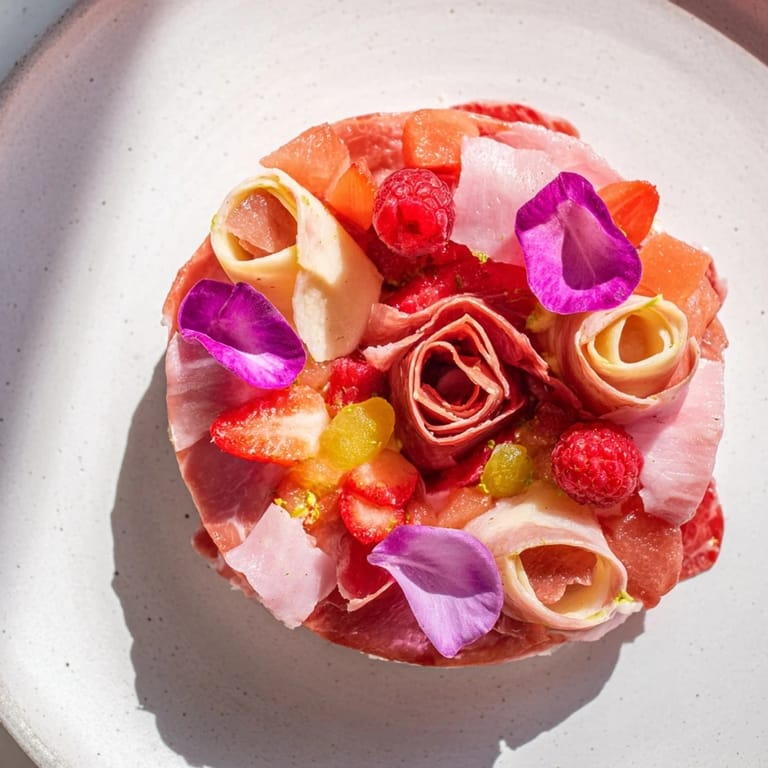
Save I'll never forget the spring afternoon when I decided to create something that looked like it belonged in an art gallery rather than on a dinner table. I was preparing for an elegant brunch, and instead of the usual cheese board, I wanted to paint with food itself. That's when the idea of the Pink Petal Watercolor Wash came to me—a platter where every ingredient, from delicate prosciutto roses to paper-thin radish slices, would blend together like watercolors on canvas. The moment guests arrived and saw it, their faces lit up before anyone even took a bite.
I remember setting this platter out for my sister's baby shower, and instead of people picking at individual items, they started creating their own flavor combinations—prosciutto rose with strawberry, beet with creamy brie, mortadella with crispy crackers. It turned into this beautiful moment of connection, where the food became a conversation starter rather than just sustenance.
Ingredients
- Prosciutto: Choose the thinnest slices you can find—they're easier to shape into delicate roses and look more ethereal on the platter. I learned this the hard way after struggling with thicker cuts.
- Mortadella: This Italian classic brings both visual softness and a subtle sweetness that balances the saltier elements. Keep it cool until the last moment.
- Pink radishes: These are your color anchors—slice them paper-thin to let light pass through them, creating that watercolor transparency effect.
- Watermelon radish: The surprise layer of pink and white inside makes this ingredient feel like edible art. It's worth hunting down at farmers markets.
- Beet: Cook it ahead of time if you can; the color is richer and it won't stain everything else. I roast mine wrapped in foil for easier handling.
- Pink-hued cheese: Port wine Derby, rosé goat cheese, or berry-washed rind cheeses all work beautifully. These aren't everyday cheeses, but they're the soul of this platter.
- Brie or Camembert: The creamy contrast is essential—it catches light and adds a luxurious element that balances the cured meats and vegetables.
- Baguette or crackers: Use these as your texture counterpoint and as edible vessels for the other ingredients. Gluten-free crackers work just as well.
- Strawberries and raspberries: Fresh berries add both sweetness and that final pop of coordinating color. Buy them the day of, as they fade quickly.
- Edible rose petals or microgreens: These are optional but they transform the platter from beautiful to Instagram-worthy in seconds.
Tired of Takeout? 🥡
Get 10 meals you can make faster than delivery arrives. Seriously.
One email. No spam. Unsubscribe anytime.
Instructions
- Start with your canvas:
- Choose a large platter or wooden board that's light in color—this lets the pinks and reds really sing. I like to chill mine first so everything stays fresh longer and doesn't wilt into the board.
- Shape your prosciutto roses:
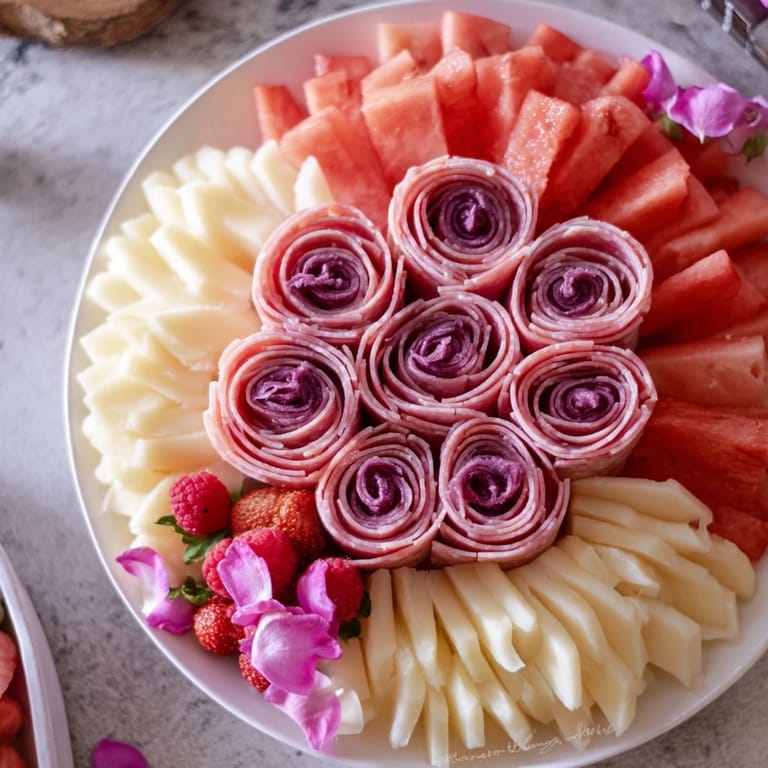
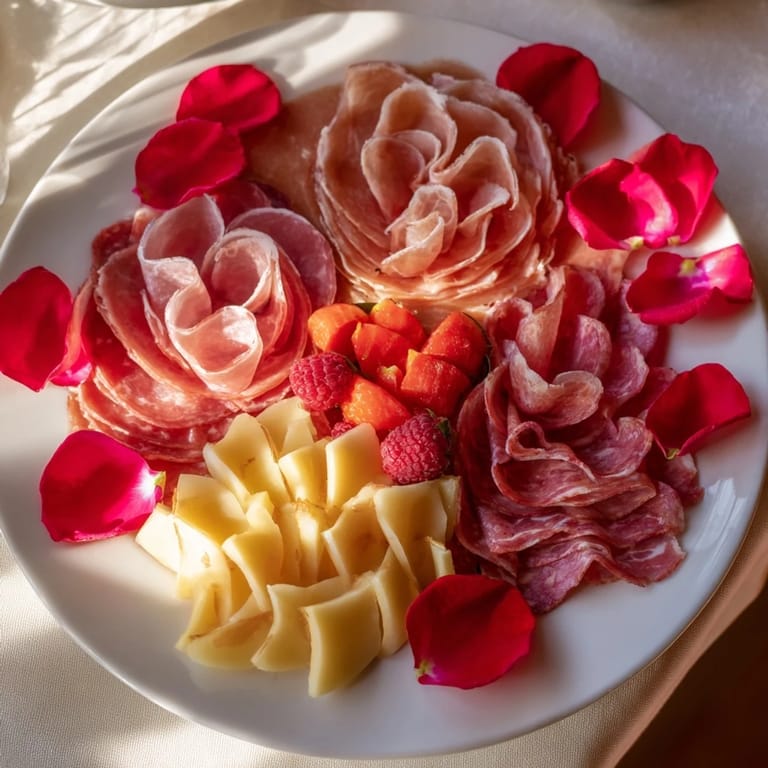
- This is where the magic happens. Take a thin slice of prosciutto and gently roll it into a loose spiral, tucking the end underneath to hold its shape. It should look organic and slightly imperfect, like a real petal arrangement. Group these in little clusters across your platter, leaving space between them.
- Layer the mortadella:
- Fold the mortadella slices loosely beside the prosciutto roses—don't make them too neat. The slight curves and folds are what create those watercolor brush stroke vibes.
- Create your vegetable wash:
- This is where patience pays off. Take your radish and beet slices and arrange them in overlapping, slightly fanned layers. Think of it like you're painting with vegetables—let some slices sit on top of others, creating depth and allowing light to pass through the translucent radish slices. The watermelon radish slices are star players here, so give them prominent placement.
- Place your cheeses strategically:
- Cluster the pink-hued cheese and brie or camembert wedges in groups, letting them nestle against the vegetables and meats. The colors should flow into each other naturally, like paint bleeding across wet paper.
- Add bread and crackers with intention:
- Arrange these in gentle curves along edges or weave them throughout the platter. They're functional, but they're also part of the visual composition.
- Finish with fruits and garnishes:
- Scatter strawberry halves and raspberries in small piles—these add the final color accents and promise of sweetness. Top with edible rose petals or microgreens if you're using them, placing them where they'll catch the light.
- Serve at the right moment:
- Bring everything out when you're ready to eat. This platter is best enjoyed fresh, before anything has a chance to dry out or lose its vibrant appearance. Let guests mix and match as they please.
 Save
Save There's something magical about watching people approach a platter like this with genuine delight. It stopped being just about appetizers and became about creating an experience—a moment where food, art, and connection all came together on one beautiful board. That's when I knew this recipe was special.
The Art of Building a Charcuterie Masterpiece
The secret to a stunning platter isn't just what you choose, but how you arrange it. Think like an artist laying out a palette. The cooler pinks and reds should transition into warmer salmon tones, with the creamy whites and pale yellows of the cheeses acting as your highlights. I've learned that leaving some negative space on the board actually makes everything else look better—it gives your eye a place to rest and makes the composition feel intentional rather than crowded.
Pairing Perfection
Rosé wine was absolutely made for this platter. The wine's delicate fruit notes echo the berries, while its acidity cuts through the richness of the meats and cheese. But honestly, this platter works beautifully with sparkling water, light teas, or even a crisp white wine. The beauty of building your own bites is that everyone can create their perfect combination—some guests will want the briny-salty experience with prosciutto and radish, while others will go for the sweet-savory play of cheese and strawberry.
Variations That Feel Special
Once you understand the principle of this platter—using color, texture, and the concept of watercolor layering—you can adapt it endlessly. In fall, I've made versions with figs, pomegranate, and deeper red cheeses. For vegetarian versions, just skip the meats and double down on cheeses, adding more vegetable varieties and maybe some marinated mushrooms or pickled onions. The pink peppercorns mentioned in the notes are a game-changer—they add a subtle floral heat that catches people by surprise. Each variation teaches you something new about balance and color theory in food.
- Try adding pickled onions or pickled shallots for sharp, briny contrast
- Pink peppercorns aren't actually spicy—they're floral and slightly fruity, and they look beautiful scattered across the board
- If you can find it, burrata or stracciatella cheese adds another layer of creamy luxury that makes people close their eyes when they taste it
 Save
Save This platter is a reminder that sometimes the most elegant food is simply about honoring beautiful ingredients and letting them be themselves. Every time I make it, someone asks if I took a culinary class.