 Save
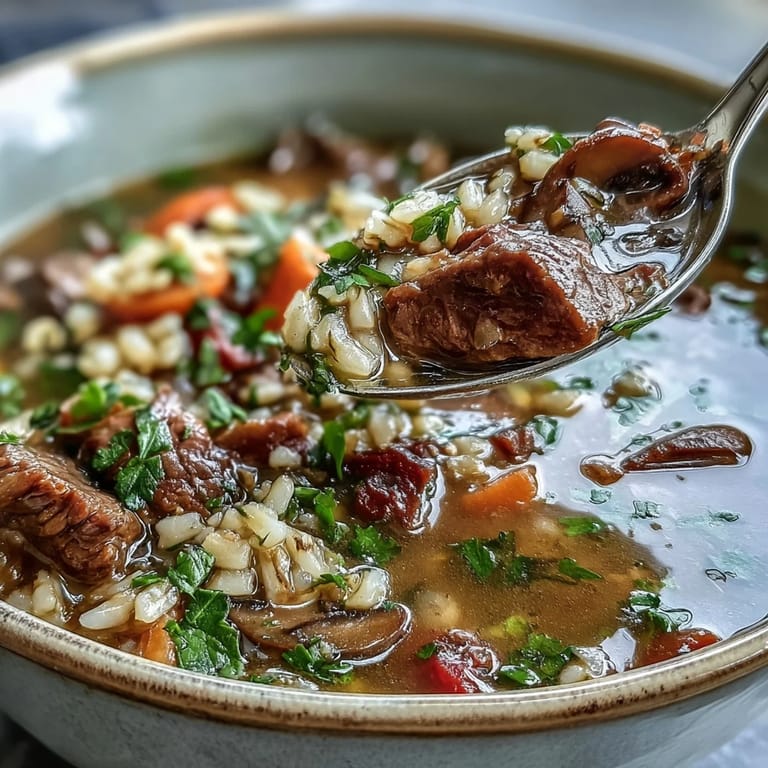
Save There's something about a pot of beef and barley soup simmering on the stove that makes the entire kitchen feel like home. My neighbor once stopped by on a grey afternoon and said the smell alone was worth the visit, and honestly, she wasn't wrong. This soup emerged from my need for something that could feed a crowd without fussing, something that actually got better as it sat. The combination of tender beef, nutty barley, and earthy mushrooms creates this deep, satisfying flavor that doesn't announce itself loudly but rather wraps around you like a warm embrace.
I made this soup for my friend after she mentioned feeling under the weather, and she texted me three days later asking for the recipe because she'd been eating it every day for lunch. That moment taught me that food made with intention and care has a way of mattering more than we expect, and this particular soup seems to carry that weight naturally.
Ingredients
- Beef stew meat (500 g): Look for pieces with some marbling, as they'll become incredibly tender during the long simmer and add richness to the broth.
- Pearl barley (100 g): Rinse it first to remove excess starch, and don't skip this step if you want a clearer broth instead of a cloudy one.
- Onion, carrots, and celery: This aromatic base is called a mirepoix, and it's the foundation that makes everything taste intentional and deep.
- Cremini or white mushrooms (250 g): Slice them fairly thick so they don't disappear into the soup, and they'll add an umami depth that makes people ask what you did differently.
- Garlic (2 cloves): Mince it fresh rather than using jarred, because those final 60 seconds before adding liquid are when garlic hits its flavor peak.
- Potato: Adds subtle body to the broth and makes the soup more filling without heaviness.
- Canned diced tomatoes (400 g): The acid balances the richness of the beef and brightens everything up.
- Beef broth (1.5 L): Use good quality broth if you can; it's the backbone of the entire dish.
- Bay leaf, thyme, and parsley: Don't underestimate dried herbs here—they're concentrated and do real work in this soup.
- Olive oil (2 tbsp): Just enough to get a proper sear on the beef without the soup tasting overly oily.
Tired of Takeout? 🥡
Get 10 meals you can make faster than delivery arrives. Seriously.
One email. No spam. Unsubscribe anytime.
Instructions
- Brown the beef properly:
- Heat olive oil in your large pot until it shimmers, then add beef cubes in a single layer and don't move them around too much. Let them sit for about two minutes per side to develop that golden crust, which is where most of the flavor comes from.
- Build your aromatic base:
- Once the beef is out, add onion, carrots, and celery to the same pot without washing it, so all those browned bits stick to your vegetables. Cook until the onions turn translucent and the celery softens, which should take about five minutes.
- Add the mushrooms:
- Mushrooms release their own moisture, so stir them in and let them cook until they've released some liquid and started to brown slightly. This concentrates their flavor and prevents the soup from becoming watery.
- Toast the garlic:
- Add minced garlic and stir constantly for just one minute, because garlic burns quickly and tastes bitter when overdone. You want to smell that pungent, fresh aroma, not something scorched.
- Combine everything:
- Return the beef to the pot and add potatoes, tomatoes with their juice, rinsed barley, beef broth, and herbs. Stir everything together so nothing sticks to the bottom, then bring the whole pot to a rolling boil.
- Simmer low and slow:
- Lower the heat, cover the pot, and let it bubble gently for a full hour, stirring occasionally. This is when the magic happens—the beef becomes silky, the barley absorbs liquid and becomes tender, and everything melds together.
- Test for doneness:
- After the first hour, taste a piece of barley and beef. If they're not quite tender, simmer uncovered for another 15 to 20 minutes, which also lets the soup thicken slightly as some liquid evaporates.
- Season and finish:
- Taste the soup now and add salt and pepper gradually, stirring between additions so you don't oversalt. Remove the bay leaf and serve hot, optionally garnished with fresh parsley.
 Save
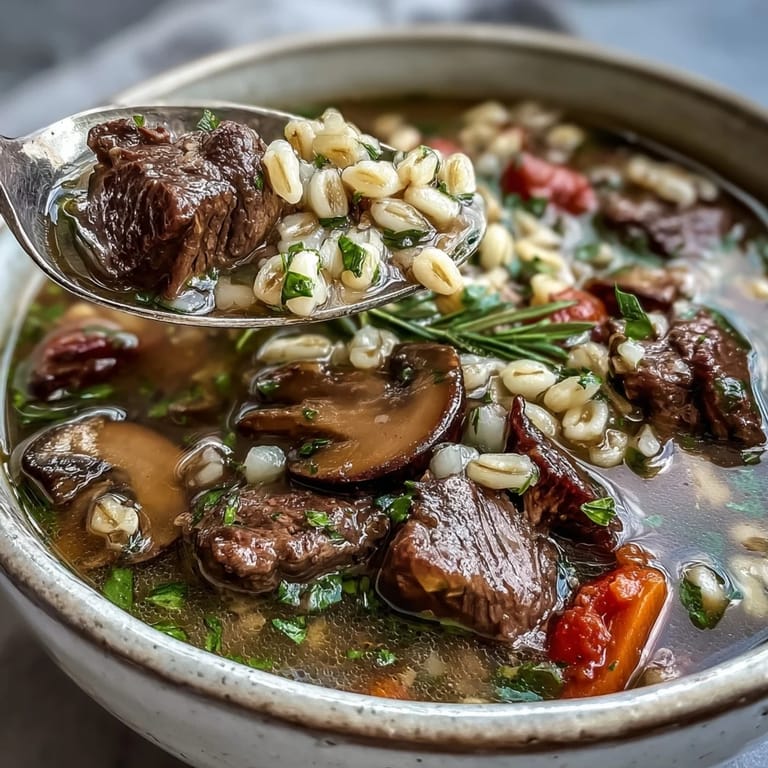
Save Years ago, a family member who rarely cooked anything volunteered to make this soup for a small gathering, and she called me halfway through panicking about the barley looking too crunchy. I told her to trust the simmer, and when everyone sat down to eat, she beamed like she'd accomplished something important, which she had. That's when I understood this soup isn't just about the eating; it's about being able to make something genuine without years of training.
The Magic of Slow Cooking
The whole point of this soup is time and gentle heat. Unlike recipes where you're trying to work fast, this one rewards you for doing less and waiting more. The longer everything simmers together, the more the beef releases collagen that makes the broth silky, and the more the barley plumps up with all that savory liquid. I've made this soup rushed on a tight schedule, and it tastes fine but hollow somehow. When I give it the full hour and a half without rushing, people notice the difference, even if they can't quite explain what it is.
Variations That Actually Work
This soup is forgiving in ways that other soups aren't, mostly because the flavors are strong enough to carry through adjustments. I've added a splash of red wine after browning the beef, which deepens everything and makes the soup taste almost wine-braised. I've switched the beef broth for chicken broth when that's what I had, and the soup becomes lighter and more delicate but still satisfying. The one time I added spinach in the last few minutes, it wilted perfectly and added a gentle bitterness that balanced the sweetness of the carrots.
Making It Your Own
The structure of this soup is solid, but your kitchen is yours, and you should cook it with what you have and what you prefer. Some people swear by leeks instead of onions, and they're right that it's beautiful that way. Others add root vegetables like parsnips or turnips for a different earthy note. The joy of making this soup repeatedly is that it stays recognizable as itself while becoming something slightly different each time.
- Swap the mushrooms for whatever you have, or skip them entirely and the soup will still be wonderful.
- If barley isn't in your pantry, use farro or even wild rice, though the flavor will shift subtly.
- Add fresh herbs at the end if you want brightness, or keep it as is if you prefer the deeper, muted flavors.
 Save
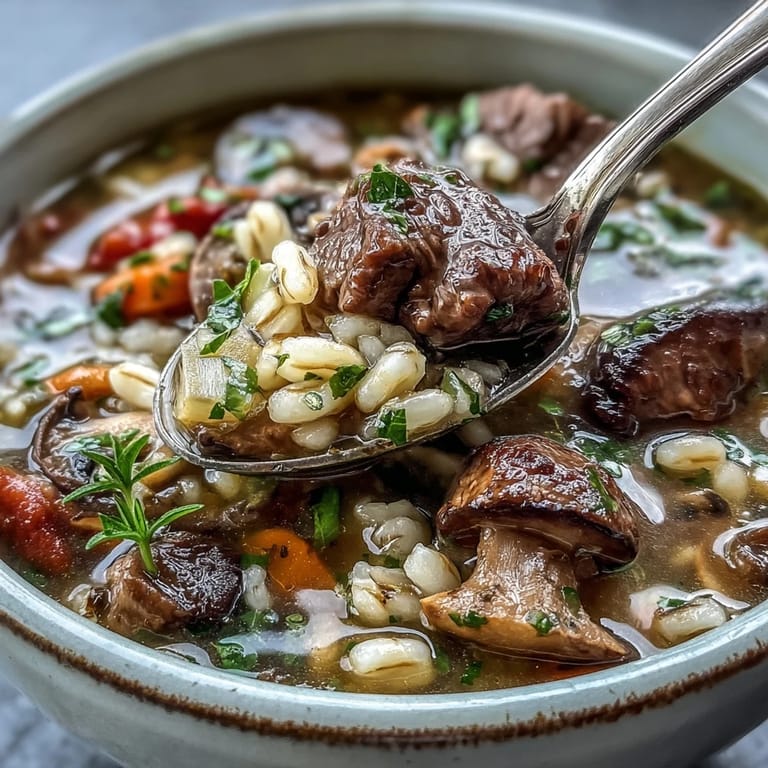
Save This soup is the kind of thing that sits on your stove and improves through the afternoon while you do other things, filling the house with a smell that makes people want to stick around. Make it, and you'll understand why soups like this have survived for generations.
Your Questions Answered
- → Can I make this soup ahead of time?
Absolutely. This soup actually tastes better the next day as flavors have time to meld. Store in the refrigerator for up to 4 days, or freeze for up to 3 months.
- → What type of beef works best?
Chuck or stew meat cut into 1-inch cubes is ideal. These tougher cuts become tender during long simmering and add rich flavor to the broth.
- → Do I need to soak pearl barley before cooking?
No need to pre-soak. Simply rinse the barley before adding it to the pot. It will cook directly in the soup, absorbing flavors as it softens.
- → Can I use other grains instead of barley?
Yes, you can substitute with farro, brown rice, or even potatoes for a gluten-free option. Adjust cooking time accordingly.
- → How do I store leftovers?
Cool completely before transferring to an airtight container. The soup will thicken in the refrigerator—add a splash of broth or water when reheating to reach desired consistency.