 Save
Save There's something about the first warm week of spring that makes me want to put a soup pot on the stove, which never quite makes sense until the smell of sautéed garlic fills the kitchen. My neighbor handed me a basket of courgettes from her garden one April afternoon, and instead of the usual roasted side dish, I found myself reaching for peas and pesto without really planning it. That first spoonful—bright, herbaceous, impossibly smooth—became the reason I make this soup every season now, even though it tastes most like home in spring.
I made this for my sister during her first week back from traveling, when she was tired and needed something that tasted like care. She sat at the counter with her spoon halfway to her mouth, just breathing in the steam, and said it was exactly what she needed—no embellishment, just that simple recognition. That's when I realized good food isn't always about impressing; sometimes it's just about meeting someone where they are.
Ingredients
- Courgettes: Two medium ones, diced into small cubes so they soften evenly and disappear into the soup without becoming mushy strands.
- Onion: One medium onion, chopped fine enough that it melts into the base and becomes the foundation of flavor.
- Garlic cloves: Just two, minced, because they're going to infuse the entire pot—more than that and the soup becomes about garlic rather than vegetables.
- Peas: Fresh or frozen work equally well; frozen peas are honestly more reliable because they're picked at peak sweetness.
- Potato: One medium potato, peeled and diced small, which thickens the soup naturally as it breaks down.
- Vegetable stock: One liter of good stock makes all the difference—the foundation of everything that follows.
- Olive oil: Two tablespoons for sautéing, nothing fancy required.
- Salt and black pepper: Season gradually; you can always add more but you can't take it out.
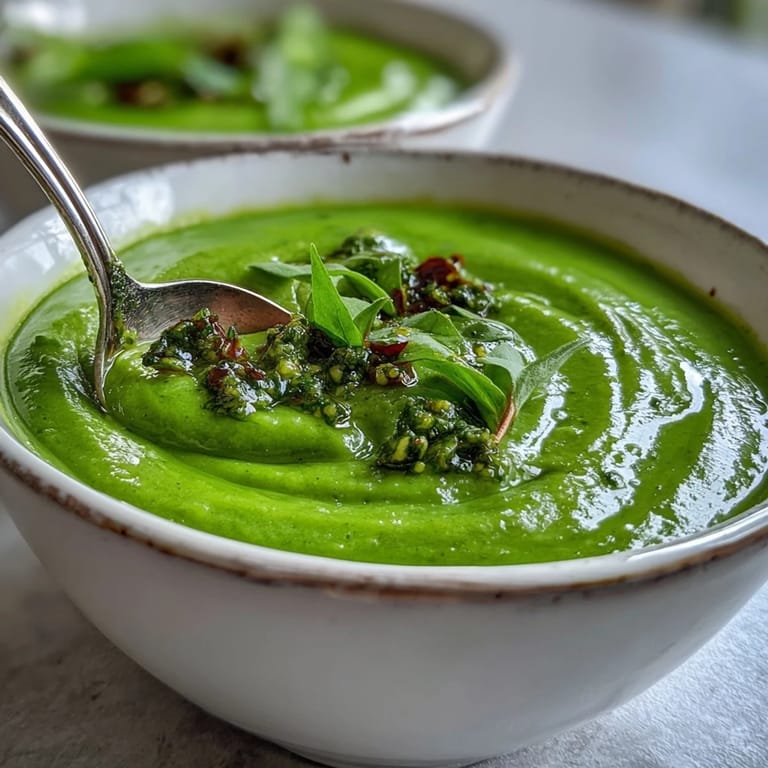
- Basil pesto: Four tablespoons total, stirred in before blending and swirled on top, creating those pockets of herby brightness.
- Fresh basil and crusty bread: For serving, both optional but both secretly essential.
Tired of Takeout? 🥡
Get 10 meals you can make faster than delivery arrives. Seriously.
One email. No spam. Unsubscribe anytime.
Instructions
- Build the base:
- Heat your olive oil in a large saucepan over medium heat, then add the chopped onion and minced garlic. You're looking for that moment when the onion turns translucent and the garlic releases its smell into the kitchen—about 3 to 4 minutes—but you want to stop before anything browns.
- Add the vegetables:
- Stir in the diced potato and courgette, coating everything in the oil. Let them soften slightly for 3 minutes while you listen to the quiet sizzle and think about what's coming next.
- Simmer the vegetables:
- Pour in your vegetable stock and bring everything to a boil, then lower the heat and let it simmer gently. The potato needs about 15 minutes to become completely tender, which is when you'll know it's ready for blending.
- Finish with peas:
- Add the peas and let them warm through for 5 minutes—they're already cooked if frozen, so you're just letting them heat and release their sweetness into the broth.
- Blend until smooth:
- Remove from heat and use an immersion blender to puree everything until silky, working in batches if you're using a countertop blender. This is meditative work, watching the chunky mixture transform into something elegant.
- Stir in the pesto:
- Mix in 3 tablespoons of pesto while the soup is still warm, letting the herbs disperse throughout. Taste and season with salt and pepper until it feels right to you.
- Serve with intention:
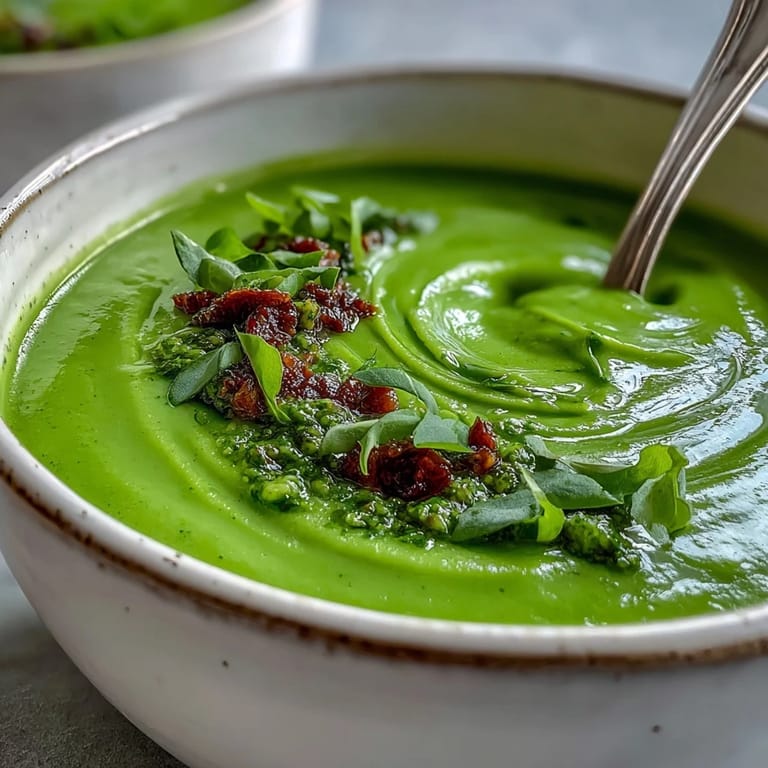
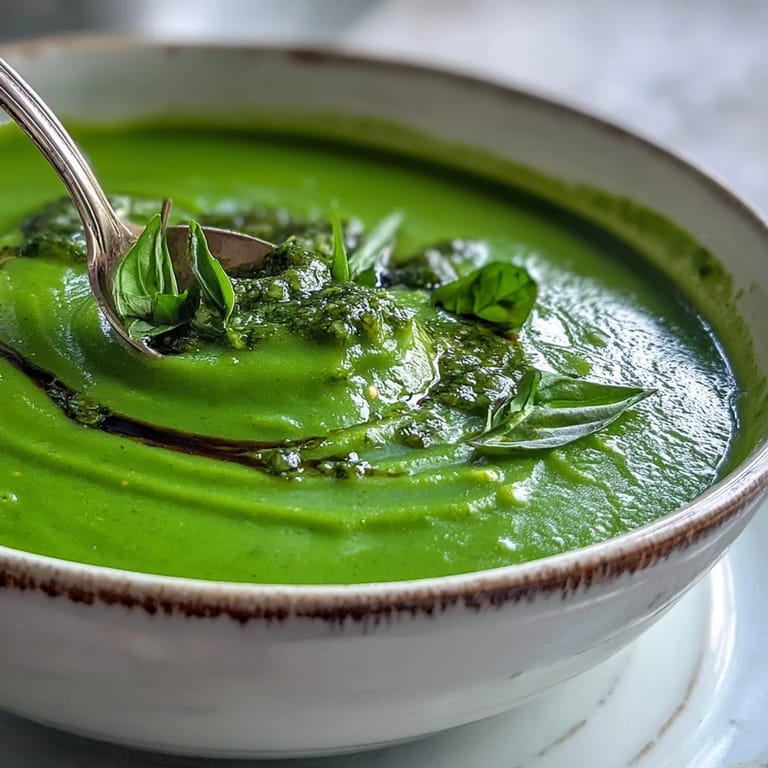
- Ladle into bowls, add a small swirl of remaining pesto to each one, scatter fresh basil over the top, and serve with bread alongside. That swirl is the punctuation mark that makes the whole thing feel finished.
 Save
Save A friend once told me that the mark of a good soup is that you want to drink it straight from the bowl, and this one crosses that line every time. It's the kind of dish that reminds you why cooking feels like generosity.
The Secret to Silky Texture
The potato is doing more work than you might think—as it breaks down, it releases starch that naturally thickens the soup, so you never need cream unless you actually want it. I learned this by accident when I forgot to add cream once and discovered the soup was already velvety enough on its own. That taught me that simplicity is often the ingredient list already doing what you need.
When Pesto Makes or Breaks It
Not all pesto is created equal, and a jarred pesto that tastes like salt and oil will make this soup taste like regret. Hunt for a pesto with visible basil leaves and decent garlic—you'll taste the difference immediately. I once made this with a questionable pesto from the back of my cupboard and couldn't figure out why something so simple tasted flat, until I started over with better ingredients.
Variations Worth Trying
Swap the peas for broad beans if that's what's in season, or add a handful of spinach at the very end for earthiness. Some days I add a splash of cream or coconut milk before blending for something richer, and in summer I chill the whole thing and serve it cold with an extra pesto swirl. The recipe's flexibility is part of why it never gets boring.
- Make it vegan by choosing a nut-free or plant-based pesto.
- Blend it partially for a chunkier texture if you prefer something less smooth.
- Garnish with toasted pine nuts or a drizzle of good olive oil if you want to add texture.
 Save
Save There's comfort in a soup this good, in how it feeds you without pretending to be something it's not. Make it when you need something warm, or chill it when summer arrives and you still want that spring-forward taste.
Your Questions Answered
- → Can I make this soup ahead of time?
Absolutely. This soup keeps beautifully for 3-4 days refrigerated. The flavors actually develop and deepen overnight, making it an excellent meal prep option. Reheat gently on the stove, adding a splash of water if it has thickened.
- → Is this soup suitable for freezing?
Yes, it freezes well for up to 3 months. Cool completely before transferring to airtight containers. Leave about an inch of space as liquids expand when frozen. Thaw overnight in the refrigerator before reheating.
- → What can I use instead of pesto?
Fresh basil blended with olive oil, garlic, and pine nuts makes a simple alternative. For a different flavor profile, try a swirl of crème fraîche with chopped fresh herbs, or a dollop of olive tapenade for a Mediterranean twist.
- → How do I make this soup vegan?
Simply ensure your pesto is vegan-friendly—many traditional versions contain Parmesan. Either purchase certified vegan pesto or make your own using nutritional yeast instead of cheese. The rest of the ingredients are naturally plant-based.
- → Can I use frozen courgette?
Fresh courgette works best as it maintains texture during cooking. Frozen courgette tends to become waterlogged and mushy, which could affect the soup's consistency. If using frozen, consider reducing the stock slightly to compensate for extra moisture.
- → What's the purpose of the potato?
The potato acts as a natural thickener, adding body and creaminess without dairy. As it simmers and breaks down, it creates a velvety texture that makes the soup feel substantial and satisfying, while remaining light enough for spring dining.