 Save
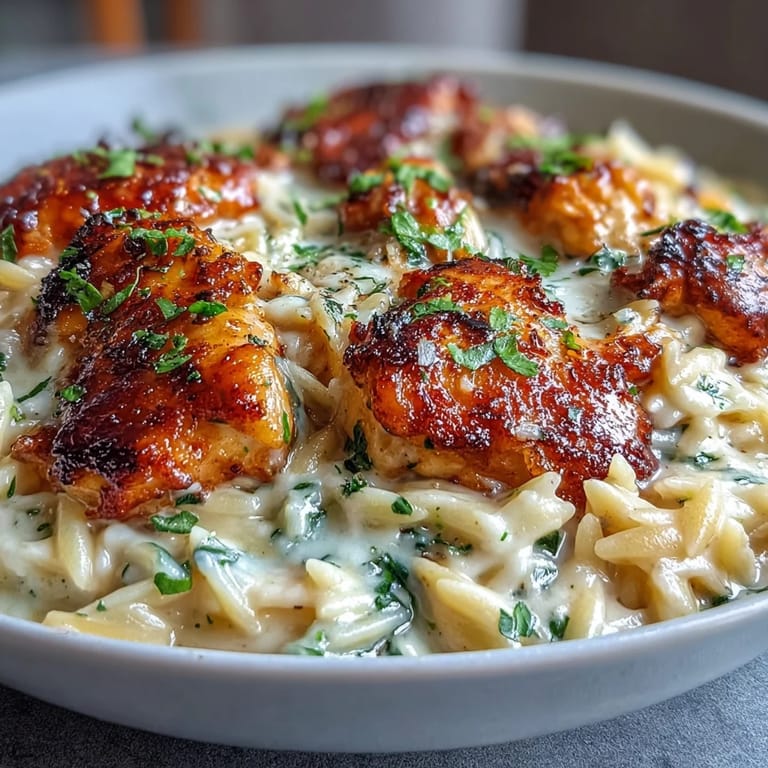
Save There's something about the smell of garlic hitting hot butter that makes you stop what you're doing and just breathe it in. I discovered this one-pot creamy garlic Parmesan chicken orzo on a Tuesday night when I had chicken thighs, a box of orzo, and exactly zero energy to do dishes. What started as desperation turned into the kind of meal that makes you wonder why you don't make it every week—creamy, garlicky, and somehow elegant enough to serve without apology.
I made this for my neighbor last month who showed up with homemade bread and said she was tired of takeout. Watching her dip that bread into the creamy sauce while we sat at the kitchen counter felt like the best kind of small victory—proof that simple food, made with attention, turns into something people actually remember.
Ingredients
- Chicken thighs or breasts: Thighs stay juicier and more forgiving, but breasts work if that's what you have—just don't skip the seasoning because it's what makes them taste intentional.
- Kosher salt, black pepper, Italian seasoning: Season the chicken before it hits the pan so the flavor gets into the meat, not just sitting on the surface.
- Olive oil: Medium heat is your friend here; rushed searing makes tough chicken.
- Garlic and onion: Don't skip mincing the garlic fine—large chunks get bitter and nobody wants that.
- Baby spinach: Optional but it adds color and nutrition without changing the flavor you came for.
- Orzo pasta: The tiny rice-shaped pasta absorbs sauce like it was made for this moment.
- Low-sodium chicken broth: Use good broth if you can; it's the backbone of everything that happens next.
- Heavy cream and Parmesan: Fresh grated Parmesan melts silky; pre-shredded has additives that make it grainy.
- Butter: Unsalted lets you control the salt and adds richness that oil can't match.
- Fresh parsley: A handful at the end feels intentional and brightens everything up.
Tired of Takeout? 🥡
Get 10 meals you can make faster than delivery arrives. Seriously.
One email. No spam. Unsubscribe anytime.
Instructions
- Season your chicken:
- Toss the bite-size pieces with salt, pepper, and Italian seasoning in a bowl, making sure every piece gets coated. This takes two minutes and changes everything about how the finished dish tastes.
- Get that golden sear:
- Heat olive oil in your skillet over medium-high until you can feel the heat radiating when your hand hovers above it. Add chicken and let it sit untouched for a minute or two so it gets that golden crust, then stir and cook until cooked through, about 5–7 minutes total. Don't crowd the pan; if your skillet feels packed, work in batches.
- Build the flavor base:
- Reduce heat to medium, add butter, then sauté your diced onion until it's soft and translucent, which takes about 3 minutes. Add minced garlic and cook for just 1 minute—you want to smell it but not burn it.
- Toast the orzo:
- Stir the dry orzo into the pan and let it toast for 1–2 minutes, stirring so it doesn't stick. You'll hear it clicking against the pan and smell something nutty and toasted.
- Add the broth:
- Pour in your chicken broth and use a wooden spoon to scrape up all those brown bits stuck to the bottom—that's pure flavor. Bring to a gentle boil, then reduce heat to a simmer.
- Let it cook gently:
- Cover the skillet and let it simmer for 8–10 minutes, stirring occasionally, until the orzo is tender and has absorbed most of the liquid. You'll know it's ready when the pasta is soft and the liquid is mostly gone but not completely dry.
- Bring the chicken back and make it creamy:
- Return the seared chicken (and any juices from the plate) to the pan, then stir in the heavy cream and freshly grated Parmesan. Add the spinach if you're using it and let everything simmer together for 2–3 minutes until the sauce is creamy and the chicken is heated through.
- Taste and adjust:
- You might need a pinch more salt or a crack of pepper—taste it before you serve it. Season to your preference because you know your palate better than any recipe does.
- Finish and serve:
- Remove from heat, scatter fresh parsley over the top, add extra Parmesan if you want (and you probably should), and serve hot straight from the skillet.
 Save
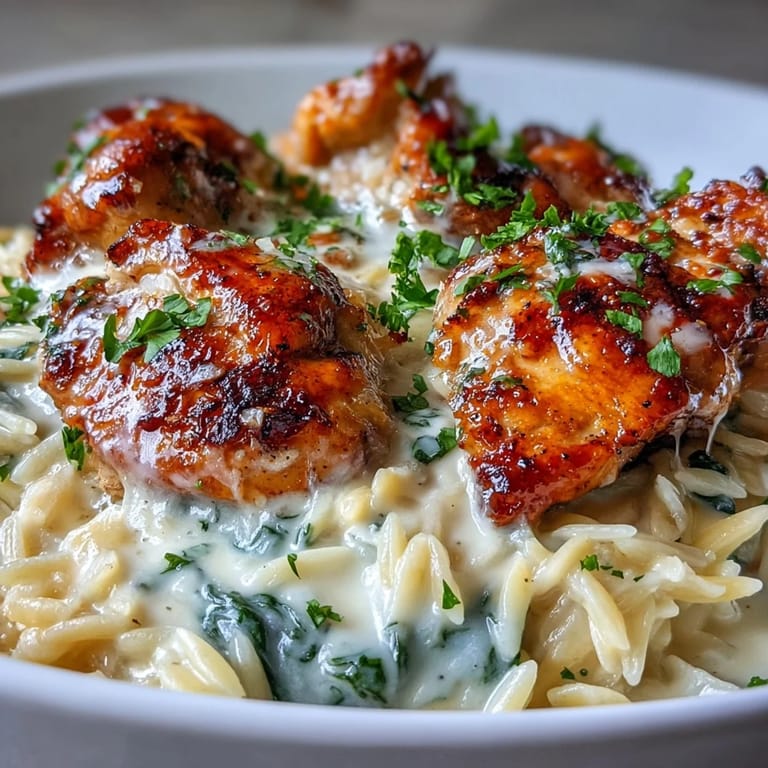
Save This dish became a Thursday night regular in my house because it's the kind of meal that feeds your body and settles your mind. There's comfort in watching cream and cheese melt into something golden and rich, especially on days when everything else feels complicated.
Why This Works as One Pot
The magic of one-pot cooking is that nothing gets lost—every bit of flavor from searing the chicken, toasting the orzo, and browning the onions stays right there in the pan and gets absorbed by the pasta and cream. It's efficient cooking, the kind that makes sense on a weeknight when you're hungry and tired and don't want a sink full of dishes staring at you later.
Variations That Actually Work
I've played with this recipe enough times to know what sticks and what doesn't. Mushrooms are a natural fit—sauté them with the onions and they add an earthy depth. Bell peppers work too, though they're more about texture and sweetness than flavor. Half-and-half instead of heavy cream makes it lighter without completely changing the character, and sun-dried tomatoes stirred in at the end add a subtle tang that some people love.
Serving and Pairing
This is a complete meal on its own, but a crisp green salad alongside cuts through the richness in a way that makes you feel less guilty about how much cream is involved. Crusty bread for soaking up the sauce is not optional—it's necessary. A chilled white wine, if you're that kind of person, sits perfectly next to the garlic and Parmesan.
- Roasted vegetables on the side add color and don't fight for attention with the main event.
- Make it a day ahead and reheat gently with a splash of broth to loosen it back up.
- Leftovers stay good for three days refrigerated and taste better than you'd expect the next day.
 Save
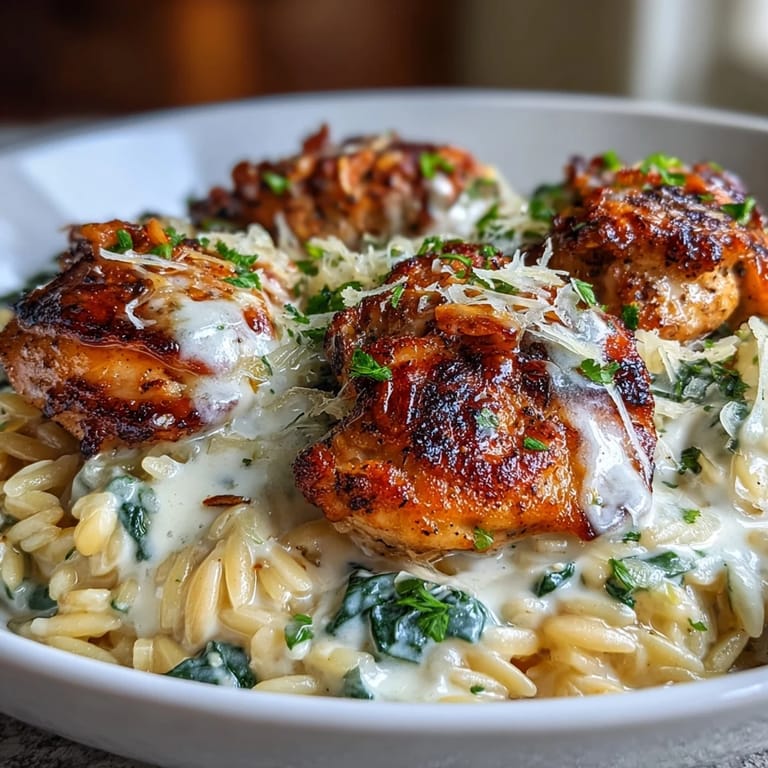
Save This is the kind of recipe that becomes part of your regular rotation without you really planning it that way. You make it once, people ask for seconds, and suddenly you're making it monthly because it works and it feels good.
Your Questions Answered
- → Can I make this ahead of time?
Yes, you can prepare this dish up to a day in advance. Store it in an airtight container in the refrigerator. When reheating, add a splash of chicken broth or cream to restore the sauce's creamy consistency, as the orzo will absorb more liquid as it sits.
- → Can I use chicken breasts instead of thighs?
Absolutely. Chicken breasts work well in this dish, though thighs tend to stay more tender and juicy during cooking. If using breasts, be careful not to overcook them during the initial searing step.
- → What can I substitute for orzo pasta?
You can replace orzo with other small pasta shapes like ditalini, small shells, or even broken spaghetti pieces. Rice also works for a risotto-style variation, though you may need to adjust the cooking time and liquid amount.
- → Is there a way to make this lighter?
Yes. Substitute half-and-half for the heavy cream, or use whole milk with a tablespoon of flour to help thicken the sauce. You can also reduce the amount of Parmesan or use a lower-fat cheese alternative.
- → Can I add more vegetables to this dish?
Certainly. Chopped mushrooms, bell peppers, zucchini, or peas work well. Add heartier vegetables like mushrooms and peppers when sautéing the onions, and add quick-cooking vegetables like peas during the last few minutes of simmering.
- → Why is my sauce not thickening?
The sauce thickens naturally as the orzo releases its starch into the cooking liquid. If it's still too thin after the orzo is cooked, continue simmering uncovered for a few more minutes. The sauce will also thicken slightly as it stands.