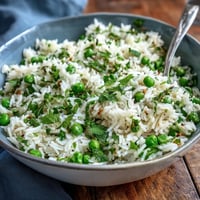
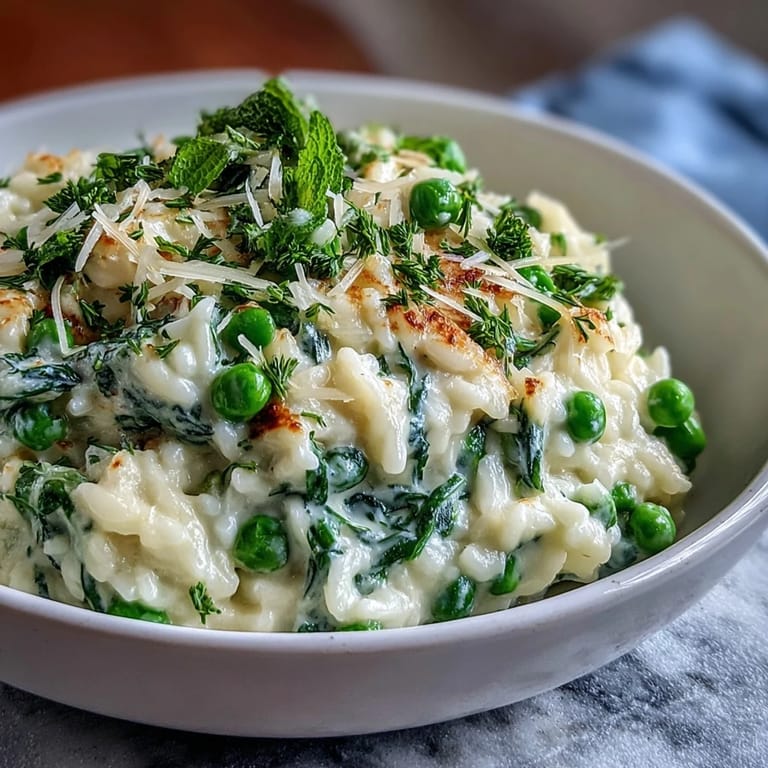
 Save
Save There's something about the first warm evening of spring that makes you want to cook something that tastes like the season itself. Years ago, I found myself at the farmer's market with a bunch of fresh mint in one hand and the brightest bag of just-picked peas in the other, and I knew immediately they belonged together in risotto. That dish became my go-to when I wanted to feel like I was doing something special without spending all night in the kitchen, and it never fails to make people slow down and actually taste their food.
I made this for my neighbor last spring when her daughter came home from college, and I remember her tasting it and getting this quiet, surprised look on her face. She told me later that it reminded her of eating in Italy, and I'd never left our city. That's when I realized risotto isn't really about fancy ingredients or technique—it's about paying attention, ladle after ladle.
Ingredients
- Fresh or frozen green peas (1 cup): Spring peas are magic if you can find them, but frozen ones work beautifully and honestly taste fresher than those sad supermarket pods sitting under lights.
- Arborio rice (1 1/2 cups): This short-grain rice releases starch as it cooks, which is what creates that creamy texture without any cream—don't skip it for regular rice.
- Vegetable stock (4 cups): Keep it warm in a separate pot so the rice doesn't shock when the liquid hits it, which slows everything down.
- Dry white wine (1/2 cup): Something you'd actually drink makes a difference; it adds a subtle brightness that's hard to fake.
- Unsalted butter (3 tbsp): Divided between the start and the finish, it's the secret to that silky, luxurious feeling in every bite.
- Freshly grated Parmesan (1/2 cup plus extra): Grate it yourself right before cooking—pre-grated has anti-caking agents that prevent it from melting smoothly into the risotto.
- Fresh mint leaves (1/4 cup): Added at the very end so it stays bright green and tastes alive, not cooked into submission.
- Flat-leaf parsley (2 tbsp): It softens the mint's intensity and adds an earthy note that keeps things balanced.
- Lemon zest (1 zest): This tiny bit of brightness lifts the whole dish and makes people wonder what secret ingredient you used.
- Salt and freshly ground black pepper: Taste as you go—risotto needs more seasoning than you'd expect.
Tired of Takeout? 🥡
Get 10 meals you can make faster than delivery arrives. Seriously.
One email. No spam. Unsubscribe anytime.
Instructions
- Start with softness:
- Melt 2 tablespoons of butter over medium heat and add your finely chopped onion, letting it cook gently until it turns translucent and soft, about 4 minutes. The onion should almost melt into the butter—this is the foundation that makes everything taste richer than it actually is.
- Toast the rice:
- Add your minced garlic and cook for just a minute until it's fragrant, then stir in the Arborio rice and toast it for about 2 minutes, stirring constantly until each grain is coated in butter and starting to smell nutty. This step is easy to rush, but those 2 minutes matter.
- Wake it up with wine:
- Pour in the white wine and keep stirring until it's mostly absorbed into the rice, which takes about 2 minutes. You'll know it's ready to move on when the liquid has almost disappeared.
- Build the creaminess:
- Now comes the meditative part—add your warm vegetable stock one ladle at a time, stirring almost constantly and waiting until most of the liquid is absorbed before adding the next ladle. This takes about 18 to 20 minutes and is where risotto's magic happens; you're coaxing the starch out of the rice to create that creamy texture naturally.
- Add the peas at the end:
- With about 5 minutes left in cooking, stir in your peas so they stay bright green and tender rather than turning to mush. They'll finish cooking in the residual heat and warm stock.
- Finish with richness:
- Turn off the heat and stir in the remaining tablespoon of butter, freshly grated Parmesan, and the finely chopped mint, parsley, and lemon zest all at once. This final moment is where it transforms from good rice into something that tastes like springtime itself.
- Taste and adjust:
- Always taste before serving and add more salt, pepper, or a squeeze of lemon if it needs it. Every stove cooks differently, so trust your palate.
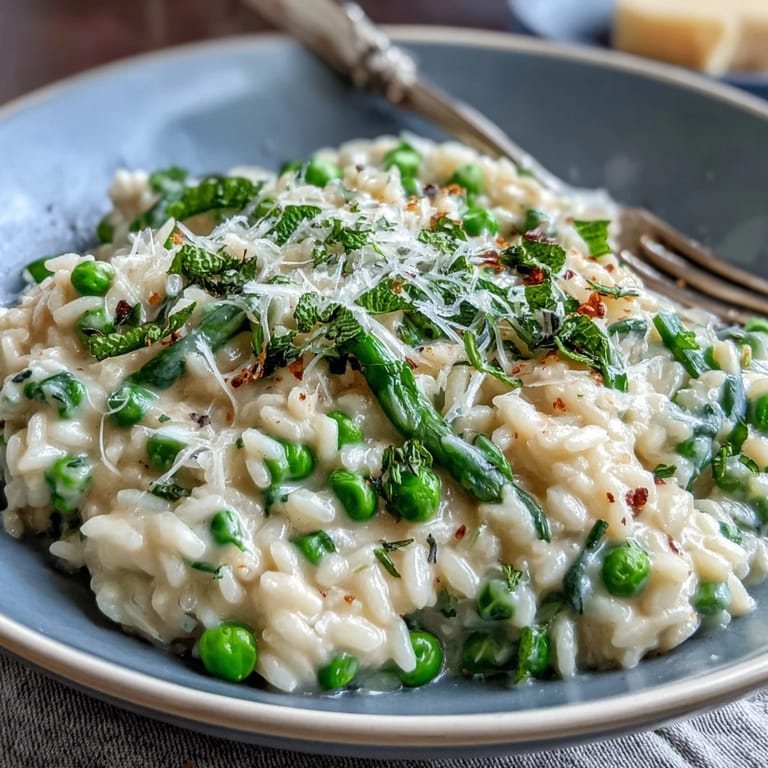 Save
Save My mother-in-law once told me that the Italian word risotto comes from the motion of stirring itself, and that cooking it is supposed to be a conversation between you and the rice. I never forgot that, and now whenever I make it, I think about how cooking something well is really just about showing up and paying attention to what's happening in front of you.
The Magic of Timing
Everything about this dish hinges on the order of operations, and there's a real beauty in that constraint. Adding peas too early means they lose their brightness and turn that sad army-green color; adding the mint at the beginning means you're cooking away the very thing that makes it special. The structure of risotto forces you to slow down and think about what each ingredient needs and when it needs it, which is probably why people find it so satisfying to make.
Why Fresh Herbs Matter Here
This is one of the few dishes where you really taste the difference between dried herbs and fresh ones, and it's worth seeking out fresh mint and parsley if you can. The mint gives it a clean, almost cool sensation on your tongue, while parsley adds an earthy grounding note that keeps the mint from becoming too perfumy. Together they make the risotto taste alive in a way that elevates it from comfort food to something you'd order in a restaurant and try to recreate at home.
Serving and Sharing This Dish
Risotto waits for no one, so have your plates warm and your guests ready before you finish cooking the last bit. I learned this the hard way when I spent 30 minutes getting everything perfect and then it sat on the stove getting gluey while everyone was still on their first course. The payoff for getting it right is that moment when you set it in front of someone and they take that first bite, and you see their whole face relax.
- A generous grind of fresh black pepper and a handful of fresh mint leaves on top make it look like you've been cooking all day.
- If you want extra richness, drizzle each serving with really good olive oil right before eating—it adds luxury without changing the flavor.
- Pair it with a crisp white wine like Sauvignon Blanc or Pinot Grigio that echoes the brightness of the peas and mint.
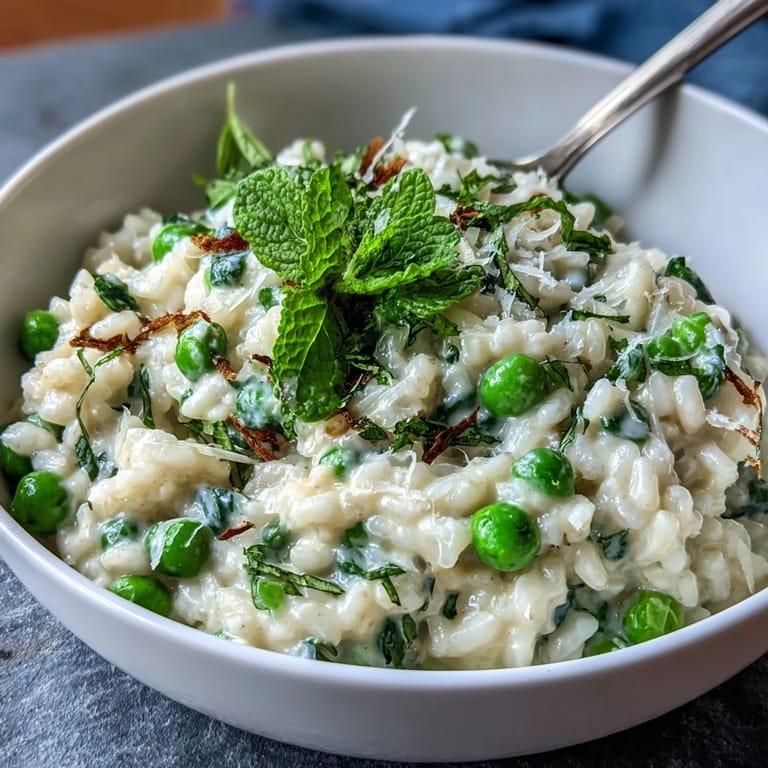 Save
Save This risotto tastes like spring tastes, if spring had a flavor, and that's worth the 30 minutes of gentle stirring. Make it for people you want to feed well.
Your Questions Answered
- → What type of rice is best for this dish?
Arborio rice is ideal as it absorbs liquid well and creates a creamy texture without becoming mushy.
- → Can frozen peas be used instead of fresh?
Yes, frozen peas are a convenient alternative and should be stirred in during the last 5 minutes of cooking to maintain their brightness.
- → How does white wine affect the flavor?
Dry white wine adds a subtle acidity and depth, balancing the richness of butter and Parmesan.
- → What is the best way to ensure creamy risotto?
Slowly add warm vegetable stock one ladleful at a time while stirring constantly, allowing rice to absorb liquid gradually.
- → Can this dish be made vegan?
Omitting butter and Parmesan and substituting with vegan alternatives can create a plant-based version.
- → When should the mint be added for best flavor?
Fresh mint is stirred in at the end to preserve its bright, fragrant qualities.