 Save
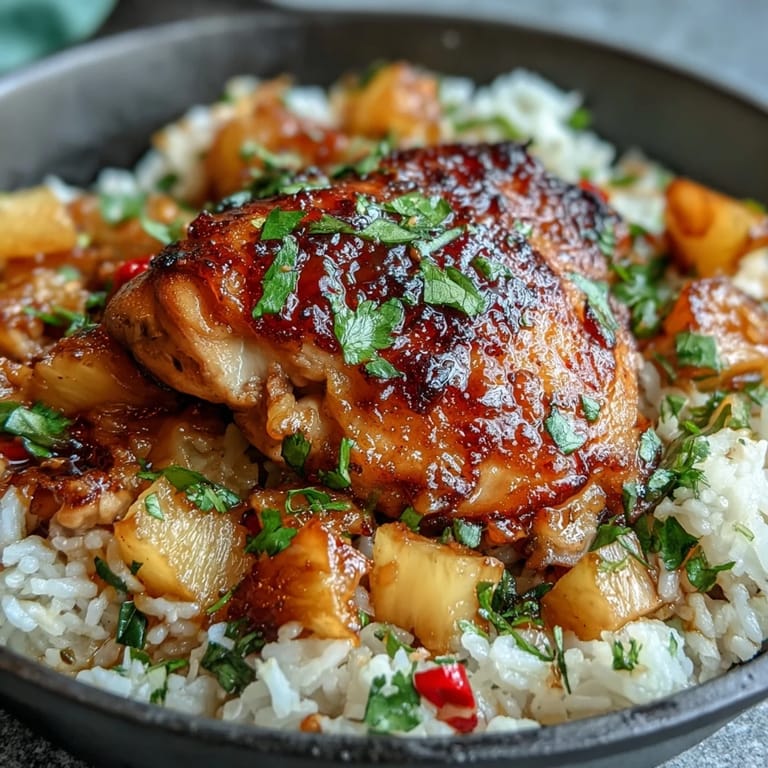
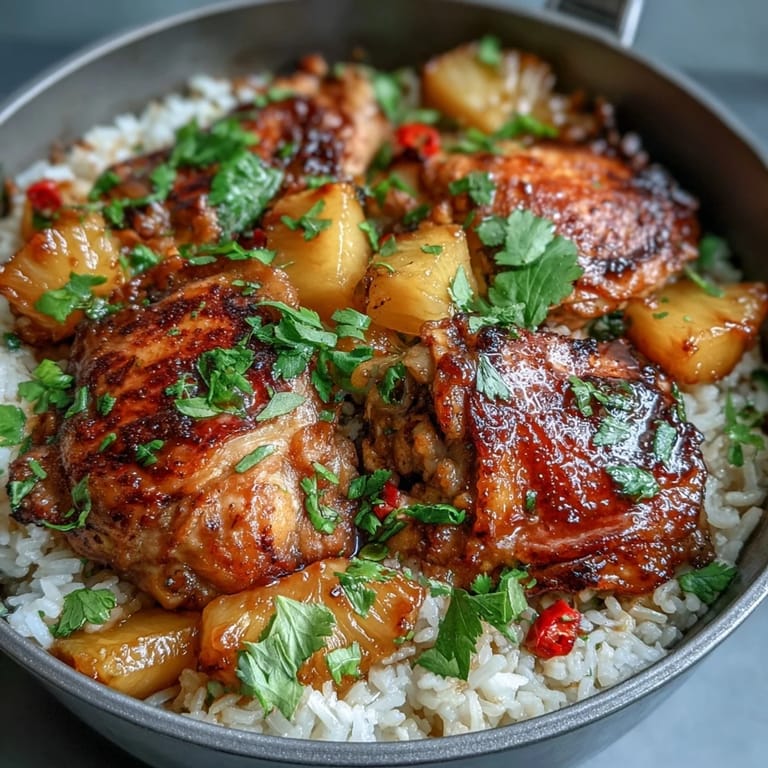
Save There's something about the smell of pineapple and chicken mingling in the oven that instantly transports you somewhere warm and unhurried. I discovered this dish on a Tuesday evening when my pantry was nearly bare, and I found myself staring at a can of pineapple and some chicken thighs, wondering if tropical and savory could actually work together in one pan. Spoiler: they absolutely do, and now it's become my go-to when I need something that feels special but doesn't demand hours in the kitchen. The rice soaks up all those golden, sweet-and-savory juices while the chicken nestles into the bed of grains, cooking gently and emerging impossibly tender.
I remember making this for a friend who'd just moved into her first apartment, and she stood in her tiny kitchen watching the oven with this amazed expression, like she couldn't believe something so fragrant and impressive could happen in her cramped space. When we opened that oven door, the steam rose up carrying this gorgeous tropical aroma, and she actually laughed—that kind of genuine laugh that happens when you realize cooking might actually be fun. That moment taught me that sometimes the simplest dishes carry the most weight, especially when they bring people together around a table.
Ingredients
- Boneless, skinless chicken thighs (4, about 600 g / 1.3 lbs): Thighs stay juicier than breasts during baking because they've got more fat; they'll emerge tender even if you accidentally overbake slightly.
- Long-grain white rice, rinsed (1 cup): Rinsing removes excess starch so the grains stay separate and fluffy rather than turning into porridge.
- Pineapple chunks, fresh or canned, drained (1 cup): Canned works beautifully here—just drain it well so you don't dilute the broth and make everything soggy.
- Red bell pepper, diced (1): The sweetness complements the pineapple, and it adds that pop of color that makes people actually want to eat what's on their plate.
- Small onion, finely chopped (1): It breaks down into the rice as everything cooks, adding depth without announcing itself.
- Garlic, minced (2 cloves): Toasting it in the pan first mellows it out and prevents that raw, harsh edge.
- Low-sodium chicken broth (2 cups): This becomes your cooking liquid and helps keep everything moist; use the low-sodium version so you control the salt level yourself.
- Soy sauce (2 tbsp): It adds umami and a subtle saltiness that ties the sweet and savory together—grab the gluten-free kind if that matters for your table.
- Olive oil (1 tbsp): Just enough to get things cooking and prevent sticking without making the dish feel heavy.
- Smoked paprika (1 tsp): This is the secret ingredient that nobody expects; it adds a whisper of smoke that makes people pause and ask what that flavor is.
- Ground black pepper (½ tsp): Fresh ground makes all the difference—pre-ground loses its bite quickly.
- Salt (½ tsp): Taste as you go since the soy sauce and broth already carry salt.
- Chili flakes, optional (¼ tsp): A tiny pinch adds complexity without heat if you don't want your dinner turning spicy.
- Fresh cilantro, chopped (2 tbsp): Sprinkled on top just before serving, it adds freshness and keeps the dish from feeling too heavy.
- Lime wedges: A squeeze of lime juice brightens everything at the last moment.
Tired of Takeout? 🥡
Get 10 meals you can make faster than delivery arrives. Seriously.
One email. No spam. Unsubscribe anytime.
Instructions
- Heat your oven and get your pan ready:
- Preheat to 375°F (190°C) so it's ready when you need it. Grab an oven-safe skillet or baking dish—this is where everything happens, so make sure it's big enough to hold chicken on top of rice without crowding.
- Build your flavor base:
- Heat olive oil over medium heat and sauté your onion and bell pepper for 3–4 minutes until they soften and start to smell sweet. Add your garlic and let it cook for just a minute more—you're looking for fragrant, not browned.
- Toast the rice and spices:
- Stir in your rinsed rice along with the smoked paprika, salt, pepper, and chili flakes if you're using them. Let it cook for about a minute, stirring occasionally—this toasts the grains slightly and wakes up the spices.
- Bring everything together:
- Scatter your pineapple chunks across the rice, then pour in the chicken broth and soy sauce. Give it a good stir so nothing's stuck to the bottom of the pan.
- Nestle in the chicken:
- Arrange your chicken thighs on top of the rice mixture, pressing them down slightly so they're partially submerged. Sprinkle with a tiny pinch more salt and pepper on the chicken itself.
- First bake, covered:
- Cover tightly with foil or an oven-safe lid and bake for 30 minutes. The steam does most of the work here, gently cooking everything through.
- Finish uncovered:
- Remove the cover and bake for another 15 minutes until the chicken reaches 165°F (74°C) internally and the rice is tender. You'll notice the top gets slightly golden as the cover comes off.
- Rest and finish:
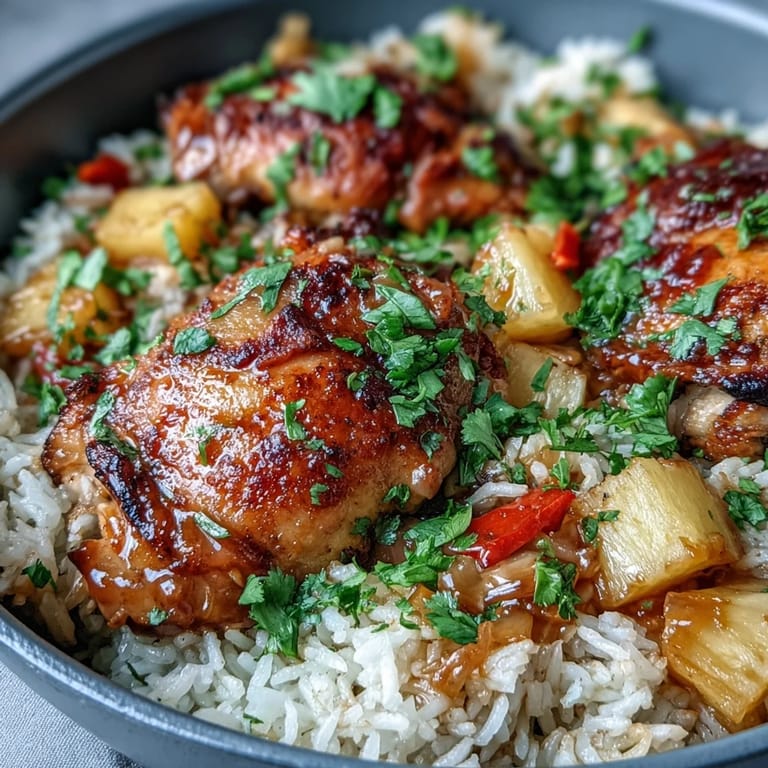
- Let it sit for 5 minutes—this lets the rice absorb any remaining liquid and makes everything come together. Scatter cilantro on top, add lime wedges alongside, and serve straight from the pan.
 Save
Save The first time someone asked me for this recipe, I realized it wasn't just about the food—it was about how it made their kitchen smell like a place where good things happen. There's magic in feeding people something warm and surprising, something that looks more complicated than it actually is but tastes like you spent hours planning it.
The Sweet and Savory Balance
Getting this balance right took a few attempts, honestly. I initially used too much pineapple and ended up with a dessert-y rice dish that confused everyone at the table. Now I understand that the pineapple is an accent, not the star—it adds brightness and a whisper of sweetness that plays against the umami from the soy sauce and the earthiness of the smoked paprika. The trick is letting each flavor do its job without overshadowing the others, which sounds poetic but really just means tasting as you build and not doubling ingredients on a whim.
Chicken Thighs vs. Breasts: Why It Matters
I've made this with both cuts, and while breasts work in a pinch, thighs are genuinely the better choice here. They're more forgiving—even if your oven runs hot or you lose track of time, thighs stay juicy and tender. Breasts can dry out quickly, especially when you're not actively watching them. If you do use breasts, reduce the baking time by about 10 minutes and start checking earlier with your thermometer to catch them at exactly 165°F.
Making It Your Own
The beautiful thing about this dish is how flexible it actually is once you understand the basic structure. I've swapped in mango for pineapple, added peas for extra color, even thrown in some cashews for crunch. You could marinade the chicken beforehand if you want deeper flavor, or add a splash of coconut milk to the broth for richness. The foundation stays solid while you play around, which is honestly what I love most about cooking—once you trust the structure, you can have real fun.
- Fresh ginger minced into the aromatic base adds warmth without overwhelming the tropical flavors.
- A drizzle of sesame oil just before serving brings a toasted richness that deepens everything.
- Keep lime wedges on the table so people can add brightness to taste rather than you deciding for them.
 Save
Save This one-pan dinner has become my secret weapon for nights when I want to feel like I've accomplished something in the kitchen without spending the whole evening there. It's the kind of dish that deserves to be made again and again, each time feeling a little bit like home.
Your Questions Answered
- → Can I substitute the chicken thighs with another cut?
Yes, boneless chicken breasts can be used. Adjust the baking time to ensure they remain juicy and fully cooked.
- → Is fresh pineapple necessary for this dish?
Fresh or well-drained canned pineapple chunks both work well, adding a sweet and tangy contrast to the savory components.
- → What type of rice works best here?
Long-grain white rice is ideal for maintaining a fluffy texture after baking with the other ingredients.
- → Can I make this dish gluten-free?
Yes, by using gluten-free soy sauce, this dish remains suitable for gluten-sensitive diets.
- → How can I add more vegetables to this bake?
Additions like peas or snap peas can enhance color and nutrition without altering the cooking process significantly.