 Save
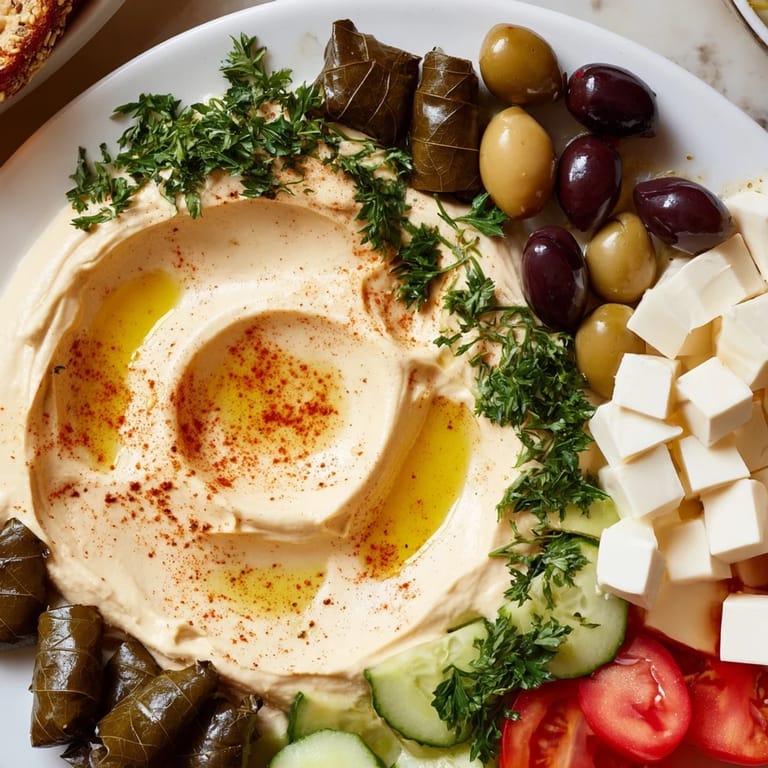
Save There's something about setting out a Turkish meze platter that instantly transforms a simple afternoon into something festive. The first time I assembled one properly, I was struck by how the colors alone—the deep greens of the dolmas, the white and golden cheeses, the jeweled olives—told a story of abundance. It wasn't about perfection or restaurant presentation; it was about creating a spread that invited people to linger, to reach, to discover flavors they hadn't expected. That's when I understood meze isn't just food—it's permission to slow down.
I remember making this for my roommate's birthday dinner, and halfway through arranging the platter, she wandered into the kitchen and just stood there, watching. No words—just this quiet satisfaction looking at all those bright, varied textures coming together. She grabbed a piece of feta and a green olive before I'd even finished, and suddenly everyone was gathered around, and the whole meal started right there, standing in the kitchen, without any of the formality I'd been planning. That's the magic of meze.
Ingredients
- Chickpeas: The foundation of silky hummus—draining them well prevents gritty texture, and rinsing removes the starchy coating that clouds the final result.
- Tahini: This sesame paste is pure richness; stir the jar before measuring because the oil separates, and a well-mixed batch makes all the difference in creaminess.
- Extra-virgin olive oil: Worth the splurge here since you taste it directly—cheap oil tastes thin and bitter by comparison.
- Feta cheese: The tanginess cuts through rich olive oil and fatty meats, and crumbling it by hand gives you control over the bite size.
- Turkish olives: If you can find them, they have a complexity that supermarket varieties miss—greener ones are peppery, darker ones are buttery.
- Grape leaves: Store-bought saves hours, and honestly, they're perfectly good; homemade feels special but not necessary for this platter.
- Lemon: Fresh juice only—bottled tastes flabby and can't brighten the hummus the way real juice does.
Tired of Takeout? 🥡
Get 10 meals you can make faster than delivery arrives. Seriously.
One email. No spam. Unsubscribe anytime.
Instructions
- Blend the hummus until cloud-soft:
- Toss your chickpeas, tahini, olive oil, minced garlic, lemon juice, and cumin into the food processor and let it run until the mixture shifts from grainy to silky, scraping down the sides once. Taste it—you're looking for that moment when lemon brightness and cumin warmth balance each other.
- Season generously:
- Add salt and pepper, pulse once more, then transfer to your serving bowl. The final drizzle of olive oil and a whisper of paprika or sumac isn't decoration—it catches the light and invites people to dig in.
- Arrange grape leaves with intention:
- Roll them neatly or fold them into thirds, placing them where they won't get buried—they deserve to be noticed.
- Build your cheese landscape:
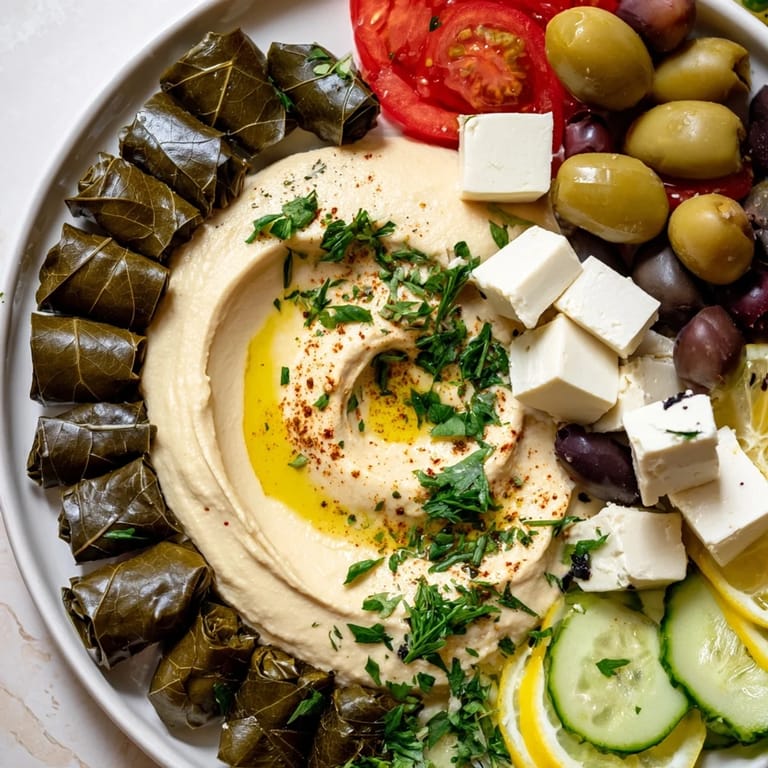
- Cut each type into distinct pieces and group them together so the contrast in color, texture, and flavor is obvious. This isn't random scattering; it's an invitation to taste the difference between varieties.
- Dress the olives:
- A coat of good olive oil and dried oregano transforms them from pantry staple to something special. Let them sit for a few minutes so the oil and herb flavors meld.
- Finish with freshness:
- Scatter parsley, arrange tomato and cucumber slices in visible gaps, tuck lemon wedges around the edges. These bright elements aren't filler—they balance the heavier, salty components and catch your eye first.
 Save
Save The moment that made this platter real for me was watching someone's face light up as they discovered how the different flavors worked together—the cool creaminess of feta against the salty brine of an olive, both wrapped in warm pita. That's when meze stopped feeling like a recipe and started feeling like a language. It's about conversation, community, and the kind of eating where there's no main event, just an endless series of small, perfect moments.
Building Flavor Layers
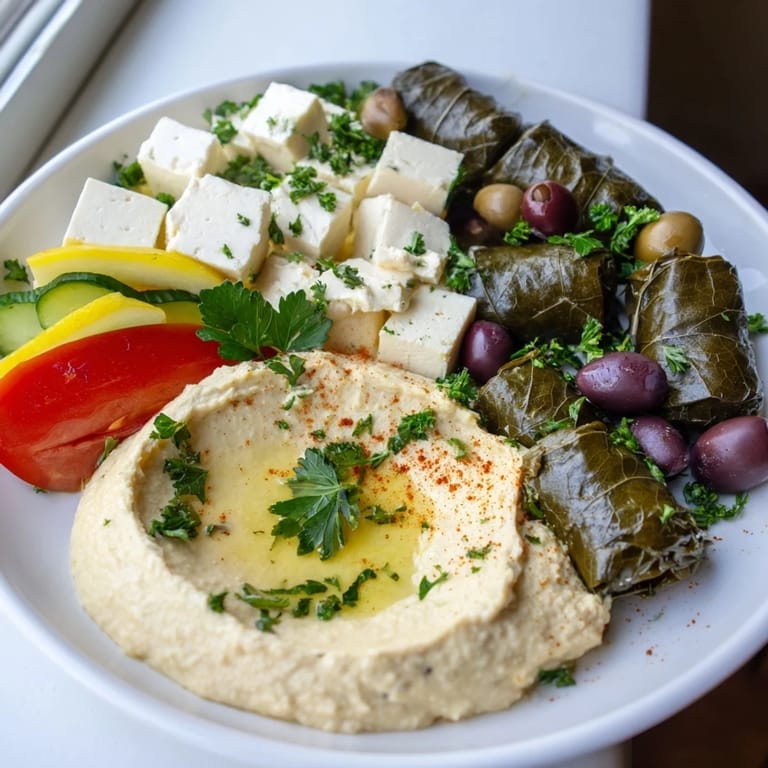
Meze works because every element has its own reason for being there—none of it feels filler or obligatory. The hummus is the quiet anchor, rich and earthy, while the olives ping with salt and sharpness. The cheeses add texture and tang, the vegetables bring freshness, and the grape leaves add an herbal, slightly tannic note that rounds everything out. Think of it like creating a conversation where every voice matters and nobody dominates the space.
Timing and Flexibility
This is one of those rare recipes where doing things ahead actually improves the results. Make the hummus a day early—the flavors meld overnight and taste more rounded. Chop your vegetables and arrange them on the platter a few hours before serving, then cover loosely with plastic wrap. The only thing that needs last-minute attention is the parsley garnish and warming the pita, both of which take seconds. This flexibility is exactly why meze shows up at every gathering from casual hangouts to holiday celebrations.
Making It Your Own
Turkish meze tradition leaves room for personality and what's in your kitchen. Roasted red peppers, grilled eggplant, spiced walnuts, or labneh all fit naturally into the spread. The point isn't following rules rigidly but understanding the balance—rich and salty elements, fresh and bright elements, something creamy, something brined, something soft, something with texture. Once you feel that balance, you can swap and adjust without thinking.
- Try pairing this platter with a crisp Turkish white wine like Narince or raki diluted with water for that authentic accompaniment.
- If you're making dolmas from scratch, cook rice with herbs, currants, and pine nuts, then wrap in fresh grape leaves—it's meditative work and tastes noticeably better than store-bought.
- Keep everything except the pita chilled until the last moment, then warm the bread just before serving so it's pliable and fragrant.
 Save
Save What I love most about meze is that it doesn't demand anything from you except generosity—setting out beautiful things and letting people find their own rhythm with them. It's honest food, the kind that brings people closer without trying.
Your Questions Answered
- → What are dolmas and how are they prepared?
Dolmas are grape leaves stuffed with a savory rice mixture often seasoned with herbs. They can be purchased ready-made or made from scratch by cooking rice with herbs and rolling it in grape leaves.
- → How can I make the hummus smoother?
Blending chickpeas with tahini, olive oil, and lemon juice until silky smooth helps achieve a creamy texture. Adding a bit of warm water during blending can also soften the hummus.
- → What cheeses are typically included in this platter?
The platter features a mix of Turkish cheeses such as feta, beyaz peynir, and kasseri or halloumi, adding mild to slightly tangy flavors and firm textures.
- → How should olives be prepared for this spread?
Marinate mixed Turkish olives in extra-virgin olive oil with dried oregano to enhance their flavor before serving on the platter.
- → What are good accompaniments for the meze platter?
Sliced cucumber, tomato wedges, fresh parsley, lemon, and warm pita or flatbread complement the flavors and provide refreshing balance.