 Save
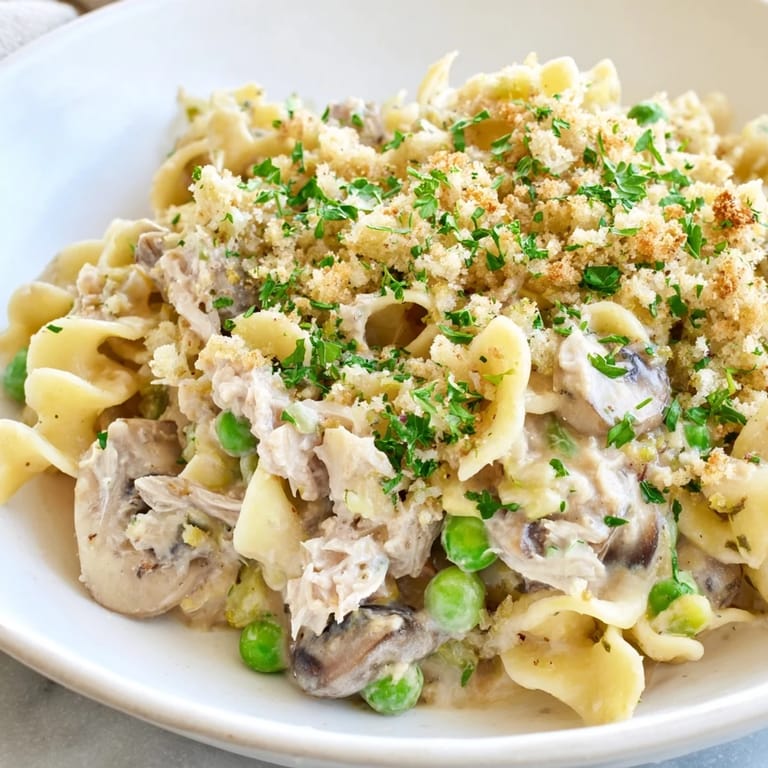
Save My roommate called it the comfort food equivalent of a hug, and honestly, I couldn't argue. I'd been craving something warm and filling on a Wednesday night when the fridge was mostly empty, and somehow tuna noodle casserole felt like the answer—not because it was trendy, but because it promised actual satisfaction without fussing around for hours. The first time I made this version with fresh mushrooms and that crispy panko top, something clicked; it was familiar enough to feel like home, but better than the canned soup version I remembered from childhood.
I made this for a group of friends the weekend after moving into a new place, and watching people relax around the table with full plates felt like I'd actually created something that mattered. There was something about serving a casserole straight from the oven, steam rising off it, that made the whole gathering feel intentional and warm.
Ingredients
- Egg noodles (12 oz): Egg noodles absorb the sauce beautifully and add richness; cook them just shy of al dente since they'll soften more in the oven.
- Solid white tuna (2 cans, drained): Solid white stays in flakes rather than breaking down, which keeps the casserole textured and substantial.
- Cremini mushrooms (1 cup sliced): These add earthy depth that elevates the whole dish beyond ordinary; slice them thin so they cook quickly and distribute evenly.
- Frozen peas (1 cup): Thaw them first so they don't dump cold spots into the casserole; they'll brighten the whole thing.
- Yellow onion and celery (1 small onion, 1 cup diced): These build the flavor foundation; don't skip the sauté step, which develops their sweetness.
- Garlic (2 cloves minced): A minute in the pan is enough to wake up the whole sauce.
- Butter and flour (3 tbsp each): This roux is your sauce structure; whisk it smooth before adding liquid to avoid lumps.
- Broth and milk (2 cups broth, 1 cup milk): The combination gives you savory depth plus creaminess without being one-note.
- Sour cream (1/2 cup): Add this off the heat so it doesn't break; it's what makes the sauce taste homemade.
- Dijon mustard (1/2 tsp): A small amount adds complexity that people won't identify but will definitely taste.
- Panko and parmesan (3/4 cup panko, 1/2 cup parmesan): The panko crisps up beautifully when tossed with melted butter, and the parmesan adds salty punch.
Tired of Takeout? 🥡
Get 10 meals you can make faster than delivery arrives. Seriously.
One email. No spam. Unsubscribe anytime.
Instructions
- Preheat and prep:
- Set your oven to 400°F and give your baking dish a light butter or oil coating. This takes one minute and saves frustration later.
- Cook the noodles:
- Boil them in salted water until they're just barely al dente—they should have a slight firmness in the center. Remember they'll continue cooking in the oven, so slightly underdone is your target.
- Sauté the vegetables:
- Melt your butter and add the onion and celery first, letting them soften for a few minutes. You'll notice the onion turning translucent and the kitchen starting to smell like dinner; that's when you add the mushrooms and let them release their moisture.
- Build the sauce base:
- Once the mushrooms are soft, add your minced garlic for just a minute—you want it fragrant, not burned. Then sprinkle the flour over everything and stir constantly for about a minute to cook out the raw flour taste.
- Add the liquids:
- Pour in your broth slowly while stirring, then add the milk, watching as the sauce comes together and thickens. This should take 3-4 minutes and will smell incredible.
- Finish the sauce:
- Pull the skillet off heat and fold in the sour cream, mustard, salt, and pepper. Taste it here—this is your moment to adjust seasoning before everything else goes in.
- Combine everything:
- Gently fold in the drained tuna, peas, and cooked noodles until everything is evenly coated. You're being gentle because you want to keep the tuna in chunks.
- Build the topping:
- In a small bowl, toss together panko, parmesan, and melted butter until it's even and clumpy. Sprinkle it evenly over the casserole—don't leave bare spots.
- Bake to golden:
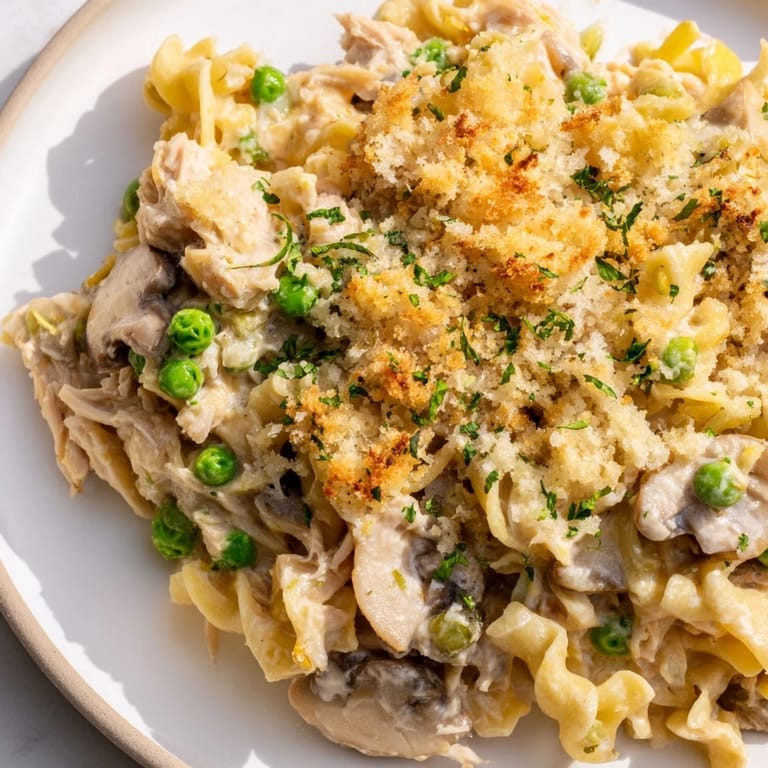
- Into the oven for 20-25 minutes; you're looking for the topping to turn golden brown and the edges to start bubbling. The kitchen will smell like toasted cheese and butter.
- Rest before serving:
- Let it sit for 5 minutes—this lets everything set so you get clean spoonfuls instead of a slidey mess. Scatter fresh parsley on top if you have it.
 Save
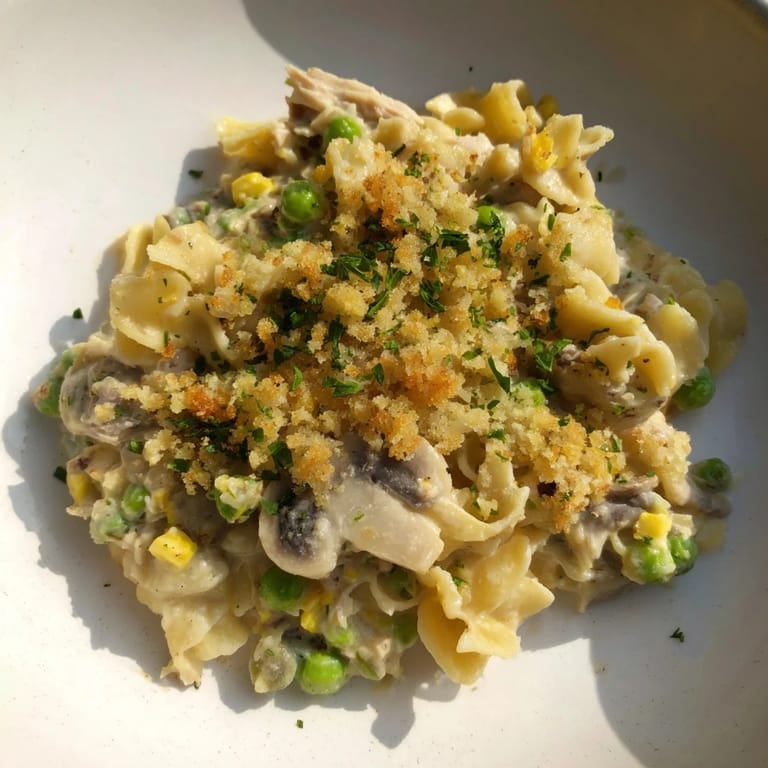
Save There's a moment right when you pull this from the oven, before anyone's even sat down, where the casserole is still actively bubbling at the edges and the top is bronzed and crispy—that's when you know you've done it right. It's not fancy, but it's honest food that fills both the bowl and whatever's empty in the moment.
Why This Casserole Works
The magic isn't in complexity; it's in respecting each component and letting them work together. Fresh vegetables cooked until soft give you flavor layers that canned cream soup never delivers. The sour cream added off heat keeps that sauce silky instead of curdled. The panko-parmesan topping isn't just for show—it's textural contrast that makes the creamy interior actually exciting to eat.
Making It Your Own
This recipe is genuinely flexible without becoming unrecognizable. Swap the tuna for shredded chicken if you prefer, or add a handful of gruyère or sharp cheddar to the sauce for more depth. Some nights I use all vegetable broth instead of chicken and load in extra mushrooms and celery, and it's just as warming.
Sides and Serving
This is complete on its own, but it's nice with something crisp on the side—a simple green salad with vinaigrette cuts through the richness, or some crusty bread to soak up the creamy corners. A cold Sauvignon Blanc alongside feels like you've elevated the whole thing without actually trying harder.
- Make the topping while the casserole bakes to save yourself a bowl and a step.
- Leftovers reheat beautifully in a 325°F oven covered with foil so the top doesn't dry out.
- This freezes well before baking; just add 10-15 minutes to the bake time if going straight from freezer to oven.
 Save
Save This is the kind of dish that gets better the more you make it, because you'll start noticing your own preferences and adjustments. It's food meant to nourish and comfort, and there's no version of that that isn't valuable.
Your Questions Answered
- → What type of noodles work best?
Egg noodles are ideal for their tender texture and ability to absorb the creamy sauce evenly.
- → How can I make the topping extra crispy?
Mix panko breadcrumbs with melted butter and parmesan cheese before sprinkling evenly on top, then bake until golden brown.
- → Can I substitute sour cream in the sauce?
Yes, Greek yogurt can be used for a lighter, tangy alternative that still adds creaminess.
- → Is it necessary to drain the tuna before mixing?
Draining the tuna removes excess liquid, ensuring the sauce remains creamy without becoming watery.
- → What is the best way to prepare the vegetables?
Sauté onions, celery, and mushrooms until soft to enhance their flavors before adding garlic and thickening with flour and broth.