 Save
Save The crunch echoed across the kitchen before I even bit down. My youngest grabbed the sandwich right off the cooling rack, eyes wide, and declared it better than any drive-through we'd ever visited. I'd spent weeks tweaking the spice blend and testing different oils, but that spontaneous taste-test moment told me everything I needed to know. Now it's the meal they request for birthdays, study nights, and any excuse in between.
I first made these for a backyard gathering where half the guests were skeptical about homemade fried chicken. By the end of the night, three people had taken photos of the recipe card I'd scribbled on. One friend admitted she'd never believed buttermilk made a difference until she tasted the tender, well-seasoned meat. The sauce disappeared so fast I had to whip up a second batch while people were still eating.
Ingredients
- Boneless, skinless chicken breasts: Pounding them to half-inch thickness ensures even cooking and prevents dry edges while the center finishes.
- Buttermilk: The acidity tenderizes the meat and helps the spice blend penetrate deeply during marinating.
- Hot sauce: Adds a vinegary kick to both the marinade and the sauce, balancing richness with brightness.
- Kosher salt: Seasons from the inside out and draws moisture to the surface for better crust adhesion.
- Paprika: Brings color and a subtle smokiness without overwhelming the other spices.
- Cayenne pepper: Controls the heat level, so adjust based on your tolerance and audience.
- Garlic powder and onion powder: These create a savory base that blooms beautifully when fried.
- All-purpose flour: Forms the structure of the coating, crisping up when it hits hot oil.
- Cornstarch: The secret to extra crunch, it creates a lighter, crispier texture than flour alone.
- Black pepper: Adds a gentle bite that complements the cayenne without competing.
- Vegetable oil: Neutral flavor and high smoke point make it ideal for frying at consistent heat.
- Mayonnaise: The creamy base of the sauce, rich and smooth enough to cling to every bite.
- Sour cream: Adds tang and lightens the sauce just enough to keep it from feeling heavy.
- Lemon juice: Brightens the whole sauce and cuts through the fried richness perfectly.
- Smoked paprika: Gives the sauce a deeper, almost grilled flavor that ties everything together.
- Honey: A touch of sweetness rounds out the heat and acidity, though it's optional if you prefer pure spice.
- Brioche burger buns: Buttery and slightly sweet, they toast beautifully and hold up to the sauce without getting soggy.
- Dill pickle slices: The briny crunch provides contrast and cuts through the richness in every bite.
- Lettuce leaves: Adds freshness and a crisp texture that balances the fried chicken.
- Tomato: Optional, but a juicy slice brings acidity and color to the finished sandwich.
Tired of Takeout? 🥡
Get 10 meals you can make faster than delivery arrives. Seriously.
One email. No spam. Unsubscribe anytime.
Instructions
- Marinate the chicken:
- Whisk buttermilk with hot sauce, salt, paprika, cayenne, garlic powder, and onion powder until the spices dissolve into a smooth, fragrant blend. Submerge the chicken breasts completely, cover the bowl, and let them soak for at least an hour or up to overnight so the flavors penetrate deep into the meat.
- Prepare the dredge:
- In a shallow dish, combine flour, cornstarch, paprika, garlic powder, onion powder, salt, cayenne, and black pepper, whisking until evenly mixed. The cornstarch is what gives you that signature crackly crust, so don't skip it.
- Heat the oil:
- Pour vegetable oil into a heavy skillet or Dutch oven and heat to 350°F, checking with a thermometer to avoid under or overcooking. Set a wire rack over a sheet pan nearby for draining the finished chicken.
- Coat the chicken:
- Lift each breast from the marinade, letting excess drip back into the bowl, then press it firmly into the dredge on both sides. For extra crunch, dip it back into the marinade briefly and dredge a second time.
- Fry until golden:
- Carefully lower the coated chicken into the hot oil and fry for 4 to 6 minutes per side, watching for a deep golden color and an internal temperature of 165°F. Transfer each piece to the wire rack to drain, keeping them crispy instead of soggy.
- Make the sauce:
- Whisk together mayonnaise, sour cream, hot sauce, lemon juice, smoked paprika, garlic powder, and honey if you like a hint of sweetness. Taste and adjust salt, pepper, or heat to your preference.
- Toast the buns:
- Lightly toast the brioche buns in a dry skillet or under the broiler until the cut sides are golden and fragrant. This step prevents them from absorbing too much sauce and falling apart.
- Assemble the sandwiches:
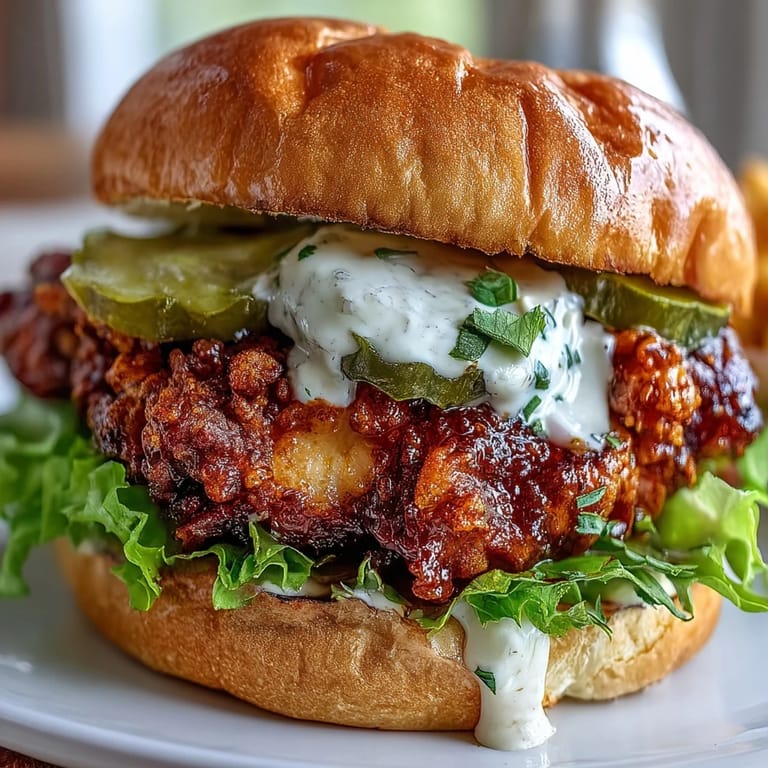
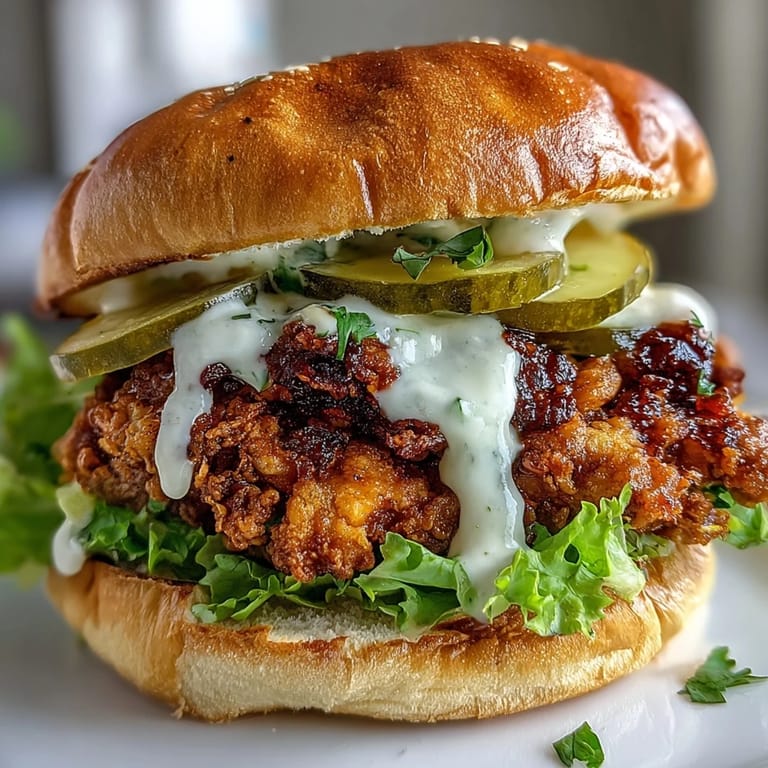
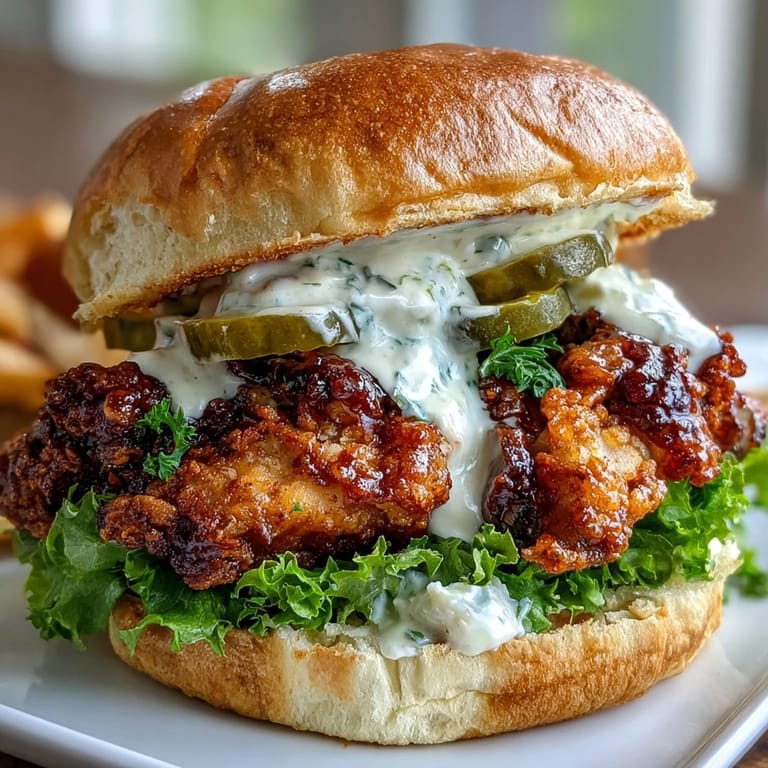
- Spread sauce generously on both halves of each bun, then layer with fried chicken, pickle slices, lettuce, and tomato if using. Press gently so everything holds together without squishing the chicken.
- Serve immediately:
- Plate the sandwiches with extra sauce on the side for dipping. They're best enjoyed right away while the coating is still crackling.
 Save
Save One rainy Saturday, I made a triple batch and froze the fried chicken on sheet pans before bagging it up. Weeks later, I reheated a few pieces in a hot oven, and they came out nearly as crispy as the day I'd fried them. My partner looked up from his plate, surprised, and said it tasted like I'd been cooking all afternoon. That's when this recipe became our secret weapon for busy nights that still deserve something special.
Storing and Reheating
Let the fried chicken cool completely before storing it in an airtight container in the fridge for up to three days. To reheat, place the pieces on a wire rack set over a baking sheet and warm them in a 375°F oven for about 10 minutes, flipping halfway through. The rack allows air to circulate and keeps the bottom from steaming, so you get that crispy coating back. Microwaving works in a pinch, but the texture won't be nearly as satisfying.
Customizing the Heat
The cayenne in both the marinade and dredge is your control dial for spice. If you're cooking for kids or anyone heat-sensitive, cut it in half or leave it out entirely and let people add hot sauce at the table. For true spice lovers, double the cayenne or stir a teaspoon of your favorite chili powder into the dredge. I've even added a pinch of ghost pepper flakes when I wanted to show off, and it earned both applause and nervous laughter.
Pairing Suggestions
These sandwiches shine alongside crispy French fries, tangy coleslaw, or thick-cut potato wedges seasoned with smoked paprika. A cold, hoppy IPA cuts through the richness beautifully, though lemonade or iced tea works just as well for a non-alcoholic option. One time I served them with pickled vegetables and cornbread, and the combination felt like a full Southern feast without the fuss.
- Add sliced jalapeños or banana peppers for extra crunch and heat.
- Try a drizzle of honey over the assembled sandwich for a sweet and spicy contrast.
- Swap the lettuce for shredded cabbage or arugula for a peppery twist.
 Save
Save There's something about biting into a sandwich you built from scratch, tasting every layer of work and care, that makes even a regular Tuesday feel like a celebration. I hope this one becomes your go-to, too.
Your Questions Answered
- → How long should I marinate the chicken?
Marinate the chicken for at least 60 minutes in the refrigerator, though overnight marinating yields the most flavorful and tender results. The buttermilk and hot sauce work together to break down proteins and infuse spice throughout the meat.
- → Can I make the spicy chicken sandwich ahead of time?
You can marinate the chicken up to 24 hours in advance and prepare the creamy sauce up to 3 days ahead. For best results, fry the chicken fresh and assemble sandwiches just before serving, though leftover fried chicken reheats beautifully in a 375°F oven for 10 minutes.
- → What makes the chicken extra crispy?
The combination of cornstarch blended with flour creates an exceptionally crunchy coating. Double-dredging the chicken—pressing the flour mixture firmly into the meat, dipping again in marinade, then coating a second time—adds even more texture and ensures the crust stays perfectly crisp.
- → Can I adjust the spice level?
Absolutely. Control the heat by adjusting the cayenne pepper in both the marinade and dredge—reduce for mild flavor or increase for intense spice. Adding extra hot sauce to the creamy sauce provides another layer of customizable heat that balances beautifully with the cool, tangy flavors.
- → What's the best oil temperature for frying?
Maintain your oil at 350°F (175°C) throughout frying. Too cool and the chicken becomes greasy with soggy coating; too hot and the outside burns before the inside reaches the safe internal temperature of 165°F. Use a kitchen thermometer for consistent results and golden, crunchy perfection every time.
- → Can I use chicken thighs instead of breasts?
Chicken thighs work wonderfully and add even more juiciness due to their higher fat content. Pound thighs to even thickness, follow the same marinating and dredging process, and adjust cooking time as needed until the internal temperature reaches 165°F.