 Save
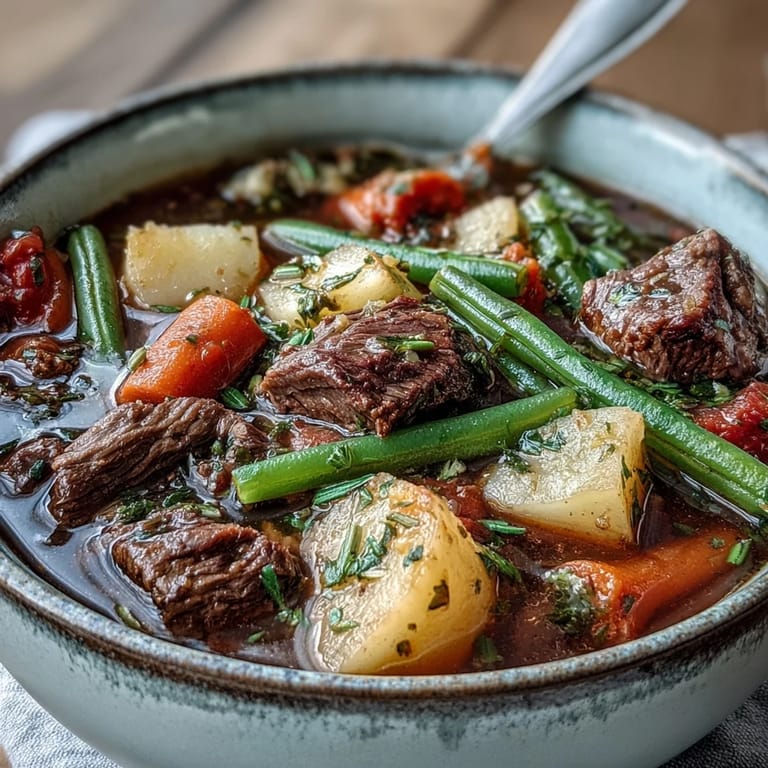
Save My neighbor showed up at my door one January evening with a pot of beef and vegetable soup, steam rising from under the lid, and I realized right then that this wasn't just a recipe—it was the kind of dish that gets passed around when someone needs comfort. After that night, I started making my own version, tweaking it slightly each time until it became the soup I reach for whenever the kitchen feels too quiet or the weather turns bitter cold.
I made this soup for my dad while he was recovering from surgery, and I watched him have three bowls in one sitting—something I'd never seen him do with any meal I'd cooked before. He told me it tasted like something his mother used to make, though I'd never met her, and that small moment taught me that food carries memory in ways we don't always understand until someone tells us.
Ingredients
- Beef chuck, cut into 1-inch cubes (1.5 lbs): Chuck is the hero here because it has just enough marbling to stay juicy while braising for hours; don't skimp on the size of your cubes or they'll disappear into the broth.
- Olive oil (2 tbsp): A touch of good oil helps brown the beef properly and builds the flavor foundation everything else sits on.
- Onion, diced (1 large): The aromatics are your secret weapon—use a large onion and let it soften completely before moving forward.
- Garlic, minced (3 cloves): Fresh garlic makes all the difference; jarred just won't give you that bright, living quality.
- Carrots, sliced (3 medium): They add natural sweetness and body to the broth without any added sugar.
- Celery stalks, sliced (2): Celery is the quiet backbone of any good soup—it deepens flavors you can't quite name.
- Potatoes, peeled and diced (2 medium): Waxy potatoes hold their shape better than russets, and your soup stays textured rather than turning starchy.
- Parsnip, peeled and diced (1, optional): I add this when I want the soup to taste slightly sweeter and more complex without anyone being able to pinpoint why.
- Green beans, trimmed and cut into 1-inch pieces (1 cup): Fresh green beans stay tender-crisp rather than turning mushy if you time it right.
- Frozen peas (1 cup): Frozen peas are actually fresher than fresh ones from the supermarket and add bright color at the very end.
- Diced tomatoes, undrained (14.5 oz can): The acidity cuts through the richness and prevents the soup from feeling one-note heavy.
- Beef broth (8 cups): Use good quality broth—it's one of only a few ingredients, so it matters; low-sodium gives you control over seasoning.
- Bay leaves (2): They flavor the whole pot but come out before serving, so don't forget to fish them out.
- Dried thyme (1 tsp) and oregano (1 tsp): These herbs are forgiving and taste better dried in a long-cooked soup than fresh.
- Black pepper and salt (½ tsp and 1 tsp): Start here, but taste as you go—broth varies in saltiness, and you'll likely add more.
- Fresh parsley, chopped (2 tbsp for garnish): A bright finish that makes everyone think you worked harder than you actually did.
Tired of Takeout? 🥡
Get 10 meals you can make faster than delivery arrives. Seriously.
One email. No spam. Unsubscribe anytime.
Instructions
- Brown your beef properly:
- Heat the olive oil over medium-high heat until it shimmers slightly, then add the beef cubes in a single layer and let them sit for a minute or two—don't stir constantly. They'll develop a golden crust that holds the flavor; this takes about 5 to 7 minutes total, and your patience here matters more than you'd think.
- Build your flavor base:
- Once the beef is out of the pot, add the onion, carrots, and celery right into those browned bits stuck to the bottom. You'll hear them sizzle, and the smell changes completely within a minute—add your garlic and let it bloom for just 60 seconds before moving on.
- Combine everything:
- Return the beef to the pot, then add the potatoes, parsnip if you're using it, green beans, tomatoes with their juice, broth, and all your herbs and seasonings at once. It looks like a lot, but trust the process.
- Let it simmer low and slow:
- Bring everything to a boil first so you see it actually boiling, then lower the heat and cover it. The longer, gentler simmer—about 1 hour 15 minutes—is what turns tough beef into something tender, and you'll know it's ready when a fork slides through without resistance.
- Finish with the peas:
- Add the frozen peas in the last 10 to 15 minutes so they stay bright green and don't get gray and mushy from overcooking. This is the time to taste for salt and pepper too, since the broth concentrates as it simmers.
- Garnish and serve:
- Fish out the bay leaves, ladle into bowls, and top with fresh parsley and a crack of black pepper. The heat of the soup will release the parsley's aroma, and that's your signal that everything is ready.
 Save
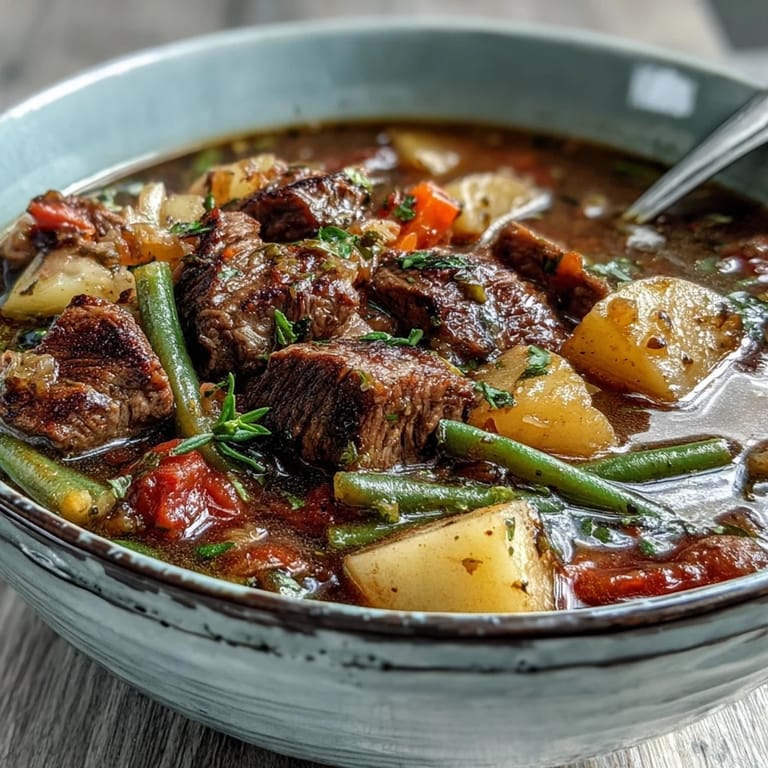
Save There's a quiet magic in making soup for someone you care about, the way it says I thought about you without needing to say much at all. This soup has become my go-to for that exact reason—it fills a bowl and fills a moment at the same time.
Why This Soup Works Through the Seasons
In winter, it's exactly what your body craves—warm, substantial, slow. But I've made this in spring with lighter vegetables, in summer with more green beans, and even in fall with roasted root vegetables added at the end, and it adapts beautifully. The beef and broth are the constants, and everything else is flexible enough to follow what's in your garden or what looks good at the market.
The Leftover Effect
Honestly, leftovers are where this soup truly shines—the flavors meld overnight and taste deeper somehow, less like individual ingredients and more like one cohesive thing. I store it in a glass container in the back of the fridge, and it keeps for four days, maybe five if you're careful. Reheat it gently on the stove (the microwave works, but the stove is kinder), and add a splash of broth if it's thickened too much.
Variations That Keep It Interesting
Once you've made this soup a few times and know how it works, the door opens for small changes that feel like new meals. I've added Worcestershire sauce when I wanted it deeper and smokier, swapped in sweet potatoes for regular ones and loved the subtle sweetness, and even thrown in a parsnip when I found one lingering in the crisper drawer. The structure stays the same, but these little tweaks keep you excited to cook it again.
- A dash of smoked paprika adds complexity without anyone being able to name the source.
- A splash of red wine at the beginning creates richness that makes people ask what's in this.
- Serve with crusty bread for soaking up every last drop, because leaving broth in a bowl feels like a waste.
 Save
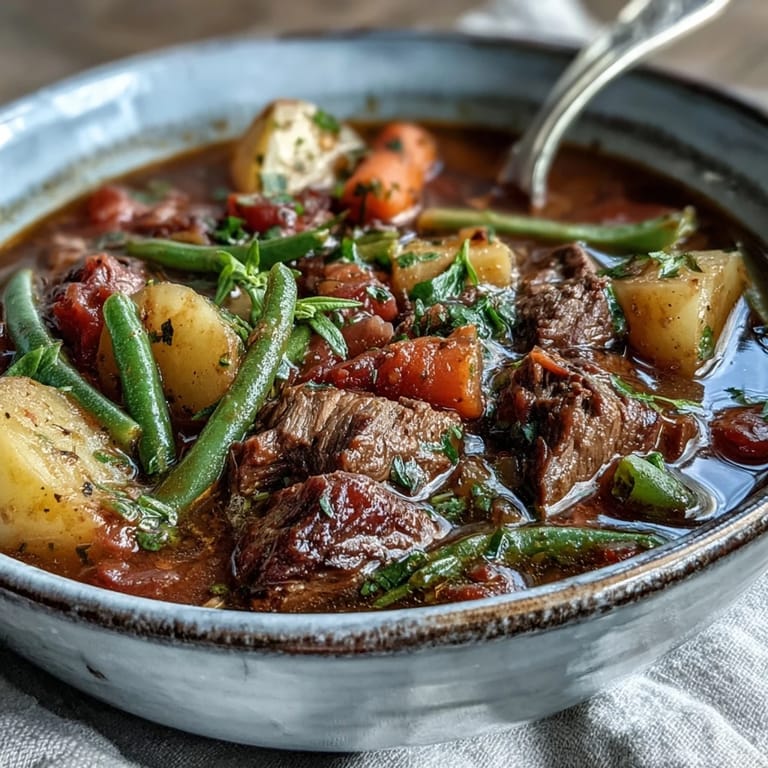
Save This soup is the kind of recipe that grows on you, becoming more valuable each time you make it rather than less. It's honest food that tastes like someone cares, which is really all any of us want from a bowl of soup.
Your Questions Answered
- → What cut of beef works best?
Beef chuck is ideal because it becomes tender during long simmering while maintaining its structure. Chuck roast or stew meat also work well.
- → Can I make this in a slow cooker?
Yes. Brown the beef first, then add all ingredients to your slow cooker. Cook on low for 7-8 hours or high for 4-5 hours until beef is tender.
- → How long do leftovers last?
Properly stored in the refrigerator, leftovers keep for up to 4 days. The flavors actually improve overnight as the broth continues to develop.
- → Can I freeze this soup?
Absolutely. Cool completely, then freeze in airtight containers for up to 3 months. Thaw overnight in the refrigerator before reheating.
- → What can I serve with it?
Crusty bread makes an excellent accompaniment for dipping. A simple green salad or roasted vegetables also complement this hearty bowl nicely.
- → Is this gluten-free?
The ingredients are naturally gluten-free, but always check your beef broth label to ensure no gluten-containing additives were used during processing.