 Save
Save This carrot salad appeared on my table during a particularly hot July when turning on the oven felt like a personal offense. A friend had just returned from Thailand and kept talking about these bright, spicy salads they ate at street markets, and I wanted something that felt alive and electric. The first batch I made was so aggressively tangy I couldnt stop eating it straight from the bowl with a fork, standing over the counter while my rice cooked untouched on the stove.
I brought this to a potluck last summer and watched it disappear in under seven minutes. Three separate people asked for the recipe while still chewing, and someone actually used their finger to scoop up the last bits of dressing from the serving bowl. My roommate now requests it whenever we have people over, and shes not someone who normally gets excited about vegetables.
Ingredients
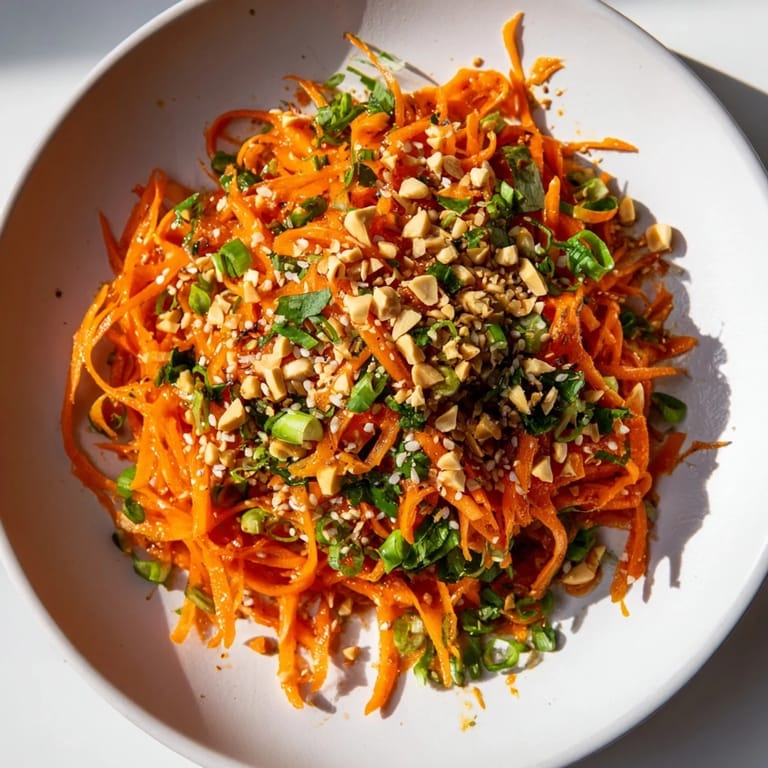
- 4 large carrots, peeled and shredded (about 3 cups): The texture matters here. Use the wide holes on your box grater or the shredding disc on your food processor. Those thin, uneven ribbons catch the dressing in ways that neat juliennes never will.
- 2 spring onions, thinly sliced: Include some of the green tops. They add a mild onion bite and these beautiful green flecks that make the whole dish look fresher.
- 2 tablespoons fresh cilantro, chopped: If you hate cilantro, skip it. Basil works surprisingly well here too, or just leave the herbs out entirely.
- 2 tablespoons soy sauce: This is your salt source. Use tamari if you need it gluten free. Regular soy sauce gives you that deep, fermented umami that makes the carrots taste substantial.
- 1 tablespoon toasted sesame oil: Do not use the untoasted stuff. You want that dark, aromatic oil that smells like restaurants. Two drops goes a long way.
- 2 teaspoons rice vinegar: White vinegar works but rice vinegar has this gentler acidity that lets the other flavors breathe. Apple cider vinegar would be my second choice.
- 1 teaspoon honey or maple syrup: Just enough to take the edge off the vinegar and heat. The first time I forgot this, it was still good but noticeably sharper.
- 1 to 2 teaspoons chili garlic sauce or sriracha: Start with one. You can always add more, but you cannot take it back. I use two teaspoons and it creates this pleasant hum behind your jawbone.
- 1 teaspoon fresh ginger, grated: Fresh. Not ground. Not the paste in a jar. Peel a knob and grate it directly into the bowl. That little bit of spicy sweetness makes the whole dressing feel brighter.
- 1 small garlic clove, minced: One clove is plenty. Raw garlic gets intense as it sits. If you know you hate raw garlic, try pressing it instead of mincing.
- 1 teaspoon sesame seeds: These go into the dressing, not just on top. They soften slightly and release this subtle nuttiness that ties everything together.
- 2 tablespoons roasted peanuts or cashews, chopped: Totally optional but I never skip them now. That crunch against the soft carrots is what makes this feel like a real dish instead of just dressed vegetables.
- Extra sesame seeds, for sprinkling: For looks, mostly. But also for that last little pop of texture on top.
Tired of Takeout? 🥡
Get 10 meals you can make faster than delivery arrives. Seriously.
One email. No spam. Unsubscribe anytime.
Instructions
- Prep your vegetables:
- Shred the carrots on the wide holes of your box grater. Slice the spring onions thin, including some of the green tops. Throw everything into a large mixing bowl.
- Whisk the dressing:
- In a small bowl, combine the soy sauce, sesame oil, rice vinegar, honey, chili sauce, grated ginger, minced garlic, and sesame seeds. Whisk until the honey dissolves completely.
- Toss and coat:
- Pour the dressing over the carrots and toss thoroughly. Use tongs or two spoons and keep mixing until every strand of carrot looks glossy. Stop and scrape down the sides of the bowl halfway through.
- Taste and adjust:
- Take a bite. Does it need more heat? More salt? More sweetness? This is when you fix it. Add ingredients a tiny bit at a time and taste after each addition.
- Let it rest:
- You can eat it immediately, but ten minutes of resting time changes everything. The carrots soften slightly and the dressing penetrates deeper.
- Finish and serve:
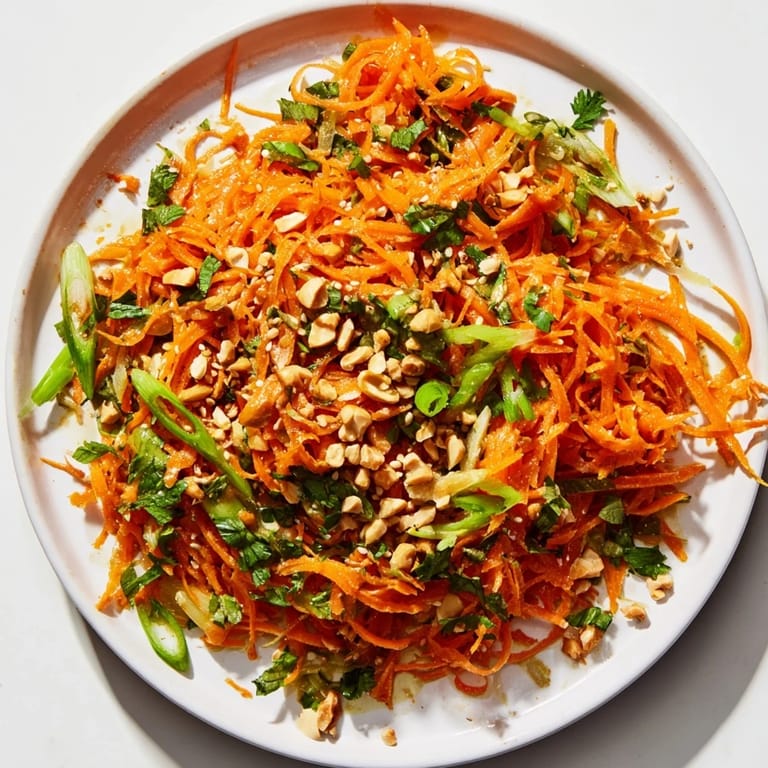
- Transfer to your serving dish. Scatter the peanuts or cashews on top along with extra sesame seeds. Serve it cold or at room temperature.
 Save
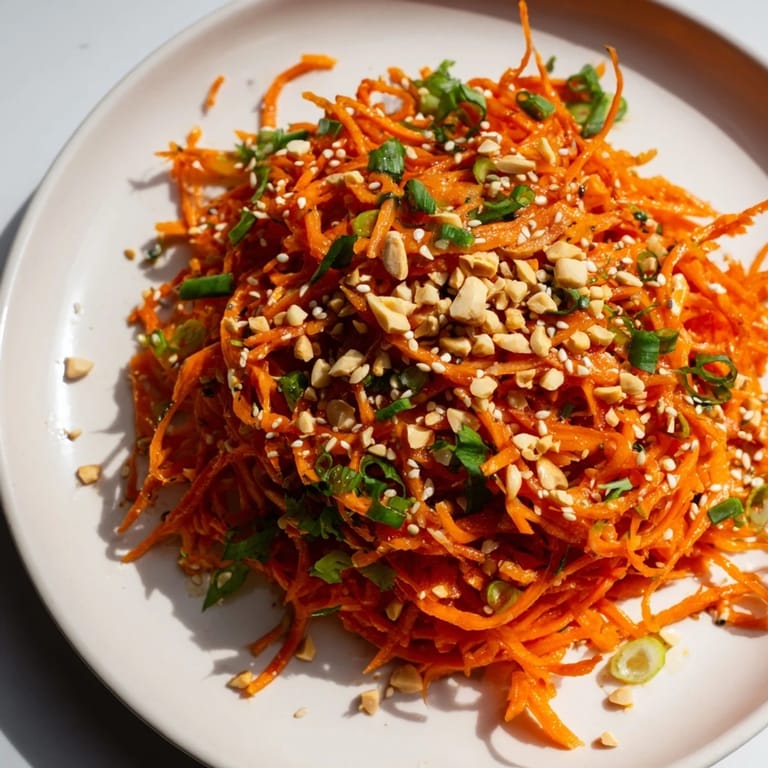
Save Last winter I made this for dinner on a night when everything felt gray and heavy. The bright orange color against the dark blue of my plates, the sharp smell of ginger and garlic hitting me as I opened the fridge, that first spicy bite. It was just a salad but it felt like medicine. Sometimes food is that simple.
Getting The Right Texture
The difference between a great carrot salad and a mediocre one comes down to how you shred the carrots. Box graters give you these irregular, varied strands that hold dressing beautifully. Food processors create perfectly uniform shreds that somehow feel less satisfying to eat. If you have the patience and the knife skills, hand cut julienne strips work too, giving you the most controlled texture of all. But honestly, the box grater is where the magic happens.
Make It Yours
This recipe takes substitutions like a champ. No ginger? Leave it out or use a pinch of ground ginger. Hate cilantro? Try Thai basil or mint. Want more vegetables? Throw in shredded cabbage, sliced bell peppers, or matchstick radishes. The dressing works on literally anything crunchy. I once used it on a mix of kohlrabi and apples, which was unexpected but completely delicious. The core formula is salt plus acid plus fat plus heat, and as long as you keep those elements in balance, you can change almost everything else.
Serving Ideas
This salad plays so well with other flavors. Pair it with grilled chicken or fatty fish like salmon. Serve it alongside something mild and starchy like plain rice or naan bread. Use it as a topping for tacos or as part of a larger Asian inspired spread. The heat cuts through rich food, the acidity balances heavy dishes, and the crunch provides texture that soft cooked foods often lack. Its a workhorse of a side dish.
- Mix in shredded red cabbage for color and extra crunch
- Add a handful of bean sprouts right before serving for texture
- Top with fried shallots if you want it to feel extra special
 Save
Save Fifteen minutes from start to finish and you have something that tastes like it came from a restaurant kitchen. Keep this one in your back pocket for nights when you want real food without turning on the stove.
Your Questions Answered
- → What type of soy sauce is best for this dish?
Using tamari soy sauce is ideal for a gluten-free option, but regular soy sauce works well too, providing salty umami depth.
- → Can I adjust the spice level in this salad?
Yes, the amount of chili garlic sauce or sriracha can be varied to match your preferred heat level, from mild to spicy.
- → How should I prepare the carrots for best texture?
Peeling and shredding the carrots finely ensures a crisp, crunchy texture that absorbs the dressing evenly.
- → Are there any good additions to enhance flavor or crunch?
Thinly sliced bell peppers or cucumber add extra crunch while roasted peanuts or cashews provide a rich contrast in texture.
- → Can this salad be made ahead of time?
Yes, chilling for 10–15 minutes allows flavors to meld nicely, and it can be stored in the fridge up to 24 hours without losing freshness.