 Save
Save The first time I made a quinoa buddha bowl, I'd just returned from a farmers market with bags bursting with vibrant vegetables. The kitchen was flooded with afternoon light as I arranged my colorful bounty across the counter, unsure what to create but knowing it needed to showcase these gorgeous ingredients. My friend had mentioned buddha bowls the week before, and standing there with a rainbow of produce, everything clicked. I grabbed the quinoa from the pantry, and what began as improvisation has since become one of my most cherished recipes.
Last spring, I brought these buddha bowls to a potluck where most people were bringing the usual pasta salads and chips. The host texted me afterward saying three different guests had requested the recipe. There was something deeply satisfying about watching people discover how satisfying plant-based food could be, especially as they returned for seconds with wide eyes and comments about how they never thought vegetables could taste this good.
Ingredients
- Quinoa: I always toast it briefly in the dry pan before adding water, which brings out a nutty flavor that transforms this grain from bland to brilliant.
- Sweet potato: The caramelization that happens when roasting sweet potatoes adds a natural sweetness that balances the savory elements in the bowl.
- Tahini: After years of making this dressing, I learned that room temperature tahini blends much more smoothly than cold tahini straight from the fridge.
- Smoked paprika: Just this small amount adds a subtle smokiness that makes the vegetables taste like they were cooked over a wood fire rather than in your oven.
Tired of Takeout? 🥡
Get 10 meals you can make faster than delivery arrives. Seriously.
One email. No spam. Unsubscribe anytime.
Instructions
- Prep your vegetables with intention:
- Cut sweet potatoes and bell peppers into similar-sized pieces to ensure they cook evenly. The kitchen will start filling with earthy aromas as you prepare the vegetables, a promising sign of the flavors developing.
- Create roasted vegetable magic:
- Spread vegetables on a baking sheet without overcrowding, giving them room to caramelize rather than steam. That sizzling sound when they first hit the hot oven is music to my ears.
- Perfect your quinoa:
- Rinsing removes quinoas natural bitter coating called saponin. When its done cooking, youll know its perfect when you see those tiny spirals separating from each grain.
- Make the silky tahini dressing:
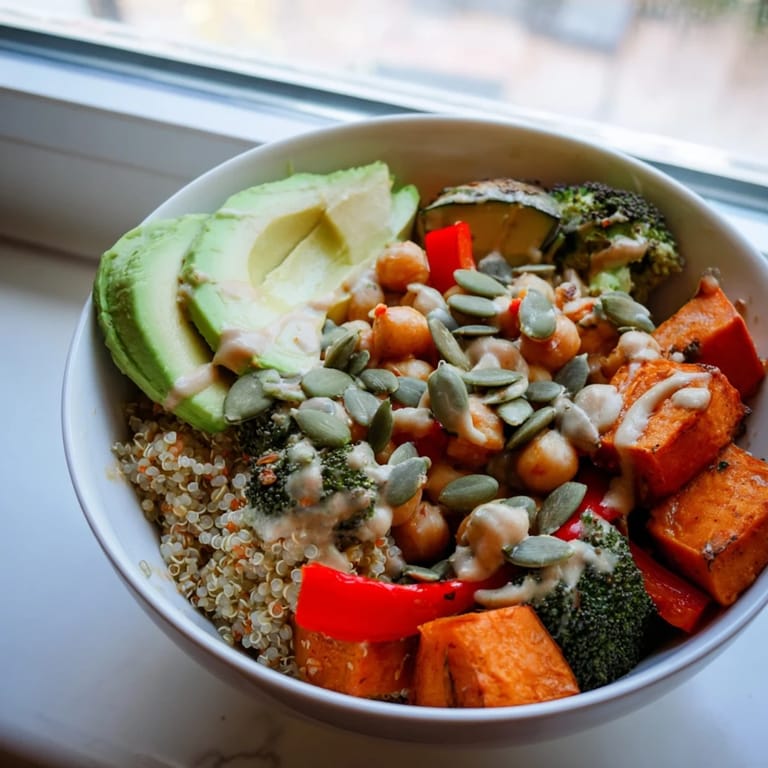
- Start with less water than you think youll need, as tahini can suddenly thin out. The dressing should coat the back of a spoon but still drizzle easily.
- Assemble with an artists eye:
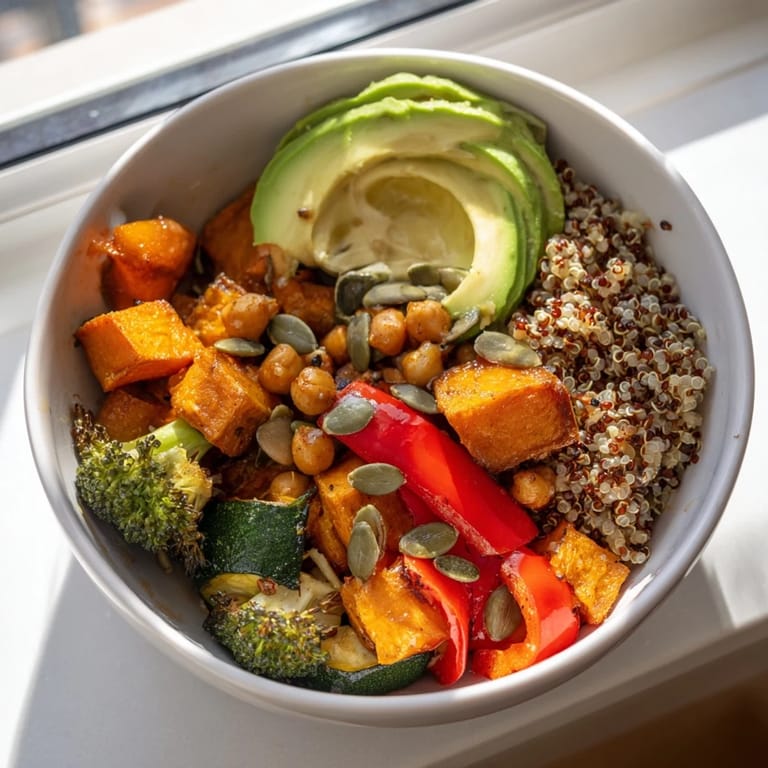
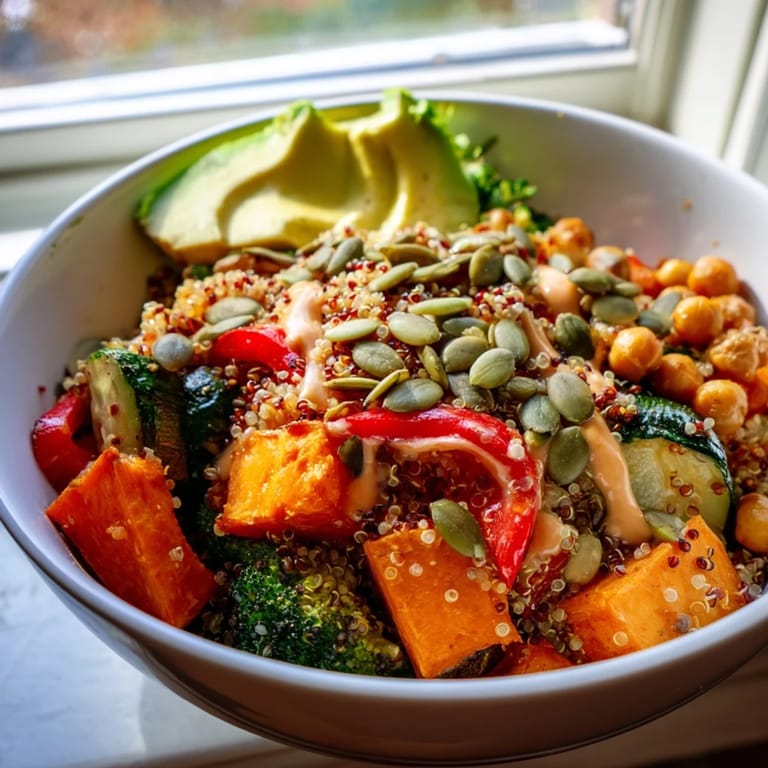
- I like creating sections of ingredients rather than mixing everything together, allowing each component to shine. Think of your bowl as a color wheel, arranging ingredients by hue for maximum visual appeal.
 Save
Save My neighbor Emily came over during a particularly difficult week for her, and I instinctively made these buddha bowls for dinner. We sat at my kitchen island, the steam rising from our bowls as she took her first bite and visibly relaxed. Food has always been my way of caring for people, but watching someone find comfort in a meal Ive prepared never loses its magic, especially with something as nourishing as these colorful bowls.
Make-Ahead Options
Sunday meal prep has become my sanctuary, and these buddha bowls are perfect candidates for advance preparation. I roast double batches of vegetables, cook extra quinoa, and store the components separately in glass containers. The tahini dressing thickens in the refrigerator, so I leave it slightly thinner than usual and store it in a small jar. Throughout the week, I can assemble a fresh bowl in minutes, sometimes adding different toppings depending on my mood.
Seasonal Adaptations
The beauty of buddha bowls lies in their flexibility with the seasons. In summer, I swap sweet potatoes for fresh corn and add cherry tomatoes that burst with sweetness. Fall brings opportunities for roasted butternut squash and Brussels sprouts, while winter calls for heartier roots like turnips and parsnips. Spring welcomes asparagus and tender young carrots, often with a sprinkle of fresh herbs from my window box. This recipe functions more as a template than a rigid formula, inviting you to celebrate whatevers freshest at your market.
Serving Suggestions
While these bowls stand perfectly well on their own, certain accompaniments can elevate the experience even further. I sometimes serve smaller portions alongside a warming miso soup in winter or with chilled cucumber gazpacho in summer. A simple side of pickled vegetables adds brightness and contrast to the earthy bowl components.
- Serve everything at room temperature rather than piping hot to allow the flavors to fully express themselves.
- For gatherings, consider creating a buddha bowl bar where guests can customize their own combinations.
- A sprinkle of flaky sea salt just before serving wakes up all the flavors and adds textural interest.
 Save
Save These buddha bowls have taught me that nourishment isnt just about nutrients its about creating something beautiful that feeds your eyes and soul as much as your body. Every time I make them, Im reminded that good food doesnt need to be complicated to be transformative.
Your Questions Answered
- → Can I prepare this bowl in advance?
Yes, you can cook the quinoa and roast the vegetables several hours ahead and store them separately in the refrigerator. Assemble the bowl just before serving to keep toppings fresh and dressing from making the greens soggy.
- → What vegetables work best for roasting?
Root vegetables like carrots and parsnips, cruciferous vegetables such as cauliflower and Brussels sprouts, and summer squash like zucchini and yellow squash all roast beautifully. Choose vegetables with similar sizes to ensure even cooking.
- → How do I make the tahini dressing thinner?
Add water one tablespoon at a time while whisking until you reach your desired consistency. The dressing will thicken slightly as it cools, so aim for a pourable consistency that's slightly thinner than you want the final result.
- → What protein substitutes work besides chickpeas?
Black beans, lentils, white beans, or cannellini beans provide excellent plant-based protein alternatives. You can also add tofu, tempeh, or nuts like almonds and walnuts for additional protein and texture variety.
- → Is this suitable for meal prep?
Absolutely. Store cooked quinoa and roasted vegetables in separate containers for up to four days. Keep the tahini dressing in a jar and add it just before eating to maintain the ideal texture of all components.
- → Can I make this gluten-free?
Quinoa is naturally gluten-free, making this bowl inherently suitable for gluten-free diets. Simply verify that your tahini, canned chickpeas, and all other ingredients carry gluten-free certification if you have celiac sensitivity.