 Save
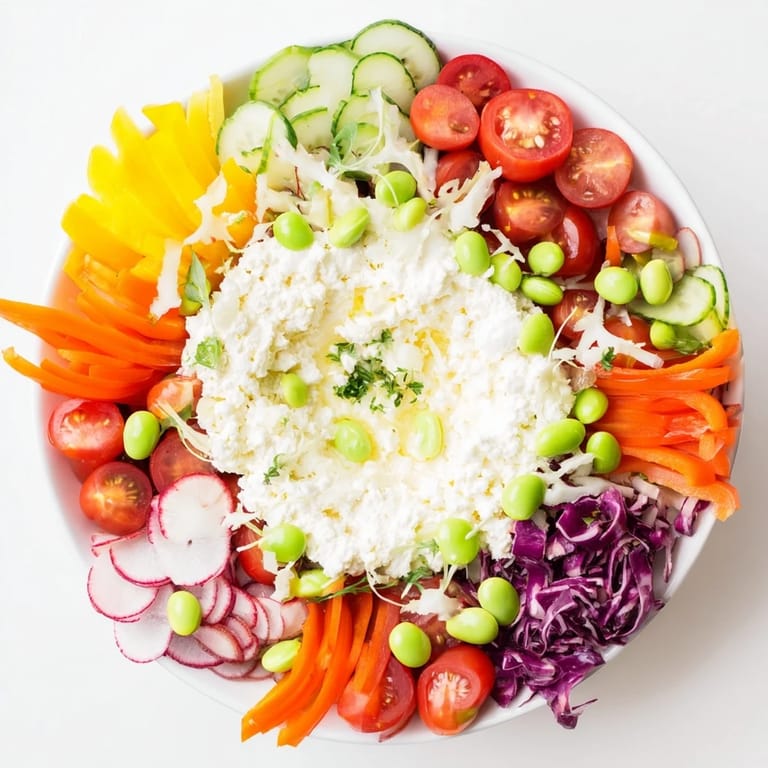
Save I discovered this salad while reorganizing my kitchen during a gray afternoon, surrounded by an almost absurd number of half-used vegetables. A red bell pepper here, some blueberries there, a container of ricotta I'd opened for something else entirely. Instead of tossing them, I arranged them by color on a plate, almost absentmindedly at first, and suddenly it clicked—this wasn't just lunch, it was a small work of art that tasted as good as it looked. My kids actually asked for seconds, which never happens with salad. Now whenever I have a rainbow of produce, I think of that moment and know exactly what to make.
I made this for a potluck where everyone was bringing heavy casseroles and meat dishes, and watching people's faces light up when they saw it was pure joy. One friend actually took a photo before eating it, something I'd never seen happen at a casual dinner. That small moment reminded me that food doesn't have to be complicated to feel special—sometimes it just needs to be thoughtful and a little bit beautiful.
Ingredients
- Ricotta cheese or Greek yogurt: The creamy white anchor that holds everything together; Greek yogurt gives you a lighter option if you want something less rich.
- Extra-virgin olive oil: Good quality here actually matters since you taste it directly; cheap oil will announce itself in an unflattering way.
- Lemon zest and juice: Brightens the entire dish and keeps the ricotta from tasting flat and one-dimensional.
- Cherry tomatoes: Halve them so the red layer isn't just a color block but actually feels integrated into the design.
- Bell peppers (red, orange, yellow): Slice them thin enough to bend slightly; thick chunks disrupt the fan effect and the visual flow.
- Cucumber: Thinly sliced so it stays delicate and doesn't overshadow the other greens with its watery texture.
- Edamame: Adds protein and a subtle nutty flavor that rounds out the vegetable-forward composition.
- Blueberries and grapes: The fruit layers bring unexpected sweetness and keep people guessing what comes next as they eat across the rainbow.
- Purple cabbage: Finely shredded so it mingles with the blueberries and creates that true blue-violet transition.
- Fresh herbs: Parsley keeps things bright, basil adds warmth, mint brings cooling surprise—pick based on your mood.
- Honey or agave: Just enough sweetness in the dressing to balance the citrus without tipping into dessert.
Tired of Takeout? 🥡
Get 10 meals you can make faster than delivery arrives. Seriously.
One email. No spam. Unsubscribe anytime.
Instructions
- Build your white foundation:
- Mix the ricotta with olive oil, lemon zest, salt, and pepper until smooth, then spoon it onto your serving platter—this is the visual heart of everything, so don't make it too wide or the prism effect collapses. Spread it gently into a small circle about the size of your fist.
- Prep your color groups:
- Slice and arrange each color layer in its own small bowl so you're not fumbling while assembling. This is the actual time-saver; everything else moves fast.
- Fan out your prism:
- Starting with red, arrange thin stripes of each color in succession, radiating outward like you're painting a sunset. Use the edge of a spoon or your fingertip to gently separate colors, and don't overthink it—slight imperfection actually makes it look homemade rather than sterile.
- Dress it right:
- Whisk olive oil, lemon juice, honey, salt, and pepper together until the honey dissolves completely. Drizzle it lightly across the salad just before serving, or pass it on the side if you're worried about wilting.
- Final touches:
- Sprinkle fresh herbs and cracked black pepper across the top, which adds both flavor and a gentle texture contrast. Serve immediately while everything is crisp.
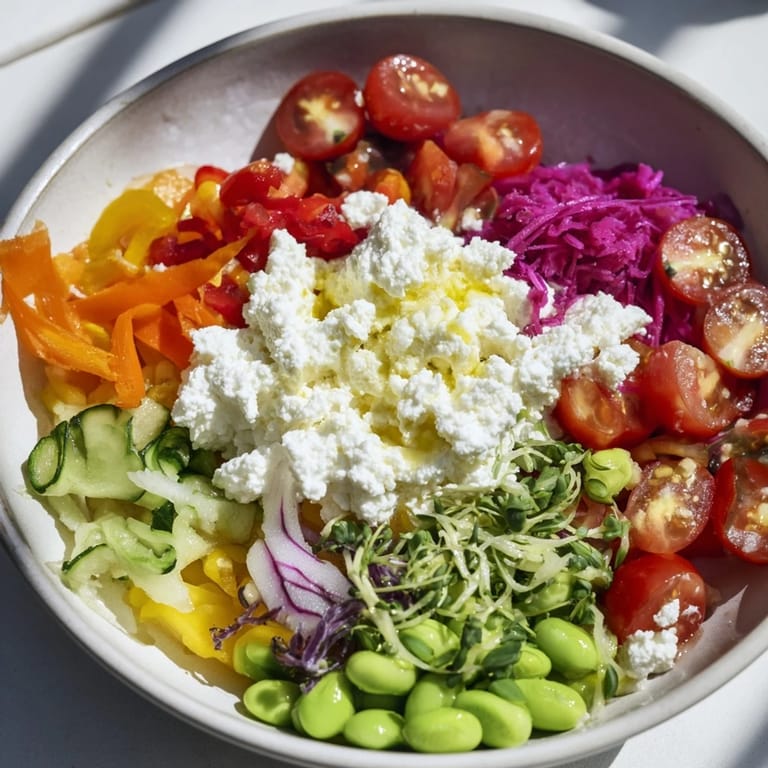 Save
Save My eight-year-old asked if she could have her plate arranged like this every day, which made me realize this isn't just about being Instagram-worthy—there's something genuinely satisfying about eating something that feels like it was made with intention. Food that's beautiful often tastes better because you're actually paying attention to it instead of mindlessly consuming it.
Making It Your Own
The beauty of this salad is that you work with whatever colors you have on hand. Snap peas for green, beets for a deeper violet, yellow squash instead of corn—your farmer's market haul becomes the ingredient list, not the other way around. I've made this in winter with roasted vegetables and it's completely different but equally stunning. The framework stays the same; the specifics shift with the season.
Timing and Temperature
There's no cooking involved, which means you can assemble this an hour before guests arrive if your vegetables are already prepped. The only real time pressure is dressing—do that right before serving so nothing gets soggy. Room temperature is actually perfect here, though some people like to chill the ricotta center slightly, which looks dramatic when you cut into it.
Serving and Pairing
This works as a stunning side dish alongside grilled chicken or fish, or stand it alone as a vegetarian main. Serve with crusty bread so people can soak up the dressing pooling underneath. Pair with a crisp white wine like Sauvignon Blanc, which echoes the fresh citrus notes and doesn't compete with the delicate vegetables.
- For extra texture, scatter toasted pumpkin seeds or sunflower seeds across the top just before serving.
- Microgreens or edible flowers turn this into something completely show-stopping if you want to impress someone genuinely.
- Make this dairy-free by swapping ricotta for plant-based cream cheese—the effect is identical, the taste only slightly different.
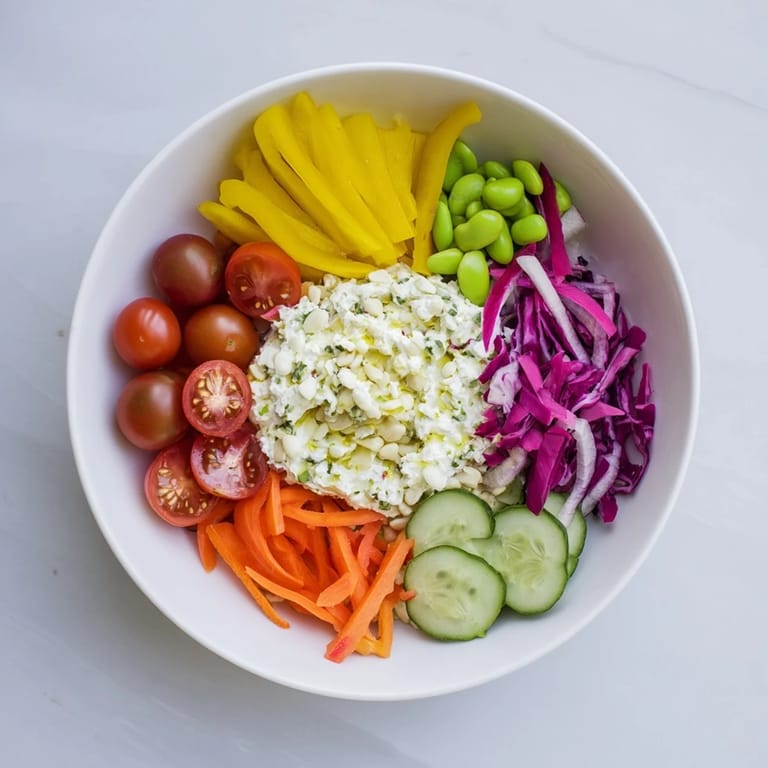 Save
Save This salad reminds me that cooking doesn't need to be complicated to feel nourishing or memorable. Sometimes the simplest gesture—arranging vegetables by color with care—can turn an ordinary meal into something people actually remember.
Your Questions Answered
- → What is the central white base made of?
The base is a creamy mixture of ricotta cheese or Greek yogurt blended with olive oil, lemon zest, salt, and pepper.
- → How are the colorful layers arranged?
The vegetables and fruits are sliced and fanned out around the white base in stripes, following the red, orange, yellow, green, blue, and violet color sequence.
- → Can the dressing be customized?
Yes, the dressing is a simple lemon juice, olive oil, and honey blend, which can be adjusted to taste or swapped with alternative sweeteners.
- → Are there vegan options for the base?
Replacing ricotta with vegan cream cheese or plant-based yogurt provides a dairy-free alternative while maintaining creaminess.
- → What garnishes enhance the dish?
Fresh herbs like parsley, basil, or mint and a sprinkle of black pepper add aroma and depth to the layers.
- → Is this dish suitable for gluten-free diets?
Yes, all ingredients are naturally gluten-free, making it suitable for gluten-sensitive individuals.