 Save
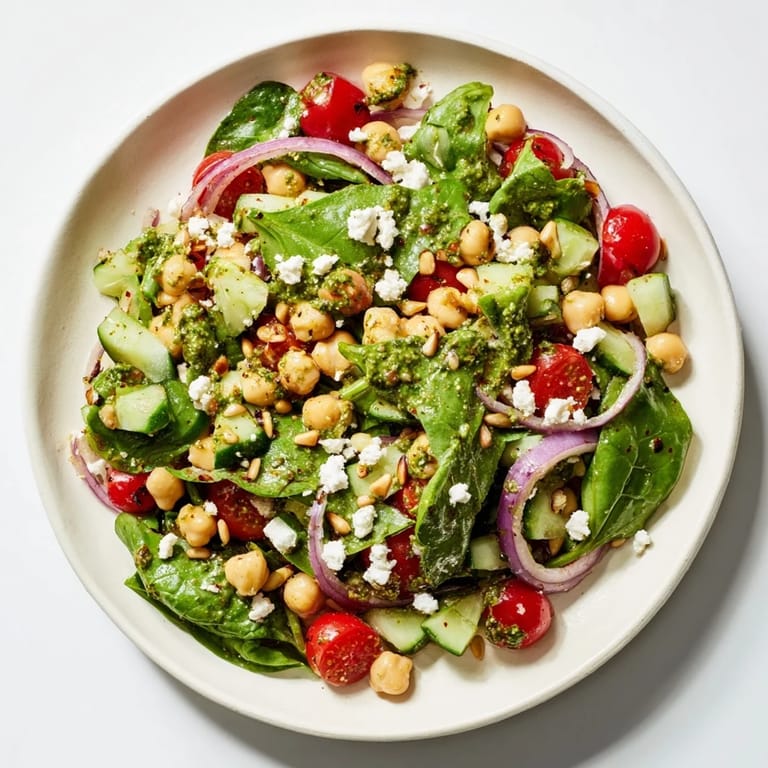
Save There's something about the smell of fresh basil that stops me mid-afternoon, pulling me straight into the kitchen with an idea. One summer, I had a handful of spinach wilting in my crisper drawer and a farmers market bag full of basil, and I decided to throw together what became this salad—simple, bright, and nothing fancy. The pesto came together while the chickpeas tumbled into the bowl, and suddenly what I'd thought was just lunch turned into the kind of meal you want to make again and again.
I made this for my sister's surprise visit one evening when I had about ten minutes' notice and almost nothing thawed. She showed up hungry from the road, and I tossed this together while we caught up. She ate two bowls and asked for the recipe before she left—that's when I knew it was worth keeping around.
Ingredients
- Chickpeas (1 can, drained and rinsed): They provide the protein that makes this salad a complete meal, and rinsing them removes excess sodium and starch so they don't get gummy.
- Fresh baby spinach (4 cups): Baby spinach wilts slightly when dressed, creating a tender texture that works better here than firmer greens.
- Cherry tomatoes (1 cup, halved): Their sweetness balances the pesto's richness, and halving them helps the dressing coat every piece.
- Red onion (½ small, thinly sliced): The sharpness cuts through the creamy elements and adds a little bite that keeps the salad from feeling flat.
- Cucumber (½ cup, diced): It brings a cool, crisp freshness that prevents the salad from becoming heavy or one-dimensional.
- Fresh basil leaves (1 cup, packed): Use leaves from the top of the plant if you can—they're more tender and flavorful than the tougher bottom leaves.
- Parmesan cheese (¼ cup, grated): Freshly grated Parmesan dissolves into the pesto better than pre-grated, and it tastes noticeably more complex.
- Extra-virgin olive oil (¼ cup): This is where quality actually matters; a good oil makes the pesto taste luxurious rather than thin.
- Pine nuts (2 tablespoons for pesto, ¼ cup optional for topping): Toasting them first brings out their buttery flavor, though sunflower seeds work perfectly if you're avoiding nuts.
- Garlic (1 clove): One clove is enough; too much overwhelms the delicate basil.
- Lemon juice (1 tablespoon): It brightens the pesto and prevents the basil from turning dark when it sits.
- Feta cheese (¼ cup, optional): Crumbles of salty feta add a creamy, tangy element that makes the salad feel more substantial.
Tired of Takeout? 🥡
Get 10 meals you can make faster than delivery arrives. Seriously.
One email. No spam. Unsubscribe anytime.
Instructions
- Make the pesto while your ingredients wait:
- Put the basil, Parmesan, pine nuts, garlic, and lemon juice into your food processor and pulse until everything is roughly chopped and combined. You want texture here, not a smooth paste.
- Stream in the oil slowly as the motor runs:
- This helps the pesto emulsify and become creamy rather than breaking into separate oil and solids. If it looks too thick, add water a tablespoon at a time until it reaches a drizzle-able consistency, then taste and adjust salt and pepper.
- Gather your salad components in one large bowl:
- Combine the chickpeas, spinach, tomatoes, red onion, and cucumber—don't dress it yet, so the spinach stays fresh and crisp.
- Dress gently and taste as you go:
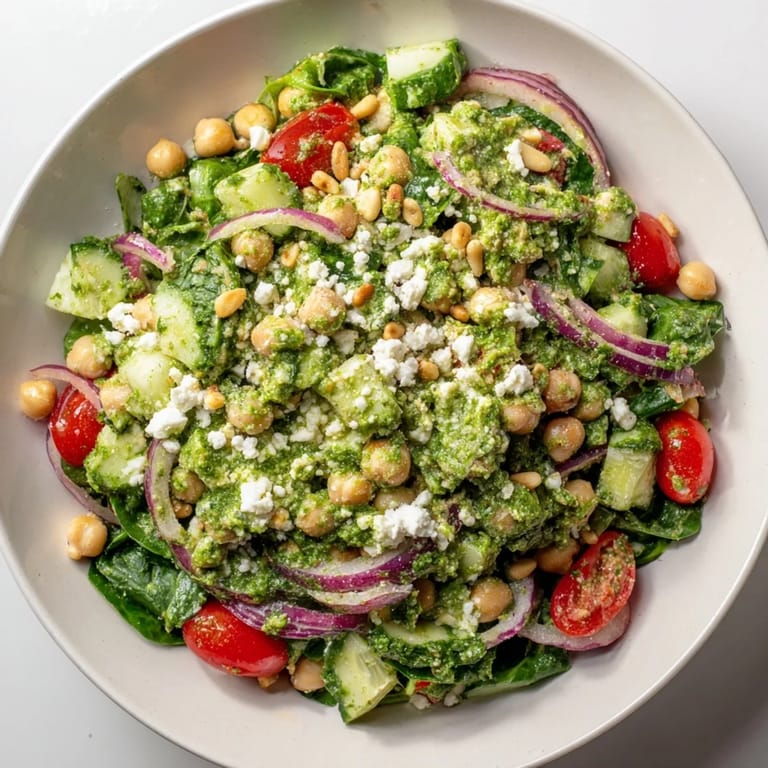
- Drizzle the pesto over everything and toss with your hands or two spoons, turning the salad over itself until the green dressing coats most of the pieces. Add more dressing if it needs it.
- Finish with the optional toppings and serve right away:
- Scatter the extra pine nuts and crumbled feta over the top just before serving so they don't get soggy or sink into the dressing.
 Save
Save There was a quiet moment last spring when I ate this salad on my porch in the early evening, and I realized how a simple combination of good ingredients and a few minutes of effort can turn an ordinary day into something memorable. That's what this salad does—it takes care of you without asking much in return.
Why This Salad Works Every Season
In summer, when basil is everywhere and tomatoes are at their peak, this salad tastes like the season itself. In fall, you can add roasted butternut squash or swap arugula for spinach and suddenly it feels like autumn on a plate. Even in winter, when fresh herbs are scarce, you can make it with what you can find and it still tastes good—maybe with mint instead of basil, or with pomegranate seeds instead of cherry tomatoes.
How to Make It Your Own
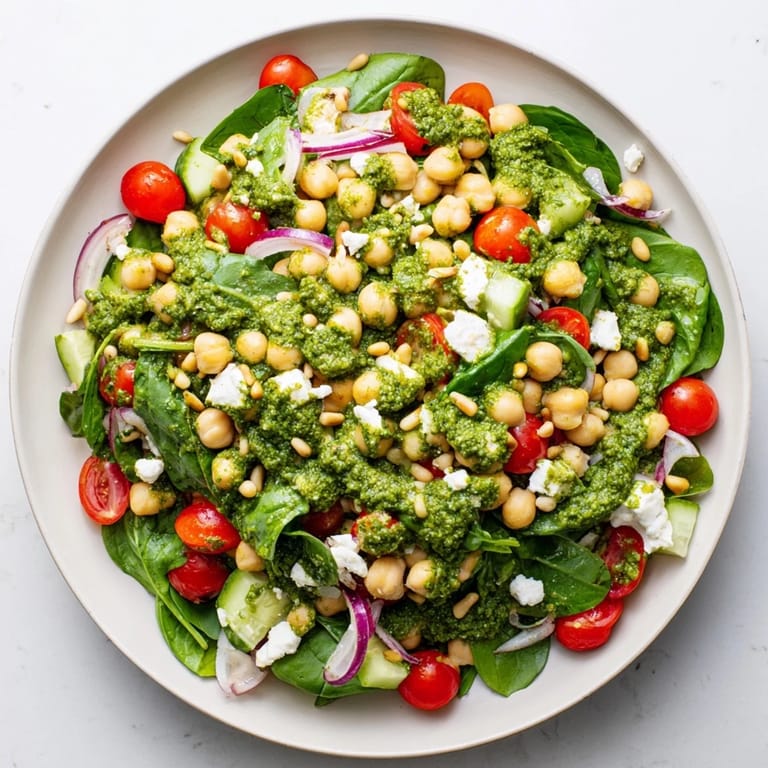
The structure of this salad is flexible enough to bend to what's in your kitchen. The chickpeas are the anchor, the pesto is the backbone, and everything else is negotiable. I've made it with white beans when I was out of chickpeas, with toasted walnuts when pine nuts were too expensive, and with whatever herbs I had growing within arm's reach of the back door.
Storage and Keeping
This salad is best eaten fresh, but you can prep the components separately and assemble it just before eating. The pesto keeps in an airtight container in the refrigerator for about three days, though it may darken slightly. The salad itself will keep for a few hours if you haven't dressed it yet, giving you options for leftovers or meal prepping.
- Make the pesto first thing in the morning and let the flavors settle while you do other things.
- Toss the salad with dressing only when you're ready to eat it, otherwise the spinach softens and the presentation loses its appeal.
- If you have leftovers, store the dressed salad in a covered container and eat it within a few hours before it becomes too wilted.
 Save
Save This is the kind of salad that reminds you that good food doesn't need to be complicated. Make it tonight and you'll understand why I keep coming back to it.
Your Questions Answered
- → What ingredients make the pesto dressing?
The pesto includes fresh basil, grated Parmesan, toasted pine nuts, garlic, lemon juice, olive oil, salt, and pepper for a rich and tangy flavor.
- → Can the salad be made vegan?
Yes, omit the Parmesan and feta cheese or substitute with plant-based cheese alternatives to suit a vegan diet.
- → How long can the salad be stored?
It can be refrigerated for up to 2 hours before serving to allow flavors to meld without compromising freshness.
- → Are there suitable ingredient substitutions?
Spinach can be swapped with arugula for a peppery bite, and sunflower seeds can replace pine nuts for nut allergies.
- → What texture contrasts does the salad provide?
Creamy chickpeas, crisp spinach, juicy tomatoes, crunchy pine nuts, and tangy dressing create a balanced mix of textures.
- → Is this salad suitable for gluten-free diets?
Yes, it contains only naturally gluten-free ingredients, making it an appropriate option for gluten-sensitive individuals.