 Save
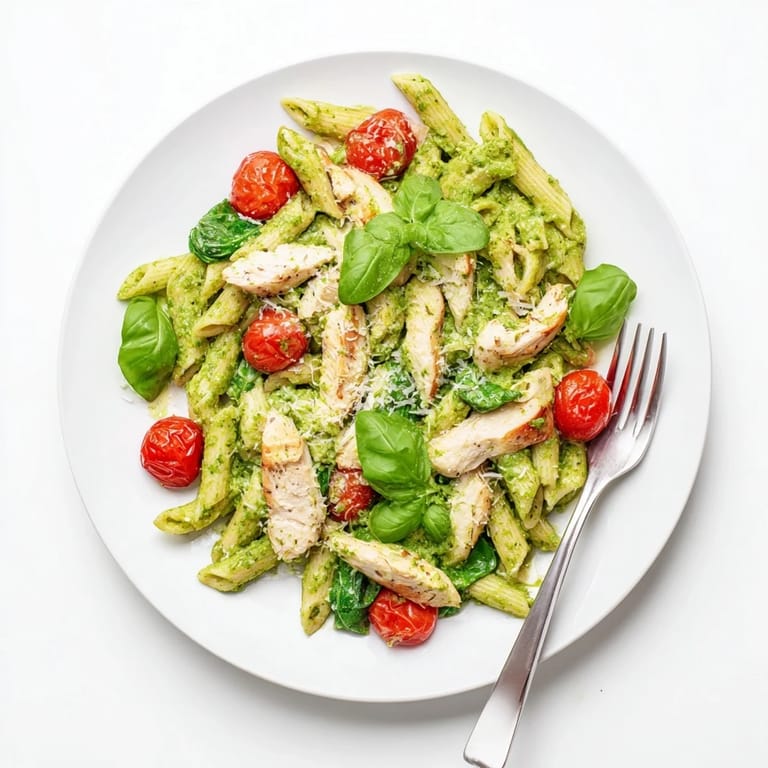
Save My Italian grandmother would have disowned me for using store-bought pesto, but on Tuesday nights when soccer practice runs late and homework piles up, this pesto chicken pasta saves my sanity without sacrificing flavor. The first time I threw this together, I was skeptical about how something so simple could taste restaurant-worthy. The kitchen filled with that unmistakable basil fragrance as the warm pasta released the oils from the pesto, and I knew I'd stumbled onto something special. My family now requests it by name: The Twenty-Minute Miracle.
Last summer, I served this at an impromptu dinner when friends stopped by unexpectedly. I was mortified at first, offering such a simple dish to guests, but watched in amazement as everyone fell silent, twirling forkfuls of pesto-coated pasta. My neighbor actually texted me at midnight asking for the recipe, calling it the best pasta shed eaten all year. There was something deeply satisfying about creating such happiness from so few ingredients and so little time.
Ingredients
- 2 large boneless, skinless chicken breasts: Cutting them horizontally before cooking is crucial - they cook faster and more evenly, and the increased surface area holds more of that pesto goodness.
- 350g penne or fusilli pasta: The spiral shape of fusilli or tubes of penne capture little pockets of pesto in their nooks and crannies far better than spaghetti ever could.
- 120g store-bought basil pesto: After trying countless brands, I found the refrigerated varieties taste fresher than shelf-stable ones, and a good pesto should have visible basil bits suspended throughout.
- Cherry tomatoes and baby spinach: These add brightness, color, and freshness that cuts through the richness of the pesto, transforming this from a heavy pasta dish into something that feels surprisingly light.
- Parmesan cheese: Buy a block and grate it yourself - it melts more smoothly into the sauce and doesnt have the anti-caking agents found in pre-grated versions.
Tired of Takeout? 🥡
Get 10 meals you can make faster than delivery arrives. Seriously.
One email. No spam. Unsubscribe anytime.
Instructions
- Prepare the star:
- Season those chicken breasts with a generous pinch of salt and freshly cracked pepper on both sides. Youll want them halved horizontally to create thinner cutlets that cook quickly and evenly.
- Get that golden sear:
- Heat your skillet until its properly hot before adding the chicken - youll hear that satisfying sizzle that means youre building flavor. The chicken should develop a beautiful golden crust, about 4-5 minutes per side, before resting and slicing.
- Pasta perfection:
- Salt your pasta water until it tastes like the sea. This is your only chance to season the pasta itself, and properly salted water makes all the difference.
- Create the foundation:
- That quick garlic sauté fills your kitchen with the most appetizing aroma. Just 30 seconds until fragrant - any longer and it might burn and turn bitter.
- Tomato magic:
- When the cherry tomatoes hit the hot pan, watch them carefully - you want them just softened, not collapsed into sauce. They should still hold their shape while releasing a bit of their sweet juice.
- Bring it together:
- The secret is adding that reserved starchy pasta water to the pesto - it emulsifies the sauce, helping it coat every piece of pasta with silky perfection. The warmth of the pasta will help melt the Parmesan right in.
- Final flourish:
- Add the chicken and spinach last, tossing just until the spinach begins to wilt from the residual heat. The bright green leaves should still have some structure, not completely wilted down.
 Save
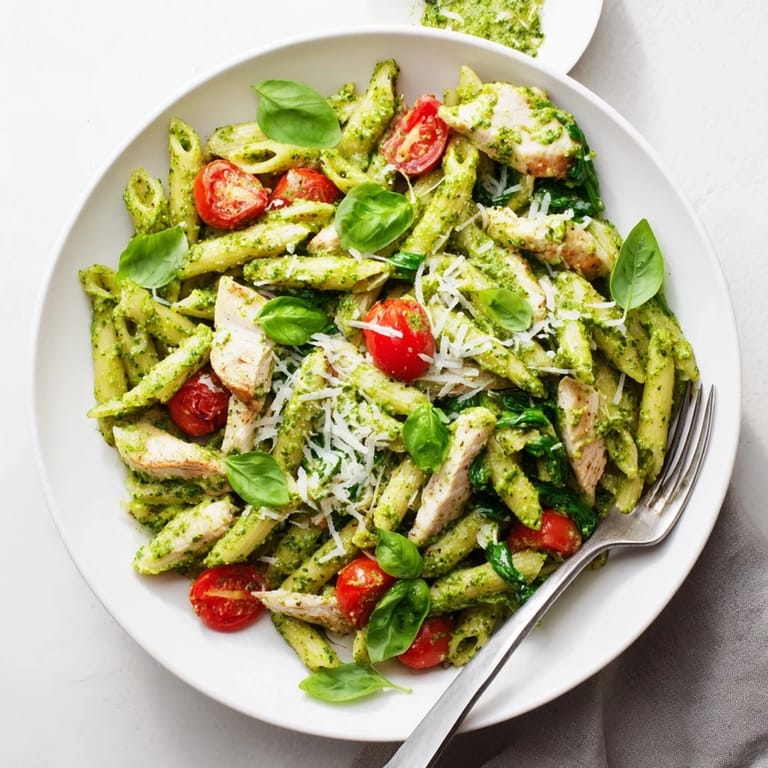
Save When my daughter was going through her picky-eating phase, this pesto pasta was the first meal she requested seconds of in months. I watched her tiny fingers attempt to twirl pasta around her fork, green sauce smeared across her cheek, and felt that unique parental triumph of witnessing a food victory. Now whenever I make it, theres this moment when the garlic hits the hot oil and the whole kitchen transforms - suddenly everyone appears from different corners of the house, drawn by the promise of something good to come.
Make It Your Own
While the recipe is perfect as written, Ive learned that its incredibly adaptable to whatever youve got in your refrigerator. Leftover roasted vegetables, a handful of olives, some crumbled bacon - nearly anything can be tossed in at the end. My brother adds a splash of heavy cream to his portion, creating a creamy pesto sauce that my nieces adore. Some nights when Im craving something lighter, I double the spinach and halve the pasta, creating a dish thats more vegetable-forward but equally satisfying.
Perfect Pairings
The bright herbaceous quality of this pasta calls for something equally vibrant to drink alongside it. A crisp Pinot Grigio works beautifully, cutting through the richness of the pesto with its acidity. For red wine lovers, a light Sangiovese brings out the sweetness of the tomatoes without overpowering the delicate basil notes. Non-alcoholic options that shine include sparkling water with a squeeze of lemon or an Italian soda with a hint of citrus.
Storage and Leftovers
If youre lucky enough to have leftovers, theyll keep beautifully in an airtight container for up to three days in the refrigerator. The flavors actually deepen overnight as the pasta continues to absorb the pesto. The texture changes slightly as the oils in the pesto solidify in the cold, but a quick zap in the microwave brings everything back to life.
- To revive leftover pasta, add a tablespoon of water before reheating to create a bit of steam and prevent drying out.
- Pack this in a thermos for a school or work lunch that will make everyone jealous.
- Leftover pasta can be transformed into a cold pasta salad with a squeeze of lemon juice and a few extra cherry tomatoes.
 Save
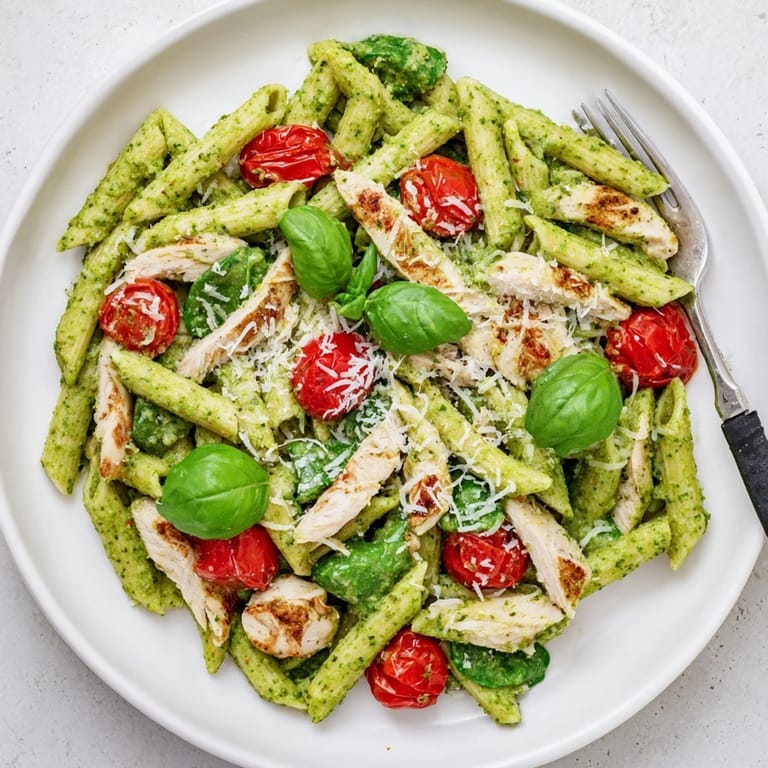
Save This pesto chicken pasta has taught me that sometimes the simplest recipes become the most beloved traditions. Make this once, and watch how quickly it becomes part of your family story too.
Your Questions Answered
- → Can I use fresh basil pesto instead of store-bought?
Absolutely. Homemade pesto will add even more vibrant flavor. Use the same amount (120g), blending fresh basil, garlic, pine nuts, Parmesan, and olive oil until you reach your desired consistency.
- → How do I know when the chicken is fully cooked?
The internal temperature should reach 75°C (165°F) when measured with a meat thermometer at the thickest part. The chicken should also be opaque throughout with no pink inside when sliced.
- → What's the best way to achieve charred marks on the chicken?
Use a grill pan or cast-iron skillet over medium-high heat. Ensure the pan is hot before adding oiled chicken. Don't move the chicken immediately—let it sit for 4-5 minutes to develop a golden crust before flipping.
- → Can I make this dish without spinach?
Yes, spinach is optional. You can omit it or substitute with other greens like arugula, kale, or zucchini. If using kale, add it earlier so it has time to soften from the heat.
- → Why do you reserve pasta water?
Pasta water contains starch that helps the pesto emulsify and coat the pasta evenly, creating a silky sauce. It also helps adjust the consistency—add more if the sauce seems too thick.
- → How should I store leftovers?
Store in an airtight container in the refrigerator for up to 3 days. Reheat gently in a skillet over low heat, adding a splash of pasta water or olive oil to refresh the sauce.