 Save
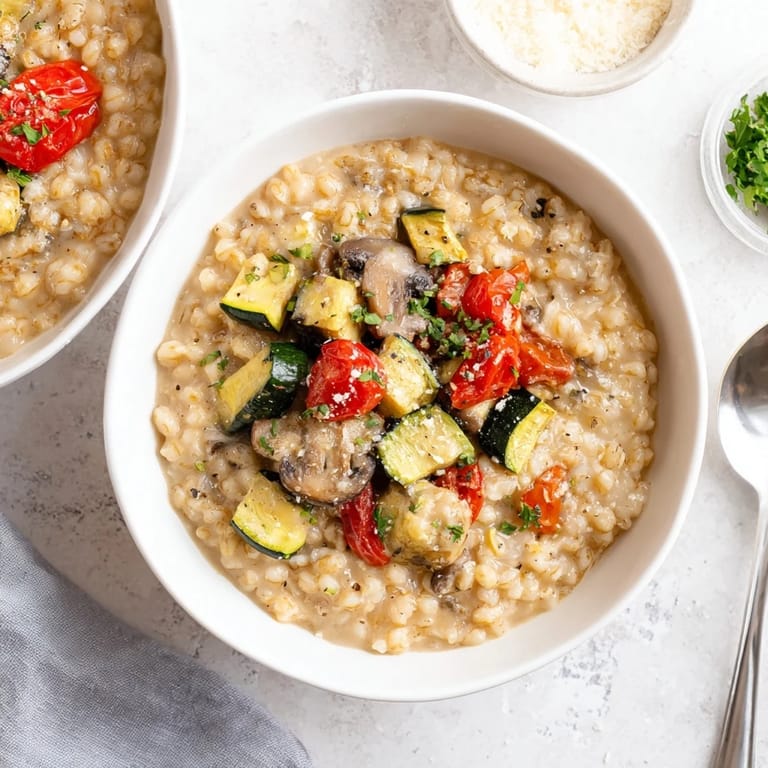
Save The first time I made this pearled barley bowl, I was searching for something heartier than risotto but with that same comforting creaminess. The kitchen filled with the nutty aroma of barley simmering away, mingling with roasting vegetables in the oven. My wooden spoon made satisfying swirls through the thickening grains as evening light filtered through the window. Something about the earthy fragrance and substantial texture felt like exactly what my soul needed that rainy Tuesday.
Last winter, my friend Sarah stopped by unexpectedly during a snowstorm, chilled to the bone. I happened to have this barley bowl simmering away, and I still remember how her eyes lit up at the first spoonful, steam rising between us as we huddled at my kitchen island. The vegetables had caramelized particularly well that day, creating little bursts of flavor against the creamy backdrop. We ended up talking for hours over second helpings, the bowl somehow stretching to feed us both generously.
Ingredients
- Pearled barley: This underappreciated grain has a delightful chew that holds up beautifully, making it impossible to overcook to mush like rice sometimes does.
- Heavy cream: Just a half cup transforms the texture completely, though plant-based cream works wonderfully too when my vegan friends come over.
- Cherry tomatoes: These little flavor bombs collapse in the oven, releasing concentrated sweetness that cuts through the richness of the dish.
- Cremini mushrooms: Their woodsy depth adds a surprising meatiness that makes this vegetarian dish feel substantial enough for die-hard carnivores.
- Dried herbs: The slow roasting awakens these pantry staples, infusing the vegetables with fragrance that dried herbs sometimes struggle to deliver.
Tired of Takeout? 🥡
Get 10 meals you can make faster than delivery arrives. Seriously.
One email. No spam. Unsubscribe anytime.
Instructions
- Prep your veggie medley:
- Dice everything into roughly equal sizes so they roast evenly, about 1-inch pieces work beautifully. The mushrooms should be quartered rather than chopped tiny, as they shrink considerably.
- Create vegetable magic:
- Toss everything on your baking sheet with a generous glug of olive oil, making sure each piece gets a light coating. Spread them out with space between each piece, otherwise theyll steam rather than roast.
- Start your barley base:
- The onions should become translucent but not brown, so keep your heat medium and stir occasionally. When you add the garlic, youll know its ready when that intoxicating fragrance rises from the pan.
- Simmer with patience:
- Unlike risotto, you dont need to stand guard constantly, but do check and stir every 7-8 minutes. The barley will gradually plump up and release its starch into the broth.
- Marry the components:
- When adding the cream and cheese, keep the heat very low to prevent any separation or graininess. The final texture should coat the back of a spoon beautifully.
- Assemble with artistry:
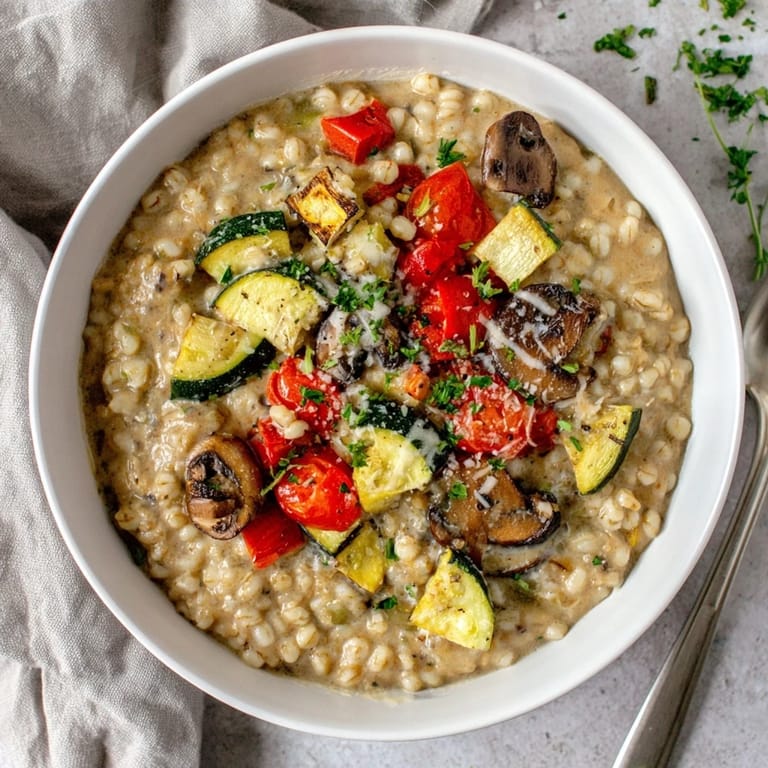
- I like to create a little well in the center of the barley for the vegetables to nestle into. This keeps the vegetables perched on top where their colors can shine.
 Save
Save My neighbor Tom, who claims to hate all things vegetarian, happened to stop by one evening when Id just finished making a batch. Out of politeness, he accepted a small bowl, then sheepishly returned to the kitchen for seconds, and finally asked for the recipe. Three years later, its still in his regular rotation, and he brings me variations he creates with seasonal vegetables from his garden, a lovely exchange that started with this humble grain bowl.
Texture Perfection
The beauty of pearled barley lies in its forgiveness. Unlike rice that can quickly turn to mush, barley maintains a pleasant chew even when cooked a few minutes too long. Ive learned through countless variations that the perfect texture has a slight resistance when bitten, similar to al dente pasta, but with a creamier surrounding consistency. The first time I made this, I worried Id overcooked it, but discovered that extra simmer time actually improves the dish by allowing the starches to fully release and create that velvety matrix around each grain.
Vegetable Selection Strategies
While the recipe suggests specific vegetables, this dish has become my clean-out-the-fridge hero. The key principle Ive discovered is balancing textures and colors rather than sticking to exact ingredients. Root vegetables need to be cut smaller than quick-cooking ones like zucchini. Bell peppers and cherry tomatoes provide essential sweetness, while something from the allium family brings necessary depth. Even odds and ends like the last handful of green beans or that half a sweet potato work beautifully here, making this dish incredibly adaptable to whatever season or grocery situation youre facing.
Make Ahead and Storage Tips
This barley bowl actually improves with a day of rest in the refrigerator, as the flavors meld and deepen overnight. Ive found the perfect method is cooking the barley base and storing it separately from the roasted vegetables, then reheating them individually before combining.
- Store the barley base in an airtight container for up to 4 days, adding a splash of broth when reheating as it thickens considerably.
- Roasted vegetables maintain their texture better when refrigerated separately and reheated in a hot oven rather than microwave.
- For a quick workday lunch, portion complete bowls into microwave-safe containers and reheat on 70% power to prevent the vegetables from becoming too soft.
 Save
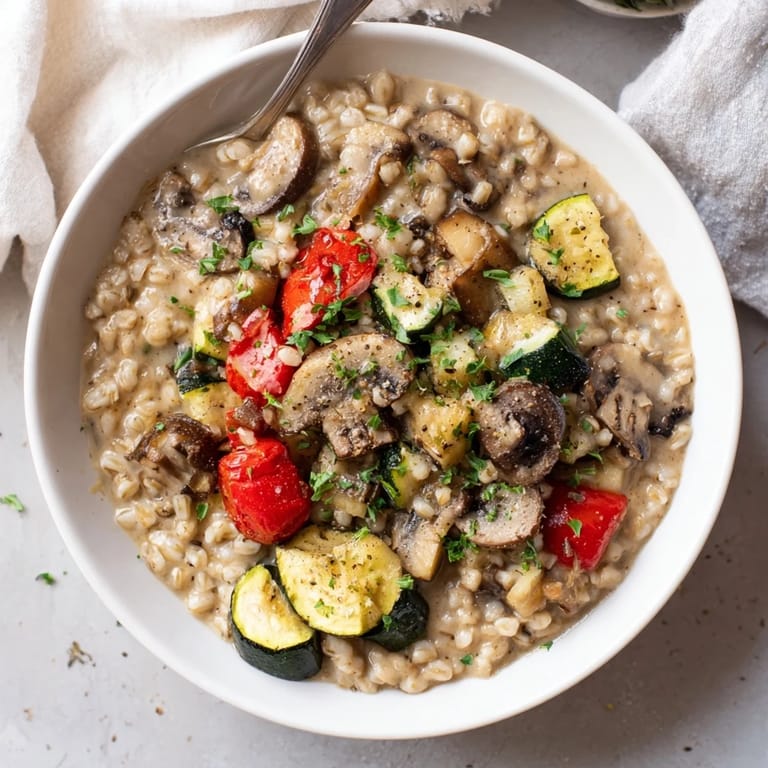
Save Theres something deeply satisfying about a meal that fills both belly and soul with equal measure. This pearled barley bowl has become my definition of comfort, adaptable to every season and welcoming to whatever ingredients you have on hand.
Your Questions Answered
- → Can I make this ahead of time?
Yes, you can prepare the creamy barley and roasted vegetables separately up to two days in advance. Store them in airtight containers in the refrigerator. Gently reheat the barley on the stovetop with a splash of broth to restore creaminess, then warm the vegetables in the oven before assembling and serving.
- → What's the best way to achieve creamy barley without cream?
Starch released from pearled barley during cooking naturally creates creaminess. Ensure you stir occasionally and use enough broth so the grains can properly hydrate. For extra richness without dairy, add a splash of oat or cashew cream toward the end of cooking, or stir in a spoonful of plant-based butter.
- → How do I prevent the vegetables from becoming mushy?
Cut vegetables into uniform, medium-sized pieces and spread them in a single layer on the baking sheet. Roast at 425°F for 25–30 minutes, stirring halfway through. The high heat caramelizes the exterior while keeping the inside tender. Avoid overcrowding the pan, which traps steam.
- → Can I use hulled barley instead of pearled barley?
Hulled barley is more nutritious but requires longer cooking—typically 45–60 minutes. Pearled barley cooks faster due to processed outer layers. If substituting, increase broth and cooking time accordingly. The final texture will be slightly firmer and nuttier with hulled barley.
- → What wines pair well with this dish?
Crisp white wines with acidity complement the creamy barley and roasted vegetables beautifully. Sauvignon Blanc is an excellent choice, as are Pinot Grigio and Vermentino. The wine's brightness cuts through the richness of the cream and enhances the earthiness of the grains and vegetables.
- → How do I store leftovers?
Store the creamy barley and roasted vegetables in separate airtight containers in the refrigerator for up to three days. Reheat gently on the stovetop, adding a bit of broth or plant-based milk to restore the creamy consistency. Alternatively, freeze individual portions for up to two months.