 Save
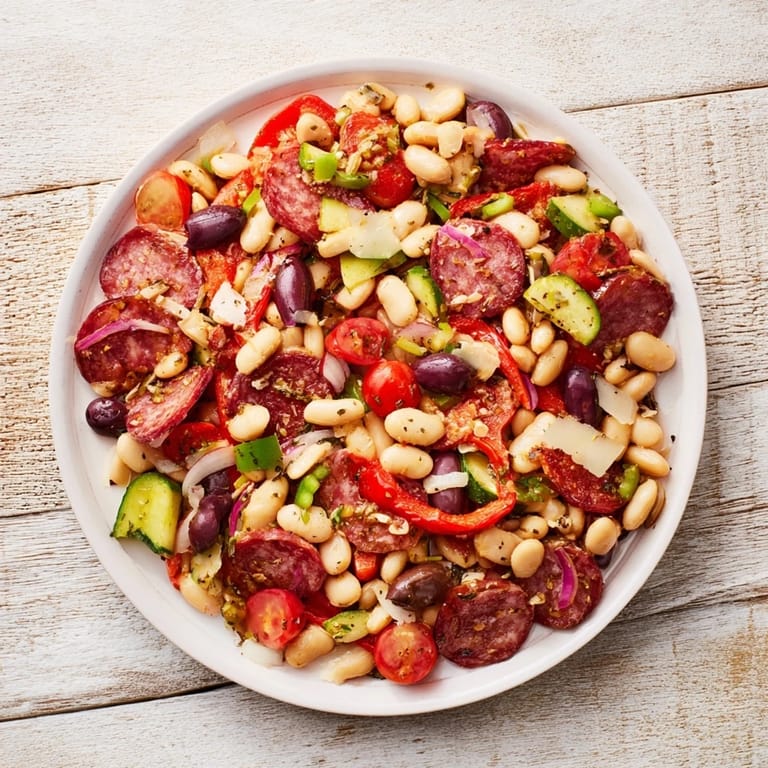
Save There's something about throwing together an Italian antipasto salad that instantly transports you to a sun-drenched piazza, even if you're just standing in your kitchen on a Tuesday afternoon. I first made this when a friend called last-minute asking if she could stop by, and instead of panicking, I grabbed whatever good things were in my fridge—creamy cannellini beans, some quality salami, chunks of provolone—and realized within minutes I'd created something that felt both effortless and impressive. The beauty of this salad is that it doesn't require cooking, just good ingredients and the willingness to let them speak for themselves. It's become my go-to when I want to feel like I've made something special without actually breaking a sweat.
I'll never forget bringing this to a potluck where I genuinely expected it to be overshadowed by the warm casseroles and baked pastas everyone else had made. Instead, it was the first thing to disappear, and three people asked me for the recipe before dessert was even served. That moment taught me that sometimes the simplest things—just good ingredients arranged in a bowl—are exactly what people are hungry for.
Ingredients
- Cannellini beans: The creamy foundation of this salad—rinse them thoroughly to remove any metallic canned taste, and they'll feel almost buttery against the crisp vegetables.
- Italian salami: Thin strips work best so the meat doesn't overwhelm each bite, and using genuinely good salami makes a noticeable difference in the final flavor.
- Provolone cheese: Cut it into small cubes so it stays in balance with everything else, and slightly aged provolone has a sharper, more interesting taste than younger versions.
- Cherry tomatoes: Halving them releases their juices into the dressing and makes them easier to eat, especially if you're serving this as a starter.
- Roasted red bell pepper: The sweetness plays beautifully against the sharp vinegar and salty cheese, and jarred roasted peppers save you the step of doing it yourself.
- Red onion: Slice it thinly so the bite stays subtle rather than aggressive, and it adds a nice color contrast to the other ingredients.
- Cucumber: Diced rather than sliced helps it distribute evenly, and it brings a cool, refreshing crunch that balances the richer elements.
- Black olives: Halving them makes them less overwhelming, and the briny flavor ties the whole composition together.
- Fresh parsley: Chopped right before mixing, it adds a brightness that doesn't show up if you do it too early.
- Extra-virgin olive oil: This is where you taste the quality—use the good stuff, because it's raw and unheated so every note matters.
- Red wine vinegar: The acidity cuts through the richness and brings everything into focus, so don't skip it or substitute it lightly.
- Oregano, garlic powder, salt, and pepper: These simple seasonings are all you need to tie the dressing together without complicating the dish.
Tired of Takeout? 🥡
Get 10 meals you can make faster than delivery arrives. Seriously.
One email. No spam. Unsubscribe anytime.
Instructions
- Gather and prep your ingredients:
- Lay everything out on your cutting board and get the cutting done first—this is when the work happens, and it's meditative if you let it be. Drain and rinse your beans under cool water, letting your fingers feel them as they soften and separate.
- Combine all the salad components:
- In a large bowl, add the beans, salami strips, provolone cubes, tomatoes, pepper, onion, cucumber, olives, and parsley. Toss it gently once or twice, just to get everything acquainted before the dressing arrives.
- Make the dressing:
- In a small jar or bowl, whisk together the olive oil, red wine vinegar, oregano, garlic powder, salt, and pepper until it looks emulsified and unified. Taste it straight—if it seems too acidic, add a splash more oil; if it feels flat, a pinch more salt will wake it up.
- Dress and toss the salad:
- Pour the dressing over everything and toss gently but thoroughly, making sure every piece gets coated without bruising the softer vegetables. The whole bowl should glisten with olive oil and vinegar.
- Taste and adjust:
- Take a spoonful and really taste it—does it need more salt, more vinegar, more oregano? This is your last chance to make it exactly how you want it, so don't skip this step.
- Let it rest and serve:
- If you have time, chill it for 10 minutes so the flavors can settle and meld together, but it's delicious at room temperature too. Serve with extra parsley scattered on top and a final whisper of olive oil.
 Save
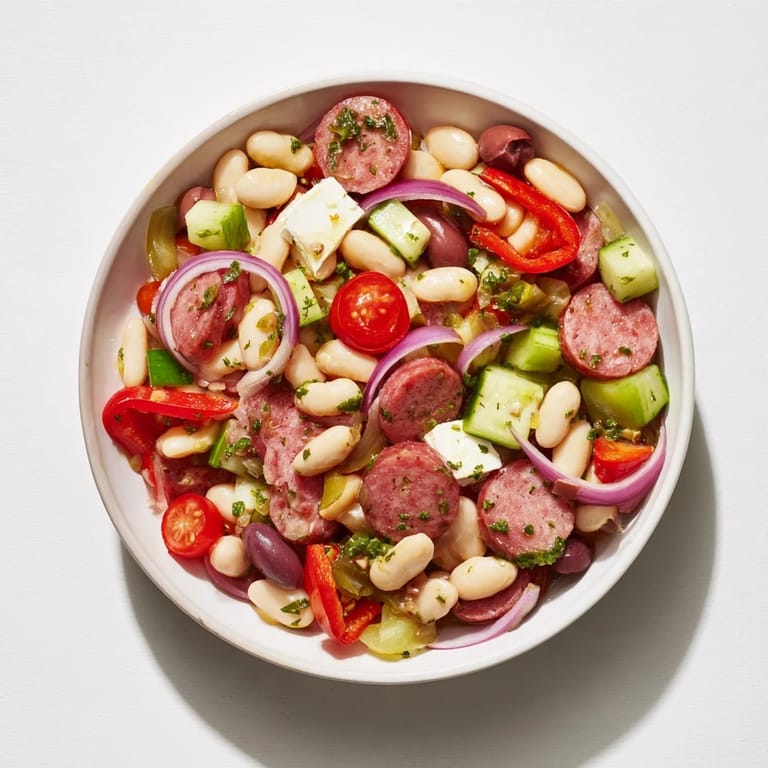
Save There's a moment when you've tossed everything together and the salad suddenly becomes something greater than its parts—when the vinegar hits the warm salami, when the beans catch the light, when you realize you've made something that's somehow both a casual weeknight side and elegant enough for a dinner party. That's the moment this recipe earned its place in my regular rotation.
Why This Works as an Appetizer
Antipasto salad sits in that perfect space between a light starter and a substantial opener—it's filling enough that you don't feel like you're just picking at the first course, but light enough that people have room for what comes next. The variety of textures and flavors keeps your palate interested, and because there's no hot component, you can serve it at the same temperature as whatever you're cooking in the oven or on the stove, which eliminates timing complications. I've learned that serving it in a pretty bowl and letting people help themselves feels more welcoming than plating it individually.
Storage and Make-Ahead Strategy
You can prep all the components the morning before you need them and store everything separately in airtight containers in the fridge—beans, vegetables, cheese, and dressing all in their own spots. When you're ready to serve, it takes literally two minutes to assemble, and everything will taste fresh because you're combining it at the last moment rather than letting it marinate for hours. The dressing itself actually improves over a day or two in the refrigerator as the flavors deepen, so making extra to keep on hand isn't the worst idea.
Variations and Swaps That Work
Once you understand how this salad balances its flavors and textures, you can play with it endlessly without losing what makes it good. I've added roasted chickpeas instead of beans on nights when I wanted more protein, swapped in white beans when I was out of cannellini, and even thrown in marinated artichoke hearts when I wanted something earthier. If you're cooking for someone who doesn't eat meat, substitute the salami with more olives, capers, or those same marinated artichokes, and the salad remains just as satisfying.
- For extra tang, stir in a tablespoon of capers or a few pepperoncini peppers right before serving.
- A handful of fresh basil mixed in with the parsley brings a different but equally Italian brightness to the whole dish.
- If you want to make it heartier, add a can of white beans instead of replacing the cannellini, turning it into something closer to a main course.
 Save
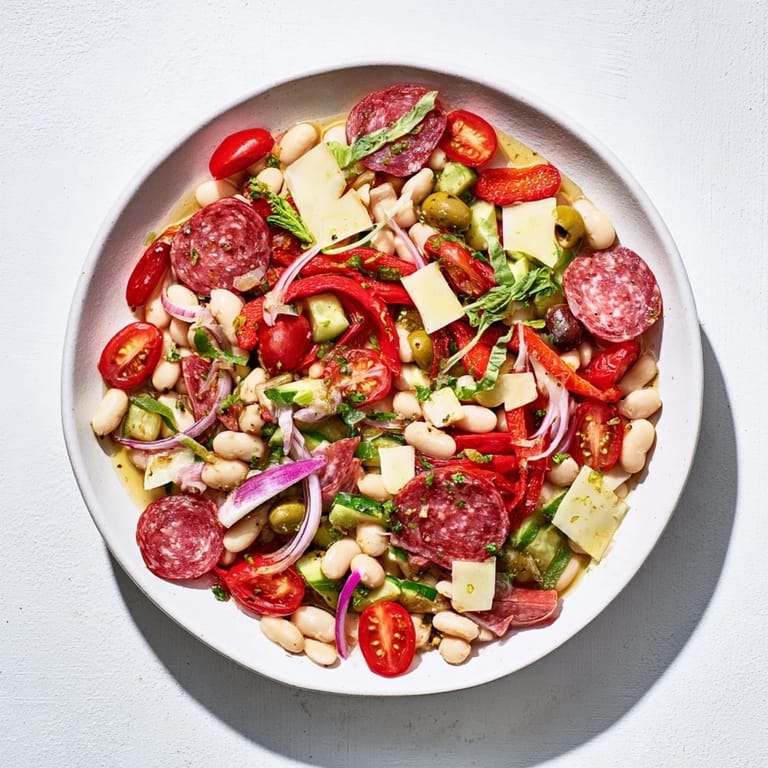
Save This salad is the kind of dish that reminds you why Italian food doesn't need to be complicated to be memorable—it just needs good ingredients and respect for their flavors. Make it once, and it'll become one of those recipes you return to again and again.
Your Questions Answered
- → Can I make this without salami?
Yes, omit the salami or substitute with marinated artichoke hearts for a vegetarian version that still offers great flavor.
- → What cheese works best here?
Provolone adds a mild tang, but mozzarella can be used as a creamy alternative without overpowering the other ingredients.
- → How long should the salad chill before serving?
Chilling for about 10 minutes allows the flavors to meld nicely, but it can be served immediately if preferred.
- → Are there suggested additions for extra tang?
Pepperoncini or capers make excellent additions, giving the salad an added burst of acidity and complexity.
- → What pairs well with this salad?
Crusty Italian bread and a light white wine such as Pinot Grigio complement the flavors and textures perfectly.