 Save
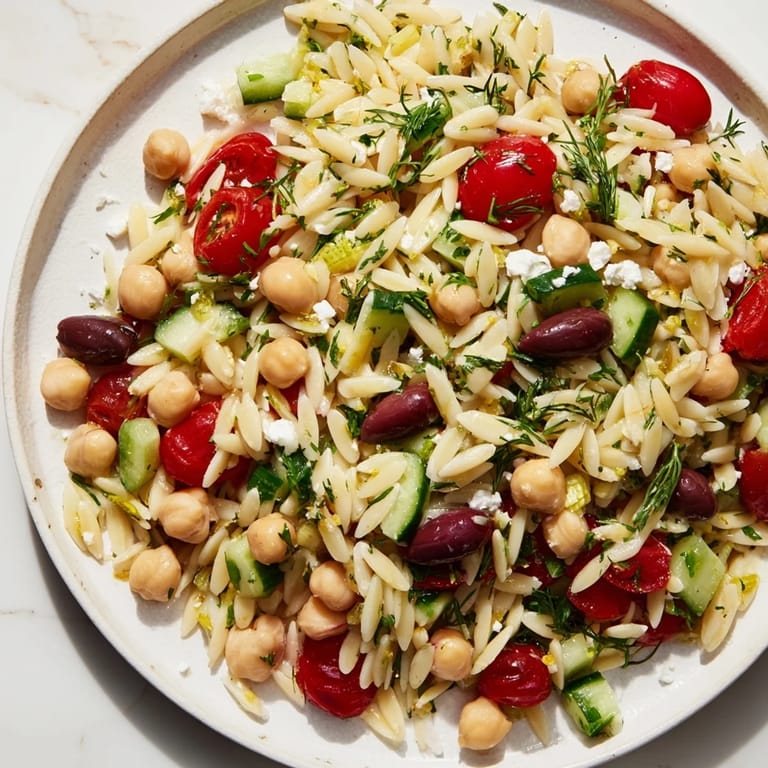
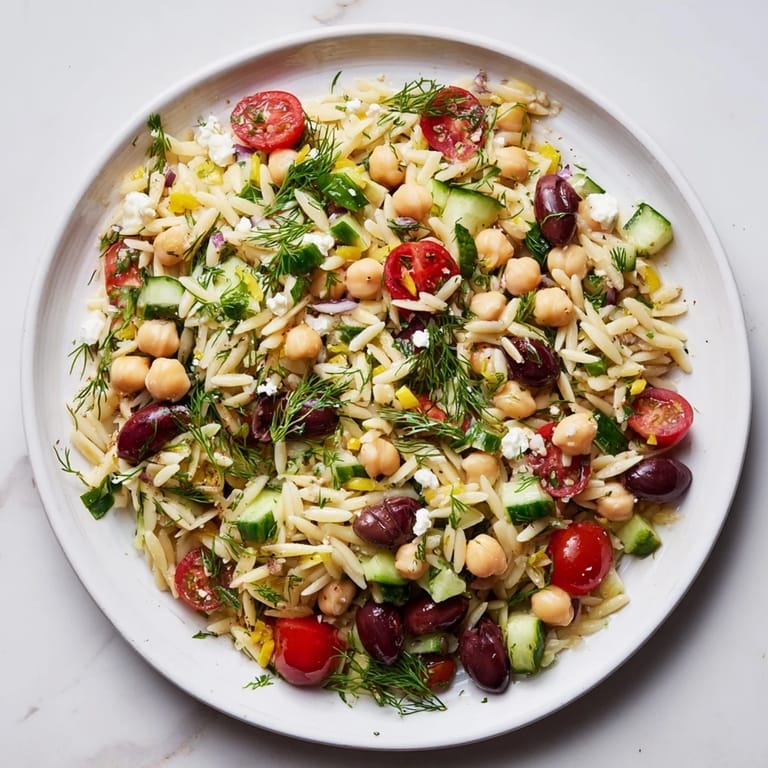
Save A friend brought this salad to a summer gathering, and I watched people keep coming back to it like it was the only thing on the table. There's something about the way fresh dill catches the light, how the lemon hits just right, and the chickpeas add this quiet substance that makes it feel like real food, not just something pretty to photograph. I asked for the recipe that night, made it the next day, and haven't stopped since.
I made this for a small lunch on the back patio one June afternoon, and my neighbor stopped by and ate three helpings standing up. She kept asking if it was complicated, surprised when I said no. That moment stuck with me—how something so effortless can feel celebratory.
Ingredients
- Dry orzo pasta: Don't skip rinsing it under cold water after cooking; it stops the starch from making everything sticky and starchy.
- Chickpeas: Rinse them thoroughly to remove the tinny flavor from the can and let them shine.
- Cherry tomatoes: Halving them instead of quartering keeps their juice from overwhelming the other vegetables.
- Cucumber: Dice it small so it mingles evenly rather than getting lost in big chunks.
- Scallions: The white and light green parts add a gentle onion bite without overpowering.
- Fresh dill: This is the backbone of the whole thing; don't use dried unless you absolutely have to.
- Fresh parsley: It's quieter than dill but adds a clean, garden-like note.
- Lemon zest and juice: The zest holds flavor even after sitting in the fridge, so don't leave it out.
- Extra virgin olive oil: This is where richness lives in a simple vinaigrette.
- Red wine vinegar: It's less sharp than white vinegar and plays well with Mediterranean flavors.
- Garlic: Minced very fine so it dissolves into the dressing rather than sitting as little sharp pieces.
- Dried oregano: A small amount whispers Mediterranean into every bite.
- Sea salt and black pepper: Finishing salt makes a difference here; it's worth using something you actually like.
- Feta cheese: Optional but transforms this from a side into something you could eat for lunch on its own.
- Kalamata olives: Briny and rich, they anchor the whole dish if you use them.
Tired of Takeout? 🥡
Get 10 meals you can make faster than delivery arrives. Seriously.
One email. No spam. Unsubscribe anytime.
Instructions
- Bring water to a boil and cook the orzo:
- Use a large pot with plenty of salted water so the pasta cooks evenly and tastes seasoned from the start. Cook it just until al dente—that moment when it's tender but still has a little resistance to the bite.
- Cool the orzo properly:
- Rinsing under cold water stops the cooking and prevents the pasta from turning into a starchy clump. Let it drain well so excess water doesn't dilute your vinaigrette later.
- Build the salad base:
- Combine orzo, chickpeas, tomatoes, cucumber, scallions, dill, and parsley in a large bowl. Gently mix so you don't bruise the tomatoes or dill.
- Make the vinaigrette:
- Whisk lemon zest, juice, olive oil, red wine vinegar, garlic, oregano, salt, and pepper together until it looks almost creamy. The lemon zest won't fully dissolve, but it should feel unified.
- Combine and taste:
- Pour the dressing over the salad and toss gently, then taste before adding feta or olives so you know what you're working with. You might want more lemon or salt depending on your tomatoes and how salty your feta is.
- Fold in any additions:
- Add feta and olives last so they don't break apart from aggressive tossing. Serve chilled or at room temperature—both are good, though it's more refreshing when cold.
 Save
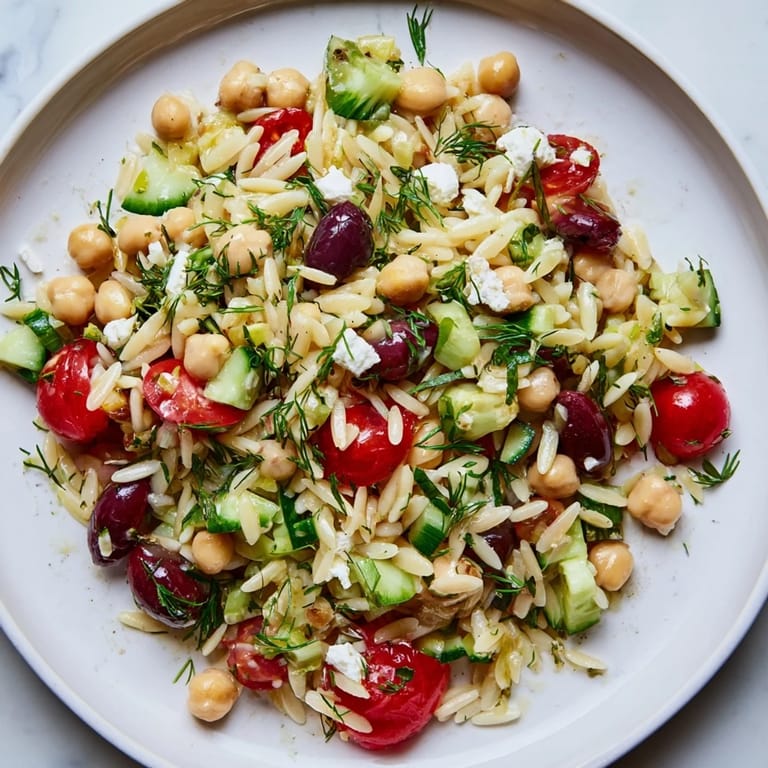
Save There's a point when you taste the salad cold from the fridge the next day and you understand why someone would ask for the recipe three times. The flavors have married, the dill has gotten more fragrant, and somehow everything tastes like the easiest, most impressive thing you've ever made.
Why This Salad Works Year-Round
In summer, it's the thing you make when you want something cold and bright. In fall, it works as a lunch box side that doesn't get sad by noon. Spring? The fresh herbs feel like a celebration. Even in winter, when you're tired of roasted vegetables, this reminds you that fresh, acidic food can feel luxurious without a stove.
Making It Your Own
The formula is forgiving. Swap dill for mint or basil if that's what you have. Add grilled chicken if you want protein, or shrimp if you're feeling fancier. Some people stir in crumbled feta right into the dressing instead of folding it in at the end, which makes the whole thing creamier and more cohesive. The recipe adapts without falling apart.
Storage and Make-Ahead
This salad tastes better after it's had time to sit, which makes it perfect for the kind of cooking where you're thinking ahead. Keep the dressed salad in the fridge for up to a day; the flavors meld and deepen, but the pasta won't turn mushy if you follow the timing rule above. Honestly, it stays good for two days if you don't mind a slightly softer orzo.
- Pack it in a container with the dressing on the side if you're taking it somewhere and want the best texture when you eat it.
- This is one of those recipes that tastes more like an afterthought than a project, which is part of why people ask for it.
- Cold from the fridge or sitting out at room temperature for an hour both work beautifully depending on the season.
 Save
Save This salad has quietly become the thing I make when I want to feel capable in the kitchen without much effort. It's one you'll come back to, probably more than you expect.
Your Questions Answered
- → How long should I cook the orzo?
Cook orzo until just al dente, usually about 8-10 minutes, then drain and rinse with cold water to stop cooking.
- → Can I use other herbs besides dill?
Yes, mint or basil can be substituted for dill to vary the fresh herb flavor.
- → Is it better served chilled or at room temperature?
This dish is versatile and tastes great both chilled and at room temperature, depending on your preference.
- → What adds the tangy flavor?
Lemon zest and juice combined with red wine vinegar create the bright, tangy vinaigrette dressing.
- → Can I add protein to this dish?
Grilled chicken or shrimp can be added for extra protein without compromising the fresh flavors.