 Save
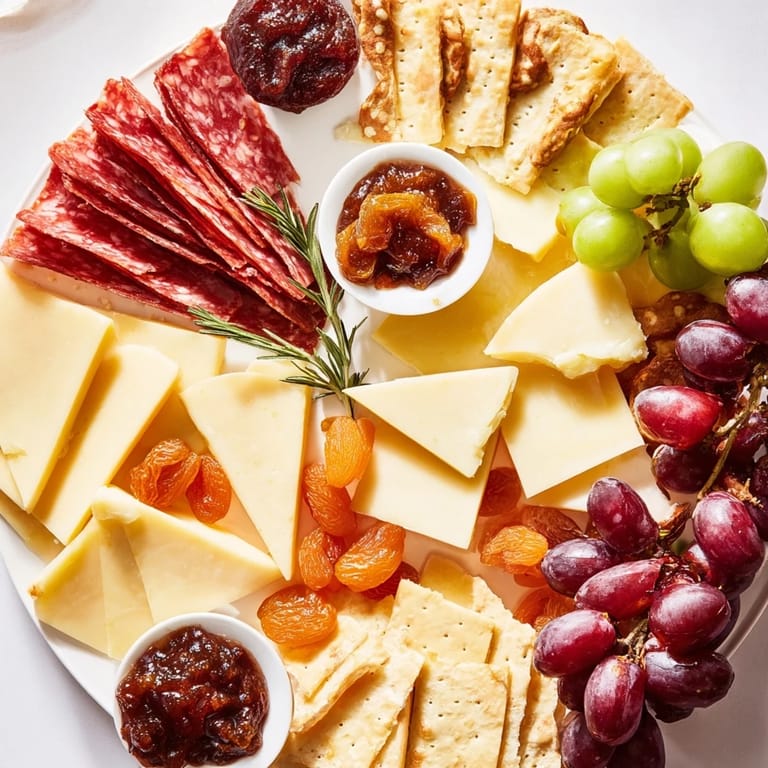
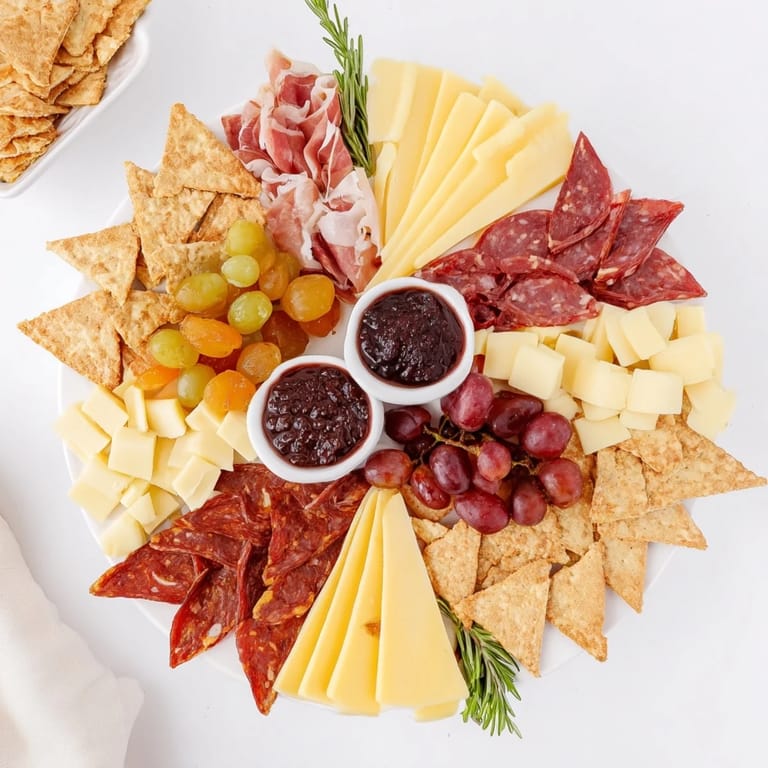
Save My sister called it 'recipe chaos' when I showed up to her dinner party with a cutting board and a ruler, determined to transform a simple charcuterie spread into geometric art. She laughed until she saw how the alternating triangles and rhombuses caught the light, creating this mesmerizing pattern that guests couldn't stop photographing. That night, I learned that sometimes the most impressive dishes aren't about complicated techniques—they're about seeing ordinary ingredients in a completely new way. The Geometric Gala was born from that happy accident of ambition meeting simplicity.
I remember standing in my kitchen on a rainy Thursday evening, knife in hand, when I realized I'd been cutting everything at random angles until that moment. Something clicked—what if every single piece told a story through its shape? Within minutes, the whole board transformed into this architectural landscape of triangles and diamonds, and I knew this was something I'd make again and again.
Ingredients
- Manchego cheese (150 g, cut into triangles): This Spanish classic has a subtle nuttiness that shines when you can really see each piece—firm enough to hold a sharp edge.
- Aged cheddar (150 g, cut into triangles): Look for a good quality block; the sharper the better, and it'll hold its triangular form beautifully on the board.
- Brie (100 g, chilled and cut into firm wedges): Chill it until it's almost solid so your knife cuts clean triangles without the cheese collapsing.
- Gruyère (100 g, cut into rhombuses): This one's nutty and complex, perfect for balancing the softer cheeses with its crystalline texture.
- Prosciutto (120 g, folded or cut into triangles): Let it stay at room temperature just before serving so it's silky, not rigid, and drape it loosely to catch the light.
- Soppressata (120 g, sliced and trimmed into rhombuses): The peppery bite here anchors the whole board—slice it thin so you can cut clean edges.
- Chorizo (100 g, sliced diagonally into rhombuses): The paprika color adds visual warmth to the geometric layout, and one slice per guest is usually just right.
- Seedless red and green grapes (1 small bunch each): They nestle into the gaps and remind your eye that not everything has to be geometric to feel intentional.
- Dried apricots (50 g, cut into diagonal pieces): Their golden color bridges the gap between the meats and the lighter elements.
- Marcona almonds (50 g): These round, delicate nuts create a soft contrast to all those sharp angles.
- Fig jam (2 tbsp): Serve it in a small bowl or a spoon rests on the board so guests can dab tiny amounts without chaos.
- Gluten-free seed crackers (100 g, broken into triangles): Break them gently along their natural lines rather than forcing them into perfect shapes.
- Fresh rosemary or thyme sprigs: These aren't just garnish—they release their aroma as guests reach for pieces, adding an invisible layer to the experience.
Tired of Takeout? 🥡
Get 10 meals you can make faster than delivery arrives. Seriously.
One email. No spam. Unsubscribe anytime.
Instructions
- Get your foundation sharp:
- Use a large, sharp chef's knife and place a cutting board under a damp towel so it doesn't slip while you work. Cut each cheese and meat into precise triangles and rhombuses, taking your time—a ruler helps if you want consistency, but imperfection actually looks more artisanal.
- Map your composition:
- Lay out your serving board and start with the cheeses and cured meats, alternating shapes and colors. Think of it like arranging a geometric pattern where every piece has its own moment to shine.
- Cluster the sweet and crunchy elements:
- Place small groupings of grapes and apricot pieces in the negative spaces between the meats and cheeses. They break up the density and add visual breathing room.
- Scatter the almonds thoughtfully:
- Don't just dump them everywhere—place handfuls in the gaps where they'll catch light and invite people to reach for them.
- Position your fig jam:
- Set it in a small bowl or spoon it directly onto the board in small dollops that guests can dip crackers and cheese into without disrupting your careful layout.
- Create crackers as part of the design:
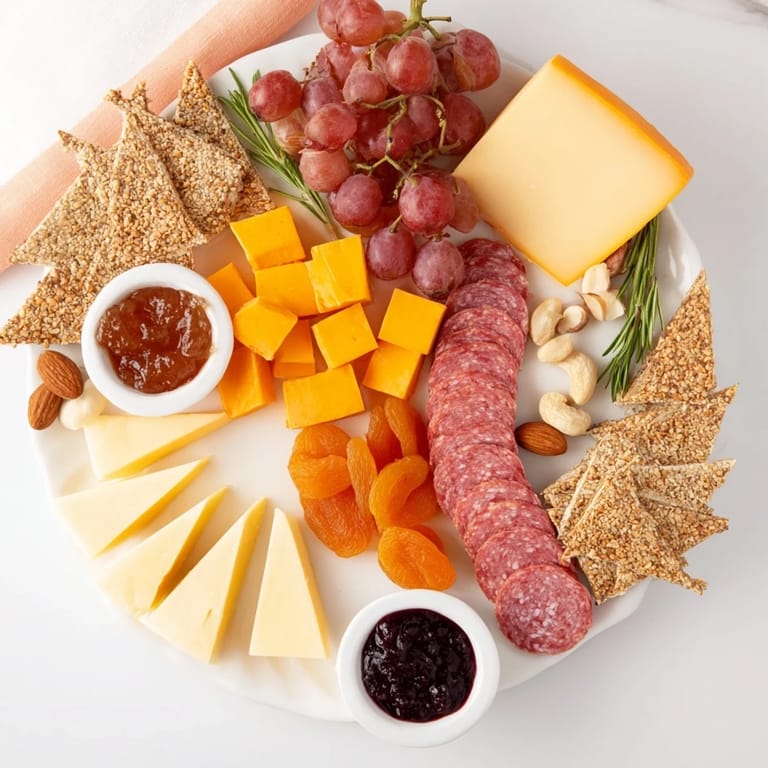
- Stack and fan your seed crackers in triangular formations, treating them as design elements rather than afterthoughts.
- Crown it with herbs:
- Tuck rosemary and thyme sprigs around the board so their aroma wafts up when guests hover over it, adding that sensory element that makes it memorable.
- Serve it proud:
- Bring the board to the table while everything is still perfectly arranged, and watch people hesitate before reaching for the first piece because it's too beautiful to disrupt.
 Save
Save There's a moment when everything clicks into place—when the last herb sprig settles into position and you step back to see what you've created. My friend Sofia walked past the board without touching anything for ten full minutes, just looking, and I realized that this dish isn't just about eating well; it's about slowing down enough to appreciate how beautiful simple ingredients can be when they're treated with intention.
The Geometry of Flavor
Cutting things into shapes might sound purely visual, but it actually changes how people experience the flavors. When you offer a triangle of aged cheddar instead of a random cube, guests approach it with curiosity rather than casualness. The geometric form creates what I call 'permission to linger'—each piece becomes deliberate, noticeable, worth savoring. I've noticed people take smaller bites from a board like this, which means they actually taste everything instead of grazing mindlessly.
Cheese Selection Strategy
The real trick is balancing textures and ages so that every bite tells a different story. Start with a younger, milder cheese, move to something aged and complex, then hit a soft, creamy moment with the brie. I usually recommend choosing cheeses that come from different parts of Europe—it expands the conversation and prevents flavor fatigue. The board becomes a journey instead of just a collection of snacks.
Making It Your Own
This is your template, not your boundary. I've done versions with smoked meats, versions with aged goudas, even a autumn version with apple slices and candied walnuts cut into diamonds. The magic isn't in these exact ingredients; it's in the commitment to the geometric theme and the care you take arranging each element. The moment you own that philosophy, you can remix it endlessly and it'll always feel intentional.
- Try cutting fresh mozzarella into cubes and then trimming the edges to create hexagons if you want to push the geometry further.
- Add a drizzle of good olive oil or honey directly on the board for dipping—it catches light and adds another layer of richness.
- Prep everything the morning of and cover with plastic wrap in the fridge; the moment before guests arrive, give the board a final arrangement sweep.
 Save
Save This board has become my secret weapon for gatherings that need a little magic. It's simple enough that anyone can make it, but impressive enough that people remember it. That's the whole point, really.
Your Questions Answered
- → What cheeses work best for creating geometric shapes?
Firm cheeses like Manchego, aged cheddar, Brie chilled until firm, and Gruyère hold their shape well when cut into triangles or rhombuses.
- → How can cured meats be shaped into geometric forms without tearing?
Using a sharp knife, slice cured meats thinly and fold or trim carefully into triangles or rhombuses to maintain a clean presentation.
- → What accompaniments enhance the flavor and visual appeal of the board?
Seedless red and green grapes, dried apricots cut diagonally, Marcona almonds, and fig jam add contrasting textures and colors.
- → Are there tips for arranging the board to emphasize the geometric theme?
Alternate shapes and colors strategically, placing the triangles and rhombuses in patterns that highlight the contrast for a modern look.
- → What garnishes work well to finish the presentation?
Fresh rosemary or thyme sprigs add aromatic appeal and a natural touch, complementing the clean lines of the shapes.
- → Can the board be adapted for different dietary needs?
Yes, using gluten-free seed crackers and choosing cheeses and meats that align with dietary preferences ensures inclusivity.