 Save
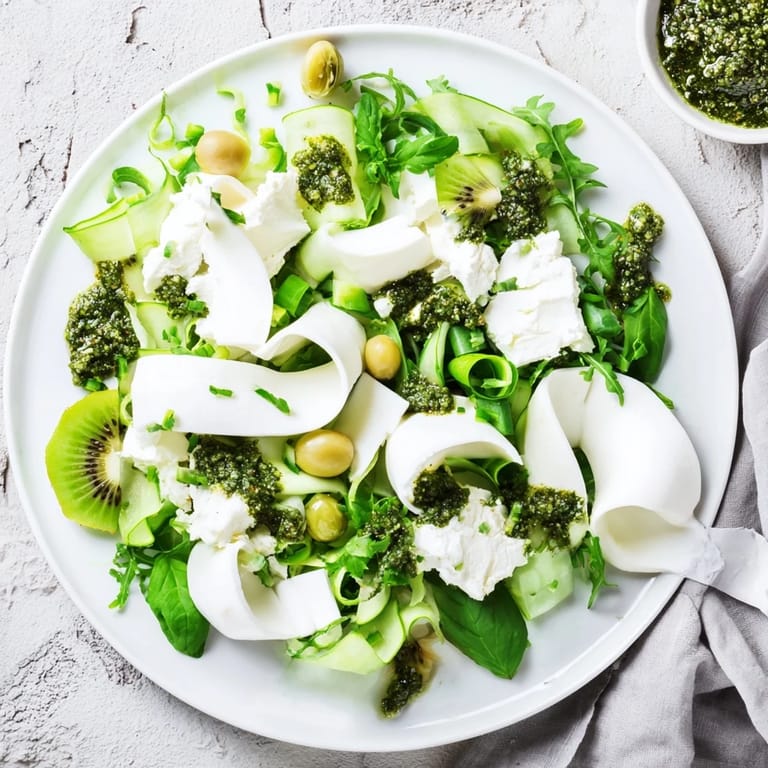
Save I discovered this salad on a sun-drenched afternoon in a small Tuscan kitchen, watching a chef layer greens like an artist creating a landscape on canvas. There was something magical about how she arranged each ingredient with such care, building depth with different shades of green until the platter looked less like food and more like an edible work of art. That moment changed how I think about salads—they don't have to be tossed and chaotic. Sometimes the most beautiful dishes are those that invite you to pause and admire before diving in.
I remember making this for my sister's garden party last summer, and watching her guests literally stop mid-conversation to photograph it before eating. Someone asked if I'd learned it from a fancy cooking school, and I loved that I could tell them it was just about understanding how to layer and present simple, beautiful ingredients. That's when I realized this salad isn't just delicious—it's a confidence builder in the kitchen.
Ingredients
- Baby spinach leaves, 100 g: Choose the youngest, most tender leaves you can find—they should feel delicate when you touch them. This is your foundation, so wash them gently and pat completely dry, or they'll release water into your finished salad.
- Arugula, 50 g: Its peppery bite is what keeps this salad from being one-note. I learned to add it last before serving if you're not eating right away, since it wilts faster than spinach.
- Cucumber, 1 small, thinly sliced: Use a mandoline for paper-thin slices that catch the light beautifully—they become almost translucent and add crucial textural contrast.
- Green bell pepper, 1, diced: The fresher this is, the sweeter it tastes. I always choose the heaviest pepper in the bin, which means it's packed with juice and flavor.
- Kiwis, 2, peeled and sliced: These bring a subtle tartness that bridges the gap between the vegetables and the creamy cheese. Let them sit out for 10 minutes before slicing so they're not ice-cold.
- Green grapes, 100 g, halved: Halving them makes them easier to eat and releases a little juice that mingles with the dressing. Choose grapes that are firm, not soft.
- Green olives, 50 g, pitted and sliced: Quality matters here—splurge on Castelvetrano or other buttery varieties if you can. The briny flavor is essential to the whole composition.
- Fresh basil leaves, 30 g: Tear them by hand rather than cutting with a knife, which bruises them. The smell alone will tell you if they're at peak freshness.
- Basil pesto, 3 tbsp: If you're making your own, blend basil, garlic, pine nuts, Parmesan, and olive oil just until it looks like rough sand. Store-bought works perfectly too, especially if you're short on time.
- Extra-virgin olive oil, 2 tbsp: Don't skip the quality here—this is one of the few ingredients you taste directly. A fruity, grassy oil makes all the difference.
- Lemon juice, 1 tbsp: Fresh squeezed is non-negotiable. Bottle lemon juice has a metallic aftertaste that will undermine all your careful layering.
- Salt and freshly ground black pepper: Taste as you go. I've learned that salads need more seasoning than you'd think because the fresh vegetables are quite mild.
- Fresh mozzarella, 100 g, torn into pieces or cut into strips: Buy it the day you're serving this, and let it come to room temperature for 30 minutes. Cold mozzarella tastes rubbery; warm mozzarella tastes like clouds.
- Crème fraîche or Greek yogurt, 1 tbsp (optional): This creates a creamy river effect and adds richness. I prefer crème fraîche because it has a subtle tang, but Greek yogurt works beautifully too.
Tired of Takeout? 🥡
Get 10 meals you can make faster than delivery arrives. Seriously.
One email. No spam. Unsubscribe anytime.
Instructions
- Build Your Green Foundation:
- Spread the baby spinach and arugula across your largest serving platter, covering it generously. This isn't a salad bowl situation—you want a wide, shallow canvas. The greens should look like a soft, billowing landscape. This is where the magic starts.
- Layer the Vegetables:
- Now comes the part that requires a little intentionality. Arrange the cucumber slices in a gentle overlapping pattern, then scatter the diced green bell pepper throughout. Step back and look at what you've done. You're building shade and dimension with each placement.
- Add the Jewels:
- This is my favorite part. Arrange the kiwi slices, green grape halves, and olive slices across the platter like you're placing jewels. There's no right or wrong way—trust your eye. Some areas should have clusters, others should be more sparse. You're creating visual rhythm.
- Tuck the Basil:
- Gently tear the fresh basil leaves and tuck them throughout the salad. Don't just scatter them on top—nestle them between other ingredients so they become part of the landscape rather than an afterthought.
- Make the Dressing:
- In a mixing bowl, whisk together the basil pesto, olive oil, lemon juice, and a pinch of salt and pepper. Taste it. It should taste bright and herbaceous, with a slight tang from the lemon. If it tastes flat, add more lemon juice, a drop at a time.
- Dress with Intention:
- Drizzle the dressing evenly over the entire salad, working in a gentle pattern so every area gets some. Don't drench it—you want the vegetables to glisten, not swim. The greens should look refreshed, not soggy.
- Create the Mozzarella River:
- Here's where your platter becomes a work of art. Arrange the torn mozzarella pieces in a meandering line across the salad, like a river flowing through the landscape. If you're using the crème fraîche or yogurt, dot it along the river in little spoonfuls. This creates a visual focal point and a creamy contrast to all the fresh vegetables.
- Serve and Admire:
- Bring the platter to the table while it still looks pristine. Let people see it before tossing. That moment of appreciation before eating is part of the recipe's magic. Then, when everyone's ready, you can gently toss it together, or let each person take what they want from the landscape.
 Save
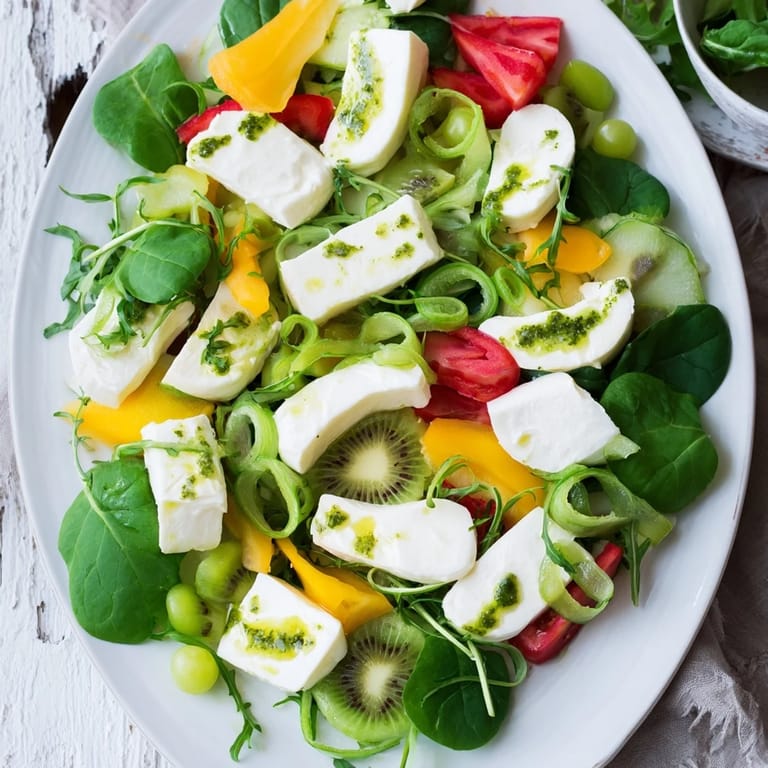
Save There was a quiet moment at that garden party when I watched someone take their first bite of this salad and close their eyes. They said, 'This tastes like summer feels,' and I understood then that food isn't just about nutrition or even flavor—it's about creating a moment where someone feels cared for. That's what this salad does. It says, 'I took time to make something beautiful for you.'
Variations and Personalization
This salad is a framework, not a rigid recipe. I've made it with different greens—watercress instead of arugula for extra peppery heat, or a mixture of lettuces when spinach isn't looking fresh. The key is to keep everything in the green family and maintain that color story. I once added sliced green apples instead of kiwis on an autumn evening, and it shifted the flavor profile toward something more savory and sophisticated. For crunch, try adding toasted pistachios or pumpkin seeds just before serving—they don't add much color, but they transform the texture in a way your guests will definitely notice. If you're vegan, use a high-quality vegan pesto and a plant-based mozzarella that actually melts and tastes good; not all of them do, so test yours first.
The Art of Presentation
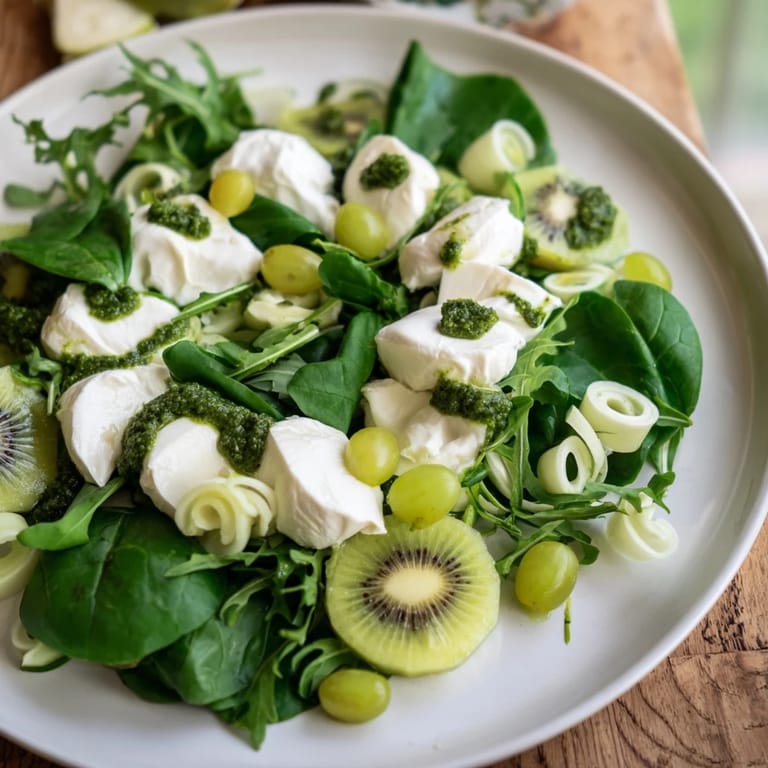
What surprised me most about this salad is how much the presentation affects the eating experience. When food is arranged with care, people taste it differently—they're more present, more appreciative. I've learned that the size of your platter matters; too small and everything looks crowded, too large and it looks sparse. A platter about 14-16 inches across is ideal. Also, the height of your layering matters. Build some depth so that when light hits the salad, it catches different surfaces and creates shadow and dimension. A flat, pressed salad might be delicious, but it won't have the same impact. Think of yourself as a painter, and green is your palette.
Pairing and Serving Suggestions
I serve this salad as the star of a meal, not as a side dish, because it deserves that spotlight. It pairs beautifully with light proteins—grilled fish, roasted chicken, or for vegetarians, some creamy burrata or grilled halloumi on the side. For drinks, a crisp Sauvignon Blanc is perfect, with its herbaceous notes echoing the basil and arugula. If you're not serving alcohol, a citrusy sparkling water with fresh lemon keeps the lightness and freshness going. The best part about this salad is that it makes people slow down and pay attention to what they're eating. In a world of rushed meals, that feels like a quiet rebellion.
- Serve at room temperature or chilled, depending on the season and your preference.
- If you must prepare it in advance, keep the components separate and assemble just before serving.
- This salad doesn't keep well overnight, so plan to serve it fresh.
 Save
Save This salad taught me that sometimes the most impressive dishes are the simplest ones, made with attention and care. Every time I make it, I remember that kitchen in Tuscany, and I feel grateful that one beautiful moment inspired something I now share with people I love.
Your Questions Answered
- → What greens are used in this dish?
Baby spinach and arugula form the fresh, leafy base, providing mild and peppery flavors.
- → How is the creamy element incorporated?
Fresh mozzarella is arranged in a meandering line to create a creamy, visually striking 'river' effect.
- → Can this be made vegan-friendly?
Yes, substitute the mozzarella and pesto with plant-based alternatives for a vegan adaptation.
- → What flavors does the dressing bring?
The basil pesto combined with olive oil and lemon juice adds herbaceous, zesty notes that brighten the greens.
- → Are there suggestions to add texture contrast?
Toasted pistachios or pumpkin seeds can be added for a delightful crunch.