 Save
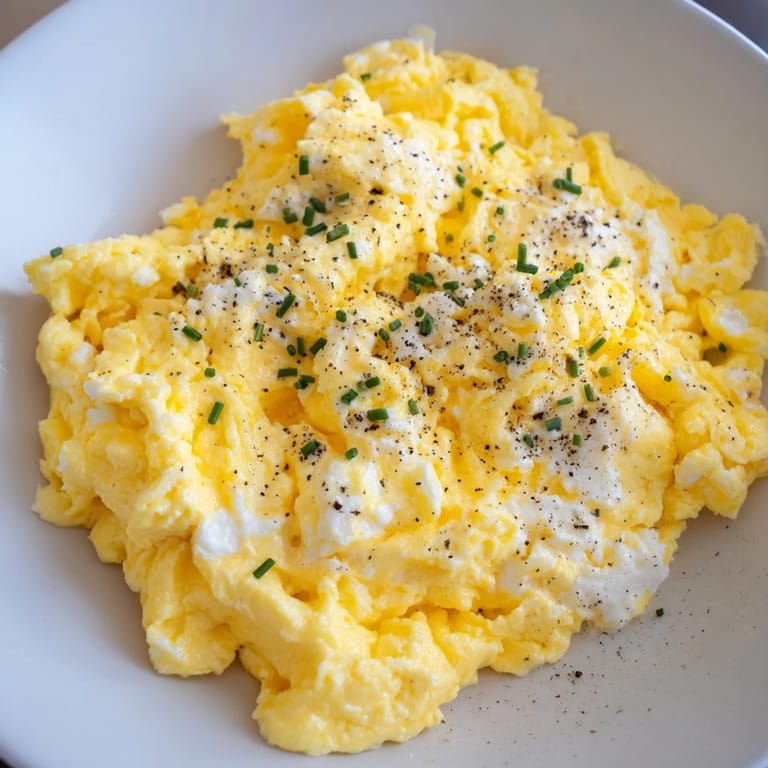
Save There's something almost magical about discovering that cottage cheese belongs in scrambled eggs. I'd been making the same tired breakfast for years until my neighbor mentioned her secret one morning over coffee, and I was skeptical at first—cottage cheese sounded like an odd addition to something so simple. But that first bite changed everything: the eggs were impossibly fluffy, almost cloud-like, and so much more satisfying than my usual rubbery morning scramble. Now it's the only way I make them, and I genuinely look forward to breakfast again.
My sister came home from the gym one Saturday morning absolutely famished, and I threw this together while she showered. When she sat down and took her first bite, she got this surprised look and asked what I'd done differently. That moment made me realize this wasn't just a healthier breakfast for me anymore—it had become something I actually wanted to share with people.
Ingredients
- 4 large eggs: Room temperature eggs blend more smoothly with the cottage cheese and create a silkier finish.
- 1/3 cup cottage cheese: Full-fat is the move here—it's creamier and richer than low-fat versions, and it's what creates that fluffy, almost custardy texture.
- 1 tablespoon milk or cream: Just enough liquid to help everything blend together without making the eggs watery.
- 1/4 teaspoon salt and 1/8 teaspoon black pepper: Season gently at first and taste as you go since cottage cheese has its own subtle saltiness.
- 1 tablespoon unsalted butter: The medium-low heat with good butter is what prevents those sad, rubbery edges and keeps everything tender.
- 1 tablespoon chopped chives or parsley: A small handful of fresh herbs adds color and a brightness that makes the whole plate feel intentional.
Tired of Takeout? 🥡
Get 10 meals you can make faster than delivery arrives. Seriously.
One email. No spam. Unsubscribe anytime.
Instructions
- Whisk everything together:
- Combine eggs, cottage cheese, milk, salt, and pepper in a bowl, whisking until the mixture is well blended and you see light foam forming on top. Don't overthink this part—just make sure there are no lumps of cottage cheese hiding at the bottom.
- Warm your skillet gently:
- Melt the butter over medium-low heat until it's foaming gently and smells toasty—this is key because medium-high heat will ruin the delicate texture. Let it bubble for a few seconds but don't let it brown.
- Pour and let it breathe:
- Add the egg mixture and resist the urge to stir immediately. Let it sit untouched for about 20 seconds so the bottom can start to set, then gently push it from the edges toward the center with your spatula.
- Cook low and slow:
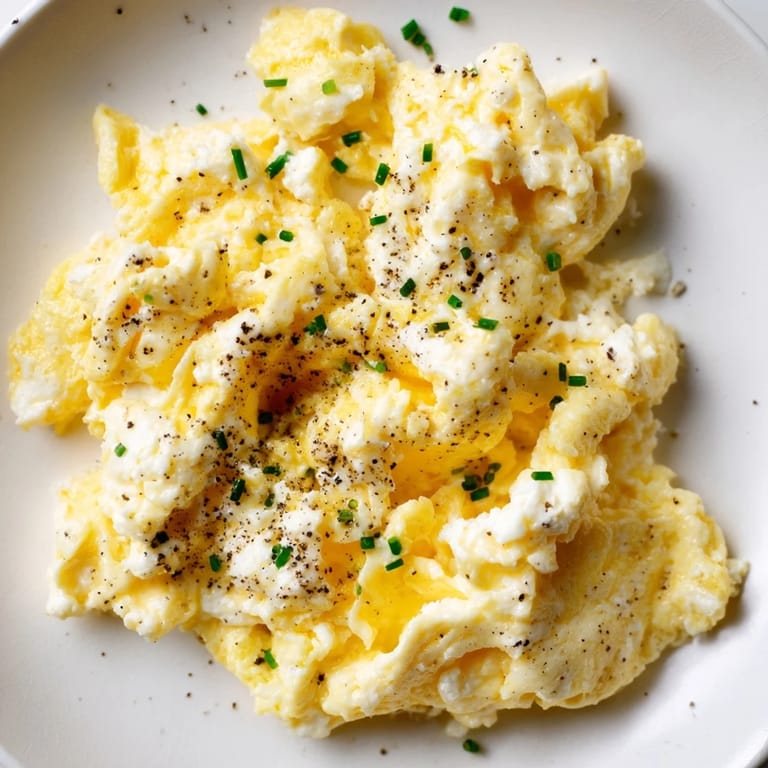
- Keep stirring occasionally, every 15 seconds or so, letting the curds form slowly. The whole process takes 2-3 minutes, and you want to stop the second the eggs look just barely set with a slight shine.
- Serve while warm:
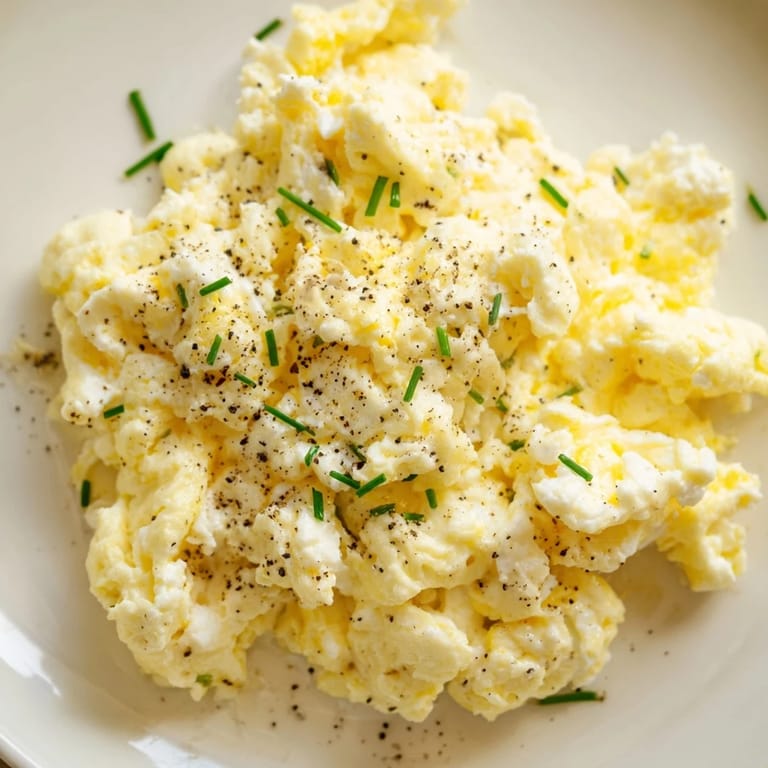
- Transfer to your plate immediately and add a pinch of chives or parsley if you have them. The eggs will continue cooking slightly from residual heat, so pulling them a touch early prevents that overcooked feeling.
 Save
Save What surprised me most wasn't just how good these eggs taste, but how they've become a comfort thing—the kind of breakfast I make on mornings when I need something that feels both nourishing and indulgent at the same time. It's a small thing, but it's changed how I think about what a simple breakfast can be.
Why This Works
Cottage cheese is mostly water and protein, which means it doesn't weigh eggs down the way cream would. Instead, it creates tiny pockets of moisture that steam during cooking, which is what gives you that fluffy, almost soufflé-like texture. The fat in full-fat cottage cheese also adds richness without making things greasy, and it blends invisibly into the eggs so you don't taste distinct curds—just pure fluffiness. It's one of those ingredient tricks that sounds weird on paper but feels brilliant the moment you taste it.
Flavor Boost Ideas
The beauty of this base is how versatile it is once you understand the technique. I've stirred in sharp cheddar right before serving, crumbled feta and dill, even smoked salmon with capers for something more brunch-like. The cottage cheese keeps everything creamy regardless of what you add, so you can be creative without worrying about dry eggs.
Making This a Real Meal
On busy mornings, I'll make these eggs while whole-grain toast is in the toaster, and by the time everything hits the plate together, it feels like a complete breakfast. A few avocado slices on the side add healthy fat, or sometimes I'll quickly sauté a handful of spinach or cherry tomatoes while the eggs cook. The combination of protein and fiber keeps you satisfied way longer than toast and jam ever did.
- Pair with whole-grain toast, sliced avocado, or roasted tomatoes for a balanced meal.
- Fresh herbs scattered on top (dill, basil, or tarragon) add sophistication without extra effort.
- Keep your heat at medium-low no matter how hungry you are—rushing this dish only leads to regret.
 Save
Save This is the kind of breakfast that feels both simple and a little special, the sort of thing that makes you actually want to sit down and eat instead of rushing out the door. Once you try it, you'll understand why it became my go-to.
Your Questions Answered
- → How does cottage cheese affect the texture?
Cottage cheese adds creaminess and moisture, making the eggs extra fluffy and tender.
- → Can I use different herbs for garnish?
Yes, parsley, chives, or even dill complement the flavors beautifully.
- → Is it better to use full-fat or low-fat cottage cheese?
Full-fat cottage cheese enhances creaminess, but low-fat works for a lighter option.
- → What cooking technique ensures fluffy eggs?
Cooking over medium-low heat and gentle stirring helps maintain a soft, airy texture.
- → Can I add vegetables or proteins to this dish?
Absolutely—try spinach, tomatoes, or smoked salmon for added flavor and nutrition.