 Save
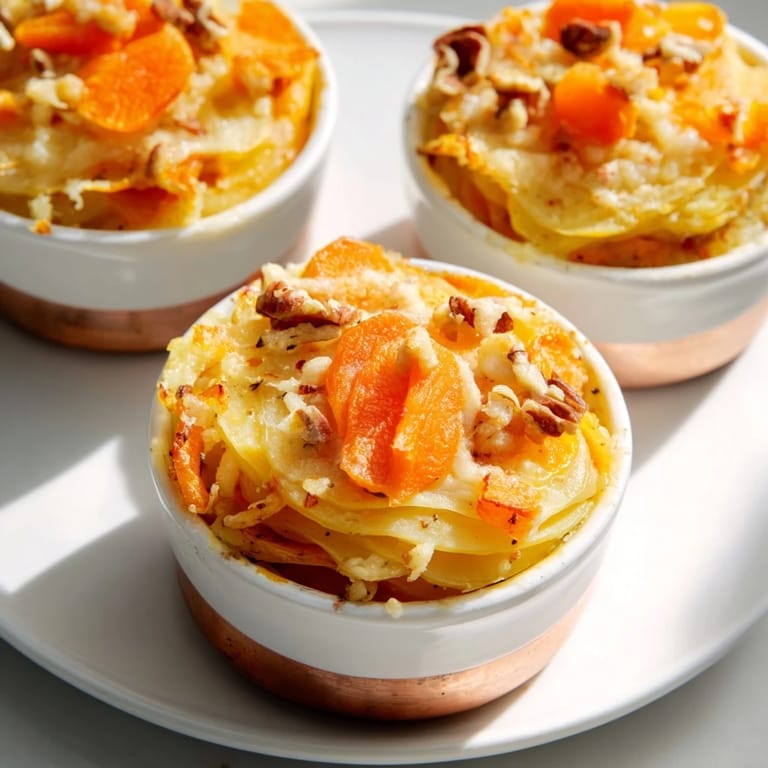
Save I discovered this dish on a crisp autumn afternoon while browsing a vintage cookbook at a farmer's market. The copper ramekins caught my eye first—those warm, penny-colored vessels gleaming under the sunlight—and I became instantly enchanted. There was something about the promise of roasted vegetables, the sweetness of apricots, and that melted aged cheddar that felt like edible comfort. I rushed home to my kitchen and created this layered beauty, and the moment I pulled it from the oven, I knew I'd stumbled onto something special.
I'll never forget serving these at a small dinner party last October. One guest took a spoonful, paused mid-chew, and said, "Wait, is that apricot?" The surprised delight on their faces was worth every minute of careful layering. My friend Sarah asked for the recipe immediately, and now it's become our little tradition—we make these whenever the seasons shift and the air turns crisp.
Ingredients
- Sweet potatoes (2 medium, peeled and thinly sliced): These are your foundation—sweet, vibrant, and they release just enough moisture to help everything cook together harmoniously. Slice them thin so they soften properly in 25 minutes
- Carrots (2 large, peeled and thinly sliced): The natural sweetness echoes the apricots, and their bright color adds visual warmth to each ramekin. Consistency in thickness matters here—aim for coin-sized slices
- Olive oil (2 tablespoons): This carries all the flavor and helps everything brown beautifully. Don't skimp—it's what creates those golden edges
- Smoked paprika (1 teaspoon): This is the secret ingredient that nobody identifies but everyone loves. It adds depth and a hint of smokiness that makes people ask, "What is that flavor?"
- Sea salt (½ teaspoon) and black pepper (¼ teaspoon): Season generously at this stage—the vegetables need it more than you'd think
- Dried apricots (½ cup, sliced): These nuggets of concentrate sweetness prevent the dish from feeling too savory. They soften beautifully in the oven's steam
- Pecan halves (½ cup, lightly toasted): Toasting them first brings out their nutty richness and adds textural contrast. It's a small step that makes a genuine difference
- Aged cheddar cheese (1 cup, coarsely grated): The aged variety has more personality than mild cheddar—use something with character that's been aged at least six months
- Fresh chives (2 tablespoons, finely chopped): Optional, but the fresh brightness at the end feels like a little gift to yourself
Tired of Takeout? 🥡
Get 10 meals you can make faster than delivery arrives. Seriously.
One email. No spam. Unsubscribe anytime.
Instructions
- Heat your oven and gather your vessels:
- Preheat to 400°F and arrange your four copper ramekins (or oven-safe dishes) on a baking sheet. This matters more than you'd think—having everything ready means you can move confidently through the next steps without rushing
- Season and dress the vegetables:
- In a large bowl, toss your thinly sliced sweet potatoes and carrots with olive oil, smoked paprika, salt, and pepper. The paprika should coat everything in a subtle rust-colored haze. Take your time here—make sure every slice is touched by oil and spice
- Create your layers:
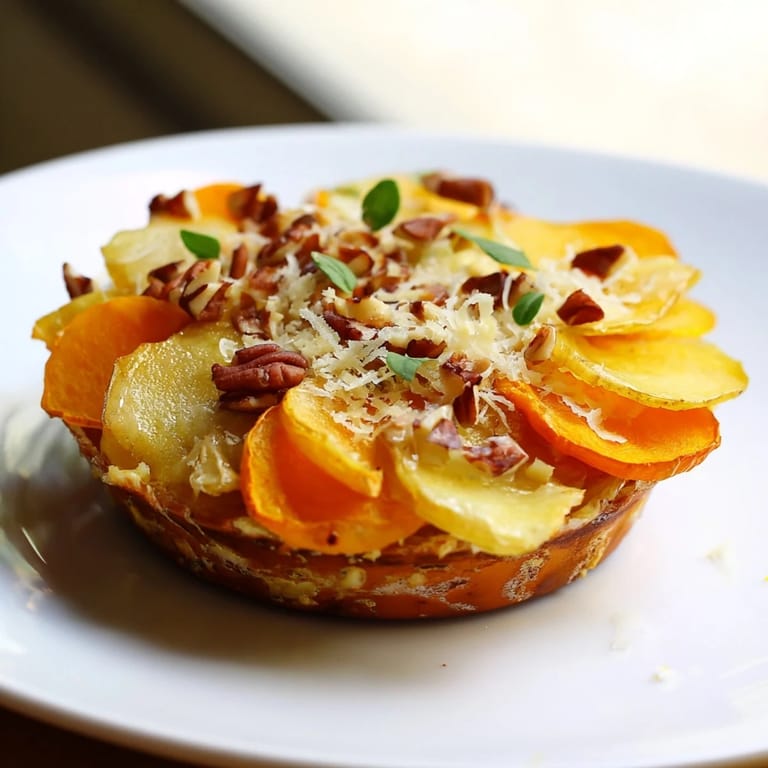
- This is the meditative part. In each ramekin, begin layering: a few overlapping sweet potato slices, then carrots, a scatter of apricots, a few pecans, and repeat. Imagine you're creating a tiny mosaic. The arrangement doesn't have to be perfect, but it should feel intentional. The vegetables should be snug but not compressed
- The first bake:
- Cover each ramekin loosely with foil—this traps steam and softens the vegetables without letting them dry out. Slide them into the oven for 20 minutes. You'll know it's working when you smell that wonderful caramelizing sweetness starting to fill your kitchen
- Reveal and crown:
- Remove the foil carefully (steam rises!), and top each ramekin generously with your grated aged cheddar. Return to the oven for just five more minutes. You're watching for the cheese to melt into golden pools and the edges to brown slightly
- Rest and serve:
- Remove from the oven and let cool for just a few minutes—this sets everything slightly so the layers hold together. Scatter chives on top if using. Serve warm, right in the ramekins, so each person gets that cozy copper vessel experience
 Save
Save What really got me, the moment I truly fell in love with this dish, was when my six-year-old nephew took a bite and said, "It tastes like autumn." He couldn't articulate why—just that the combination somehow tasted like the season itself. That innocence and honesty reminded me that food isn't just sustenance or even technique. Sometimes it's just a feeling on a plate.
The Beauty of Copper in the Kitchen
I chose copper ramekins for this dish because they do something special—they conduct heat evenly, yes, but they also bring warmth to the table. There's something about serving from copper that makes simple food feel ceremonial. Even if you don't have copper, small oven-safe ceramic or cast iron dishes work beautifully. The magic isn't in the material; it's in the care you take plating everything with intention.
Playing with Variations
This dish is more flexible than it appears. I've made it with dried figs when apricots weren't available, and the earthier sweetness was wonderful. I've also swapped the aged cheddar for a sharp gruyere, which brought a different kind of sophistication. One winter, I added a tiny pinch of cayenne pepper to the spice mixture, and it created this subtle heat that made people reach for another spoonful.
Making It Your Own
The real joy of this recipe is that it invites personalization. Think of it as a template rather than a strict mandate. The vegetable base of sweet potatoes and carrots is forgiving and adaptable to whatever is at your farmer's market or in your pantry.
- For a vegan version, use a high-quality plant-based cheddar or a nutritional yeast blend—it won't be identical, but the layered roasted vegetables shine regardless
- If tree nuts are a concern, use roasted sunflower seeds instead of pecans for a similar textural contribution
- This pairs beautifully with a medium-bodied Chardonnay or a spiced apple cider if you're serving it to friends
 Save
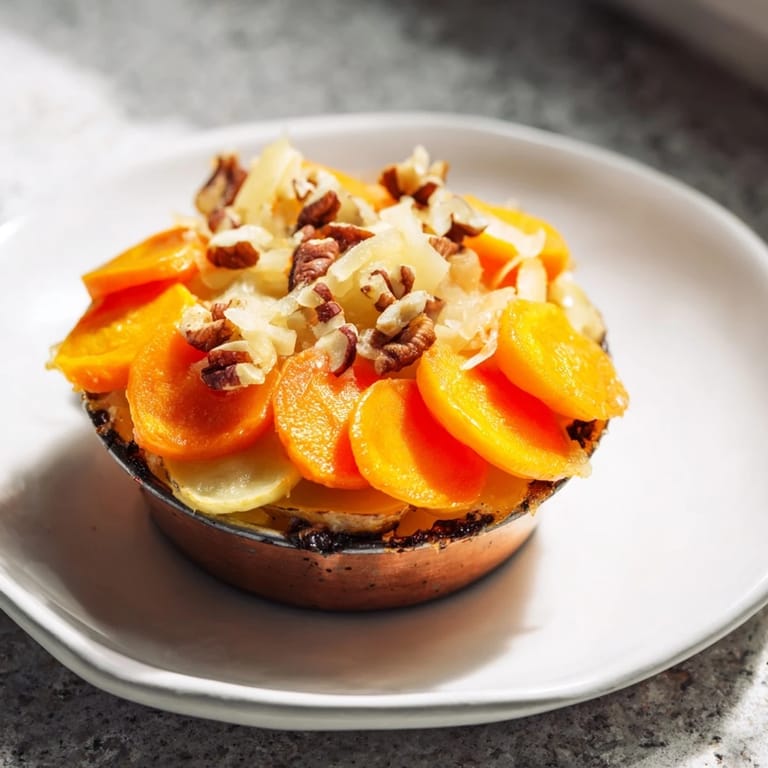
Save This recipe taught me that sometimes the most elegant dishes come from simple ideas executed with care. Every time you make it, you're creating small copper vessels of warmth and flavor—the kind of dish that reminds people why they love gathering around a table.
Your Questions Answered
- → Can I substitute the dried apricots?
Yes, dried figs or dates can replace apricots for a different sweet profile.
- → What cheese works best in this dish?
Aged cheddar provides a sharp, creamy contrast that melts beautifully over the vegetables.
- → How do I make this dish gluten-free?
Ensure the cheddar used is gluten-free and check for any cross-contamination with nuts.
- → Can I prepare this ahead of time?
Yes, you can assemble the layers in ramekins a few hours ahead and refrigerate until baking.
- → What wine pairs well with this dish?
A medium-bodied Chardonnay or spiced cider complements the warm, sweet and smoky flavors.