 Save
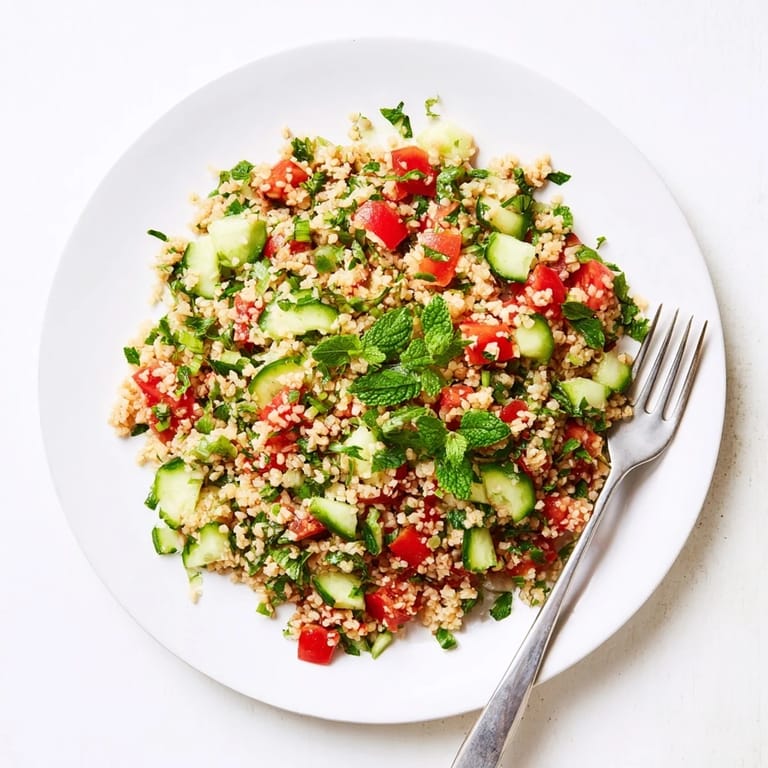
Save The first time I made tabbouleh was during a scorching summer when the thought of turning on the oven made me wilt faster than basil in the sun. Standing in my kitchen, sweat beading on my forehead, I chopped mountains of parsley until my hands were stained green and fragrant. The vibrant colors transforming my cutting board looked like an edible mosaic, and that first forkful – bright with lemon and herbs – instantly transported me somewhere cooler, somewhere ancient.
I remember bringing this tabbouleh to a neighborhood potluck where it sat next to heavy pasta salads and mayo-laden coleslaws. As the evening wore on, I noticed people returning to the table, bypassing other dishes to scoop second and third helpings of my humble bowl of greens and grains. An elderly Lebanese woman approached me afterward, eyes twinkling, and whispered that my tabbouleh reminded her of home. She squeezed my hand and told me the secret was respecting the parsley as the star, not the bulgur.
Ingredients
- Fine bulgur wheat: I prefer the fine grind which absorbs liquid quickly and gives that authentic fluffy texture that coarser varieties sometimes miss.
- Fresh flat-leaf parsley: The foundation of any proper tabbouleh, I learned to use mostly leaves and fine stems for the perfect balance of flavor and texture without bitterness.
- Fresh mint: This brightens everything up with its cooling quality, and Ive found that young tender leaves provide the most delicate flavor without overwhelming the other ingredients.
- Cucumber: Seeding prevents excess moisture from making your salad soggy, a lesson I learned after serving what amounted to bulgur soup at an early attempt.
- Lemon juice: Freshly squeezed makes all the difference, creating that zippy brightness that bottled versions can never quite match.
Tired of Takeout? 🥡
Get 10 meals you can make faster than delivery arrives. Seriously.
One email. No spam. Unsubscribe anytime.
Instructions
- Prepare the bulgur:
- Pour boiling water over the bulgur in a large bowl, watching as the tiny grains begin to absorb the liquid like tiny sponges. Cover and let it stand for 10-15 minutes until tender, then fluff with a fork, creating little air pockets that will help cool it faster.
- Chop the herbs:
- Finely chop the parsley and mint, releasing their aromatic oils that will perfume your kitchen with the scent of gardens and sunshine. The finer your chop, the more evenly the flavors will distribute throughout the salad.
- Prep the vegetables:
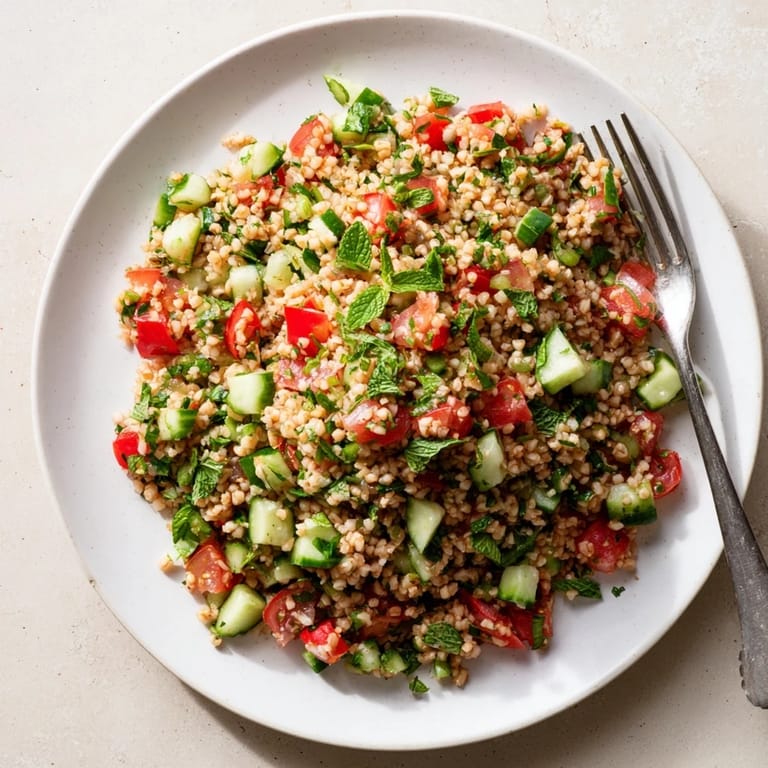
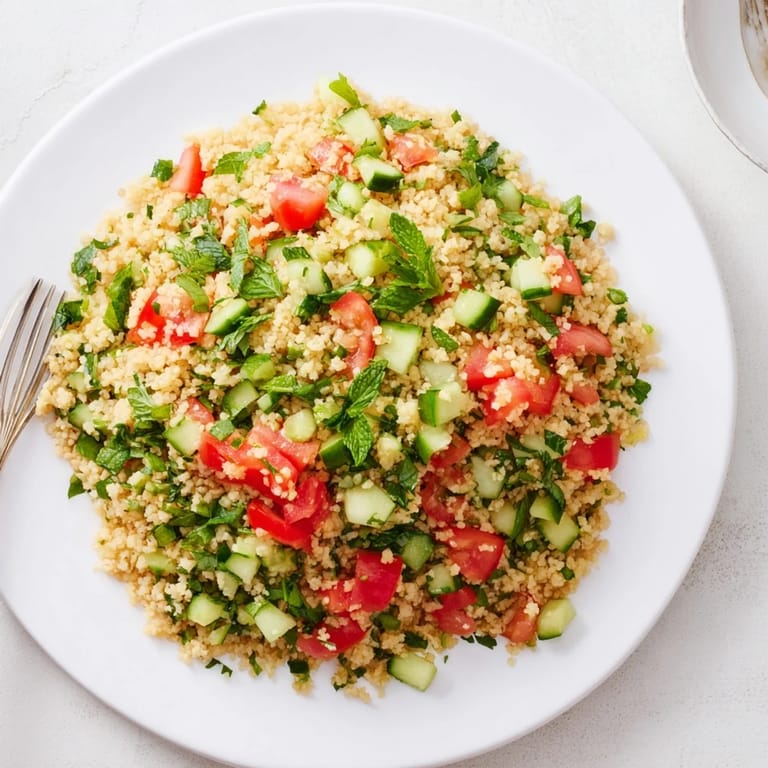
- Dice tomatoes and cucumber into small, jewel-like pieces about the size of the bulgur grains for textural harmony. Slice the scallions thinly to provide a gentle oniony bite without overwhelming the delicate herbs.
- Mix the dressing:
- Whisk olive oil, lemon juice, and garlic together until they form a temporary emulsion, the garlic infusing the mixture with its pungent warmth. Season with salt and pepper, tasting as you go to find that perfect balance between tart and savory.
- Combine and marinate:
- Gently toss everything together with reverent hands, watching as the colors meld into a vibrant patchwork. Let the salad rest in the refrigerator for at least 20 minutes, giving the flavors time to get acquainted and fall in love with each other.
 Save
Save Last spring, I packed this tabbouleh for a solo hike, sitting atop a ridge overlooking valleys of wildflowers while eating from my little container. Something about the simplicity of the meal, the ancient grains and fresh herbs, connected me to generations of people who had eaten similar dishes while looking out over similar landscapes. Food rarely makes me contemplative, but tabbouleh somehow manages to be both nourishing and philosophical all at once.
Making It Your Own
After making tabbouleh dozens of times, Ive discovered its one of those forgiving recipes that welcomes experimentation. Ive added diced avocado for creaminess, tossed in pomegranate seeds for jewel-like pops of sweetness, and even introduced roasted eggplant for a smoky dimension. Each variation teaches me something new about balance and contrast, but the fundamental character always remains - bright, fresh, and somehow both rustic and elegant.
Serving Suggestions
Tabbouleh creates this wonderful contrast when served alongside richer foods, cutting through their heaviness like a cool breeze. I love it heaped into warm pita bread with a dollop of hummus, as a bed for grilled chicken or fish, or simply on its own with good olive oil drizzled over top. It transforms from side dish to main course when topped with crumbled feta and toasted pine nuts, becoming substantial enough for a light dinner that doesnt leave you feeling weighed down.
Storage and Make-Ahead
Tabbouleh has taught me the beauty of a dish that improves with a short rest but knows when its time is up. The first day brings bright, distinct flavors where you can taste each component individually. By day two, everything melds together in perfect harmony, the bulgur softening further and the herbs infusing the grains with their essence.
- Store leftovers in an airtight container in the refrigerator for up to three days, though the vibrant green color will gradually fade.
- If preparing ahead for a gathering, chop all ingredients and store separately, then combine with dressing about 30 minutes before serving.
- A squeeze of fresh lemon juice and a drizzle of olive oil can revive day-old tabbouleh, bringing back some of its initial brightness.
 Save
Save Tabbouleh reminds us that extraordinary dishes often come from ordinary ingredients, transformed through simple but thoughtful preparation. May your kitchen fill with the scent of fresh herbs and lemon as you create this ancient dish that continues to feel so perfectly modern.
Your Questions Answered
- → Can I prepare tabbouleh ahead of time?
Yes, tabbouleh actually tastes better when made a few hours or even a day ahead. This allows the flavors to meld together. Store it covered in the refrigerator and give it a gentle stir before serving. Add fresh herbs on top just before serving to maintain their bright color and flavor.
- → What can I use instead of bulgur?
You can substitute bulgur with cooked quinoa, millet, or couscous for a gluten-free option. Cooked farro also works well. Use the same volume of cooked grain as you would bulgur. Each grain will slightly alter the texture and flavor, but all work beautifully in this salad.
- → How do I get the best flavor from fresh herbs?
Use the freshest herbs available, preferably flat-leaf parsley and spearmint. Finely chop them just before adding to avoid bruising, which darkens the leaves. The high ratio of herbs to grain is what makes authentic tabbouleh distinctive, so don't skimp on the herbs.
- → Can I make this salad vegan?
Absolutely! Tabbouleh is naturally vegan as written. The olive oil dressing is plant-based, and all the ingredients are vegetables and grains. If serving with additions, ensure any accompaniments are vegan-friendly. It pairs wonderfully with falafel for a complete vegan meal.
- → What's the best way to serve tabbouleh?
Serve tabbouleh chilled or at room temperature with fresh lemon wedges on the side. It pairs beautifully with grilled vegetables, falafel, or roasted meats. You can also serve it on a bed of lettuce leaves or alongside hummus and pita bread for a traditional Middle Eastern spread.
- → How long does tabbouleh keep?
Properly stored in an airtight container, tabbouleh keeps for 3-4 days in the refrigerator. The flavors actually improve over time as the bulgur continues to absorb the dressing. If it seems dry after a day or two, drizzle with a bit more olive oil and lemon juice before serving.