 Save
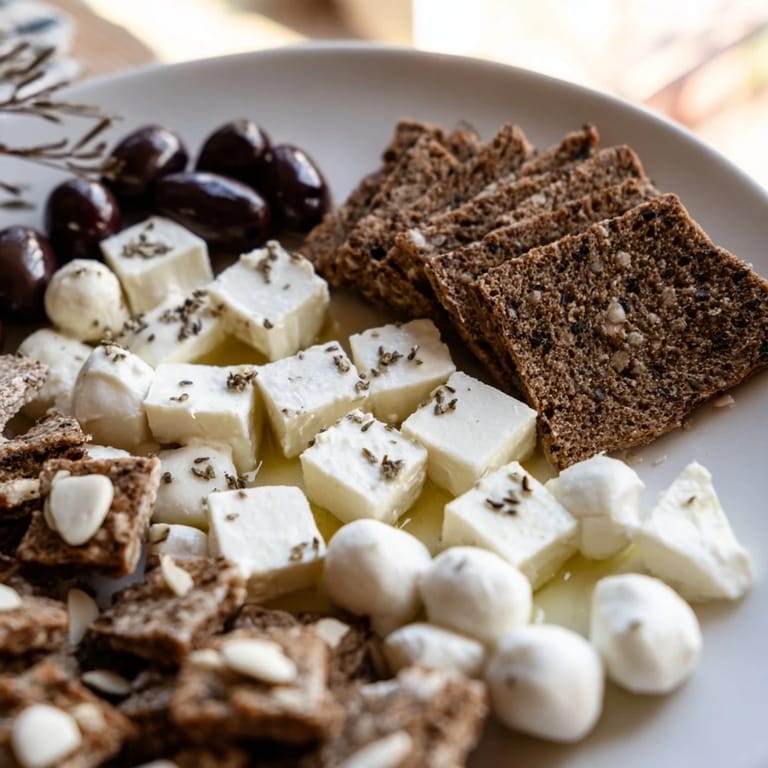
Save I'll never forget the first time I arranged a black and white platter for my sister's engagement party. I was nervous, honestly—the brief was intimidating: make it look like something from a high-end gallery opening, but keep it simple enough that I wouldn't stress in the kitchen. As I laid out those perfectly contrasting ingredients on white porcelain, something magical happened. The geometric patterns began to emerge, almost like a painting, and suddenly I understood that elegance doesn't require complexity. It just requires intention and a little bit of visual courage.
I made this for my best friend's baby shower, and watching the guests gasp when I brought it out made me realize that food isn't just about taste—it's about creating moments. One of the mothers-to-be said it was too beautiful to eat, then grabbed three pieces anyway. That's when I knew I'd created something special.
Ingredients
- Black olives (Kalamata or Niçoise), pitted: These are your anchor for visual drama—choose them for their deep, glossy finish rather than just flavor. The pitting matters; you want them to sit flat and proud on your platter
- Dark rye bread, sliced: This becomes your geometric foundation, and honestly, it's the unsung hero. Look for bread with real depth of color; pale bread won't give you that striking contrast you're after
- Fresh mozzarella balls (bocconcini or ciliegine): Drain them thoroughly before plating—excess moisture will make your platter look sad and soggy. Room temperature tastes better than cold straight from the fridge
- Fresh mozzarella, large ball, sliced: Use the sharpest knife you have for clean slices. Dragging a dull blade through cheese crushes it, and crushed edges don't look elegant
- Black sesame seeds: These add texture and intentionality. Sprinkle them with a light hand—restraint is what makes this look sophisticated
- White sesame seeds: The counterpoint to black; they catch light beautifully and add a subtle crunch when someone bites into that rye bread
- Blanched almonds: These are your minimalist white accents, creating visual breathing room. They also add a whisper of richness
- Black mission figs, halved: Optional, but they add an unexpected sweetness that makes people pause and appreciate the complexity. Use them if you want the platter to tell a more layered story
- Vanilla bean: This is the element that surprised me the most. Those tiny black seeds scattered across white mozzarella add an aromatic elegance that's almost invisible until someone leans in and smells it
- Extra virgin olive oil: This is your finishing touch and your glue. Good oil makes all the difference in how this comes together
- Flaky sea salt and cracked black pepper: These are your seasonings and your visual punctuation marks
Tired of Takeout? 🥡
Get 10 meals you can make faster than delivery arrives. Seriously.
One email. No spam. Unsubscribe anytime.
Instructions
- Cut your bread into geometric shapes:
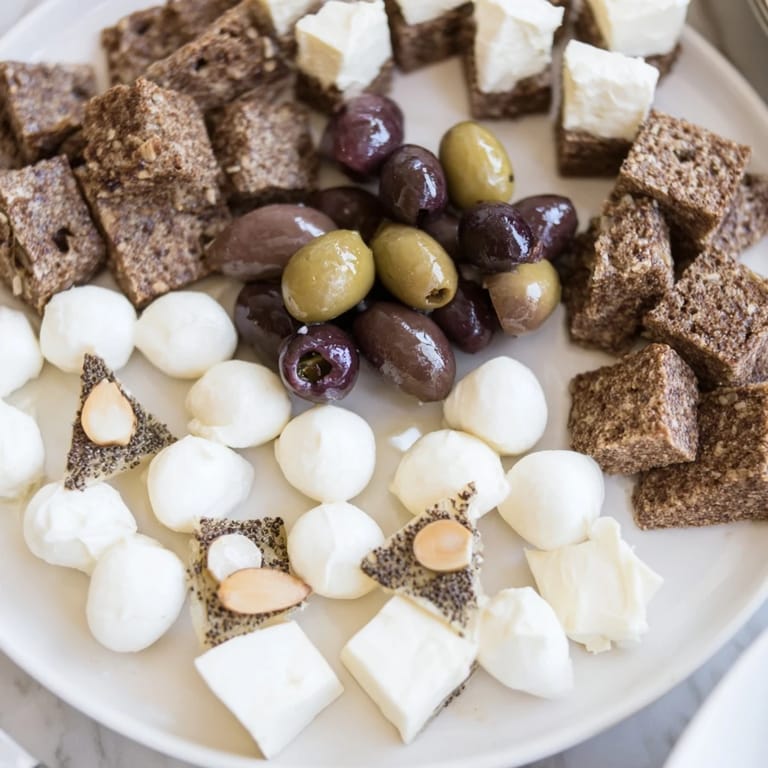
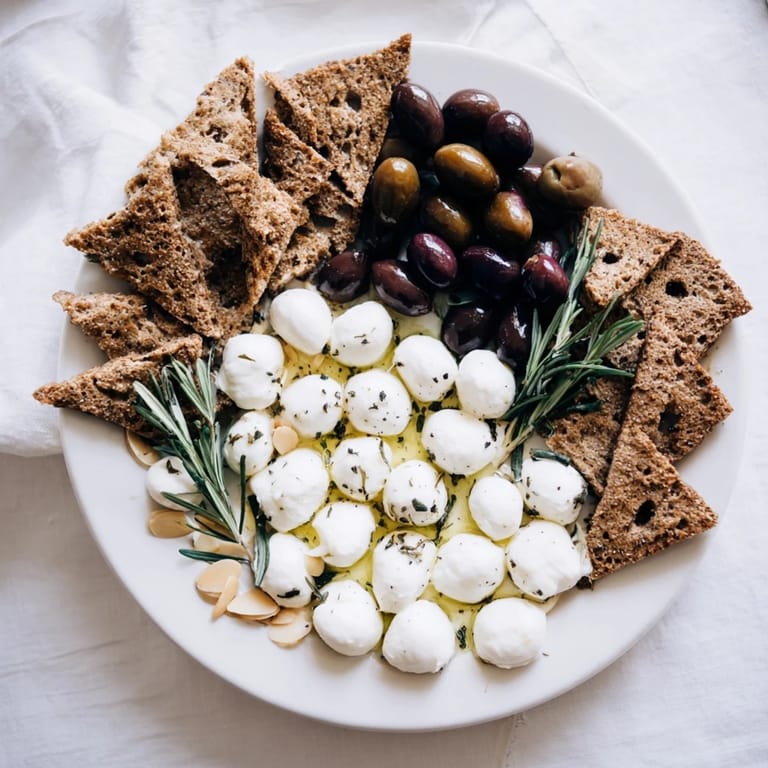
- Using a sharp knife, cut your dark rye bread into squares, triangles, or rectangles. I like mixing shapes—it feels more intentional than just squares. Arrange them in alternating rows or patterns across your large platter. Think about this like the grid of your composition; everything else will layer on top of this foundation.
- Create your first black and white contrast:
- Now place your black olives and mozzarella balls in alternating lines or circles. You want them to create a visual rhythm, like a conversation between two colors. Step back and look at it from above—that's how your guests will see it first.
- Layer in the sliced mozzarella:
- Slice your large mozzarella ball and arrange those slices in geometric shapes alongside the bread. Overlapping or fanning them slightly gives dimension. Leave some space; negative space is just as important as what you're placing.
- Sprinkle your sesame seeds for texture:
- Here's where the platter starts to feel finished. Sprinkle black sesame seeds over the white mozzarella and white sesame seeds over the rye bread. Don't go heavy-handed; these are accents, not coatings. You want to see the ingredients underneath.
- Add your figs if you're using them:
- If you've chosen to include the black mission figs, halve them and place them strategically. They add both color contrast and an element of surprise. This is an optional touch, but it's what transforms this from a pretty platter into something memorable.
- Place your almonds in clusters:
- Scatter blanched almonds in minimalist clusters or lines. They're your white punctuation marks. I like grouping them in threes or fives rather than spreading them everywhere; it feels more deliberate.
- Finish with oil and seasoning:
- Drizzle extra virgin olive oil over the cheese and bread with a careful hand. Then sprinkle flaky sea salt and a touch of black pepper if desired. This is the moment your platter becomes edible art.
- Add the vanilla seed magic:
- Using the tip of a knife, gently scrape vanilla seeds from the pod and dot them artistically atop your mozzarella slices. This is your signature touch—unexpected, elegant, and aromatic. It's the detail that makes people ask, 'What is that?'
- Serve at the perfect moment:
- Bring this to the table immediately to maintain crispness, or cover and refrigerate for up to an hour. If you refrigerate, let it sit out for five minutes before serving so the flavors aren't muted by cold.
 Save
Save What I love most about this platter is that it's become my go-to when I want to impress without spending hours in the kitchen. There's something deeply satisfying about creating something that's both beautiful and delicious in under thirty minutes.
The Art of Color Contrast
The real magic of this platter is in understanding how black and white work together. In design, this is called maximum contrast, and it makes things impossible to ignore. When you're arranging your ingredients, think about creating visual pathways with color. The eye naturally follows patterns, so if you create alternating lines or circles of black and white, you're actually guiding people through the platter like a visual experience. I've noticed that guests interact with platters arranged this way differently—they slow down, they look more carefully, they take their time choosing. That's the power of intentional arrangement.
Why This Works for Formal Occasions
There's something about black and white that reads as inherently sophisticated. Maybe it's because these are the colors of formal wear, of tuxedos and evening gowns. Maybe it's because contrast itself feels deliberate and curated. Whatever the reason, this platter has a way of elevating any gathering. I've served it at birthday parties, anniversaries, and professional events, and it works in all contexts. The ingredients are simple enough that they won't compete with other dishes on your spread, but the presentation is striking enough that it becomes a focal point. It's the appetizer that people remember after the main course is forgotten.
Storage and Make-Ahead Strategy
The beauty of this recipe is that most of the work can be done ahead of time. You can cut your bread and drain your mozzarella hours before the event. You can even arrange everything on the platter and cover it loosely with plastic wrap for up to an hour before serving. The only things you should do right before guests arrive are the oil drizzle and the vanilla seed scatter—these are your finishing touches that keep everything looking fresh. One important note: if you're making this more than an hour ahead, leave the sesame seeds off until just before serving. They can get a bit soft if they sit on the moist cheese for too long, and you want them to maintain that textural crunch.
- Prep everything that can be prepped—cut bread, drain cheese, have your bowl of olives ready—and do only the final assembly within thirty minutes of serving
- If making ahead, cover loosely with plastic wrap and keep at room temperature if your kitchen isn't too warm, or refrigerate if you're in a hot climate
- Always let the platter sit out for a few minutes before serving if you've refrigerated it, so the cheese and oil aren't ice cold
 Save
Save This platter is proof that elegance isn't about complexity—it's about intention. Make it with confidence, and let the beauty of the contrast do the work for you.
Your Questions Answered
- → How do I create the geometric patterns?
Use a sharp knife to cut dark rye bread into squares, triangles, or rectangles, arranging them in alternating rows or patterns on a platter.
- → Can I prepare this platter in advance?
For best crispness, serve immediately. You may cover and refrigerate up to 1 hour before serving.
- → Are there gluten-free alternatives for this dish?
Yes, substitute gluten-free dark bread to accommodate dietary preferences or restrictions.
- → What adds subtle aroma to the white elements?
Scraping vanilla bean seeds atop mozzarella slices imparts a gentle, elegant fragrance without overpowering.
- → How can I enhance flavor contrast on this platter?
Sprinkle black sesame seeds over mozzarella and white sesame seeds on bread; add blanched almonds or black mission figs for additional texture and sweetness.