 Save
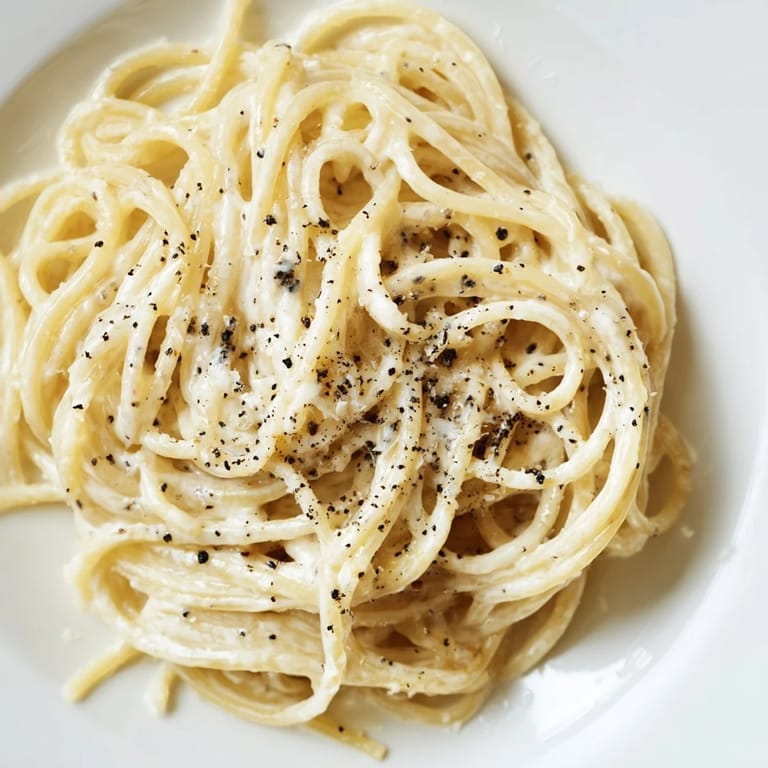
Save My roommate came back from Rome obsessed with this dish, insisting we had to make it that night. I thought she was exaggerating how good three ingredients could taste. Twenty minutes later, I was scraping my plate with bread, stunned that something so simple could taste that rich. Now it's my go-to when I want to impress without the stress.
I made this for my parents on a weeknight when they dropped by unexpectedly. My mom watched me toss the pasta with cheese and hot water, convinced it would turn into a clumpy mess. When she tasted it, she went silent for a moment, then asked for the recipe. That's when I knew I'd actually learned something worth sharing.
Ingredients
- Spaghetti (400 g): The long strands hold the creamy sauce beautifully, and their texture when cooked al dente gives each bite the perfect chew.
- Pecorino Romano cheese (120 g, finely grated): This sheep's milk cheese is sharp and salty, the soul of the dish, so buy a good wedge and grate it fresh.
- Freshly cracked black pepper (2 tsp, plus extra): Toasting it releases oils that make the pepper floral and complex, not just spicy.
- Salt: Essential for the pasta water, it seasons the noodles from within and helps build the sauce.
Tired of Takeout? 🥡
Get 10 meals you can make faster than delivery arrives. Seriously.
One email. No spam. Unsubscribe anytime.
Instructions
- Boil the pasta:
- Bring a large pot of well salted water to a rolling boil, then add the spaghetti and cook until just al dente. Before draining, scoop out 1 cup of that starchy cooking water and set it aside.
- Toast the pepper:
- While the pasta cooks, add the black pepper to a large skillet over low heat and toast it for 1 to 2 minutes, stirring often until it smells warm and aromatic. This step wakes up the pepper and makes it shine.
- Build the base:
- Pour about half a cup of the reserved hot pasta water into the skillet with the toasted pepper and let it simmer gently. The water will start to pick up the pepper's flavor and turn slightly cloudy.
- Toss the pasta:
- Add the drained spaghetti directly to the skillet and toss it around so every strand gets coated in that peppery water. Work quickly and keep the heat low.
- Add the cheese:
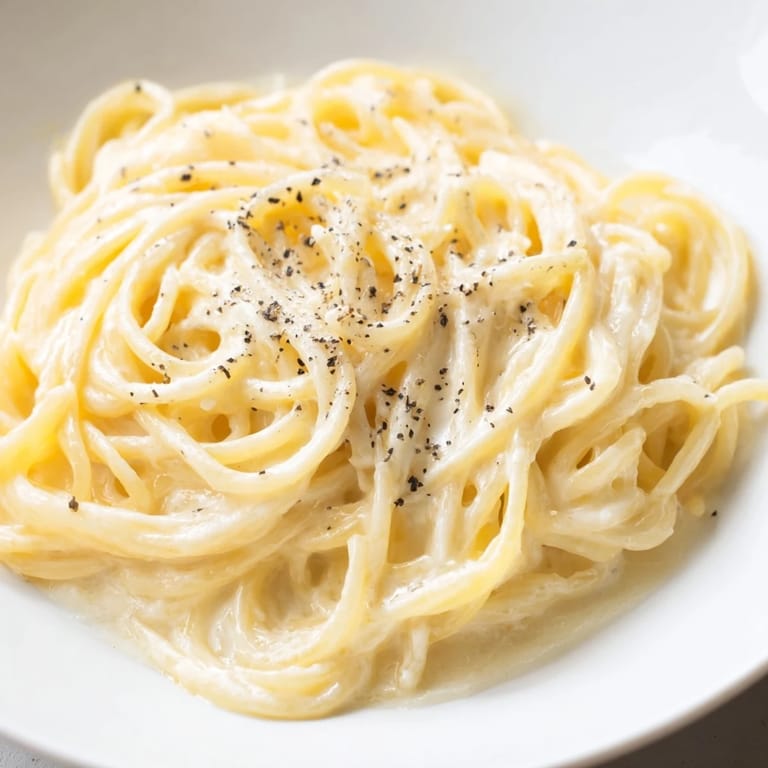
- Remove the skillet from the heat and sprinkle in the grated Pecorino Romano a little at a time, tossing vigorously and adding splashes of reserved pasta water as needed. The goal is a glossy, creamy sauce that clings to every noodle without clumping.
- Serve:
- Plate the pasta immediately, finishing each serving with an extra shower of Pecorino and a few more cracks of black pepper. Eat it hot, right away, while the sauce is silky.
 Save
Save One night I made this after a long shift and ate it standing at the counter in my tiny kitchen. No music, no phone, just me and a bowl of pasta that tasted like comfort and competence. It reminded me that some of the best meals don't need an occasion, they create one.
Choosing Your Cheese
Pecorino Romano is traditional and gives the dish its signature sharpness, but if you can't find it or want something gentler, Parmigiano Reggiano works too. I've even mixed half and half when I wanted a little more sweetness to balance the pepper. Just make sure whatever you use is real cheese, not the shelf stable kind, because the sauce depends on it melting properly.
Getting the Sauce Right
The secret is in the pasta water, that cloudy liquid is full of starch that acts like glue between the cheese and the noodles. I learned to save more than I think I need because adding it gradually lets me control the consistency. If the sauce gets too thick, a splash loosens it right up. If it's too thin, a bit more cheese and some vigorous tossing will bring it together.
Serving and Pairing
This dish is best eaten immediately, straight from the pan if you're feeling casual. I like to serve it in warm bowls with extra cheese and pepper on the table so everyone can adjust to their taste. A crisp white wine like Vermentino or Pinot Grigio cuts through the richness beautifully, and a simple green salad on the side is all you need.
- Warm your serving bowls in the oven for a minute so the pasta stays hot longer.
- Leftover Cacio e Pepe doesn't reheat well, so make only what you'll eat.
- If you have guests, prep your cheese and pepper in advance so you can focus on the tossing.
 Save
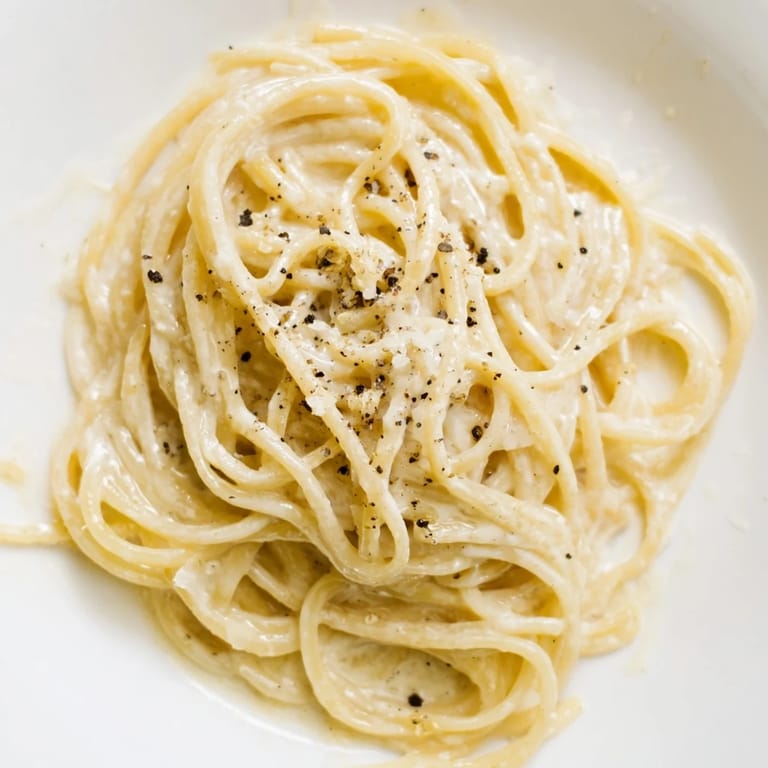
Save Once you nail this recipe, you'll realize how little you need to make something extraordinary. It's become my proof that technique beats complexity every time.
Your Questions Answered
- → Why is pasta water essential in Cacio e Pepe?
Pasta water contains starch that helps emulsify the cheese with the heat and pepper, creating a creamy sauce without cream or butter. The starch acts as a natural binder, transforming grated cheese into a silky coating on each strand of spaghetti.
- → Can I use Parmesan instead of Pecorino Romano?
Yes, Parmigiano Reggiano works as a substitute, though it will deliver a milder, less salty flavor profile. Pecorino Romano's distinctive sharpness is traditional and authentic to the Roman original.
- → How do I prevent the cheese from clumping?
Work quickly and continuously stir the pasta while gradually sprinkling in the finely grated cheese. Keep the heat low and add small amounts of reserved pasta water as needed to maintain a creamy consistency and prevent the cheese from seizing.
- → What's the best way to crack black pepper for this dish?
Use a mortar and pestle or peppercorn mill for coarsely cracked pepper rather than pre-ground. Toast the cracked pepper in a dry skillet for 1-2 minutes before adding pasta water to intensify its aromatic oils and flavor.
- → How much pasta water should I reserve?
Reserve at least 1 cup (240 ml) of pasta cooking water before draining. You'll use about half immediately, with the remainder on hand for adjusting the sauce consistency. The starchy water is crucial for achieving the proper creamy texture.
- → Can this dish be made ahead or reheated?
Cacio e Pepe is best served immediately after cooking. The emulsified sauce can break if sitting or reheated. For fresh enjoyment, prepare it just before serving to maintain the silky, creamy sauce and optimal flavor.