 Save
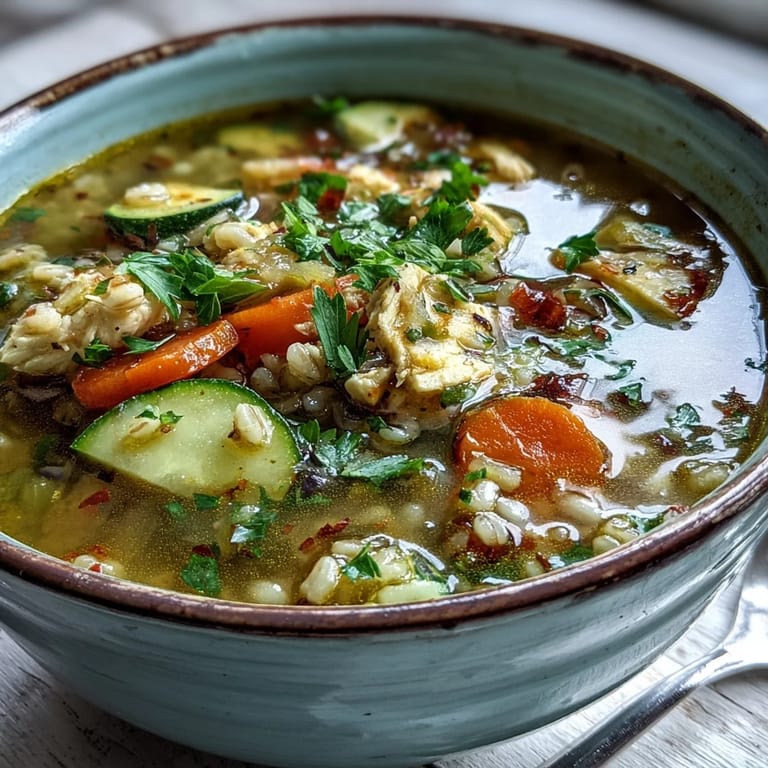
Save There's something about a golden soup simmering on the stove that shifts the entire mood of a kitchen. My friend Sarah brought this turmeric chicken and barley soup to my place on a grey afternoon when I was feeling run down, and watching her ladle it into bowls while steam rose up in curling wisps reminded me why comfort food isn't just about taste—it's about intention. The warmth of turmeric fills the air before you even taste it, and somehow the barley, so humble and underrated, becomes the backbone that holds everything together. I've made it dozens of times since, tweaking nothing, because it works exactly as it should.
I made this for my partner when he was recovering from a work injury, and I remember him asking for seconds before he'd even finished his first bowl. That's when I knew I'd found something special—not because of any technique, but because it genuinely nourished him. He'd sit at the kitchen counter while I cooked, and the smell alone seemed to ease something in him.
Ingredients
- Boneless, skinless chicken breasts (2, about 400 g, diced): Use good quality poultry if you can—it dissolves into tender pieces rather than turning stringy, and the broth becomes richer from it.
- Pearl barley (3/4 cup, rinsed): Rinsing removes the starch coating, so your soup stays clear and refined instead of becoming cloudy; this step genuinely matters.
- Carrots (2 medium, diced) and celery (2 stalks, diced): These create the flavor foundation along with onion—don't skip the sauté step or you'll miss their sweetness developing.
- Yellow onion (1 medium, finely chopped): Finely chopped means it dissolves into the broth rather than existing as visible chunks; it's a small detail that changes everything.
- Garlic (3 cloves, minced): Add it after the softer vegetables or it turns bitter; this is learned wisdom from one burnt batch early on.
- Zucchini (1 small, diced): Added late in cooking so it keeps its shape and slight firmness rather than becoming mushy baby food.
- Low-sodium chicken broth (6 cups): This is your canvas—use the best broth you can find or make your own; it matters more than you'd think.
- Ground turmeric (1 1/2 teaspoons): This is the soul of the soup; blooming it in oil with the spices releases its warmth and prevents it from tasting medicinal.
- Ground cumin (1/2 teaspoon) and dried thyme (1/2 teaspoon): Together they build complexity without overpowering the turmeric's gentle, golden presence.
- Sea salt (1 teaspoon) and black pepper (1/2 teaspoon): Taste as you go because salt is personal, and you can always add more but you can't take it back.
- Fresh parsley (2 tablespoons, chopped) and lemon wedges: The brightness at the end lifts everything—don't skip these unless you want a one-note experience.
Tired of Takeout? 🥡
Get 10 meals you can make faster than delivery arrives. Seriously.
One email. No spam. Unsubscribe anytime.
Instructions
- Start with the sacred soften:
- Heat olive oil in your pot over medium heat and add the onion, carrots, and celery all at once. You'll know they're ready when the onion turns translucent and the kitchen smells almost sweet—about 5 minutes in. Listen for that gentle sizzle rather than a loud hiss; that's your signal the heat is just right.
- Bloom the spices:
- Stir in the garlic, turmeric, cumin, and thyme, cooking for exactly 1 minute until the raw edge softens and the aroma becomes almost floral. This blooming step is what separates a flat soup from one with actual soul—don't rush it or extend it.
- Introduce the chicken:
- Add the diced chicken and stir for 2 to 3 minutes, watching as the edges shift from pink to opaque white. You're not cooking it through here; you're just sealing the outside so it stays tender in the broth.
- Build the broth:
- Pour in the chicken broth and add the rinsed pearl barley, salt, and pepper, stirring to distribute everything evenly. The barley will sink to the bottom initially, but that's exactly where it needs to be.
- The gentle simmer:
- Bring everything to a boil, then immediately reduce the heat to low and cover the pot. Simmer for 35 minutes, stirring every 10 minutes or so to keep the barley from sticking—this is also your chance to taste and adjust seasoning gradually.
- The final addition:
- Add the diced zucchini, cover again, and simmer for another 10 to 15 minutes until the barley is tender but not mushy and the chicken is completely cooked through. You'll know it's ready when a piece of barley crushes easily between your teeth.
- Taste and finish:
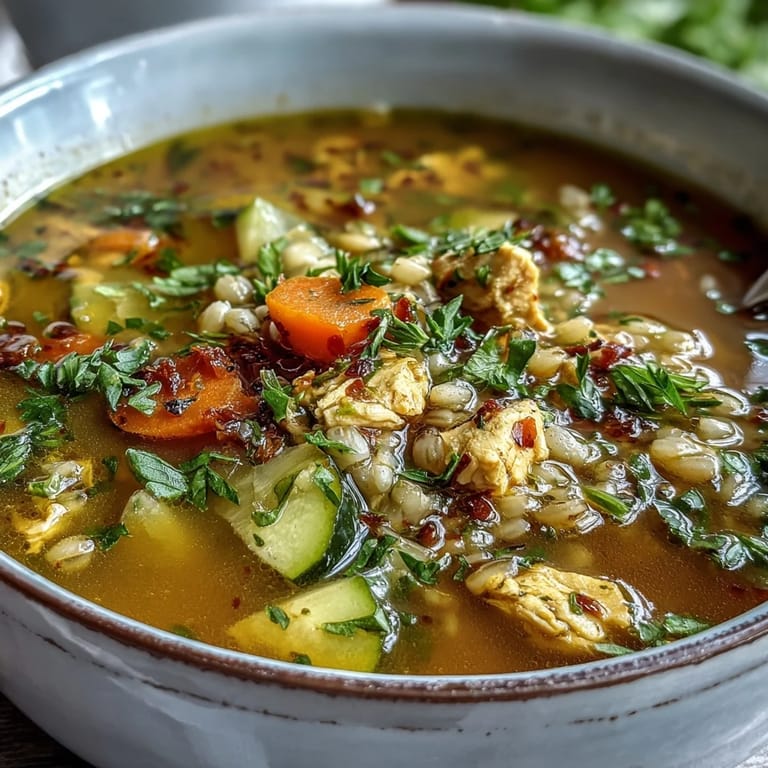
- Before serving, taste carefully and adjust salt or pepper if needed—this is your moment to make it exactly right. Ladle into bowls, top with fresh parsley, and serve with lemon wedges on the side so people can brighten their own bowls to taste.
 Save
Save My mother asked for the recipe after eating this soup, which meant everything to me because she rarely asks for recipes—she just quietly absorbs them through observation. Making it for her became a small ritual, a way of saying I've learned something, and I'm sharing it with you.
When to Make This Soup
This soup exists in the space between meals and medicine, which is exactly where the best comfort foods live. Make it when someone needs nourishing, when the weather turns, when you want your kitchen to smell like intention rather than obligation, or on nights when you're cooking for yourself and deserve something that tastes like care.
Building Flavor Layers
The secret to why this soup tastes so much better than the sum of its parts is understanding that each step builds on the last. Sautéing the vegetables first creates a sweet, caramelized base; blooming the spices releases their essential oils; browning the chicken adds savory depth; and the long simmer lets everything converge into something unified. This isn't complicated technique—it's just respecting the ingredients enough to let them develop properly before combining them.
Variations That Actually Work
This soup is forgiving enough to adapt without losing its identity, which is the mark of a recipe that truly understands balance. You can add fresh spinach or kale in the last 2 minutes if you want extra greens and a bit of earthiness, or swap the chicken for chickpeas and add another cup of barley for a vegetarian version that's equally satisfying. Serve it with crusty bread, a squeeze of fresh lemon, or even a small dollop of yogurt stirred in just before eating.
- Fresh greens work best when stirred in at the very end so they stay bright and don't turn grey.
- If you want extra vegetables, add them in stages based on cooking time—root vegetables early, delicate ones late.
- Leftover soup tastes even better the next day when flavors have had time to meld, so make extra without guilt.
 Save
Save There's wisdom in simplicity, and this soup proves it. Make it, taste it, and you'll understand why people keep coming back.
Your Questions Answered
- → How long does pearl barley take to cook in soup?
Pearl barley typically takes 45-50 minutes to become tender in soup. It absorbs liquid as it cooks, so you may need to add more broth if reheating leftovers the next day.
- → Can I make this vegetarian?
Yes, simply omit the chicken and use vegetable broth instead. Add an extra cup of barley or include chickpeas for protein to maintain the hearty texture.
- → What gives this soup its golden color?
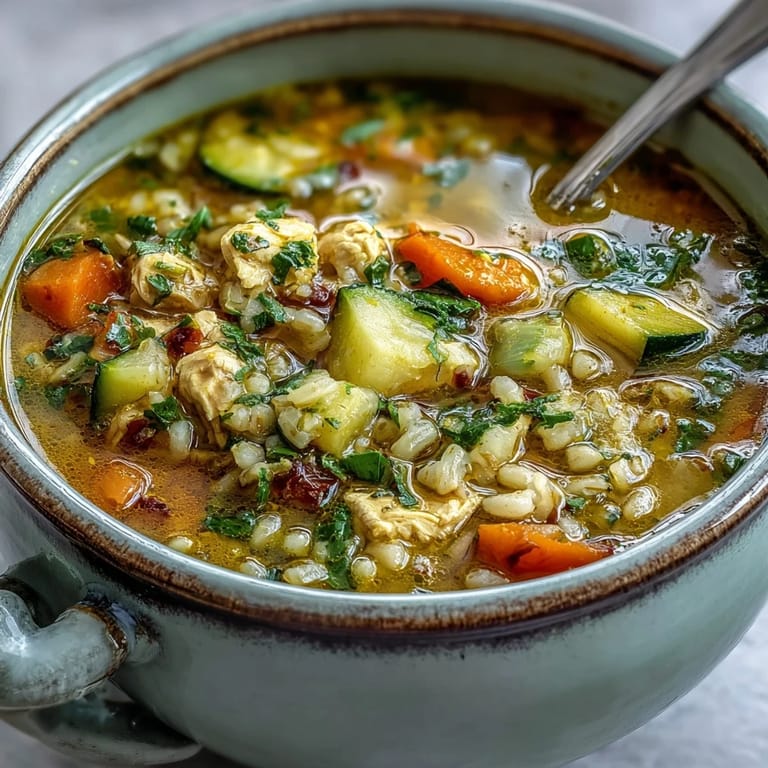
The ground turmeric creates the vibrant golden-yellow hue. Use at least 1½ teaspoons to achieve both the beautiful color and the warming, anti-inflammatory benefits.
- → How should I store leftovers?
Store in an airtight container in the refrigerator for up to 4 days. The barley will continue absorbing liquid, so add more broth or water when reheating to reach desired consistency.
- → Can I use quick-cooking barley instead?
Yes, but reduce the simmering time to 15-20 minutes and add it later in the cooking process. Quick barley may become mushy if cooked as long as pearl barley.
- → What other vegetables work well in this soup?
Fresh spinach or kale can be stirred in during the last 5 minutes of cooking. Butternut squash, parsnips, or bell peppers also complement the turmeric flavors beautifully.