 Save
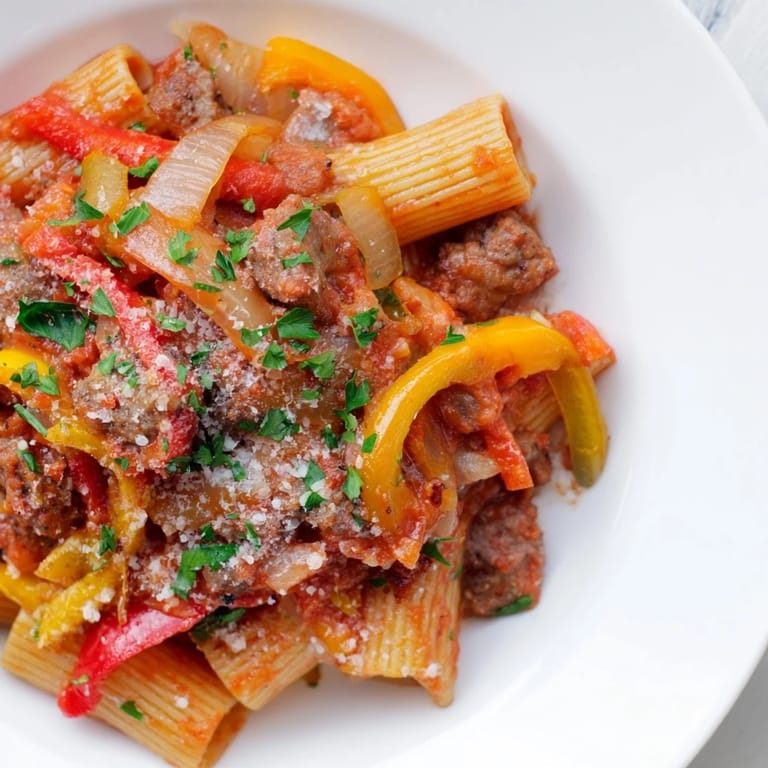
Save My neighbor Marco once called mid-week asking if I wanted to learn his family's way with sausage and peppers—turns out it's less about following rules and more about trusting your nose. He threw everything into one pan with such ease that I realized this dish isn't fancy or complicated; it's just honest food that brings people together. That night, leaning against his kitchen counter with a plate of steaming pasta, I understood why this Italian-American classic has stayed on family tables for generations.
I made this for my book club once, doubling the recipe at the last minute because someone's partner wanted to join. Watching everyone twirl pasta on their forks, sauce dripping onto their chins, I realized no one was talking about calories or technique—they were just happy. That's when you know a recipe has earned its place in your regular rotation.
Ingredients
- Italian sausage (1 lb, casings removed): Choose mild if you prefer gentler heat, or spicy if you like a kick that builds as you eat. The meat will brown better if you break it into small crumbles rather than large chunks.
- Bell peppers (1 red, 1 yellow, 1 green, sliced): Three colors aren't just pretty—each pepper brings different sweetness levels, and together they create balance. Slice them roughly the same thickness so they soften evenly.
- Onion (1 large, thinly sliced): Don't skip this; onions are where the deep sweetness comes from when they caramelize slightly in the sausage fat.
- Garlic (3 cloves, minced): Fresh garlic is worth the extra minute of chopping because it blooms when it hits hot oil, filling your kitchen with that unmistakable signal that dinner is happening.
- Penne or rigatoni pasta (12 oz): Tube shapes catch sauce better than thin strands; the sauce should live inside the pasta, not just coat the outside.
- Crushed tomatoes (1 can, 14 oz) and tomato paste (2 tbsp): The paste adds concentrated depth; don't skip it thinking the canned tomatoes are enough.
- Oregano and basil (1 tsp and 1/2 tsp, dried): Dried herbs work beautifully here because they soften into the sauce as it simmers.
- Red pepper flakes (1/2 tsp, optional): A small amount adds intrigue without overwhelming; taste as you go if you're unsure.
- Olive oil (2 tbsp) and salt, pepper: Good olive oil improves everything; use what you'd actually pour on bread.
- Fresh parsley (1/4 cup) and Parmesan (for serving): These are your final whispers of flavor and freshness—don't underestimate their importance.
Tired of Takeout? 🥡
Get 10 meals you can make faster than delivery arrives. Seriously.
One email. No spam. Unsubscribe anytime.
Instructions
- Start the pasta water:
- Get a large pot of well-salted water boiling first—this is your foundation. Salt the water so it tastes like the sea; your pasta will thank you by absorbing flavor from the inside out.
- Brown the sausage:
- While waiting for the pasta, heat olive oil in a large skillet and crumble in the sausage, breaking it into small pieces as it cooks. Listen for the sizzle to soften into a gentle murmur, which tells you it's nearly done, about 5-7 minutes.
- Build flavor with peppers and onions:
- Once the sausage is golden and cooked through, transfer it to a plate and add the sliced peppers and onions to the same pan where all that browned bits and rendered fat are waiting. Sauté for 5-6 minutes, stirring occasionally, until the vegetables soften and the onions start turning golden at the edges.
- Wake it up with garlic:
- Add your minced garlic and stir constantly for just one minute—you want it fragrant, not brown and bitter. The smell should stop you mid-thought.
- Build the sauce:
- Stir in the tomato paste first, letting it darken slightly in the pan for about a minute, then add the crushed tomatoes along with oregano, basil, and red pepper flakes if using. Season with salt and pepper, then let everything bubble gently for 5 minutes so the flavors marry.
- Bring it back together:
- Return the cooked sausage to the skillet and stir everything together, simmering for another 3-4 minutes. If the sauce looks thick, splash in some of that reserved pasta water—sauce should coat the spoon but still flow.
- Marry pasta and sauce:
- Drain your cooked pasta and add it directly to the skillet, tossing gently until every piece is coated. Heat through for 1-2 minutes, then taste and adjust seasoning one final time.
- Finish and serve:
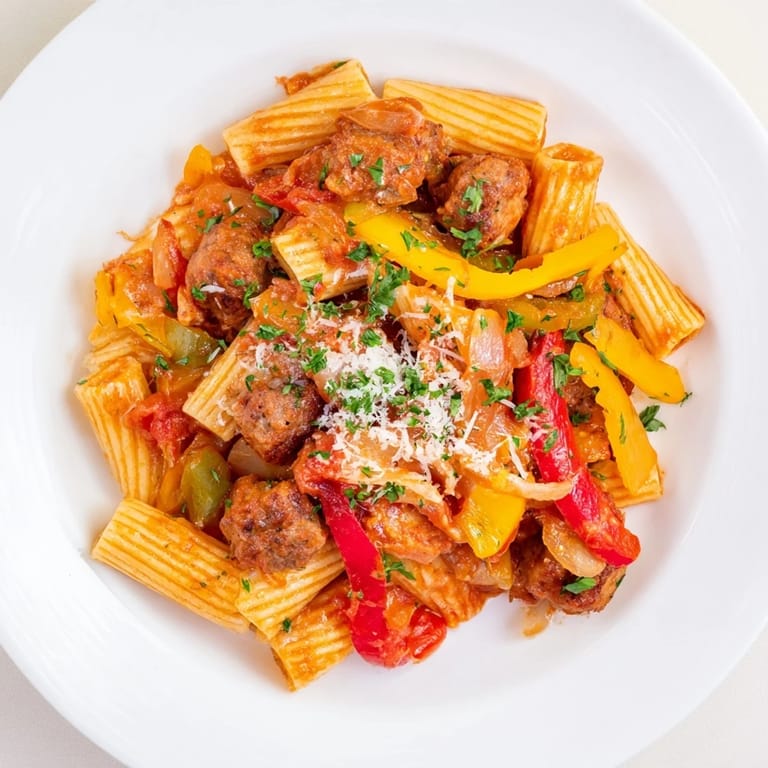
- Divide among bowls or plates, top with fresh parsley and a generous handful of Parmesan. Serve immediately while steam is still rising.
 Save
Save There's a moment near the end of cooking when you walk past the stove and the smell hits you—rich, warm, alive—and you just stop. That's when you know this dish has done what it's supposed to do: made your kitchen feel like the most inviting place in the world.
Why This Works So Well
The genius of this dish is its simplicity layered with technique. The sausage releases fat that becomes your cooking medium, so you're not just adding flavor on top—you're building it in. The peppers and onions create sweetness that balances the slight acidity of tomatoes, and the longer everything simmers together, the more unified and complex the sauce becomes. It's proof that great cooking doesn't mean more ingredients or more steps; it means understanding how each component supports the others.
Variations Worth Trying
Once you've made this classic version, you'll start seeing possibilities everywhere. A splash of red wine added when you put in the tomato paste deepens everything into something more wine-bar worthy. If you want lighter, swap the Italian sausage for turkey or chicken, which will give you the same satisfying structure with less richness. Some people add a pinch of sugar to balance acidity, while others stir in a dollop of cream at the very end for richness that catches in unexpected ways.
Making It Your Own
The frame of this recipe is strong enough to hold your improvisations. Maybe you add mushrooms sautéed alongside the peppers, or a handful of fresh spinach stirred in at the end so it wilts from the heat. You might use different pasta shapes entirely, or scale it up for a crowd without changing anything except the quantities. The beauty is that once you understand how this dish works—how its parts fit together—you stop following a recipe and start cooking from instinct.
- Fresh basil torn and scattered on top at the table gives brightness that dried herbs simmered into sauce cannot.
- Passing extra Parmesan at the table lets everyone adjust their own ratio without guessing.
- This keeps beautifully in the refrigerator for two days, and actually tastes better when reheated gently the next night.
 Save
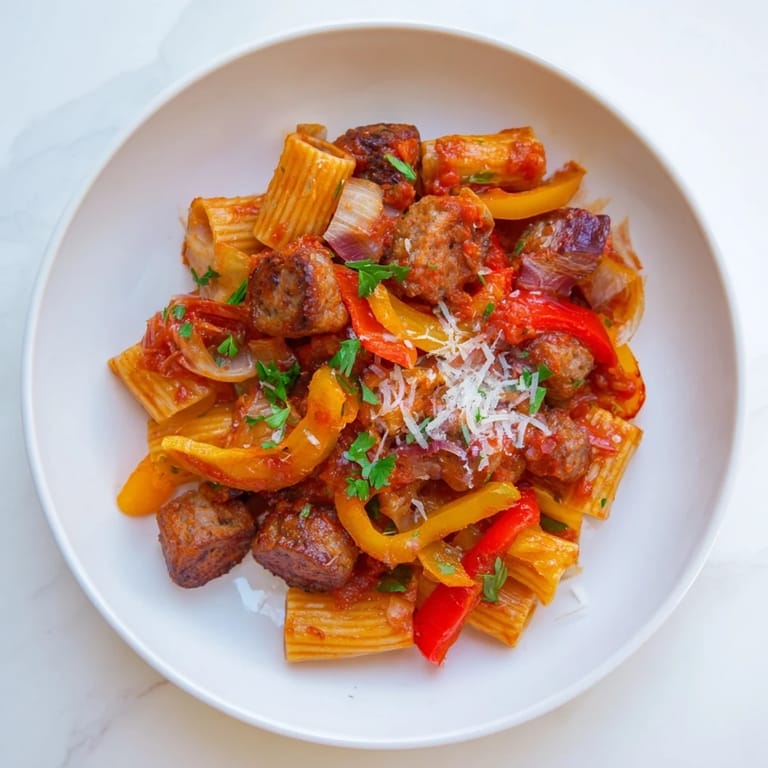
Save This is the kind of dish you'll make again and again, each time a little more confident, a little more yours. It's simple enough for a weeknight but good enough for people you want to impress.
Your Questions Answered
- → What type of sausage works best?
Italian sausage, either mild or spicy, brings rich flavor and pairs well with the peppers and herbs in the sauce.
- → Can I substitute the pasta type?
Penne or rigatoni pasta are ideal as they hold the sauce well, but similar tubular pasta shapes can be used.
- → How do I ensure the peppers are tender but not mushy?
Sauté the sliced peppers and onions for about 5-6 minutes until softened and slightly caramelized, preserving texture while enhancing sweetness.
- → Is it possible to adjust the spiciness?
Yes, omit or reduce crushed red pepper flakes to lower heat, or choose mild sausage to keep the dish milder.
- → What are good garnishes for this dish?
Fresh chopped parsley adds brightness, and grated Parmesan provides a salty finish complementing the sauce.