 Save
Save The first time I cooked kabsa, my neighbor's mother watched me fumble through layering rice and meat, then gently took the wooden spoon from my hands and showed me how to nestle the lamb into the grains so everything steams together. That simple gesture taught me more than any recipe could—this dish isn't just about following steps, it's about patience and understanding why each moment matters. Now when I make it, I can taste her quiet wisdom in every fragrant bite, and I always think of her steady hands guiding mine.
I served this to my sister's family during Eid, and her youngest son went back for thirds, which never happens with him. His mother laughed and said he'd finally found something worth eating more than one plate of. That night, I realized kabsa isn't just rice and meat—it's the thing that gets everyone at the table talking, passing dishes, asking for seconds before they've even finished their first bite.
Ingredients
- Bone-in lamb or chicken pieces (1 kg): The bone releases collagen into the broth, making it silky and rich—if you use boneless meat, the dish loses that depth that makes people close their eyes while eating.
- Basmati rice (3 cups, rinsed and soaked 20 minutes): Soaking keeps each grain separate and fluffy instead of mushy; this step takes thirty seconds and changes everything.
- Ground cumin, coriander, cinnamon, black pepper, turmeric, cardamom, cloves, and allspice: This blend isn't random—each spice builds on the last, creating warmth without heat, complexity without heaviness.
- Dried black lime or loomi (1, optional but encouraged): If you've never used loomi before, it smells strange and tastes like nothing you expected, but it adds a subtle tartness that balances all the sweetness from the raisins.
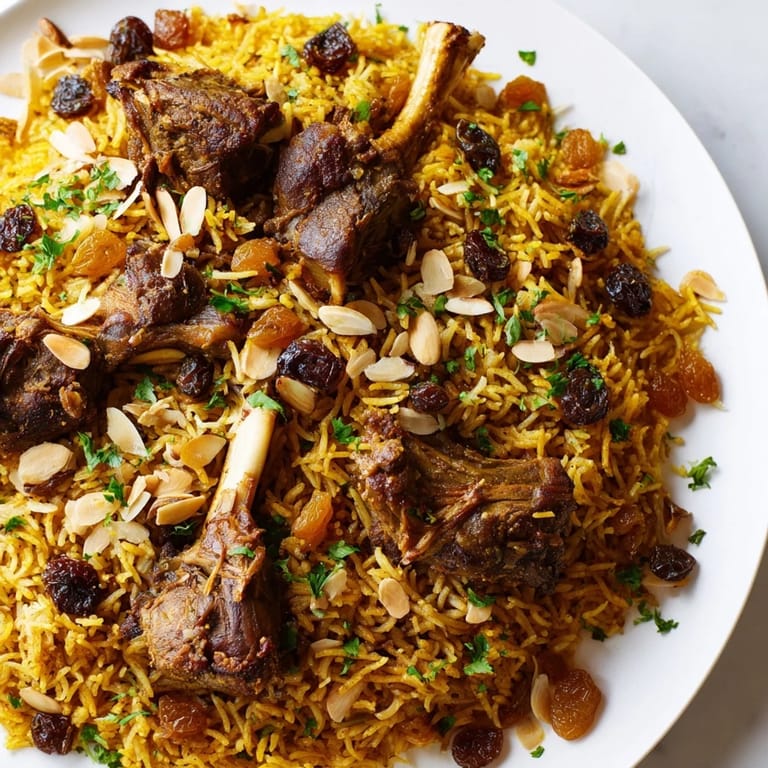
- Golden raisins (½ cup) and slivered almonds (½ cup, toasted): These aren't just garnish—they're pockets of sweetness and texture that remind you this is a dish meant to celebrate.
- Chicken or lamb stock (5 cups): Homemade is better if you have it, but good quality store-bought works too; avoid anything labeled as broth alone, you need body.
Tired of Takeout? 🥡
Get 10 meals you can make faster than delivery arrives. Seriously.
One email. No spam. Unsubscribe anytime.
Instructions
- Toast Your Intentions:
- Heat oil in a heavy pot until it shimmers slightly, then add onions and let them turn golden brown—this takes longer than you think, maybe seven or eight minutes, but rushing this means missing the sweetness that becomes the foundation of the whole dish.
- Build the Aromatics:
- Add garlic for just a minute so it doesn't burn, then add meat and brown it on all sides without moving it around too much; let it sit and develop a golden crust, about eight minutes total.
- Wake Up the Spices:
- Stir in every spice along with bay leaves and your pierced black lime, and stand there for a minute breathing in the transformation—this is when your kitchen stops smelling like raw ingredients and starts smelling like celebration.
- Marry It All Together:
- Add tomatoes and grated carrot, stirring gently and letting everything cook for four or five minutes until the vegetables begin to soften and the whole pot is bubbling gently.
- Simmer with Confidence:
- Pour in stock, bring it to a rolling boil, then drop the heat to low, cover it, and let it rest for thirty-five to forty minutes for chicken or sixty minutes for lamb—the meat should be so tender it almost falls apart when you look at it.
- Make Space for the Rice:
- Remove the meat carefully and set it aside somewhere warm, then stir your drained rice directly into the broth along with salt; taste it and adjust seasoning because this is your last real chance.
- Bring It Home:
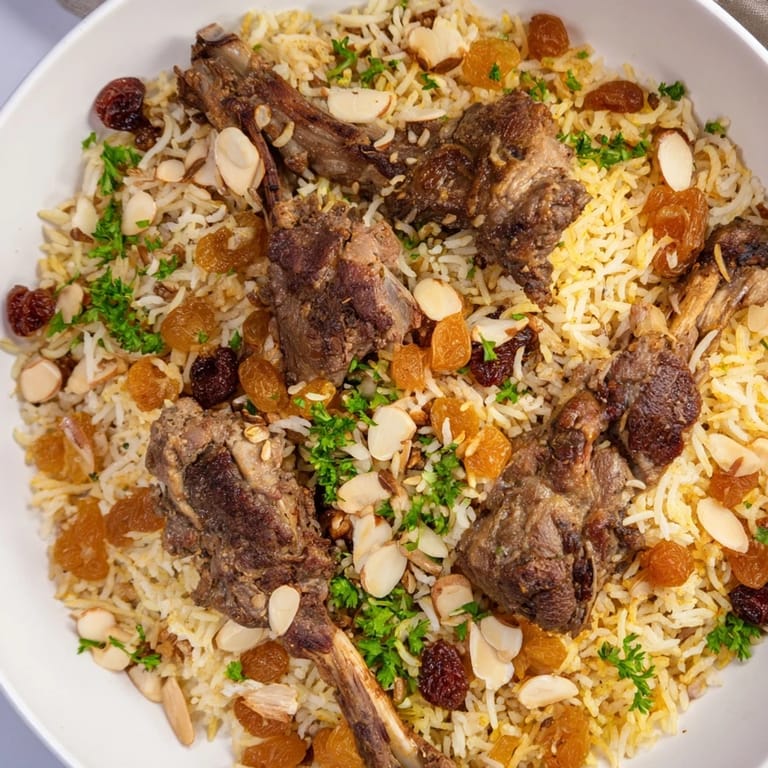
- Nestle the meat back into the rice, scatter raisins across the top like you mean it, cover the pot, and let it cook on low heat for twenty-five to thirty minutes—the rice will drink up the liquid and become impossibly fluffy.
- The Final Touch:
- Remove bay leaves and loomi, fluff the rice gently with a fork to separate the grains, then transfer everything to a serving platter and crown it with toasted almonds and fresh parsley.
 Save
Save There's a moment during the final simmer when the kitchen fills with this indescribable fragrance—warm, complex, slightly sweet—and you know you've done something right. My children used to come find me in the kitchen just to stand there and breathe it in, asking how much longer until dinner without any real urgency. That smell became our signal that something special was happening.
Why This Dish Became Part of Everything
Kabsa sits at the intersection of everyday and celebration, which is why it shows up on regular weeknights and major holidays alike. The technique looks complicated on paper but becomes intuitive once you understand that you're essentially building layers of flavor—searing meat, toasting spices, simmering everything until the boundaries blur and you can't taste the individual components anymore, just the harmony. It's a forgiving dish too; slight variations in timing rarely ruin it, and flexibility with meat choices means you can make it with whatever you have on hand.
Timing and Patience
The total time of an hour forty-five minutes splits into two distinct phases: the active part where you're chopping and stirring (about twenty-five minutes), and then the waiting, which is actually the most important part. During those final fifty minutes of simmering, you're not doing anything except trusting the process—you can set a table, have a conversation, or simply sit with the knowledge that dinner is already decided. This rhythm makes kabsa perfect for feeding a crowd because by the time people arrive, everything is ready and warm, and you're calm instead of frantic.
Serving and Variations That Work
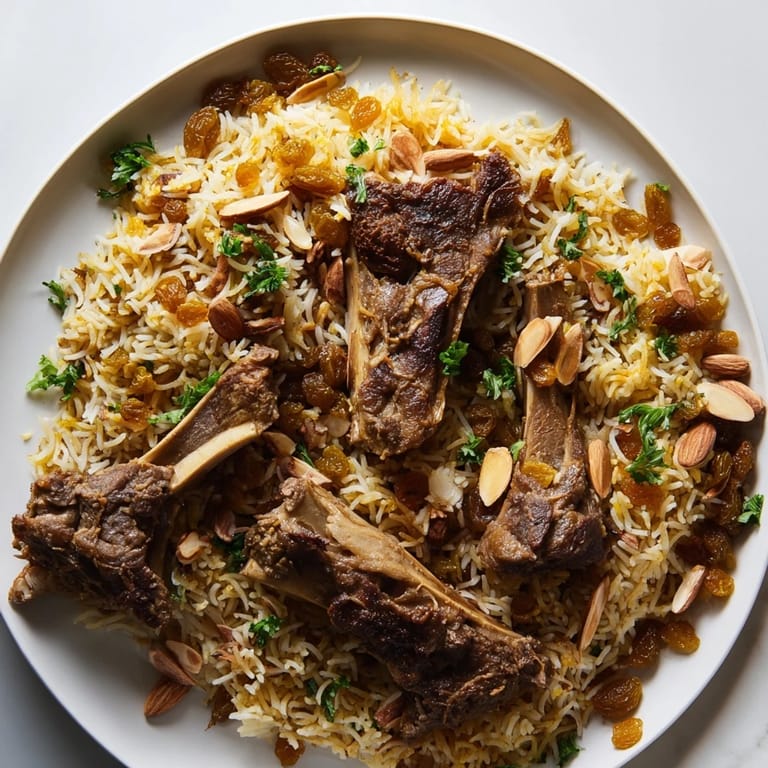
Kabsa comes to the table as a complete meal, but it truly sings when surrounded by simple counterpoints—a bright tomato and cucumber salad cuts through the richness, cool yogurt offers contrast, and fresh bread soaks up every bit of broth that clings to the rice. The almonds and raisins provide texture that prevents the whole dish from feeling one-note, and the parsley at the end adds a green note that makes it feel balanced. Beyond the traditional preparation, you can swap lamb for chicken for lighter eating, or lean into beef if that's what's in your freezer, and the spice blend will embrace whatever you choose with the same warmth.
- Toast your almonds yourself rather than buying pre-toasted ones—they'll be fresher and crunchier by serving time.
- If you can't find loomi, a small squeeze of lemon juice stirred in at the very end creates similar brightness, though the flavor note is different.
- This dish reheats beautifully, and sometimes tastes even better the next day when all the flavors have settled and deepened.
 Save
Save Every time I make kabsa, I'm grateful for that neighbor's mother and her patient hands showing me that good food is never hurried. This dish rewards you for slowing down and paying attention, and then feeds everyone around you with the kind of warmth that lingers long after the last bite.
Your Questions Answered
- → What type of meat works best in Kabsa?
Lamb or chicken pieces with bones provide the richest flavors and tender texture ideal for kabsa.
- → Can I omit the dried black lime (loomi)?
Yes, though loomi adds a distinct citrusy depth, it can be left out without greatly affecting the dish.
- → How do I ensure the rice is fluffy and well-cooked?
Soaking the basmati rice beforehand and cooking it gently with the meat broth helps achieve a light, fluffy texture.
- → What role do raisins and almonds play?
Golden raisins add a sweet contrast and toasted almonds bring a crunchy texture that complements the spiced rice perfectly.
- → Is it necessary to toast the spices?
Toasting spices enhances their aroma and depth, making the kabsa more flavorful, but it's optional.