 Save
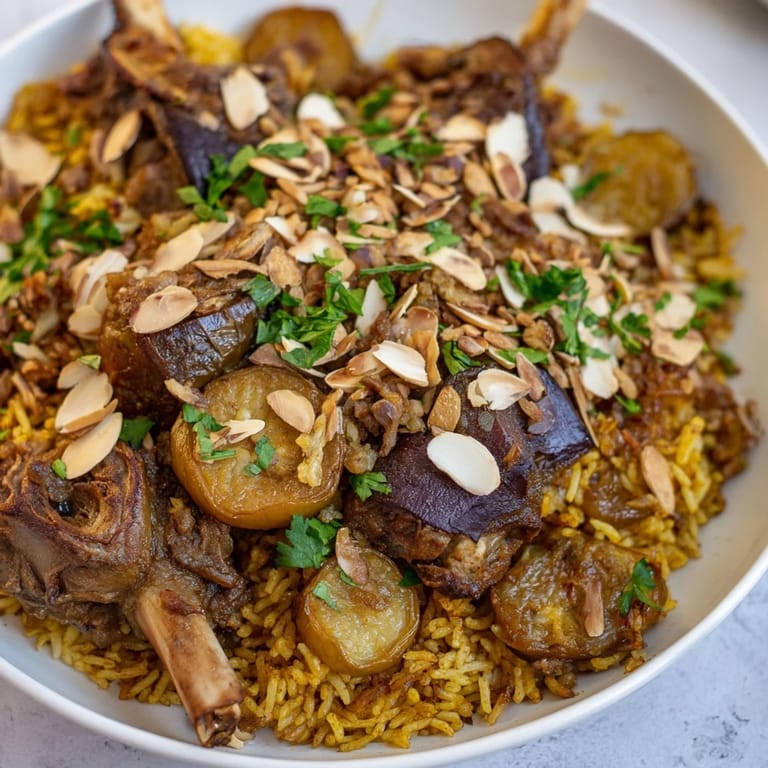
Save The first time I watched my grandmother flip a pot of maqluba onto a platter, I held my breath—there was this suspended moment where everything could go perfectly right or spectacularly wrong. When it landed intact, golden and steaming, the whole family erupted. That dramatic inversion became the heart of why I make this dish now, not just because the flavors are incredible, but because there's real joy in that moment of reveal.
I once made this for a dinner party and completely underestimated the drama of the flip. My friend gasped when it came out perfectly, and suddenly everyone wanted to know how to make it. What started as a quiet family recipe became the dish people still ask me about years later.
Ingredients
- Bone-in lamb shanks or chicken pieces (900 g): The bones add depth to the broth and keep the meat tender during cooking; chicken thighs work beautifully if you want something leaner.
- Black pepper, allspice, and cinnamon (1 tsp, 1 tsp, 1/2 tsp): This warm spice blend is what makes maqluba distinctly Palestinian—toast them lightly before grinding if you have whole spices.
- Long-grain basmati rice (2 cups): Rinsing removes the starch and keeps grains separate; soaking for even just 20 minutes makes a real difference.
- Eggplant and potatoes (2 medium each): These are your structural layers and flavor anchors; cut them consistently so they cook at the same rate.
- Turmeric, cumin (1/2 tsp each): These go into the broth and give the rice that beautiful golden color and subtle earthiness.
- Vegetable oil (3 tbsp): You'll use this for searing the meat and brushing the vegetables; don't skimp, it makes everything better.
- Slivered almonds or pine nuts (1/2 cup): Toast these yourself just before serving—store-bought toasted nuts lose their crunch by the time you use them.
- Chicken or beef broth (3-4 cups): Homemade is ideal, but good-quality store-bought works; warm it slightly before adding so the rice cooks evenly.
Tired of Takeout? 🥡
Get 10 meals you can make faster than delivery arrives. Seriously.
One email. No spam. Unsubscribe anytime.
Instructions
- Prepare the rice foundation:
- Rinse your basmati under cold water until it runs clear—this takes patience but it's worth it. Soak for 30 minutes, then drain completely; wet rice will throw off your layering and cooking time.
- Season and sear the meat:
- Rub your lamb or chicken generously with the spice blend, then sear it hard in hot oil until the edges are caramelized. You're building flavor here, not cooking it through.
- Build the broth:
- Sauté your onions in the same pot to pick up all those flavorful bits, then nestle the meat back in with your broth. Let it simmer gently for 30 to 40 minutes until it's nearly tender; this is where the magic begins.
- Roast the vegetables:
- While the meat cooks, brush your eggplant and potato slices with oil and roast them until they're golden and soft at the edges. They'll finish cooking in the pot, so don't overdo it here.
- Layer with intention:
- In your heavy pot, start with tomatoes on the bottom (they'll break down and create a sauce), then potatoes, eggplant, meat and onions, and finally your rice. Press gently so everything nestles together without getting crushed.
- Season the broth:
- Mix your turmeric, cumin, and salt into the reserved broth, then pour it over the rice until it's just covered. The rice will absorb it all.
- The gentle cook:
- A plate smaller than your pot goes on top of the rice to keep everything compact, then your lid seals it all in. Medium heat to start until you hear a gentle simmer, then drop to low for 35 to 40 minutes—resist the urge to peek.
- Rest and reveal:
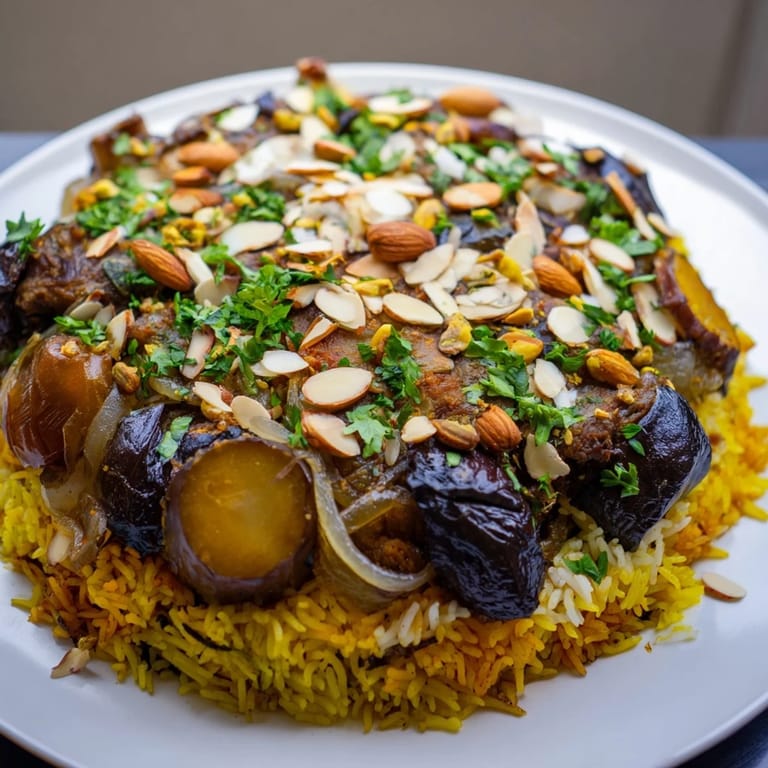
- Let it sit covered for 15 minutes off heat; this is when the rice fully absorbs any remaining liquid and the layers set. Place your serving platter on top and flip with confidence, letting gravity do the work.
 Save
Save There's something almost ceremonial about gathering everyone around right when the platter comes off the pot, watching their faces when that perfect dome of rice emerges intact. It's one of the few dishes where the presentation is part of the actual experience.
The Best Meat to Use
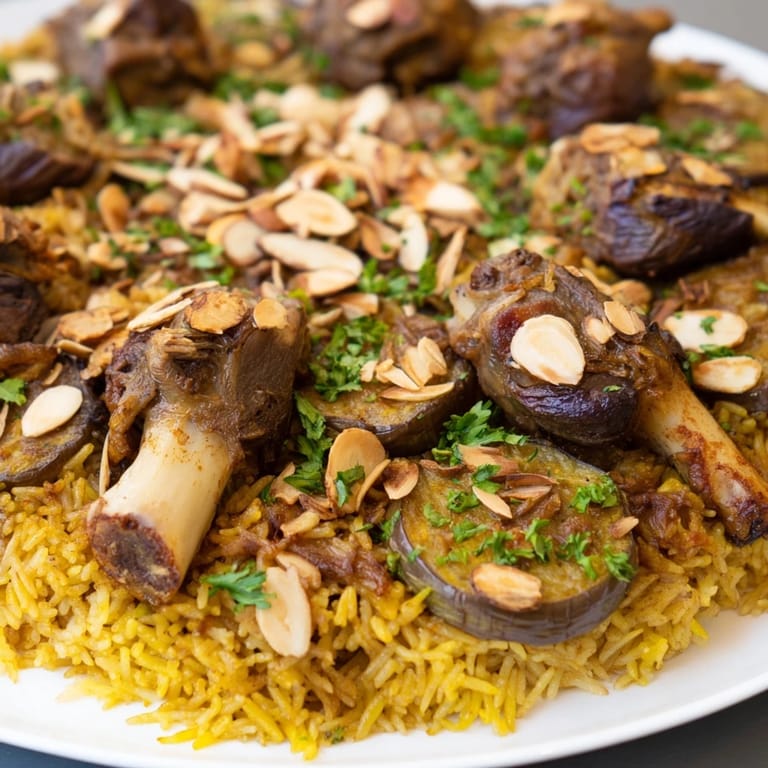
Lamb shanks give you the richest, most authentic flavor—the bone adds a subtle sweetness that echoes through the whole dish. Chicken thighs are lighter but still flavorful and cook faster if you're short on time. I've even made it with beef chuck and it was excellent; choose whatever meat you can get that has some fat and connective tissue.
Playing with Vegetables
Eggplant is traditional, but don't feel locked into it—cauliflower florets roasted until slightly charred are incredible, and zucchini adds a quieter, more delicate note. Some cooks add chickpeas for extra heartiness or swap in fennel for a different angle altogether. The structure stays the same; you're just changing the flavor conversation.
Making It Your Own
The spice blend is where your personal touch lives—if you love more warmth, add an extra pinch of cinnamon or a tiny bit of clove. Some families add a touch of nutmeg or even a whisper of ginger. The rice can be infused differently too; some cooks add a bay leaf or a cinnamon stick to the broth instead of mixing spices in.
- If you're nervous about the flip, practice with a smaller batch first or use a wider, shallower pot for easier handling.
- Make sure your serving platter is at least as wide as your pot's mouth so you have room to work.
- Serve it hot with thick yogurt and a bright cucumber salad to cut through the richness.
 Save
Save Make this when you want to slow down and cook with intention, when you have people around who'll appreciate both the flavors and the moment. It's one of those dishes that reminds you why we gather around food in the first place.
Your Questions Answered
- → What type of meat works best for Maqluba?
Lamb shanks are traditional and lend rich flavor, but chicken pieces can also be used for a lighter option.
- → How do you achieve tender, flavorful rice layers?
Soaking the basmati rice before cooking and layering it with spiced broth ensures fluffy, aromatic grains that absorb rich flavors.
- → Can vegetables be substituted in this dish?
Yes, alternative vegetables like cauliflower florets can replace eggplant for variation while maintaining texture and taste.
- → How is the Maqluba flipped without breaking apart?
Using a large serving platter over the pot and carefully inverting it allows the layered dish to come out intact and visually striking.
- → What garnishes complement this dish?
Toasted slivered almonds or pine nuts and fresh chopped parsley add crunch and freshness to the final presentation.
- → Is it possible to prepare Maqluba without broth?
Broth enhances flavor and moisture, but water with added spices can be used if broth is unavailable, though taste may be milder.