 Save
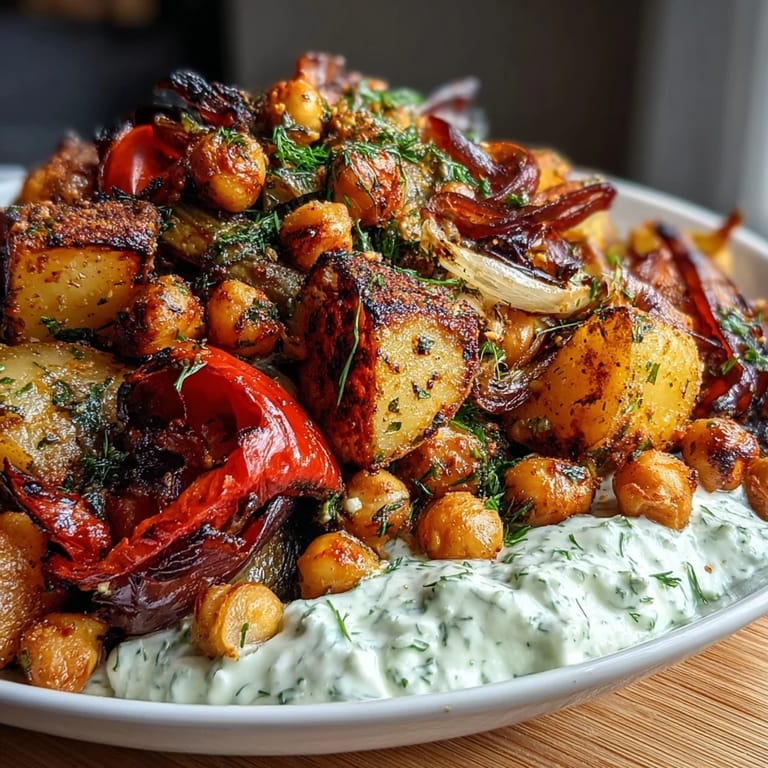
Save There's something about roasted vegetables that transforms the simplest ingredients into something that feels celebratory. I discovered this bowl during a particularly chaotic Wednesday when I had half a fridge to use up and absolutely no energy for complicated cooking. The moment those chickpeas hit the oven and started crisping at the edges, the whole kitchen smelled like a Mediterranean coast I'd only seen in photos. My roommate wandered in asking what smelled so good, and by the time everything was roasted golden, we were both sitting down with these vibrant bowls before I'd even finished setting the table.
I remember making this for my sister's book club when she'd asked me to bring something that wouldn't make the house smell weird and that people with different diets could actually enjoy. One woman came back for seconds and asked if I'd add it to my restaurant menu someday—that's when I realized this wasn't just a bowl of vegetables, it was something people genuinely wanted to eat again.
Ingredients
- Chickpeas: These are your protein anchor, and rinsing them thoroughly removes the starchy liquid so they actually get crispy when roasted instead of steaming themselves.
- Red bell pepper: Choose one that's firm and glossy; the natural sugars caramelize beautifully during roasting and add sweetness to balance the savory spices.
- Red onion: Cut into wedges rather than thin slices so they don't burn and stay intact enough to pick up on your fork.
- Potatoes: Keep the cubes uniform in size so everything finishes cooking at the same time; ¾-inch is the sweet spot.
- Olive oil: Don't skimp here—good olive oil makes a noticeable difference in the final flavor and helps everything caramelize evenly.
- Spice blend: This combination of paprika, basil, oregano, garlic powder, dill, and parsley creates that authentic Mediterranean character without requiring fresh herbs that might wilt.
- Greek yogurt: Full-fat versions create the creamiest sauce, though regular yogurt works fine if that's what you have on hand.
- Cashews and tofu: These make the tzatziki rich and substantial without dairy if you're going plant-based, and they add body even with yogurt included.
- Cucumber: Squeeze out that excess moisture firmly—a damp tzatziki loses its luxurious texture and just becomes watery.
- Fresh dill: This is one place where fresh really outperforms dried; it adds brightness that dried dill can't quite capture.
- Red wine vinegar: The acidity keeps the sauce lively and prevents it from tasting too heavy.
Tired of Takeout? 🥡
Get 10 meals you can make faster than delivery arrives. Seriously.
One email. No spam. Unsubscribe anytime.
Instructions
- Heat your oven and prep your space:
- Set the oven to 400°F and let it fully preheat while you gather your ingredients. A fully heated oven is what gives those vegetables their caramelized edges, so don't skip this step even though it feels like you're waiting forever.
- Cut everything into uniform pieces:
- Dice your potatoes into ¾-inch cubes, cut your bell pepper into chunks roughly the same size, and slice your red onion into wedges. Uniform sizing matters because small pieces will burn while large ones are still raw.
- Make your spice blend:
- Combine paprika, basil, garlic powder, oregano, dill, parsley, salt, and pepper in a small bowl and give it a quick mix. This way you're not sprinkling in spices one by one and over-seasoning some vegetables while under-seasoning others.
- Coat everything with oil and spices:
- Toss your drained chickpeas, potatoes, bell pepper, and red onion with olive oil and your spice blend on a large baking sheet. Make sure everything gets an even coating—use your hands if you need to; you'll get better distribution and nothing gets left undressed in the corner of the pan.
- Spread in a single layer and roast:
- Spread everything out so pieces aren't piled on top of each other, then slide into the oven for 40 minutes. Stir everything halfway through so the edges caramelize evenly on all sides.
- Build your sauce while vegetables roast:
- While the oven's doing the work, combine yogurt, cashews, tofu, and minced garlic in a blender and blend until completely smooth and creamy. You're looking for the consistency of sour cream, not thin yogurt.
- Finish the sauce with fresh elements:
- Grate your cucumber directly onto a clean kitchen towel and squeeze out all that excess moisture—seriously, wring it like you mean it. Fold the squeezed cucumber into your blended mixture along with fresh dill, red wine vinegar, salt, pepper, and lemon juice, then taste and adjust seasoning.
- Assemble your bowls:
- Spread a generous layer of tzatziki onto each bowl or plate, then pile your warm roasted vegetables and chickpeas on top. Serve right away so you get that contrast of cool, creamy sauce against warm, caramelized vegetables.
 Save
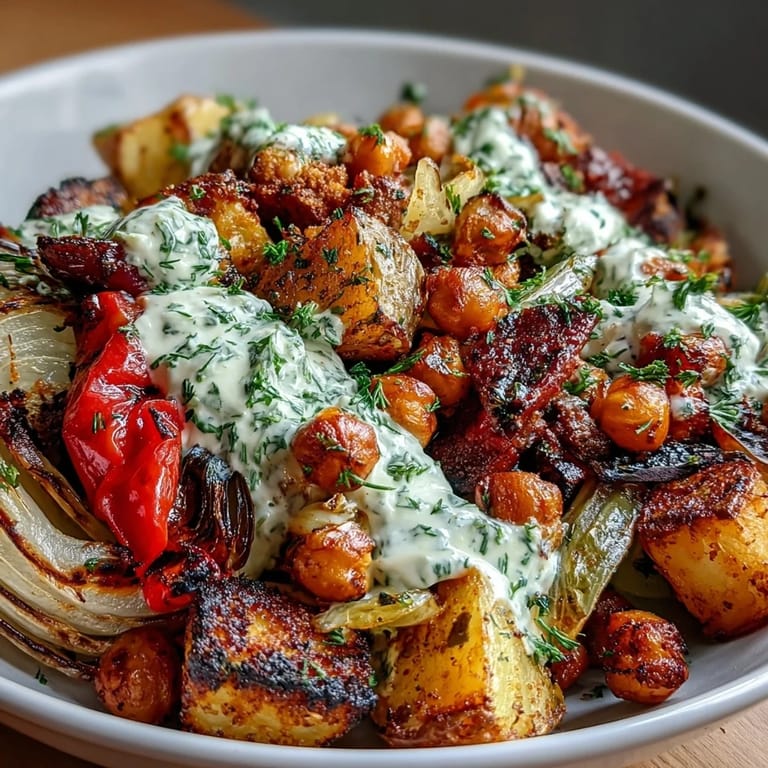
Save My favorite thing about this bowl is watching someone take that first bite and their whole face light up when they realize how good it is. It's the kind of dish that makes people slow down and actually taste their food instead of rushing through lunch.
Why This Bowl Became My Go-To
After making this a dozen different ways, I realized the magic isn't in any single ingredient—it's in the combination of warm, crispy, caramelized vegetables with something cool and creamy waiting underneath. The roasting process is what transforms ordinary potatoes and chickpeas into something that tastes restaurant-quality without requiring any fancy techniques. Everything cooks at the same time on one sheet pan, which means minimal cleanup and maximum flavor development happening in your oven while you're free to do something else.
Variations That Actually Work
I've made this bowl with sweet potatoes when I wanted earthier sweetness, added chunks of zucchini and eggplant when I had them in the fridge, and even thrown in some cherry tomatoes at the very end of roasting so they stay just barely soft. The spice blend is forgiving enough that you can swap herbs based on what you have—Italian seasoning works great if you're out of the individual dried herbs. Each version tastes different enough to feel new, but the structure stays solid, so you can get creative without worrying about ruining the whole dish.
Making It Work for Different Diets
The beautiful part about this recipe is how naturally it accommodates different needs without feeling like compromise cooking. If you're going fully vegan, swap the Greek yogurt for a plant-based version and it tastes virtually identical to the dairy version—the cashews and tofu create creaminess either way. For gluten-free eaters, just double-check your spice blend doesn't have any hidden binders or additives, though most pure dried herbs are naturally gluten-free anyway. You can make this for a crowd where everyone has different preferences and serve it exactly the same way to each person.
- Vegan option: Use plant-based yogurt and you've got a fully vegan bowl that doesn't sacrifice creaminess.
- Grain-free: Swap the potatoes for cauliflower florets or mushroom chunks to keep carbs lower.
- Extra protein boost: Top with a scoop of feta cheese, a soft-boiled egg, or some crumbled tofu if you want even more substance.
 Save
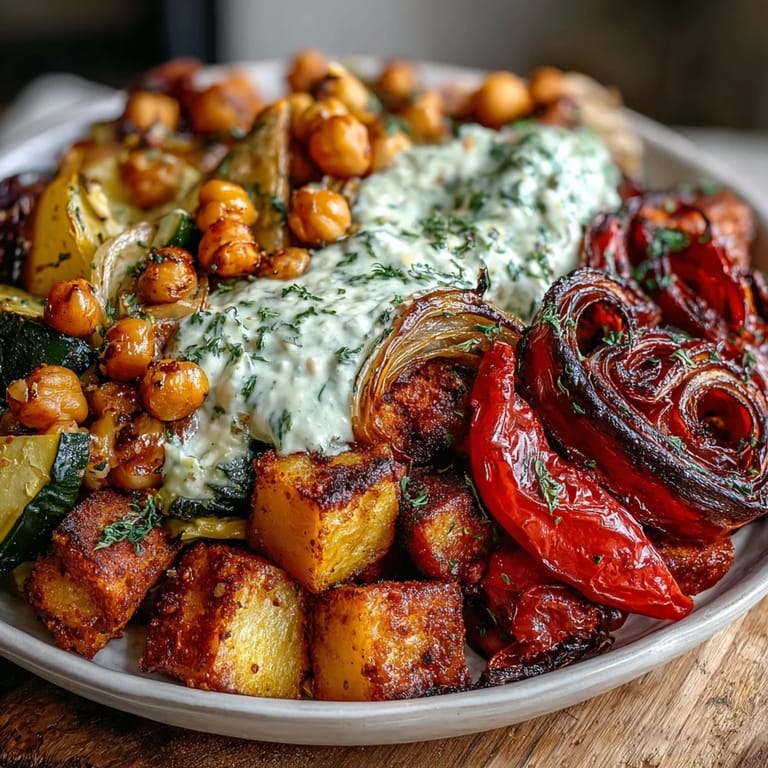
Save This bowl proves that the most satisfying meals don't require complicated recipes or impossible-to-find ingredients. There's something honest and true about food that tastes this good without any fussiness getting in the way.
Your Questions Answered
- → What vegetables work best for roasting in this bowl?
Potatoes, red bell peppers, and red onions are ideal, as they roast evenly and develop caramelized sweetness, enhancing the dish's flavor.
- → How do I achieve a creamy, flavorful tzatziki without cucumber water diluting it?
After grating, squeeze out excess moisture from the cucumber using a clean kitchen towel to keep the sauce thick and creamy.
- → Can I substitute the chickpeas with other legumes?
Yes, white beans or lentils can be used as alternatives, offering different textures and protein profiles to suit your preference.
- → Is it possible to make the tzatziki sauce vegan?
Absolutely. Use plant-based yogurt and tofu instead of dairy options to maintain creaminess while keeping it vegan-friendly.
- → What spices enhance the roasted vegetables’ Mediterranean flavor?
A blend of paprika, dried basil, garlic powder, oregano, dill, and parsley infuses the vegetables with authentic Mediterranean aroma and taste.