 Save
Save There's something almost magical about watching eggs transform in a bubbling tomato sauce, and shakshuka was the dish that first made me understand why Middle Eastern cooks treat breakfast like a sacred ritual. I discovered it on a chaotic Tuesday morning when my neighbor appeared at my kitchen door with a cast-iron pan, a bag of groceries, and a determination to teach me something I'd been missing my whole life. Within thirty minutes, the smell of cumin and paprika had filled my apartment, and I was fishing warm pita through pools of golden yolk while sitting cross-legged on my kitchen counter. It's been a weeknight favorite ever since.
I made this for my friend Jordan on a Sunday morning when she showed up stressed about a work presentation, and by the time we'd finished eating straight from the pan, she'd talked through the whole thing and forgotten to be nervous. That's when I realized shakshuka isn't really about the recipe at all—it's about creating a moment where people slow down and actually sit together.
Ingredients
- Olive oil: Use good quality if you can; it carries so much of the flavor here, and cheap oil will make the whole dish taste thin.
- Yellow onion and red bell pepper: The sweetness of these is your foundation—don't skip the sautéing step or rush it.
- Garlic and red chili: Fresh garlic makes all the difference, and the chili is optional only if you prefer your shakshuka gentle.
- Crushed tomatoes and fresh tomatoes: The combination of canned and fresh gives you depth and texture simultaneously.
- Tomato paste: This concentrated umami bomb is worth its weight in flavor; don't use less.
- Ground cumin, sweet paprika, cayenne, and coriander: These spices are where the soul of the dish lives—measure them, don't eyeball.
- Eggs: Room temperature eggs will cook more gently and evenly than cold ones pulled straight from the fridge.
- Fresh parsley and cilantro: The brightness at the end is what makes people ask for the recipe.
- Feta cheese: Optional, but the tangy crumbles against the warm egg are something special.
Tired of Takeout? 🥡
Get 10 meals you can make faster than delivery arrives. Seriously.
One email. No spam. Unsubscribe anytime.
Instructions
- Warm your pan and build the base:
- Heat olive oil over medium heat in a skillet large enough that you won't feel cramped later. The oil should shimmer, not smoke. Add the onion and bell pepper, and let them soften without rushing—this takes five to seven minutes, and they should be nearly translucent before you move forward.
- Bloom the aromatics:
- Stir in the minced garlic and chopped chili, cooking for about a minute until the smell hits you like a warm blanket. You'll know it's ready when the kitchen smells undeniably alive.
- Build the sauce:
- Add both the crushed and fresh tomatoes along with the tomato paste, stirring until everything is combined. Now sprinkle in your cumin, paprika, cayenne if using, coriander, salt, and pepper. Stir well so every bit of sauce gets coated with spice.
- Simmer and reduce:
- Let the sauce bubble gently for ten to twelve minutes, stirring occasionally, until it thickens noticeably and the flavors deepen. You're looking for a sauce that clings to the back of a spoon, not something watery.
- Create wells for the eggs:
- Use the back of a wooden spoon to make four small indentations in the sauce, spacing them so the eggs won't touch. These little nests will cradle each egg as it cooks.
- Add the eggs:
- Crack each egg carefully into its well, keeping the yolk intact. The eggs will look fragile at first, and they are—handle them with respect.
- Cook covered:
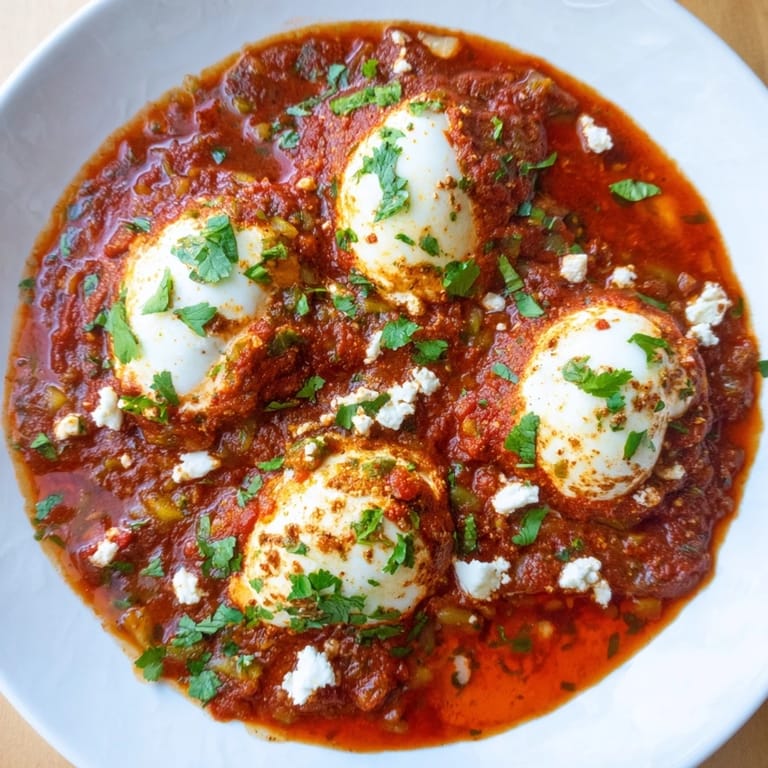
- Cover the pan and lower the heat slightly, cooking for six to eight minutes until the egg whites have set but the yolks still jiggle when you gently shake the pan. Every stove is different, so check around the six-minute mark rather than waiting the full time.
- Finish with brightness:
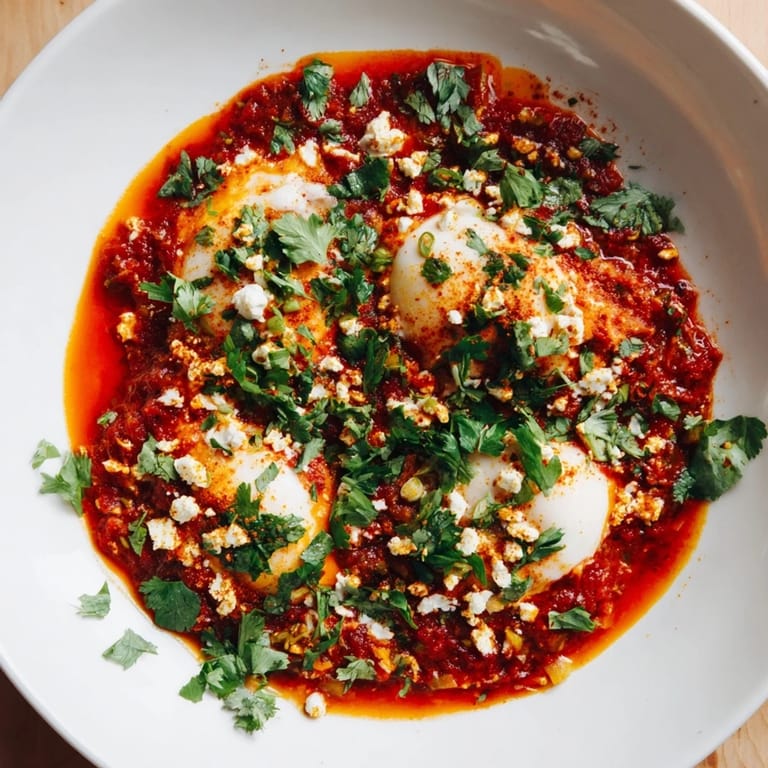
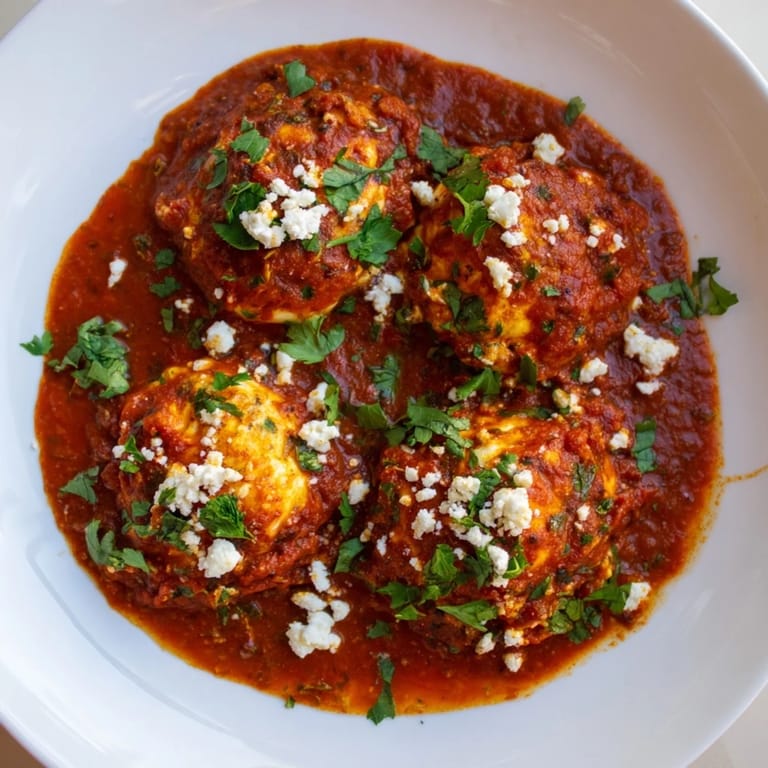
- Remove from heat and scatter fresh parsley and cilantro over everything. If you're using feta, crumble it now while the heat will slightly soften it.
- Serve immediately:
- Bring the whole pan to the table if you can, with warm pita or crusty bread waiting beside it. The magic is in the immediacy.
 Save
Save My most vivid memory isn't from cooking shakshuka perfectly, but from making it badly one Saturday when I forgot to reduce the sauce first and ended up with watery, barely-set eggs floating in tomato soup. My date laughed, we ate it anyway from the same bowl with two spoons, and somehow it became one of the best breakfasts either of us could remember. That's when I learned that shakshuka doesn't need to be perfect to be exactly what someone needs.
The Spice Conversation
There's no single correct heat level for shakshuka, which is what makes it so personal to cook. Some mornings I want the cayenne loud and clear; other times I skip it entirely and let the paprika whisper instead. The beauty is that you're not locked into anyone else's version. Taste the sauce before you add the eggs, and adjust the spices with confidence—this is your kitchen, and the best shakshuka is the one that makes you happy to be awake.
Why Cast Iron Matters
A cast-iron pan isn't required, but it's recommended for one simple reason: it holds heat evenly and keeps the sauce hot right up to the moment you carry it to the table. Regular stainless steel or nonstick will work perfectly well, but if you have cast iron, this is the dish to use it for. The weight of the pan becomes part of the experience, and honestly, there's something satisfying about a one-pan meal served in the vessel it was cooked in.
Variations That Feel Natural
Once you've made shakshuka a few times, you'll start seeing it as a template rather than a rule. I've stirred in sautéed spinach on mornings when I wanted greens, added roasted eggplant because it was what needed using, and even scattered crumbled labneh on top instead of feta when cheese felt too heavy. The sauce is forgiving, and the eggs are always the anchor that makes it shakshuka. Serve it alongside thick Greek yogurt or labneh if you want something cooling against the warm spices, and remember that bread isn't optional—it's the utensil that makes this dish truly come alive.
- Try adding a pinch of smoked paprika for depth if regular paprika feels one-note.
- Sautéed spinach or eggplant can turn this from appetizer into something more substantial without changing the fundamental character.
- The feta crumble is optional, but the fresh herbs at the end are not.
 Save
Save Shakshuka has a way of turning an ordinary morning into something worth remembering, and that's really all you need to know. Make it for someone you love, or make it for yourself and take the time to eat it slowly.
Your Questions Answered
- → What spices enhance the tomato sauce?
Cumin, sweet paprika, ground coriander, and a touch of cayenne pepper contribute warm, layered flavors to the tomato base.
- → How are the eggs cooked in this dish?
Eggs are cracked into small wells in the simmering sauce and cooked until whites set while yolks remain soft and runny.
- → Can I adjust the spice level?
Yes, you can increase or omit chili and cayenne pepper according to your preferred heat tolerance.
- → What garnishes complement this dish?
Fresh parsley, cilantro, and optionally crumbled feta cheese add freshness and depth to the flavors.
- → What is the best way to serve it?
Serve immediately with warm pita or crusty bread to soak up the rich, spiced tomato sauce.