 Save
Save The first time I bit into a sabich was at a tiny stand in Tel Aviv, where a woman with flour-dusted hands moved with such practiced efficiency that my sandwich was wrapped before I could even ask questions. Years later, I finally understood the magic: it wasn't just the combination of crispy fried eggplant, creamy tahini, and bright salad—it was how each element sang against the others, held together in warm pita like an edible conversation. Now I make it at home when I want something that feels both deeply satisfying and somehow festive, even on ordinary weeknights.
I remember making sabich for a potluck where everyone showed up with casseroles and desserts, and I arrived with these oil-stained pita pockets that somehow became the first thing to vanish from the table. Someone asked me for the recipe that very night, and I realized I'd never actually written it down—just made it from memory and instinct. That's when sabich became more than just street food in my kitchen; it became the thing I make when I want to turn a regular gathering into something people actually remember.
Ingredients
- Eggplant: Two medium eggplants cut into half-inch rounds are your foundation—thick enough to stay tender inside while the edges crisp up in the oil, thin enough to cook through evenly.
- All-purpose flour: This light dredge creates a delicate, shattering crust that seals in the eggplant's creaminess without making it heavy or bready.
- Vegetable oil: Use a cup for frying because eggplant is honestly an oil sponge, and you want enough depth so the slices can float and brown properly on both sides.
- Eggs: Four large hard-boiled eggs give the sandwich protein and richness; their buttery yolk becomes almost another sauce when you bite through.
- Israeli salad vegetables: The diced tomatoes, cucumber, and red onion are what keep this from becoming heavy—they're your freshness and brightness in every bite.
- Fresh herbs: Parsley goes into the salad while cilantro becomes a final garnish; don't skip either because they smell like the Middle East and taste like home.
- Tahini sauce: Half a cup of tahini paste whisked with water and lemon juice becomes impossibly silky—this is the binding agent that makes all the textures play together.
- Pita bread: Four large pitas are your edible vessels; warm them so they're still steaming when you fill them.
- Amba sauce: The pickled mango sauce is optional but honestly transformative if you can find it—it adds a sweet-sour depth that nothing else quite matches.
- Pickles and hot sauce: Keep these on the side for people to customize their own heat level and tang.
Tired of Takeout? 🥡
Get 10 meals you can make faster than delivery arrives. Seriously.
One email. No spam. Unsubscribe anytime.
Instructions
- Salt your eggplant and wait:
- Slice your eggplants and lay them on a cutting board sprinkled with a teaspoon of salt. Let them sit for fifteen minutes—this draws out moisture that would otherwise make them soggy when fried. Pat them completely dry with paper towels when the time's up.
- Flour and fry with confidence:
- Dredge each slice lightly in flour (you want a whisper of coating, not a thick jacket) and slip them into oil heated to medium-high. Listen for that immediate sizzle when eggplant hits oil; that's the sound of a perfect fry starting. Two to three minutes per side until they're golden brown and the edges are slightly darkened.
- Start your eggs early:
- While eggplant is frying, get a saucepan of water boiling and slip in your eggs. Once the water comes back to a boil, reduce the heat and let them simmer for exactly nine minutes—any longer and the yolks develop that gray-green ring, any shorter and they'll be too soft.
- Ice bath and peel:
- Transfer the hot eggs immediately to ice water to stop them cooking. Once they're cool enough to handle, peel them under a light stream of cold water—it's easier than you'd think and makes them less likely to crack.
- Build your salad quickly:
- While everything else is cooking, dice your tomatoes, cucumber, and red onion as fine as you can manage. Toss them together with fresh parsley, a squeeze of lemon juice, a drizzle of olive oil, and a pinch of salt and pepper.
- Make tahini sauce that's silky:
- Whisk together tahini paste, minced garlic, and lemon juice first, then slowly add water while whisking until you reach a consistency that's pourable but still rich. It should coat a spoon but still drizzle smoothly onto warm pita.
- Warm your pita properly:
- Don't skip this step—cold pita is a crime against sabich. Wrap your pitas in a clean kitchen towel and warm them in a 350-degree oven for three minutes, or hold them directly over a gas flame for a few seconds on each side if you're feeling brave.
- Assemble with intention:
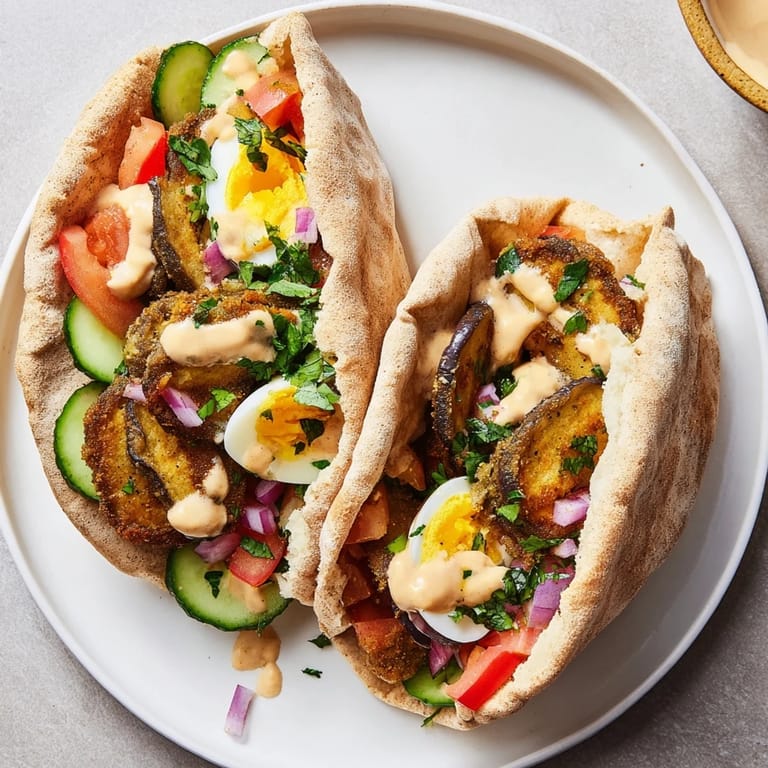
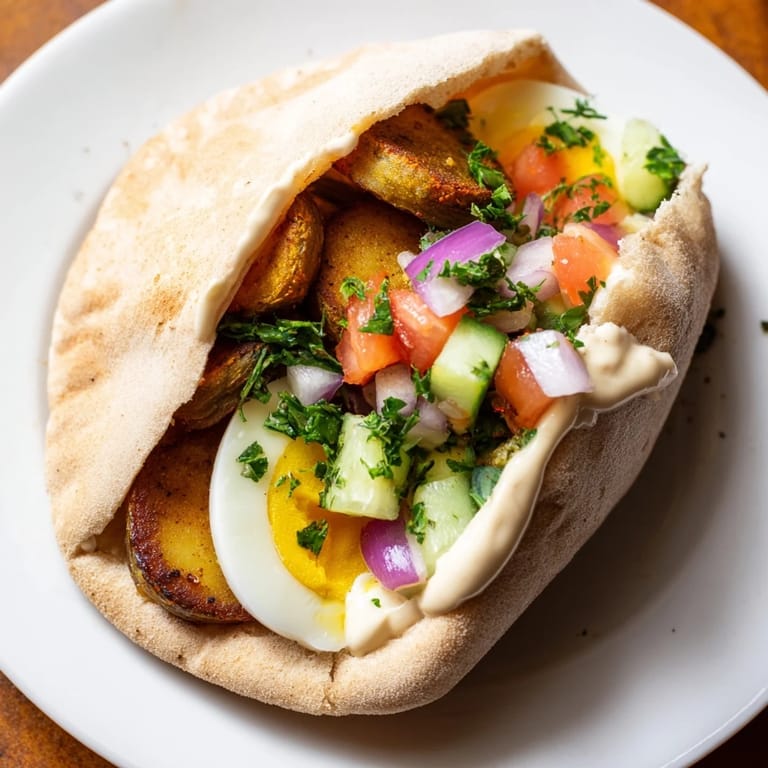
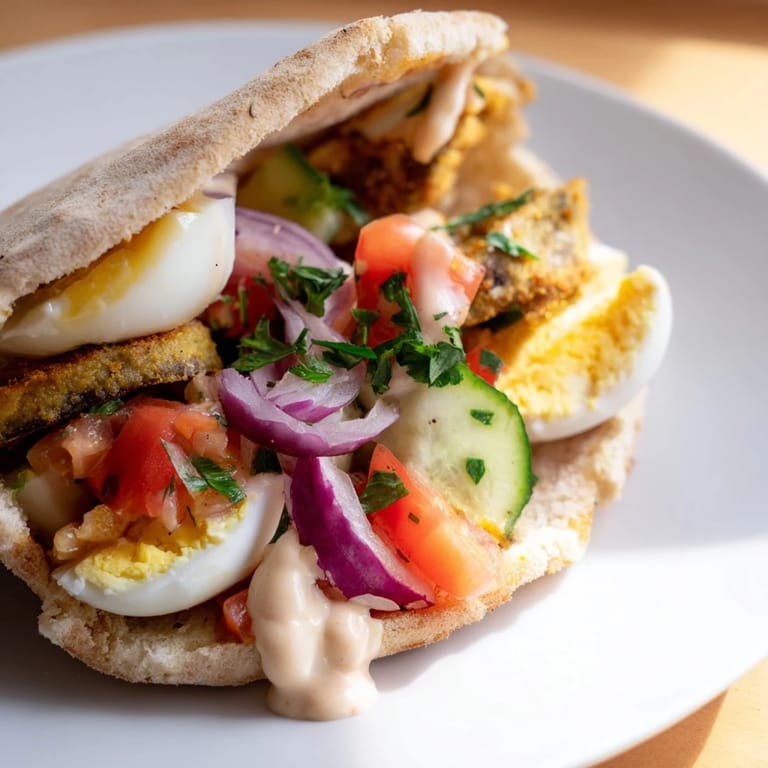
- Slice each warm pita open to create a pocket. Start with a layer of fried eggplant (still warm is key), then add sliced eggs, a generous spoonful of Israeli salad, and a generous drizzle of tahini sauce. Top with amba if you have it, pickles, cilantro, and hot sauce to your heat preference, then wrap tightly in paper so everything stays warm and contained while you eat.
 Save
Save There's a moment when you first wrap a warm sabich and hold it in both hands, and you feel the pita still steaming slightly against your palms, and you know that whoever eats this is about to experience something that tastes like pure, uncomplicated joy. That's when it stopped being just a recipe for me and became something I reach for when I want to give people something memorable.
The Secret to Crispy Eggplant
The eggplant is honestly the whole show here, so it deserves respect. That fifteen-minute salt rest isn't just tradition—it genuinely changes the texture by pulling out water that would otherwise steam your fries and make them mushy. I learned this the hard way after a batch of sabich that tasted perfect but felt disappointingly soft, and once I started being patient with the salt step, everything transformed. The flour dredge should be light, almost like you're dusting them; a thick flour coating turns the whole thing more like a fritter than a sabich.
Why Tahini Is Everything
Tahini might be the most underrated ingredient in this sandwich, and I say that as someone who loves crispy eggplant. That silky sesame sauce is what brings all the textures together and prevents the whole thing from feeling like a collection of components instead of a unified bite. The secret is patience when you're whisking—start with just the lemon juice and garlic to break down the tahini, then add water slowly until it's smooth and pourable. Too much water and it becomes thin; not enough and it's too thick to drizzle. I usually make mine slightly thinner than I think it needs to be because it always thickens a bit once it sits.
Make It Your Own
One of the best things about sabich is how forgiving it is when you start playing with it. I've made vegan versions by skipping the eggs entirely, and honestly, you don't miss them as much as you'd think because there's so much texture and richness from the eggplant and tahini. Amba is traditional but not essential; if you can't find it, a drizzle of harissa mixed with a little mayo gives you similar depth. The Israeli salad can be prepped hours ahead and actually gets better as it sits, so you can build a lot of this meal on your own schedule.
- Make the Israeli salad and tahini sauce the day before if that helps your timing.
- Fry the eggplant up to two hours ahead and warm it gently before assembling.
- Set out all your components and let people build their own sabich if you're feeding a crowd.
 Save
Save Sabich is the kind of food that makes people slow down and really taste what's in front of them, which might be the greatest gift a sandwich can give. Make it once and you'll understand why it's been a street food staple for so long.
Your Questions Answered
- → How do you prepare the eggplant for sabich?
Slice the eggplant into rounds, sprinkle with salt to remove excess moisture, pat dry, dredge lightly in flour, and fry until golden brown on both sides.
- → What is the best way to make tahini sauce creamy?
Whisk tahini paste with water, lemon juice, minced garlic, and salt until smooth, adjusting water to reach the desired consistency.
- → Can sabich be made vegan?
Yes, for a vegan version omit the eggs or replace them with tofu. The rest of the ingredients are plant-based.
- → What ingredients make up the Israeli salad?
It consists of diced tomatoes, cucumber, finely chopped red onion, parsley, lemon juice, olive oil, salt, and pepper mixed together.
- → Is amba necessary for authentic sabich?
Amba, a pickled mango sauce, is traditional but optional. It adds a tangy, spicy flavor if included.