 Save
Save My first encounter with fesenjan was at my aunt's kitchen table on a rain-soaked afternoon in Tehran, where she was stirring this glossy mahogany sauce with such focus you'd think she was composing music. The smell of pomegranate molasses mingling with toasted walnuts filled the entire apartment, and I watched, mesmerized, as she explained that this dish wasn't just food—it was patience made edible. Years later, when I finally made it myself, I understood what she meant the moment that deep, complex sauce came together.
I made this for my friend who'd just moved to the city and was feeling homesick for real, flavored food—not the bland stuff cluttering her kitchen. When she took that first spoonful and her eyes widened, I saw something shift; she sat down and ate slowly, and afterward we talked for three hours about her grandmother's kitchen. That's when I learned that fesenjan isn't just a stew—it's a bridge between worlds.
Ingredients
- Boneless chicken thighs or duck (700 g / 1.5 lbs), cut into large pieces: Thighs stay tender and forgiving during long cooking, while duck brings an earthiness that makes this dish feel genuinely special.
- Salt and black pepper (1/2 tsp each): Season boldly here—the meat needs confidence.
- Vegetable oil (2 tbsp): Use something neutral so the spices take center stage.
- Large onion, finely chopped: This becomes the sauce's foundation, sweetening as it cooks.
- Ground walnuts (250 g / 2 cups): Toast them lightly before grinding if you have time—it deepens the flavor and makes you feel like an actual cook.
- Pomegranate molasses (500 ml / 2 cups): This is the soul of the dish; find good quality stuff, as it carries everything.
- Water (500 ml / 2 cups): Use good water, or use low-sodium broth if you want extra richness.
- Sugar (2 tbsp): Adjust freely—some batches of pomegranate molasses are tangier than others, and your taste buds matter here.
- Ground cinnamon, turmeric, and cardamom (1/2 tsp, 1/4 tsp, 1/4 tsp): These warm spices are the whisper that makes people stop mid-bite and ask what they're tasting.
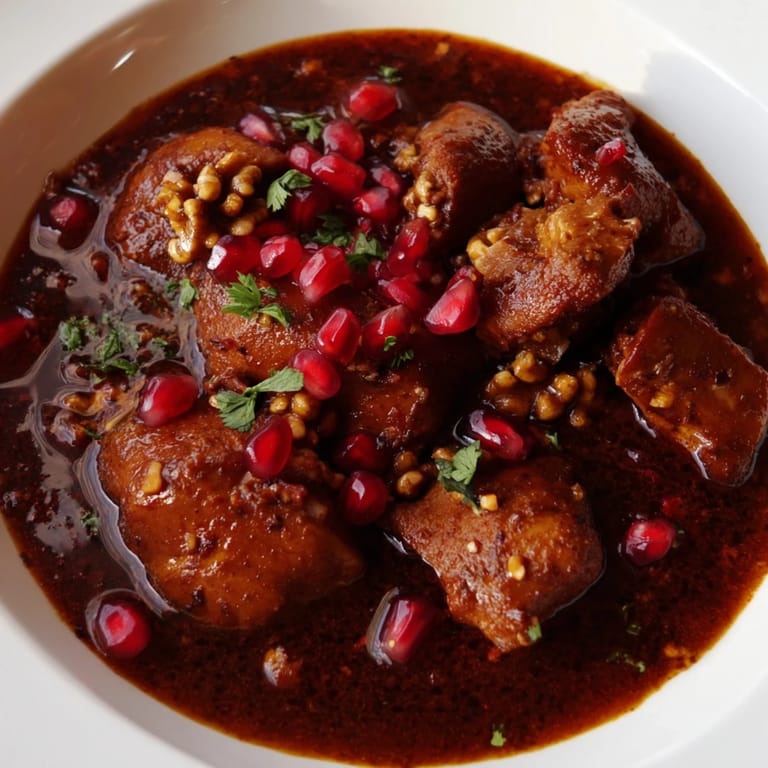
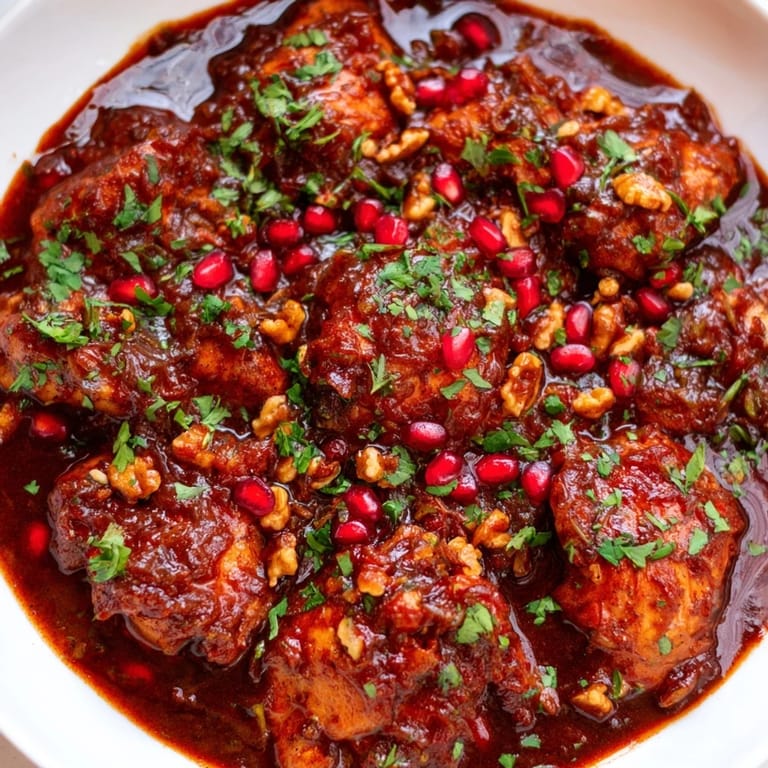
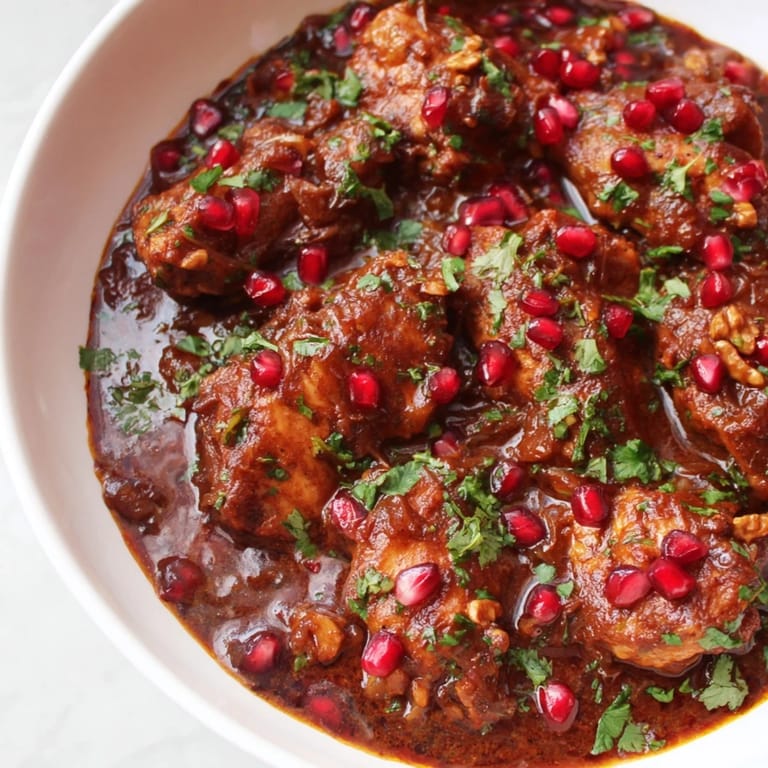
- Pomegranate seeds and fresh parsley for garnish: These aren't just pretty—the seeds burst with tartness that answers the richness of the sauce.
Tired of Takeout? 🥡
Get 10 meals you can make faster than delivery arrives. Seriously.
One email. No spam. Unsubscribe anytime.
Instructions
- Season and prepare:
- Dust your meat with salt and pepper, giving each piece attention. This small ritual sets the tone for everything that follows.
- Build the base:
- Heat oil over medium heat and watch it shimmer before adding onions. Sauté them until they turn deep golden and smell almost caramelized—this takes about 8 to 10 minutes and is worth every second of patience.
- Brown the meat:
- Work in batches if needed so nothing steams. You're looking for golden-brown edges that seal in the meat's promise.
- Toast the walnuts:
- Stir them constantly for 2 to 3 minutes, breathing in their warm, nutty perfume. They'll smell almost toasted before you add the liquid—trust that moment.
- Build the sauce:
- Pour in the pomegranate molasses, water, sugar, and spices, stirring until everything dissolves into one glossy, unified color.
- Simmer low and slow:
- Bring to a gentle boil, then drop the heat to low, cover, and walk away for an hour. You're not making magic—you're letting time do it for you.
- Finish strong:
- Uncover and simmer for another 30 minutes, stirring often. Watch for the oil to rise to the surface in delicate streaks—this signals that everything has married perfectly. Taste and adjust sweetness or tang to match your mood.
- Plate and celebrate:
- Serve over basmati rice, scattered with pomegranate seeds and parsley if you have them.
 Save
Save The first time my partner tasted this, they looked at me and said, 'This tastes like love tastes,' which might be the silliest and truest thing anyone's ever said about food. I realized then that fesenjan is one of those dishes that reaches past hunger and touches something deeper—a reminder that cooking for someone is an act of translation.
The Sweet and Sour Philosophy
Persian cooking lives in the space between sweet and sour, and fesenjan is its most eloquent argument. The pomegranate molasses provides the tart undertone while the sugar adds weight and balance—neither dominates, and that's entirely the point. I've learned through trial that the ratio matters less than your willingness to taste as you go, adjusting until the flavors feel like they're holding hands rather than fighting.
Meat Choices and Alternatives
Duck is traditional in Iran and brings a richness that feels ceremonial, but chicken thighs work beautifully and are far more forgiving for home cooks. I've also made this with mushrooms and eggplant for vegetarian friends, and while different, it's equally worthy—the sauce carries anything you trust it with.
Serving and Storage
Fesenjan tastes better the next day, when all the flavors have had time to know each other better. Store it covered in the refrigerator for up to four days, and warm it gently on the stovetop, adding a splash of water if it's thickened too much.
- Serve over saffron rice, plain basmati, or even couscous if that's what you have.
- Leftovers work wonderfully as a filling for flatbread or layered into grain bowls.
- Don't skip the pomegranate seeds if they're in season—they're not garnish, they're the final word.
 Save
Save This dish reminds me why cooking matters—not because it's complicated, but because it connects us to memory, to culture, to each other. Make it once and you'll understand.
Your Questions Answered
- → What types of meat work best for this dish?
Boneless chicken thighs or duck are preferred for their tenderness and flavor. Duck lends a more traditional richness, while chicken offers convenience.
- → Can I make a vegetarian variation?
Yes, substitute mushrooms or eggplant instead of meat to keep the rich texture and absorb the complex sauce flavors.
- → How do I balance the sauce’s sweetness and tang?
Adjust the sugar and amount of pomegranate molasses during cooking to achieve your preferred sweet and sour balance.
- → Why are walnuts important here?
Walnuts add natural creaminess and nuttiness, thickening the sauce while complementing the tartness of the pomegranate.
- → What is the best way to serve this dish?
It pairs beautifully with steamed basmati or saffron rice to soak up the rich sauce and provide a fragrant base.