 Save
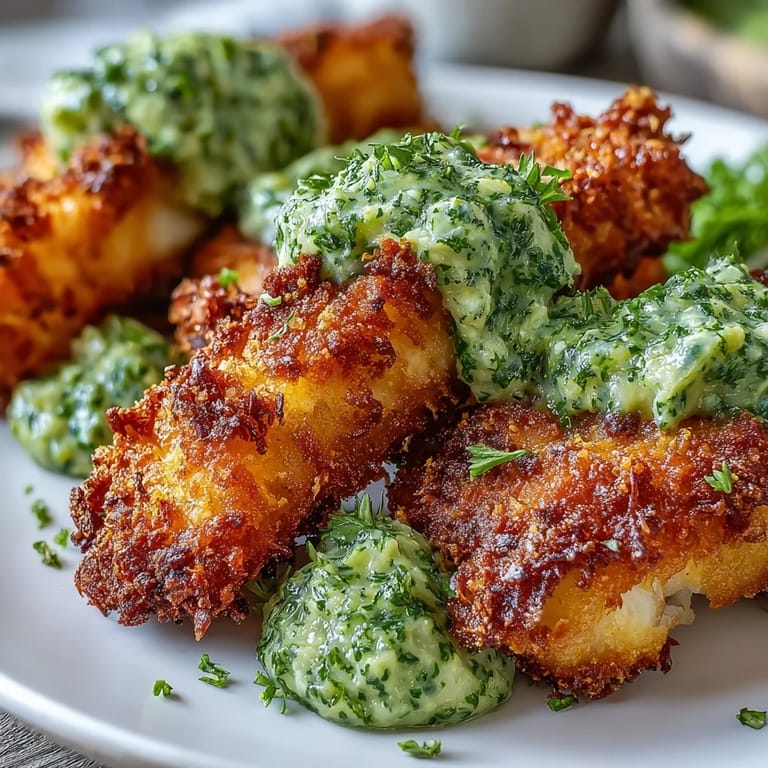
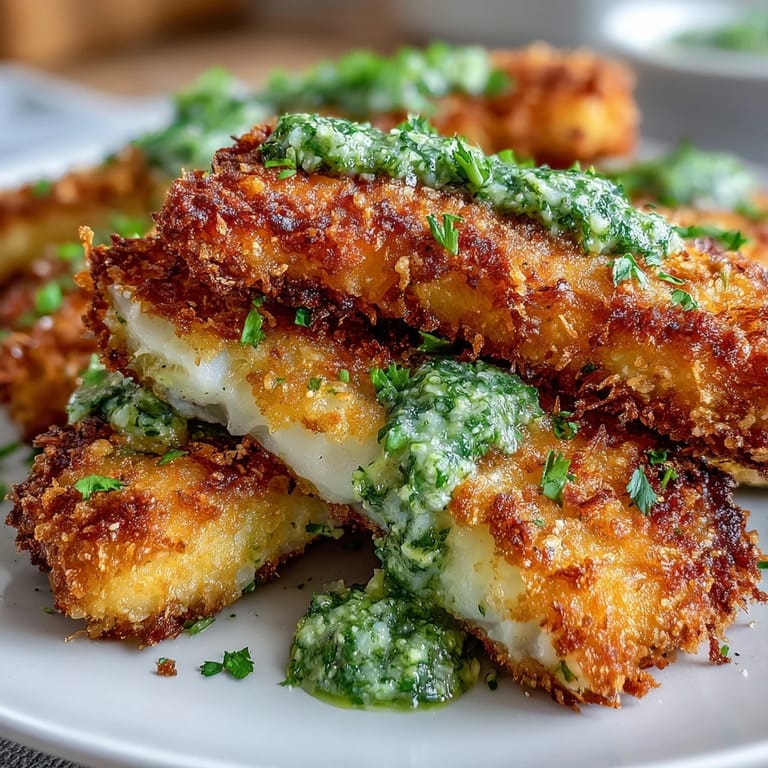
Save The smell of toasted Parmesan hit me before I even opened the oven, sharp and nutty, filling the kitchen with a warmth that made my daughter wander in from the living room. She stood on tiptoes to peek through the glass door, watching the goujons turn golden. I'd been trying to nudge her toward eating more fish, and this was my attempt at bridging the gap between her love of anything crispy and my hope she'd enjoy something beyond frozen shapes. When I pulled them out and she grabbed one before I could plate them, I knew I'd cracked it.
I served these at a small dinner party last spring, nervous because one guest was a chef and I worried she'd find them too simple. She finished her plate before anyone else and asked for the recipe, which I scribbled on the back of an envelope while we finished the wine. Later she texted me a photo of her own version, tweaked with lemon zest in the crust, and I felt that quiet pride you get when something you made travels beyond your own kitchen.
Ingredients
- Skinless haddock fillets: Haddock is mild and flaky, holding its shape well when baked, though cod or pollock work just as beautifully if that's what your fishmonger has fresh.
- Plain flour: This first layer helps the egg stick, creating a base for the crust that won't slide off halfway through baking.
- Eggs: Beaten until smooth, they act as the glue between flour and breadcrumbs, sealing in moisture while the outside crisps.
- Panko breadcrumbs: Their light, airy texture gives you that satisfying crunch, far superior to regular breadcrumbs which can turn dense.
- Parmesan cheese: Finely grated Parmesan adds a salty, umami depth and helps the crust brown evenly in the oven.
- Black pepper, sea salt, smoked paprika: These seasonings build flavor into the crust itself, with the paprika adding a subtle warmth and color.
- Frozen peas: They're sweet and vibrant, and freezing actually preserves their color and nutrition better than some fresh options.
- Fresh basil leaves: Basil brings an aromatic sweetness that balances the earthiness of the peas without overpowering them.
- Pine nuts: They add richness and body to the pesto, though sunflower seeds work brilliantly if nuts are off the table.
- Extra virgin olive oil: A good quality oil makes the pesto silky and adds its own fruity note that ties everything together.
- Lemon juice: Brightness is key here, cutting through the richness and making the pesto taste alive rather than flat.
Tired of Takeout? 🥡
Get 10 meals you can make faster than delivery arrives. Seriously.
One email. No spam. Unsubscribe anytime.
Instructions
- Get the oven ready:
- Preheat your oven to 200°C (180°C fan) and line a baking sheet with parchment paper so the goujons don't stick. This also makes cleanup easier, which matters more than you think on a weeknight.
- Set up your coating station:
- Arrange three shallow bowls in a row: flour in the first, beaten eggs in the second, and a mixture of panko, Parmesan, pepper, salt, and smoked paprika in the third. It's like an assembly line, and once you get into a rhythm, it goes quickly.
- Coat the haddock strips:
- Dredge each piece of fish in flour, shake off the excess, dip it into the egg until fully coated, then press it into the Parmesan-panko mixture, turning to cover all sides. Lay them on the prepared baking sheet with a little space between each one.
- Bake until golden:
- Lightly spray or drizzle the goujons with olive oil, then bake for 15 to 20 minutes, flipping them halfway through so both sides crisp up evenly. They should be golden and firm to the touch when done.
- Make the pea pesto:
- While the fish bakes, blanch the peas in boiling water for two minutes, then drain and run them under cold water to stop the cooking and keep that bright green color. Blitz them in a food processor with basil, Parmesan, garlic, pine nuts, olive oil, and lemon juice until you have a textured, creamy pesto, then season with salt and pepper.
- Serve hot:
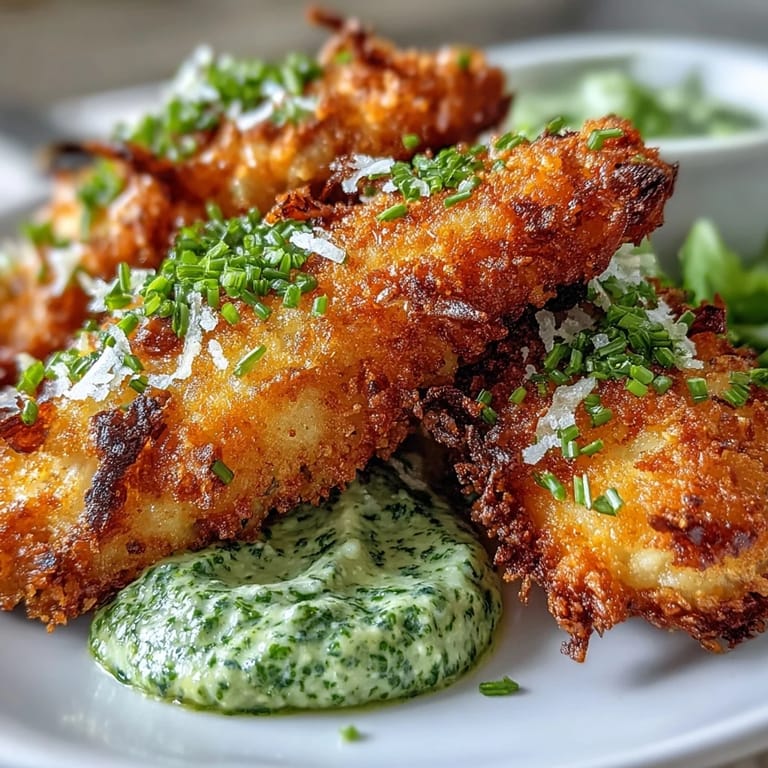
- Plate the goujons while they're still warm and crispy, with a generous spoonful of pea pesto on the side and lemon wedges for squeezing. A handful of salad leaves makes it feel complete without adding much effort.
 Save
Save 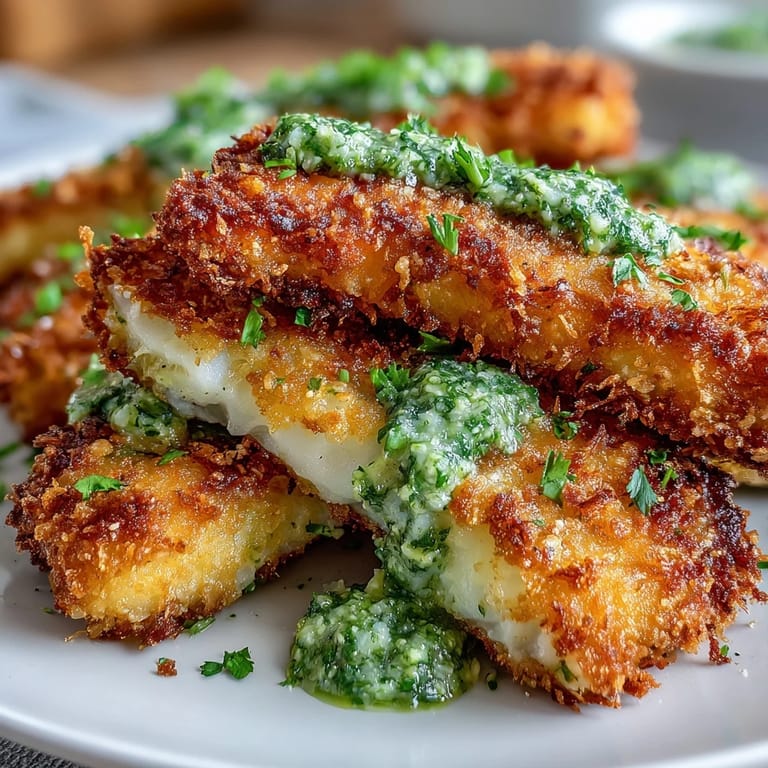 Save
Save One evening my partner came home late and tired, and I reheated a few leftover goujons in the oven while warming the pesto gently on the stove. He ate them standing at the counter, dipping each piece slowly, and didn't say much except that it felt like being looked after. Sometimes a recipe earns its place not because it's fancy, but because it's the one you reach for when you want to care for someone without making a big show of it.
Choosing Your Fish
Haddock is my first choice here because it has a slightly sweeter flavor than cod and holds together well when cut into strips, but honestly, whatever looks freshest at the counter is your best bet. Pollock is another lovely option, often more affordable and just as flaky. If you're working with frozen fillets, let them thaw completely in the fridge overnight and pat them very dry with paper towels before you start, otherwise the coating won't stick properly and you'll end up frustrated.
Making the Pesto Ahead
The pea pesto can be made a day in advance and kept in the fridge in an airtight container with a thin layer of olive oil drizzled over the top to prevent browning. When you're ready to serve, let it come to room temperature for about twenty minutes so the flavors open up again, or warm it gently in a small saucepan over low heat, stirring often. I've even frozen it in ice cube trays and popped out a couple of cubes to thaw when I need a quick sauce for pasta or roasted vegetables.
Serving Suggestions
These goujons pair beautifully with a simple green salad dressed in lemon and olive oil, or serve them alongside roasted new potatoes and steamed green beans for something more substantial. If you're feeding kids, they love dipping these into the pesto like it's a game, and it's a sneaky way to get them eating peas without complaint.
- A crisp Sauvignon Blanc or dry sparkling wine cuts through the richness and complements the lemon and basil.
- For a casual meal, serve with thick-cut chips and a wedge of lemon for that elevated fish and chips feel.
- Leftover pesto is brilliant stirred through warm pasta, spread on toast, or dolloped onto grilled chicken.
 Save
Save 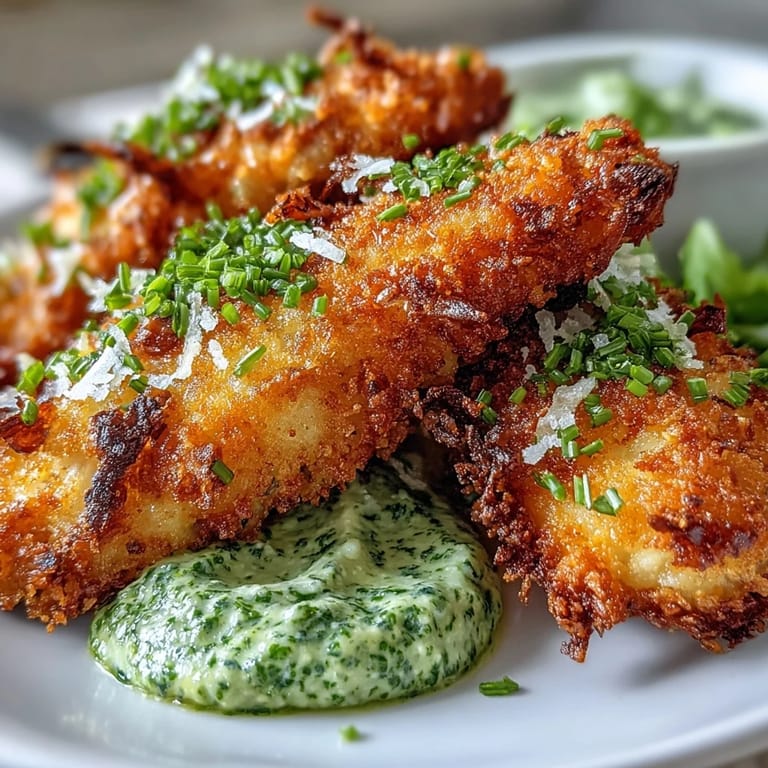 Save
Save There's something deeply satisfying about pulling a tray of golden, crackling goujons from the oven and knowing you've made something that feels indulgent but came together without drama. This is the kind of recipe that quietly becomes a regular, the one you make when you want comfort, flavor, and a little bit of pride on the plate.
Your Questions Answered
- → Can I use a different type of fish?
Yes, cod or pollock work excellently as substitutes for haddock. Choose firm white fish that holds its shape when cut into strips and baked.
- → How do I make this gluten-free?
Simply replace the plain flour with gluten-free flour and use gluten-free breadcrumbs instead of panko. The rest of the ingredients are naturally gluten-free.
- → Can the pea pesto be made ahead?
Absolutely. Prepare the pesto up to 2 days in advance and store it in an airtight container in the refrigerator. Stir well before serving.
- → What can I use instead of pine nuts?
Toasted sunflower seeds make an excellent nut-free alternative with similar texture and richness. Walnuts or almonds also work well if tree nuts aren't a concern.
- → Can I fry these instead of baking?
Yes, shallow fry in vegetable oil over medium heat for 3-4 minutes per side until golden and cooked through. Baking offers a lighter, healthier option though.
- → How do I keep the coating crispy?
Ensure the goujons aren't overcrowded on the baking sheet, and lightly spray with oil before baking. Turn them halfway through cooking for even browning and crispness.