 Save
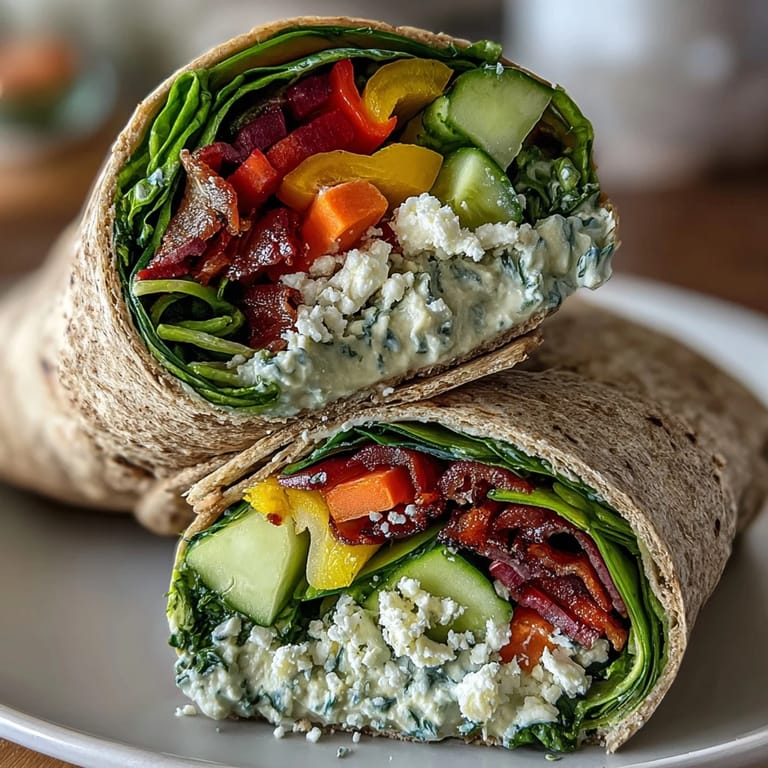
Save My daughter came home from school one afternoon asking if we could pack something she could actually look forward to eating, something colorful that wouldn't get squished in her backpack like the sandwiches usually do. That's when these rainbow wraps became our thing—a solution born from her honest complaint that turned into our favorite lunch ritual. Now whenever she sees me gathering vegetables on a Tuesday morning, she knows what's coming, and somehow a simple wrap became a small daily joy we share.
I remember packing these for a long car ride to visit family upstate, and my son actually finished his entire wrap before we even hit the highway. The crunch of fresh vegetables mixed with that creamy hummus kept him satisfied for hours, and I realized this wasn't just lunch—it was peace and quiet for everyone involved. Since then, these wraps have traveled to soccer games, school picnics, and weekend hikes where they always hold up better than anything heavier I've tried.
Ingredients
- Large whole wheat tortillas: These are sturdy enough to hold everything without tearing, and the nutty flavor pairs beautifully with fresh vegetables in a way white tortillas never quite do.
- Hummus: It acts as both a creamy binder and a flavor base that ties all those different vegetables together—roasted red pepper or garlic varieties add surprising depth if you want to experiment.
- Red and yellow bell peppers: The sweetness of these peppers contrasts perfectly with the earthiness of the other vegetables, plus they stay genuinely crisp even hours later.
- Carrot: Julienning it thin is worth the extra effort because it softens just enough over a few hours to become almost tender while keeping that satisfying crunch.
- Cucumber: Choose one that's firm and not watery, and cut it lengthwise into thin planks so the water content doesn't make your wrap soggy.
- Purple cabbage: This is your secret weapon for keeping everything crunchy all day long, and it adds a subtle peppery note that rounds out the flavor.
- Baby spinach: Fresh and delicate, it wilts just slightly from the hummus warmth but keeps that tender, earthy character.
- Fresh herbs: Parsley or cilantro brightens everything at the last second, though honestly the wrap tastes complete without them if you're rushing.
- Avocado: A ripe one adds creaminess, but wait to slice it until you're actually assembling to prevent browning.
- Feta cheese: Crumbled feta brings a salty tang that makes each bite feel more substantial, though it's completely optional if you want to keep things fully vegan.
Tired of Takeout? 🥡
Get 10 meals you can make faster than delivery arrives. Seriously.
One email. No spam. Unsubscribe anytime.
Instructions
- Lay and spread:
- Take your tortilla and place it on a clean, dry surface, then spread the hummus in an even layer using the back of a spoon, leaving about a half-inch border so nothing squeezes out when you roll. This thin, even layer is the key to keeping everything cohesive without making the tortilla wet and fragile.
- Create your rainbow:
- Starting from the center, arrange your vegetables in horizontal lines—red pepper, yellow pepper, carrot, cucumber, cabbage, spinach—like you're painting a picture. This visual arrangement not only looks beautiful but ensures every bite has a bit of everything.
- Layer with flavor:
- Scatter your herbs, avocado slices, and feta over the vegetable rows if you're using them, distributing them evenly so nothing gets left behind in the first bite.
- Fold and roll:
- Fold the left and right sides of the tortilla inward about an inch, then starting from the bottom edge closest to you, roll it up tightly and confidently. The goal is a snug wrap that holds everything together without being so tight that you split the tortilla.
- Repeat and wrap:
- Make three more wraps using the same method, then let them rest for a minute so the tortillas relax slightly before cutting.
- Slice and transport:
- Cut each wrap diagonally (this makes them easier to hold and somehow more appealing), then wrap each piece individually in parchment or foil to keep everything clean and contained during transport.
 Save
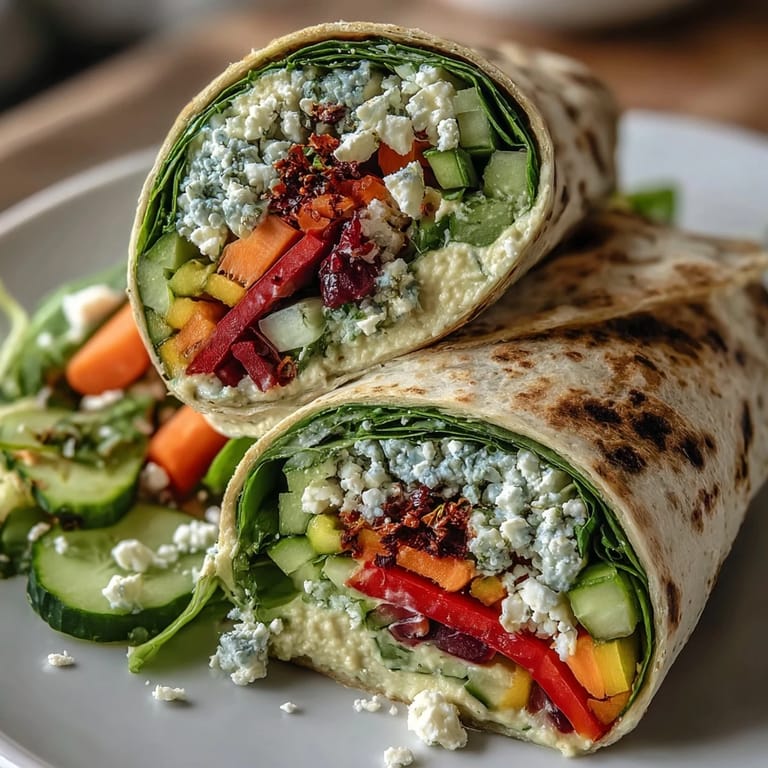
Save There's something deeply satisfying about watching someone bite into one of these wraps and see all those colors come together at once—it's nutrition that doesn't feel like a compromise. My son once told me these were his favorite lunch because they were pretty, and that taught me that how food looks matters almost as much as how it tastes.
The Magic of Texture Contrast
What makes these wraps so addictive is that moment when you bite into them and experience at least five different textures at once—the slight chew of the tortilla, the creamy spread, the crisp vegetables, the softness of the spinach, and maybe the tang of cheese. This contrast is what keeps people coming back instead of abandoning them halfway through like they do with boring lunches. I learned this by accident when I once made a wrap with only soft ingredients and it felt texturally boring despite tasting fine.
Customization Without Overthinking
The beauty of these wraps is that you can honestly use whatever vegetables you have on hand—spring brings fresh radishes and peas, summer calls for tomatoes and zucchini, fall invites roasted beets and Brussels sprouts. The formula stays the same: pick three to four vegetables that have different colors and textures, add your spread, add your protein if using it, and roll. I've made these with everything from shredded beets to roasted Brussels sprouts, and the only real rule is making sure you have enough variety that each bite stays interesting.
Prep Smart for Busy Days
On Sunday afternoons, I now prep all the vegetables in advance and store them in separate containers so assembly takes literally five minutes on a weekday morning. This is the difference between these wraps becoming something you actually make versus something that sounds nice in theory but never happens. Having everything ready means that when your kid asks for lunch, you're not scrambling, you're executing.
- Chop and store vegetables the night before in separate containers so you can assemble multiple wraps quickly without searching through the fridge.
- Keep avocados whole until the moment of assembly to prevent browning, but have them at room temperature so they slice cleanly.
- Pre-portioned hummus in small containers means even a teenager can assemble their own wrap if they want to take ownership of lunch.
 Save
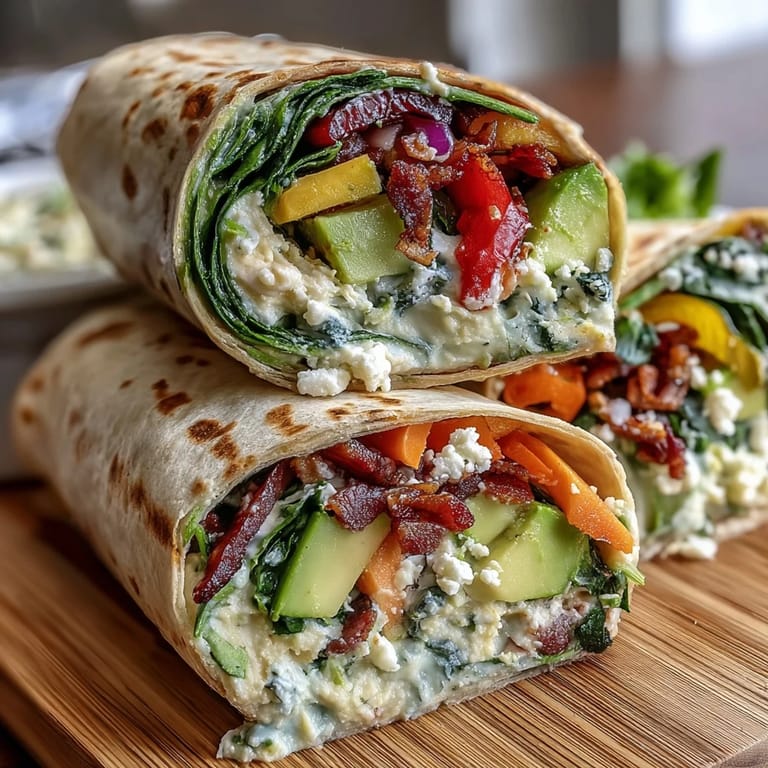
Save These wraps have become something bigger than lunch in our house—they're a small act of care that happens regularly, a moment where I know my family is eating well without feeling like they're missing out. That's really all any recipe needs to be.
Your Questions Answered
- → How can I keep the wraps from getting soggy?
Spread hummus evenly and avoid excessive watery ingredients. Layer sturdy veggies first and wrap tightly to maintain freshness.
- → What are good protein additions for this dish?
Grilled chicken, tofu, or crumbled feta cheese can add protein while complementing the fresh vegetable flavors.
- → Can I prepare these wraps in advance?
Yes, prepare and wrap tightly using parchment paper. Store refrigerated and slice just before serving to keep crispness.
- → What spreads work best with these veggie layers?
Classic or flavored hummus adds creaminess, but cream cheese or dairy-free spreads offer tasty alternatives.
- → How can I make these wraps gluten-free?
Simply substitute the whole wheat tortillas with gluten-free wraps without altering flavor or texture significantly.