 Save
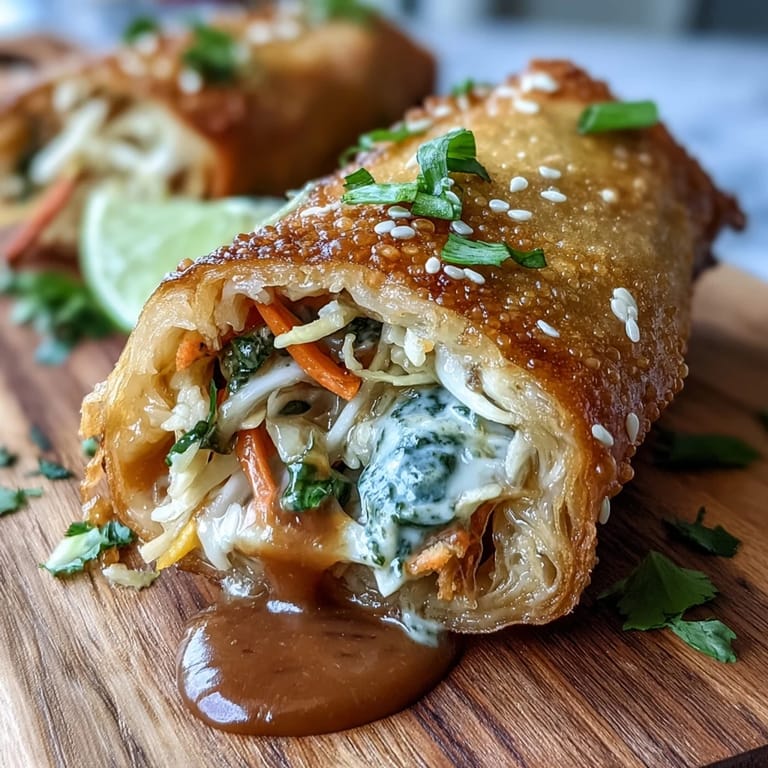
Save The scent of sizzling oil and the quick shuffle of vegetables against my cutting board always signal the start of something fun in my kitchen. Spring rolls have a way of making everything feel festive, even when it’s just me and the radio humming in the background. I first attempted these crispy bundles on a drizzly Tuesday, with mismatched socks and a craving for something crunchy yet fresh. The mix of golden wrappers and vivid veggies looked far more cheerful than the weather outside. That day, a simple snack turned into a little kitchen celebration just for me.
On a recent weekend, I prepped a platter of these spring rolls for a group of friends who always show up hungry and curious. We built an assembly line—one person rolling, another taste-testing, and someone inevitably sneaking extra cilantro. The laughter grew with each imperfectly wrapped parcel, all destined for the frying pan and, ultimately, eager hands. It was the kind of gathering where memories are rolled up with the food. Those messy, shared moments make this recipe more than just an appetizer—it’s instant togetherness.
Ingredients
- Spring roll wrappers: The key to that signature crunch—I learned it helps to keep them covered with a damp towel so they don’t dry out as you work.
- Shredded green cabbage: This gives each roll its hearty bite and holds up well after frying, especially when sliced as thin as possible.
- Julienned carrots: For color and subtle sweetness; aiming for uniform strips makes every bite satisfying.
- Bean sprouts: They add juicy freshness that balances the fried shell, but make sure to pat them dry to prevent soggy rolls.
- Julienned red bell pepper: These bring a little tang and brightness—sometimes I toss in yellow or orange too if my fridge suggests it.
- Cooked vermicelli noodles: I found that quick rinsing with cold water prevents them from sticking together when you assemble your rolls.
- Green onions: Sliced paper-thin so their sharpness mingles, not overwhelms, the other flavors.
- Fresh cilantro: This is my trick for a vivid herbal pop; finely chop to mix the flavor evenly through the filling.
- Soy sauce: A splash seasons the filling perfectly and works best tossed in before the noodles so everything gets coated.
- Sesame oil: Those few drops transform the scent—learned after making a bland batch that just didn’t sing.
- Grated ginger: Always fresh, grated on a microplane, to wake everything up.
- Garlic: Just one clove minced super-fine makes the filling more savory.
- Vegetable oil: Neutral and high-heat friendly, so the wrappers crisp up instead of burning before the inside warms through.
- Creamy peanut butter: Smooth is best for the sauce, creating that irresistible texture for dipping.
- Rice vinegar: Its gentle acidity balances the richness of the peanut butter in the sauce.
- Honey or maple syrup: A hint of sweetness, and I often swap in maple syrup if making the vegan version.
- Sriracha (optional): For just a whisper of heat in the dipping sauce—but I set some aside plain for spice-averse friends.
- Toasted sesame oil (for sauce): Rounds out the peanut sauce with a deep nutty aroma.
Tired of Takeout? 🥡
Get 10 meals you can make faster than delivery arrives. Seriously.
One email. No spam. Unsubscribe anytime.
Instructions
- Mix the veggie filling:
- Grab a large bowl and toss in all your prepped cabbage, carrots, bean sprouts, peppers, noodles, green onions, and cilantro. Pour over the soy sauce, sesame oil, ginger, and garlic, then use your hands (or tongs) to gently fold everything together until each thread of noodle and shred of cabbage is glistening.
- Ready the wrappers:
- Keep spring roll wrappers under a damp towel while you work, and set a small bowl of water nearby for sealing.
- Roll ‘em up:
- Place a wrapper with a corner pointing at you, spoon a modest mound of filling near the edge, fold the corner over, tuck in the sides, and roll up tight like a burrito—dabbing the final edge with water to seal.
- Repeat and stack:
- Continue rolling until all the filling and wrappers are used up; don’t worry if some look wonky—they all taste delicious.
- Heat and fry:
- Pour about 2 inches of vegetable oil into a deep skillet or wok and heat to about 350°F—the oil should shimmer, and a corner of wrapper dropped in should sizzle right away. Fry rolls in batches without crowding, gently turning until each is evenly gold and crisp, then transfer to a plate lined with paper towels.
- Whisk up the peanut sauce:
- In a small bowl, whisk creamy peanut butter with soy sauce, rice vinegar, honey or maple syrup, sriracha if using, warm water, and toasted sesame oil until completely smooth and pourable.
- Serve and enjoy:
- Arrange spring rolls on a platter with the peanut dipping sauce front and center, ready for dunking while still hot and crunchy.
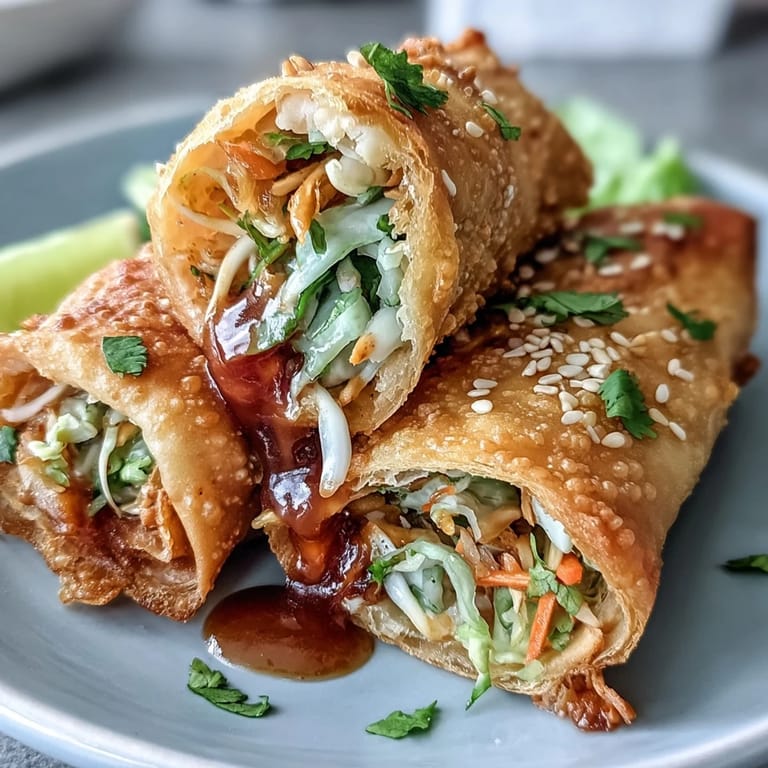 Save
Save I’ll never forget the look on my sister’s face the first time she dunked a piping-hot spring roll into the peanut sauce—eyes wide in happy disbelief, then laughter as sauce dripped down her chin. Dishes like this, meant to be grabbed with fingers and shared, have a way of turning ordinary evenings into memorable ones.
Rolling With Friends and Family
I’ve found that people love to participate when you’re making spring rolls—set up a DIY station and let everyone build their own. Some go for extra noodles, others for an avalanche of herbs, but every roll comes out a little different, a mini expression of its maker. Cooking becomes an activity, not a chore, and the act of rolling together turns even shy guests into confidants over shared spatters and secret sauces.
Baking Instead of Frying
I once tried baking these rolls when I ran out of oil, and was surprised by the golden, satisfying crunch with far less mess. Just brush them all over with a thin layer of oil, line them up on a baking tray, and turn halfway through for even color. While nothing replaces the sizzle of frying, baking makes cleanup a breeze and lets you crank out enough for a hungry crowd without babysitting a hot pan.
Dipping Sauce Magic
The peanut sauce always steals the show, and I’ve experimented with tweaks, from extra sriracha for heat to a splash of lime for brightness. Whisk rapidly to get it silky—if it thickens up as it sits, add a trickle of warm water to loosen it right before serving.
- Blitz everything in a blender for the smoothest sauce fast.
- Taste as you go; more vinegar wakes up tired tastebuds.
- Always serve a little extra sauce on the side—it disappears quickly.
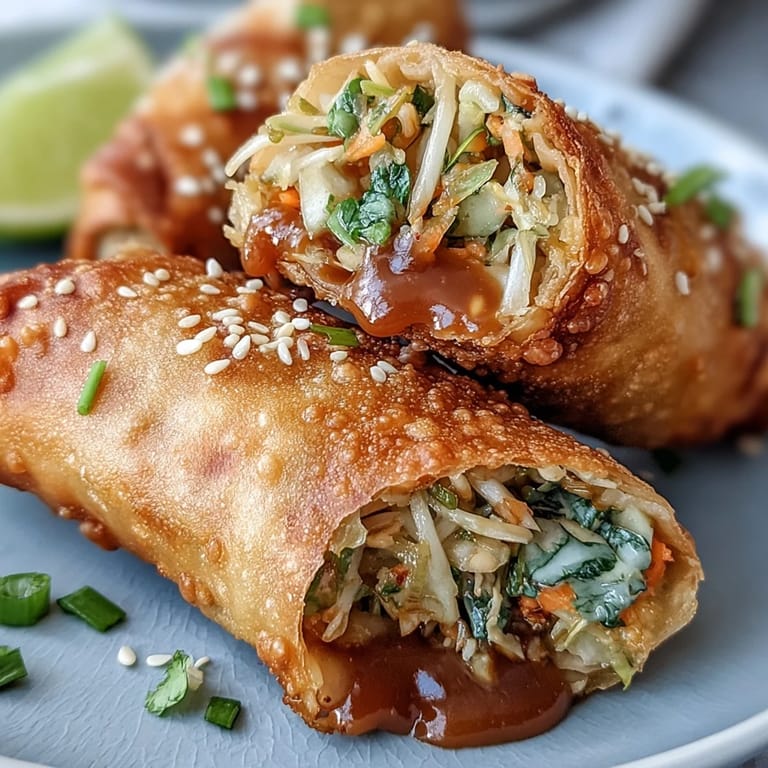 Save
Save Here’s to crispy spring rolls, passed from hand to hand, disappearing in minutes, and to kitchens that smell of adventure and peanut sauce.
Your Questions Answered
- → How do I prevent soggy spring rolls?
Drain and pat dry noodles and vegetables before assembling, avoid overly wet fillings, wrap tightly, and fry in batches at the proper oil temperature (about 350°F) so they crisp quickly without absorbing excess oil.
- → Can I bake the rolls instead of frying?
Yes. Brush each roll with oil and bake at 400°F (200°C) for 15–18 minutes, turning halfway to get an even golden crust. Baking reduces oil but needs good contact with heat to crisp the wrapper.
- → How can I make the peanut sauce smooth and pourable?
Whisk peanut butter with warm water a little at a time, then add soy, rice vinegar and sweetener. Warm liquid and vigorous whisking, or a short pulse in a blender, yields a silky, pourable sauce.
- → What are vegan swaps for this dish?
Use maple syrup instead of honey and choose spring roll wrappers that are egg-free. Replace optional shrimp or chicken with tofu or extra mushrooms for plant-based protein.
- → How should leftovers be stored and reheated?
Cool to room temperature, store in an airtight container in the fridge for up to 2 days. Reheat in a hot oven or toaster oven to restore crispness; avoid the microwave, which makes wrappers soggy.
- → Which wrappers work best for frying?
Thin wheat-based spring roll wrappers give a crisp, golden finish when fried. Rice paper can be used for different texture but dries and crisps differently; check packaging for egg if vegan.