 Save
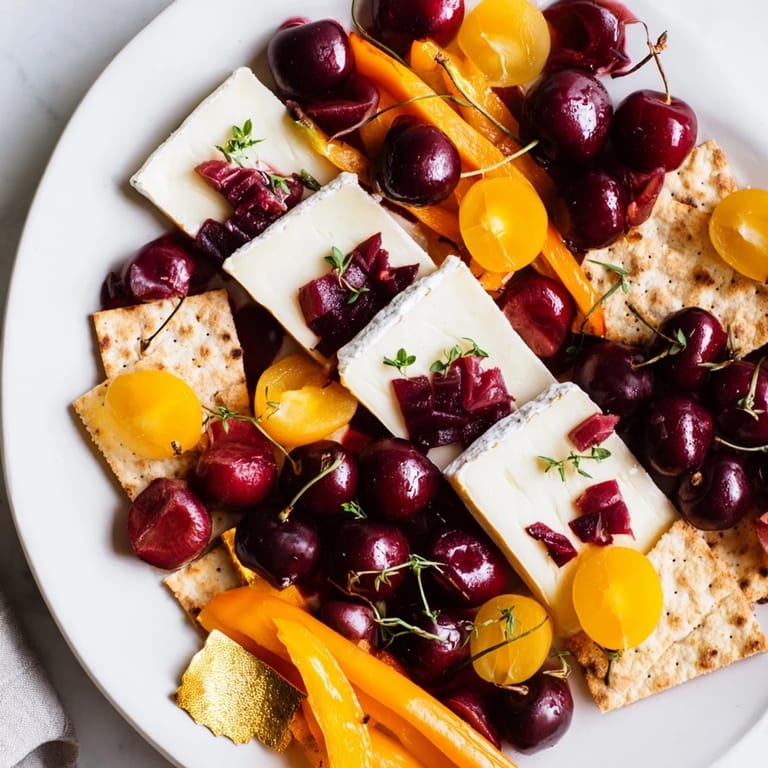
Save I'll never forget the evening I first arranged a Crimson and Gold Gala platter for a dinner party. I was standing in my kitchen, holding a wine-soaked cheese in one hand and a roasted golden pepper in the other, and something just clicked. The deep reds and brilliant golds looked like they were dancing against each other, and I realized that sometimes the most memorable dishes aren't about complicated techniques—they're about creating moments of pure visual joy that make people pause before they even taste.
I remember my sister walking into my kitchen as I was finishing the arrangement and gasping. She said, 'Did you really make this?' There's something about presenting food that's both beautiful and delicious that transforms a simple appetizer into something memorable. That moment taught me that plating matters just as much as flavor, especially when you're setting the tone for an evening.
Ingredients
- Fresh sweet cherries: These jewel-like fruits are the foundation of your crimson block. Pit them just before serving so they stay plump and juicy, and their tartness balances the sweetness of the gold section beautifully.
- Wine-soaked cheese like Drunken Goat or Merlot BellaVitano: This is where the magic happens. The wine infusion gives it an earthy depth that elevates the entire platter. Slice it thick enough to taste, not so thin it falls apart.
- Roasted yellow bell peppers: Roasting them yourself takes just a few minutes but makes them infinitely more flavorful than raw. The slight char adds a sweetness that perfectly complements the aged cheeses.
- Aged cheddar or gouda: The golden hue is natural, and the sharper the cheese, the better it stands up to the sweet elements on the board. Cut them into generous cubes so they're easy to grab.
- Gold leaf-topped crackers: These are your edible jewelry. If you can't find pre-topped crackers, apply the gold leaf yourself just before serving—it sticks better to room-temperature crackers.
- Pomegranate seeds and golden raisins: These add jewel-toned texture and bursts of flavor. The pomegranate is tart, the raisins are concentrated sweetness. Together, they're a flavor conversation.
- Yellow cherry tomatoes: Halving them makes them feel less like an afterthought and more intentional. They bring acidity that cuts through the richness of the cheeses.
- Fresh basil or microgreens: This final garnish adds a whisper of green that somehow makes the reds and golds pop even more vivid.
Tired of Takeout? 🥡
Get 10 meals you can make faster than delivery arrives. Seriously.
One email. No spam. Unsubscribe anytime.
Instructions
- Fire up the oven and char those peppers:
- Preheat your oven to 220°C (425°F). Place whole yellow bell peppers directly on a baking sheet and roast them for 10 to 12 minutes, turning occasionally, until their skins are blistered and charred. You'll know they're ready when they look almost angry and blackened—that's where the flavor lives. Transfer them to a bowl, cover it with plastic wrap, and let them steam for 5 minutes. This step is crucial; it loosens the skin. Peel away the papery charred skin with your fingers, remove the seeds and white pith, and slice the pepper into strips. Drizzle lightly with olive oil and crack fresh black pepper over them. Set aside to cool.
- Crown your crackers with gold:
- If you're using edible gold leaf, this is where you become an artist. Follow the package instructions carefully—usually it means using a small brush or applicator to gently place the delicate leaf on room-temperature crackers. Work slowly and don't rush it; gold leaf tears if you breathe on it wrong, and that's exactly the kind of minor disaster that becomes a good story later.
- Create your color blocks:
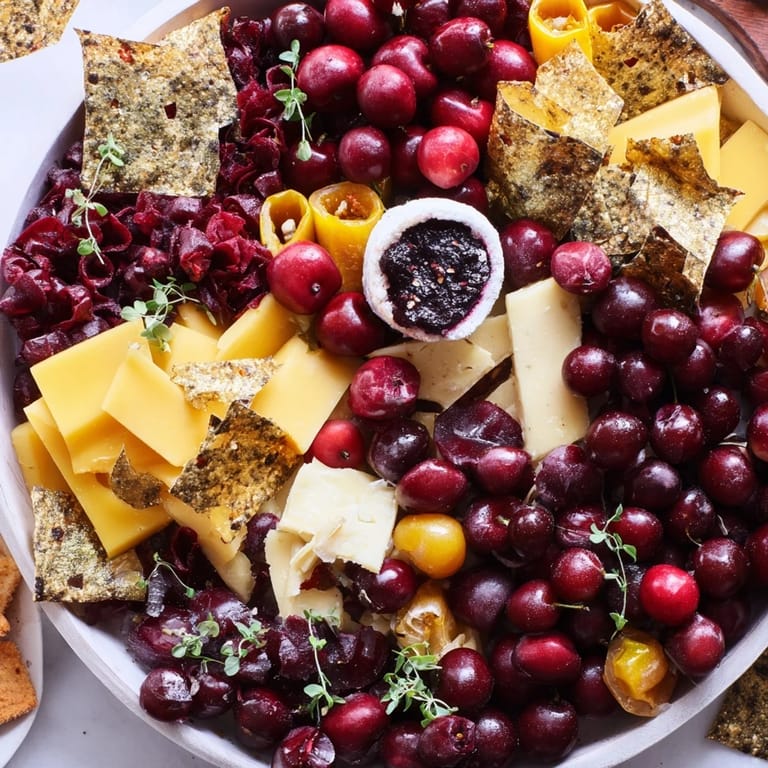
- This is where the platter comes alive. On your largest serving platter or board, arrange all your crimson elements—the pitted cherries, sliced wine-soaked cheese, dried cranberries, halved red grapes, and pomegranate seeds—in one tight, cohesive block on one side. Don't scatter them; pack them close together so the colors bleed into each other. On the opposite side, create an equally bold gold block with your cooled roasted pepper strips, golden cheese cubes, gold leaf crackers, golden raisins, and halved yellow tomatoes. The contrast is everything.
- Add the final flourish:
- Scatter fresh basil leaves or delicate microgreens between and across both color blocks. These green notes aren't just decoration—they signal freshness and add a subtle herbal note that ties everything together. Step back and look at what you've created. It should stop people in their tracks.
- Serve with intention:
- Bring the platter to the table while everything is still arranged perfectly. Encourage your guests to mix and match—a bit of crimson cheese with a golden cracker, a cherry paired with roasted pepper. These flavor combinations are discoveries they'll make themselves, which somehow tastes even better.
 Save
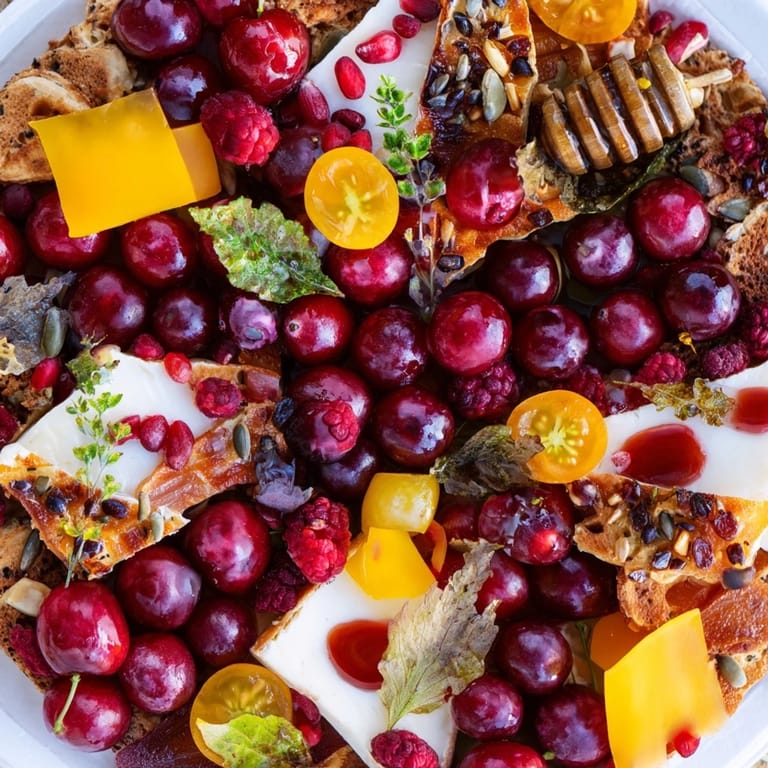
Save There was a moment at a party where I watched a friend take a bite of roasted pepper, then reach for the wine-soaked cheese, then a pomegranate seed—completely out of order from how I'd imagined someone eating the platter. I realized then that the best boards aren't about instruction; they're about invitation. They're about creating a space where someone can explore flavors on their own terms and feel like they're discovering something delicious.
The Art of Color Blocking
Color blocking on a board isn't just about aesthetics—it's about creating a visual narrative that makes people want to taste. When you place deep reds against brilliant golds, you're not just serving food; you're telling a story of contrast and harmony. I've learned that the tighter you pack each color block, the more dramatic the effect. Letting elements touch and overlap within their color family creates intensity, while maintaining that bold line between the two sides keeps the composition clean and sophisticated. Think of it like creating two small paintings that complement each other rather than blend together.
Wine Pairings and Flavor Combinations
A light white wine—something crisp like a Sauvignon Blanc or Pinot Grigio—is the perfect companion to this platter. The acidity cuts through the richness of the aged cheeses while complementing the sweetness of the roasted peppers and dried fruits. I've also discovered that if you drizzle a touch of honey over the gold section just before serving, it adds a luxurious sweetness that makes the contrast between the two sides even more pronounced. Some guests will create their own flavor stories: cherry with cheddar, roasted pepper with wine-soaked cheese, pomegranate with a cracker. Others will eat straight down one color block. Both approaches are equally valid and equally delicious.
Making It Your Own
The beauty of this platter is that it's flexible enough to adapt to what's available and what you love. I've made versions with deep purple grapes instead of red ones, substituted the gold leaf with threads of saffron for a warmer tone, and even created an entirely vegan version using plant-based cheeses and crackers that turned out equally stunning. The core principle—bold colors in deliberate blocks with contrasting flavors—remains the same. What matters most is that you're creating something that makes people pause and appreciate what they're about to eat. That moment of appreciation, before the first bite, is where the real magic lives.
- If edible gold leaf feels too precious or difficult, saffron threads create an equally luxurious look with a subtle spice undertone
- Make this platter up to 2 hours ahead, cover it loosely with plastic wrap, and keep it at room temperature so the roasted peppers and cheeses stay at their best
- For a vegan version, seek out quality plant-based aged cheeses—they've come a long way—and pair them with seeds and nuts for added texture
 Save
Save This platter changed how I think about entertaining. It taught me that you don't need complicated techniques or rare ingredients to create something memorable—you just need intention and a little bit of theatrical flair. Every time I make it, I remember why I fell in love with it in the first place.
Your Questions Answered
- → How should the yellow bell peppers be prepared?
Roast whole yellow bell peppers at 425°F until skins blister, steam covered to loosen skins, then peel and slice. Drizzle with olive oil and season with black pepper before serving.
- → What types of cheese work well for this platter?
Wine-soaked cheeses like Drunken Goat or Merlot BellaVitano provide rich flavor, complemented by aged cheddar or gouda cubed for the golden section.
- → Can edible gold leaf be substituted?
Yes, in case gold leaf is unavailable, a sprinkle of turmeric or saffron threads can add a warm golden hue and subtle flavor.
- → What garnishes enhance the visual appeal?
Fresh basil or microgreens add a touch of green that contrasts nicely with the crimson and gold colors while adding freshness.
- → Is this platter suitable for vegetarians?
Yes, all ingredients are vegetarian-friendly. Options like plant-based cheeses and crackers can make it vegan.