 Save
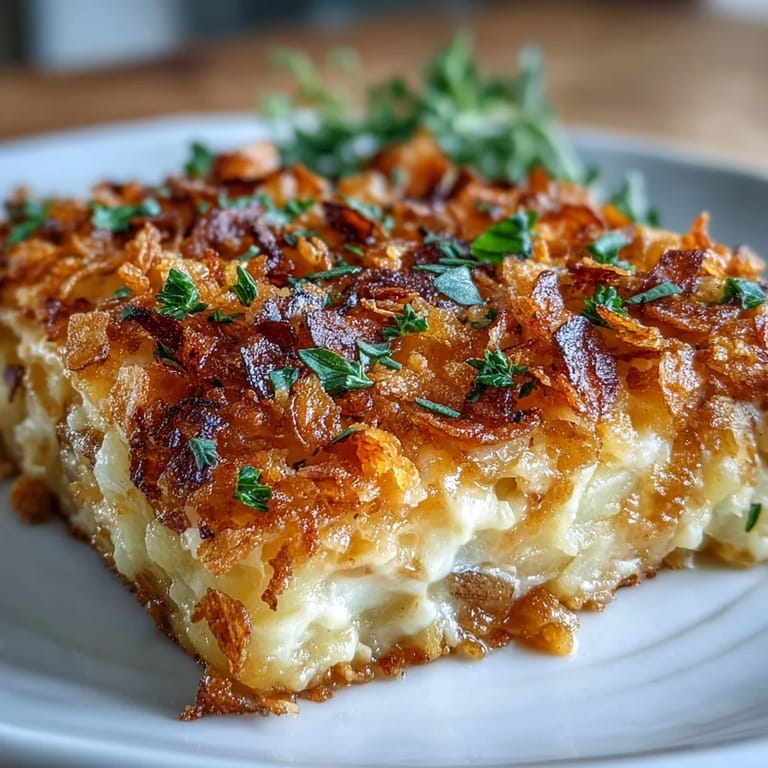
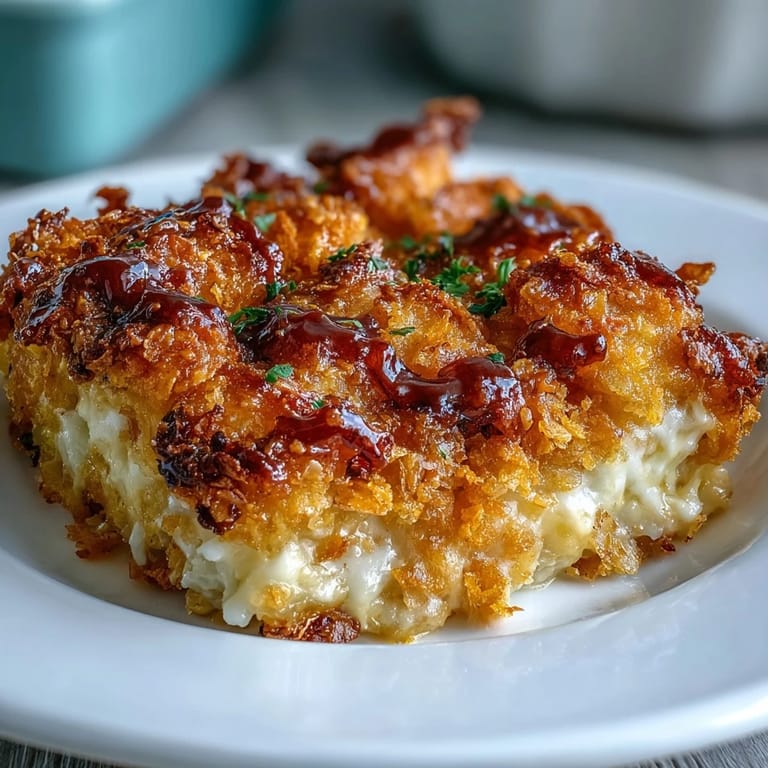
Save There's something about a casserole dish that shows up at a potluck already warm, its golden crust catching the light, that makes people gravitate toward it before anything else on the table. My neighbor Sarah brought funeral potatoes to a church gathering years ago, and I watched grown men line up for seconds while the fancy salads sat untouched. The name caught me off guard at first—turns out it's called that because it's the dish that appears at every funeral reception, the one people actually want to eat. I finally asked for her recipe, and after tweaking it slightly, I realized the secret was in that crispy cornflake topping, the way it shatters between your teeth while the potato underneath stays creamy and buttery.
I made this for a casual Sunday dinner during a snowstorm, when my kids' friends got stuck at our place and suddenly I was feeding eight people instead of four. I didn't have time to be precious about it—I just threw everything together and slid it in the oven, convinced I'd messed something up. When that golden crust came out of the oven, crispy and fragrant with butter and cheese, the kids actually put their phones down. That's when I knew this recipe was keeper-worthy, not because it was fancy, but because it made people genuinely happy in the most uncomplicated way.
Ingredients
- Frozen shredded hash brown potatoes (32 oz bag, thawed): Thawing these ahead saves you from watery casserole disaster, and honestly, they're already perfectly shredded so why not take the shortcut.
- Cream of chicken soup (10.5 oz can): This is the binder that makes everything creamy; cream of mushroom works beautifully if you're cooking vegetarian and tastes just as rich.
- Sour cream (1 cup): Don't skip this or use Greek yogurt as a substitute—the tang and moisture it brings are non-negotiable for texture.
- Unsalted butter, melted (1/2 cup plus 1/4 cup): Using two portions lets you control the flavor in the sauce versus the topping, and unsalted means you're not guessing at salt levels.
- Garlic and onion powder (1/2 teaspoon each): These small amounts add savory depth without overpowering, though you could bump them up slightly if you love bold flavors.
- Kosher salt and black pepper: Kosher salt gives you better control over seasoning because the grains are larger and easier to handle.
- Sharp cheddar cheese, grated (3 cups total): Use the real stuff, not pre-shredded if you can help it, because the anti-caking agents can make the sauce feel grainy.
- Cornflakes, lightly crushed (3 cups): Crush them by hand right in the box so you get some texture variation—not powder, not whole flakes, something in between.
Tired of Takeout? 🥡
Get 10 meals you can make faster than delivery arrives. Seriously.
One email. No spam. Unsubscribe anytime.
Instructions
- Get your oven ready and prep the dish:
- Heat your oven to 350°F and grease a 9x13-inch baking dish generously with butter or cooking spray so nothing sticks to the sides later. This is the moment where you set yourself up for an easier cleanup and a casserole that releases cleanly when you scoop it out.
- Build the creamy potato base:
- In a large bowl, combine your thawed hash browns with the cream of chicken soup, sour cream, 1/2 cup melted butter, garlic powder, onion powder, salt, pepper, and 2 cups of grated cheddar cheese. Stir everything together until it looks cohesive and creamy, though don't worry if there are still some visible potato shreds—that's texture, not a problem.
- Spread and smooth:
- Pour the potato mixture into your prepared baking dish and use a spatula to spread it in an even layer, getting it into the corners where it tends to gather. Even distribution means every forkful will have the same ratio of potato to sauce.
- Make the topping shine:
- In a separate bowl, toss your crushed cornflakes with 1/4 cup melted butter until each piece glistens, then stir in 1 cup of grated cheddar cheese. The butter-coated cornflakes will toast up beautifully in the oven and stay crispy rather than getting soggy.
- Top and bake:
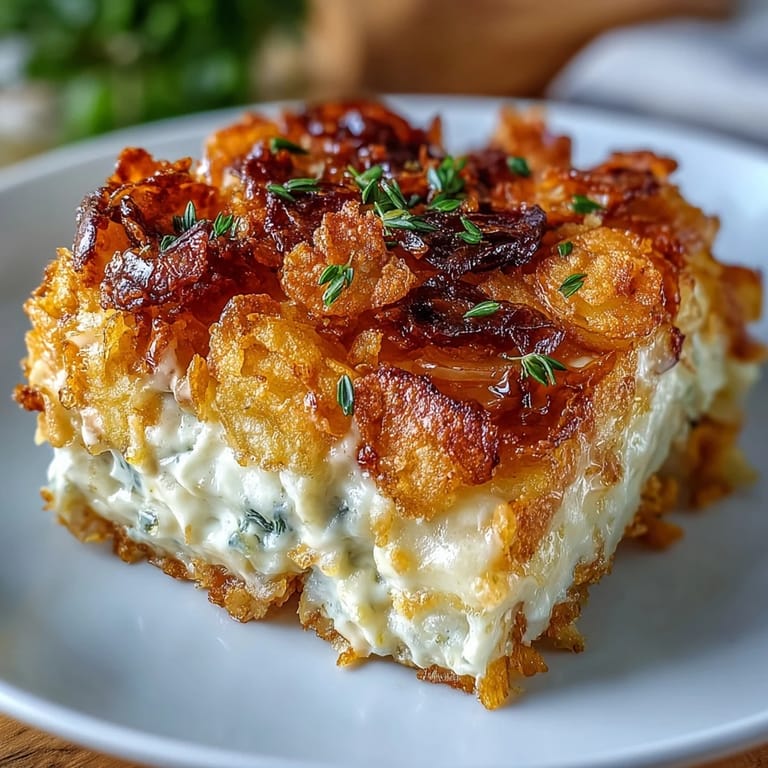
- Sprinkle the cornflake-cheddar mixture evenly over the potatoes and slide the dish into the oven for 40 to 45 minutes. You'll know it's done when the top is a deep golden brown and you can see the mixture bubbling around the edges—that's how you know the potatoes underneath are hot all the way through.
- Let it rest:
- Pull it out of the oven and let it sit for 10 minutes before digging in, which gives the sauce a chance to set slightly and makes scooping cleaner. This brief rest also makes the casserole less likely to fall apart on the serving spoon.
 Save
Save I brought this to a community potluck during a difficult week when our neighborhood was facing losses, and watching people reach for it over and over, the way it seemed to comfort without anyone saying much, reminded me that sometimes the most meaningful food is the plainest kind. There's a reason this dish shows up at memorials and celebrations alike—it asks nothing of you except to enjoy it.
The History Behind the Name
Funeral potatoes earned their name not because they're depressing, but because they're the one casserole that appears at virtually every memorial service in certain regions, particularly in the American West and Midwest. There's something about their universal appeal and ability to feed a crowd that made them the unofficial official dish of gathering in times of need. Over the decades, the recipe evolved from simple scalloped potatoes into this creamy, topped version that's become almost sacred in church basements and community centers.
Timing and Make-Ahead Strategies
You can assemble this casserole up to 24 hours ahead, cover it tightly, and refrigerate it—just add 10 extra minutes to the baking time since you're starting from cold. If you're making the topping separately, keep it in an airtight container and only spread it over the potatoes about 15 minutes before baking so the cornflakes stay as crispy as possible. This flexibility makes it perfect for potlucks or holiday meals where your oven space and timing are both precious commodities.
Variations and Personal Touches
This recipe is forgiving enough that you can make it your own without derailing the whole dish. Try stirring in crispy bacon bits or diced ham to the potato mixture, or layer in some sautéed mushrooms for deeper umami flavor. The topping is where you can really play—some people swap half the cornflakes for crushed potato chips, others add fresh thyme or crushed sage to bridge it toward a more savory side dish.
- Green onions and jalapeños add brightness and heat if your crowd enjoys a little kick with their comfort food.
- Switching half the sharp cheddar for smoked gouda gives you a completely different flavor profile that works beautifully with ham or turkey.
- If cornflakes feel too sweet or stale in your pantry, crushed crackers or panko breadcrumbs work in a pinch and crisp up the same way.
 Save
Save This casserole has become my answer to the question of what to bring when words aren't enough, or when celebration needs something warm and unpretentious at its center. Make it once and you'll understand why it keeps showing up, decade after decade, at tables that matter.
Your Questions Answered
- → What type of potatoes work best in this dish?
Frozen shredded hash brown potatoes are recommended for a consistent texture and easy preparation, though fresh shredded potatoes may also be used.
- → Can the cornflake crust be made gluten-free?
Yes, substituting with gluten-free cornflakes will maintain the crunchy topping while accommodating gluten sensitivities.
- → What substitutes can be used for the cream of chicken soup?
For a vegetarian option, cream of mushroom soup is an excellent alternative that preserves creaminess and flavor.
- → How can I make the topping extra crispy?
Ensure the cornflakes are well coated in melted butter before baking and bake uncovered to achieve a golden, crunchy crust.
- → What cheese is best for this preparation?
Sharp cheddar cheese provides a robust flavor that complements the creamy potatoes and crunchy topping perfectly.