 Save
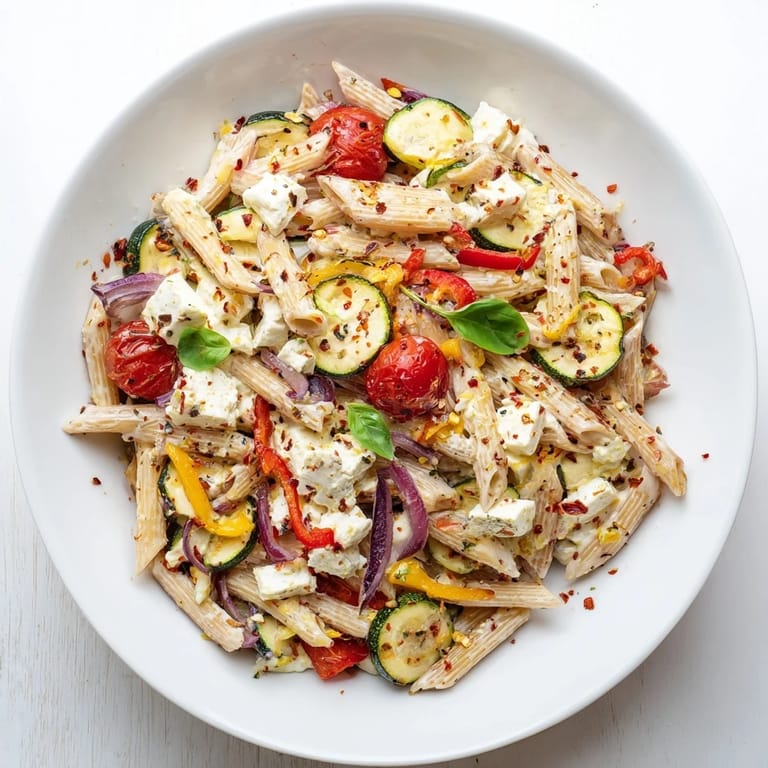
Save I discovered this lighter take on viral feta pasta last summer when my sister brought over a bunch of farmers market vegetables and we needed something quick for dinner. She swore by the whole-grain version, insisting the nuttier pasta would balance the creamy feta better than regular penne ever could. We roasted everything together, and the moment that block of cheese started turning golden and the tomatoes began to collapse into the pan, I understood why this became such a thing online. There's something almost meditative about watching vegetables caramelize while that feta softens into a sauce. Now I make it constantly, and it's become my go-to when I want something that feels indulgent but doesn't leave me feeling heavy afterward.
I remember feeding this to my neighbor who had just moved in, and she came over asking what that incredible smell was coming from my kitchen. I served it still warm from the oven, scattered with basil, and she literally closed her eyes after the first bite. She's been bugging me for the recipe ever since, and I love that this dish has a way of making people feel like you've done something complicated when really you just threw vegetables on a pan and let the oven do the work.
Ingredients
- Reduced-fat feta cheese block (200 g): The star of the show—buy it as a block, not crumbled, because it'll melt into a creamy sauce that coats every piece of pasta.
- Cherry tomatoes (400 g, halved): These burst and release their juice as they roast, creating a natural sauce base that's way better than anything you could make on the stovetop.
- Zucchini (1 medium, diced): Adds substance without heaviness, and it becomes tender and slightly sweet when roasted.
- Red bell pepper (1, diced): Brings a gentle sweetness that complements the salty feta beautifully.
- Red onion (1 small, sliced): Gets mellowed and caramelized by the heat, adding depth rather than bite.
- Garlic (2 cloves, minced): Added right at the end so it perfumes everything without burning or becoming bitter.
- Extra-virgin olive oil (2 tbsp): Use good quality here—it's essential for the flavor and helps create the creamy sauce.
- Dried oregano (1 tsp): A Mediterranean anchor that ties all the vegetables together.
- Crushed red pepper flakes (½ tsp, optional): A whisper of heat if you want it, but totally optional.
- Whole-grain penne or fusilli (300 g): The texture holds onto the sauce better than regular pasta, and the nutty flavor actually matters here.
- Fresh basil leaves: Reserved for garnish—it brightens everything and adds that final, essential freshness.
- Salt and freshly ground black pepper: Season the vegetables generously before roasting; they'll concentrate as they cook.
Tired of Takeout? 🥡
Get 10 meals you can make faster than delivery arrives. Seriously.
One email. No spam. Unsubscribe anytime.
Instructions
- Heat your oven and prep the vegetables:
- Set the oven to 200°C (400°F) while you chop everything. Aim for roughly the same size pieces so everything roasts evenly and becomes tender at the same time.
- Build your roasting base:
- Toss the tomatoes, zucchini, bell pepper, and red onion in a large baking dish with olive oil, oregano, red pepper flakes if you're using them, and a generous pinch of salt and pepper. Spread them out in a single layer—don't crowd the pan or they'll steam instead of caramelize.
- Place the feta and let it roast:
- Nestle the feta block right in the center of the vegetables and drizzle a little more oil over it. Slide the whole thing into the oven for 25–30 minutes, until the vegetables have softened and are starting to brown at the edges, and the feta is golden and jiggly.
- Cook the pasta:
- While everything roasts, get your pasta water going. Cook the whole-grain pasta according to the package instructions—don't overcook it, you want it to have a little resistance when you bite it. Before you drain it, scoop out about ½ cup of that starchy pasta water and set it aside; it's your secret weapon for making the sauce silky.
- Finish the sauce:
- When the vegetables are ready, pull the baking dish out carefully—it'll be hot. Stir in the minced garlic and let it sit for just a minute so it releases its fragrance. Then gently mash the soft feta with a spoon, breaking it up so it starts to mix with all those sweet vegetable juices and oil. It doesn't need to be perfectly smooth; a little texture is nice.
- Bring it all together:
- Add the drained pasta to the baking dish along with a splash of that reserved pasta water. Toss everything gently until the pasta is coated and creamy. If it feels dry, add another splash of pasta water—you want it saucy but not soupy.
- Serve and garnish:
- Transfer to a serving dish or serve straight from the baking dish while it's still warm. Scatter fresh basil over the top and add a crack of black pepper for good measure.
 Save
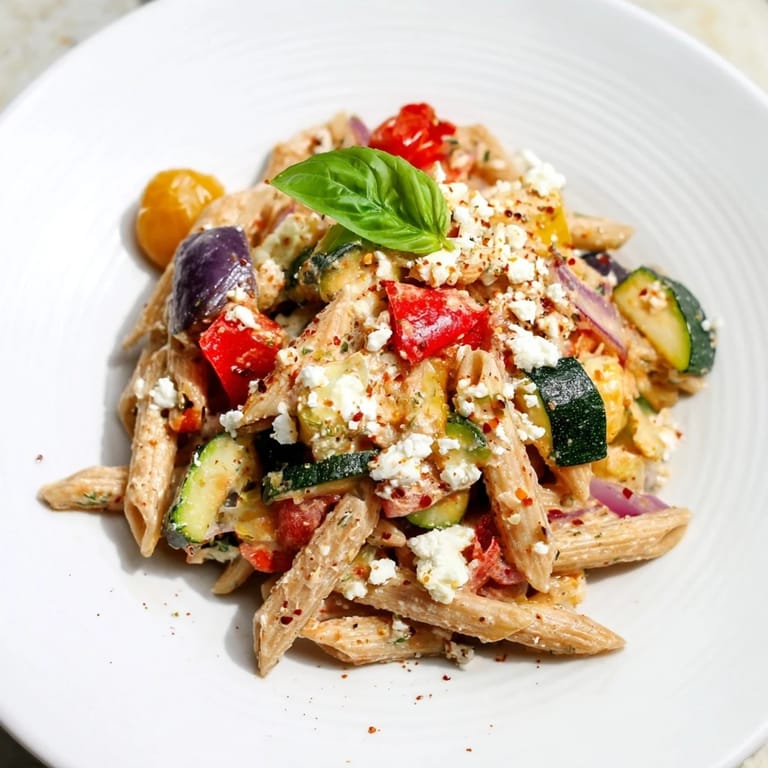
Save There's a moment right after you pull this from the oven where the whole kitchen smells like concentrated summer, and when you break that golden feta apart and watch it turn the vegetables into a creamy sauce, it genuinely feels like magic. I've made this for people who swear they don't like feta, and it converts them every single time.
Why Whole Grains Actually Matter Here
I used to think whole-grain pasta was a healthy compromise you had to tolerate, but roasted feta changed my mind completely. The nuttier, deeper flavor of whole-grain penne or fusilli actually plays with the creamy feta and sweet vegetables instead of getting lost under them. The texture is a little chewier too, which means the sauce clings to it better. Once you taste it this way, regular pasta starts to feel one-dimensional by comparison.
Making It Your Own
This recipe is genuinely forgiving about vegetables because the roasting technique works for almost anything. I've made it with spinach stirred in at the end, with eggplant instead of zucchini, with asparagus in spring, and even with roasted chickpeas mixed in for extra protein. The idea is always the same: roast something sweet and tender, let that feta melt into a sauce, toss with pasta. The formula is flexible, but the magic stays the same.
Serving and Pairing
This dish is bright enough to stand on its own, but a crisp white wine like Sauvignon Blanc or a light Pinot Grigio turns it into something almost special-occasion worthy. Serve it right from the baking dish if you're eating casually, or transfer it to a nice bowl if you want it to feel a little fancier. A simple green salad on the side is nice for cutting through the richness, and really, a hunk of good bread for soaking up any extra sauce is always the right call.
- Pair with Sauvignon Blanc or a crisp white wine that echoes the acidity of the tomatoes.
- Leftovers are fine served cold the next day, though reheating gently makes them taste better.
- Double the recipe easily—it scales up without any fuss and actually tastes better when there's more surface area for caramelization.
 Save
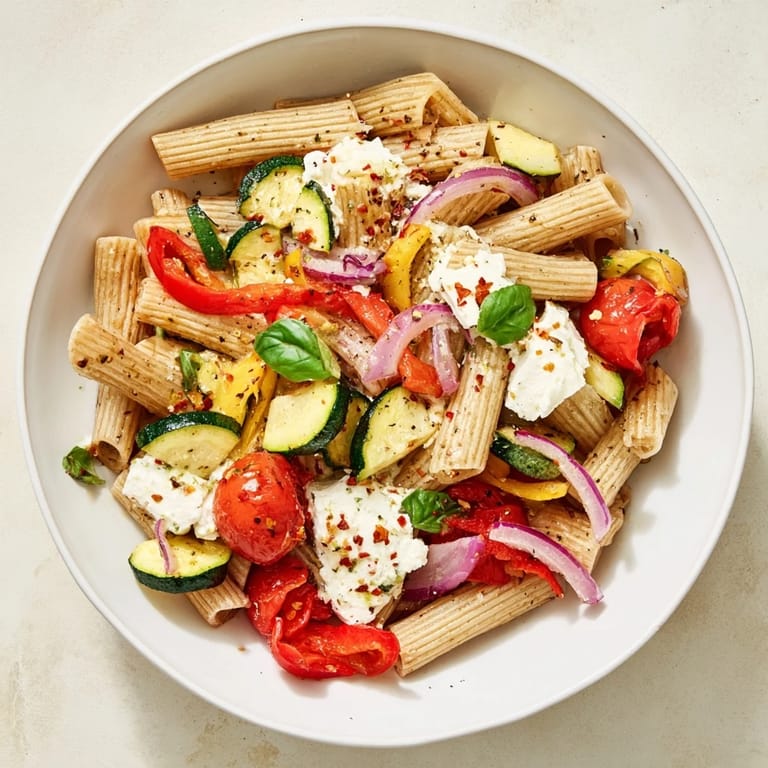
Save This lighter version proved to me that viral recipes become viral because they actually work. It's simple, it's impressive, and it tastes so good that people will ask you for the recipe.
Your Questions Answered
- → What vegetables are best for this dish?
Cherry tomatoes, zucchini, red bell pepper, and red onion provide a vibrant mix of flavors that roast beautifully alongside feta.
- → Can I use other types of pasta?
Whole-grain penne or fusilli are recommended for texture and nutrition, but any pasta shape you prefer will work well.
- → How do I ensure the feta becomes creamy when baked?
Baking the feta with the vegetables at 200°C allows it to soften and caramelize, which helps it blend into a smooth sauce when mashed.
- → Is it possible to make this gluten-free?
Yes, swap the whole-grain pasta for a certified gluten-free variety without changing the method.
- → What herbs and spices enhance the flavor?
Dried oregano and fresh basil add Mediterranean notes, while red pepper flakes provide optional heat to balance the creaminess.