 Save
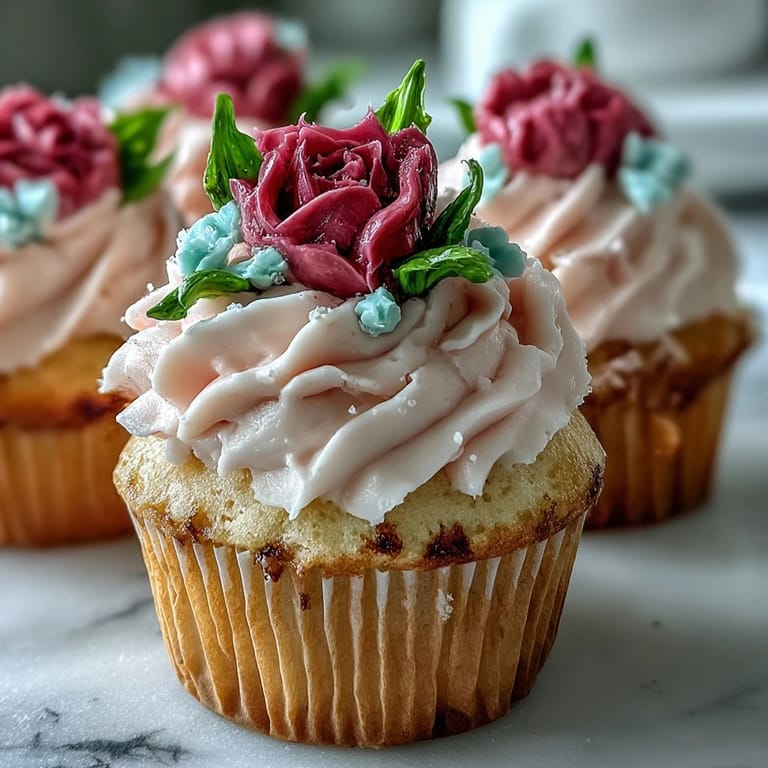
Save My sister called me three weeks before her baby shower in an absolute panic—she'd seen pictures of these delicate buttercream flower cupcakes online and couldn't unsee them. I'd never piped anything more complex than a birthday message, but something about the way she described them made me want to try. Standing in my kitchen that Saturday afternoon with my piping bags lined up like little soldiers, I realized these cupcakes weren't really about perfection at all; they were about showing up with color and care for someone you love.
When I set those first dozen cupcakes out at the shower, I watched three different people pick one up, study the little piped roses and daisies, and smile like they'd just opened a tiny gift. One guest whispered that she'd never seen homemade cupcakes look this fancy, and that single moment made every wobbly petal and color-mixing experiment worth it. My sister kept one in her fridge for an extra day just to look at it.
Ingredients
- All-purpose flour: The 160 grams here creates a tender crumb without denseness—measuring by weight instead of cups is the quiet hack that changes everything.
- Granulated sugar: 150 grams sweetens without overwhelming; paired with vanilla, it lets the cupcake taste like itself rather than just sugar delivery.
- Unsalted butter, softened: Room temperature butter incorporates air when creamed, which gives these cupcakes their delicate lift—cold butter will fight you.
- Large eggs, room temperature: Cold eggs won't emulsify properly with the butter; take them out 30 minutes before baking or set them in warm water briefly.
- Whole milk, room temperature: Alternating wet and dry ingredients prevents overmixing, and room temperature milk emulsifies smoothly without seizing the batter.
- Pure vanilla extract: Use the real thing here—imitation vanilla tastes thin against the buttercream flowers that will sit on top.
- Baking powder: 1½ teaspoons lifts these gently; too much creates a peaked, cracked top that shows under the frosting.
- Salt: A quarter teaspoon anchors all the sweetness and makes the vanilla pop.
- Unsalted butter for frosting: 225 grams of softened butter is your canvas; room temperature is non-negotiable or you'll have grainy frosting.
- Powdered sugar, sifted: Sifting removes lumps before mixing, which prevents gritty frosting texture and ensures smooth piping consistency.
- Whole milk or cream for frosting: Start with 2 tablespoons; you might need the third if your kitchen is warm, since humidity affects buttercream thickness.
- Food coloring: Gel colors are more forgiving than liquid—they don't thin the buttercream, so you can tint more boldly without adjusting consistency.
Tired of Takeout? 🥡
Get 10 meals you can make faster than delivery arrives. Seriously.
One email. No spam. Unsubscribe anytime.
Instructions
- Set your stage:
- Preheat your oven to 350°F and line the muffin tin while the oven wakes up. This small act of preparation prevents that rushed feeling when you're ready to pour batter.
- Combine your dry ingredients:
- Whisk flour, baking powder, and salt together in a medium bowl—this distributes the leavening evenly so you don't get dense pockets later. Set it aside and forget about it for a moment.
- Cream the butter and sugar:
- Beat softened butter and sugar together on medium speed for 2 to 3 minutes until it looks pale and fluffy like clouds; this incorporates air that will make the cupcakes rise. You'll see it transform from dense to airy, which is oddly satisfying to watch.
- Add eggs carefully:
- Add one egg at a time, beating well after each one so the mixture stays emulsified and creamy. Rush this step and the batter separates; take your time and the texture stays smooth.
- Add the vanilla:
- Stir in the vanilla extract so it's evenly distributed—this isn't a big moment but it matters for even flavor.
- Alternate wet and dry:
- Add half the flour mixture and mix until just combined, then add the milk, then the remaining flour, stirring until the batter comes together smoothly. Stop as soon as you don't see streaks of flour; overmixing develops gluten and makes cupcakes tough.
- Fill and bake:
- Divide batter evenly among liners, filling each about two-thirds full—this gives room for the cupcake to rise without spilling over. Bake for 16 to 18 minutes until a toothpick comes out clean; the tops should be pale golden and springy to a light touch.
- Cool completely:
- Let them rest on a wire rack for at least 30 minutes before frosting; warm cupcakes will melt the buttercream and make flowers slide off. I learned this the hard way.
- Cream the frosting butter:
- Beat 225 grams of softened butter on medium speed for about 2 minutes until it looks pale and creamy; this is your foundation for fluffy buttercream.
- Add powdered sugar gradually:
- Add the sifted powdered sugar a little at a time, beating well between additions so you don't cloud yourself in a powdered sugar cloud. The gradual approach prevents lumps and keeps the texture smooth.
- Mix in vanilla and milk:
- Add vanilla extract and 2 tablespoons of milk, then beat until the frosting looks light and fluffy with a spreadable consistency. Add more milk only if needed—a teaspoon at a time—since humidity and room temperature affect how much you'll need.
- Tint your flowers:
- Divide buttercream into bowls and add gel food coloring a few drops at a time, stirring until you reach the shade you want. Gel coloring doesn't thin the frosting like liquid does, so you can go bolder without worry.
- Practice on parchment:
- Before piping on actual cupcakes, try making flowers on a piece of parchment paper with leftover frosting—this quiets the anxiety and reminds your hands how the motion feels. After three or four flowers, your hands remember the rhythm.
- Pipe with intention:
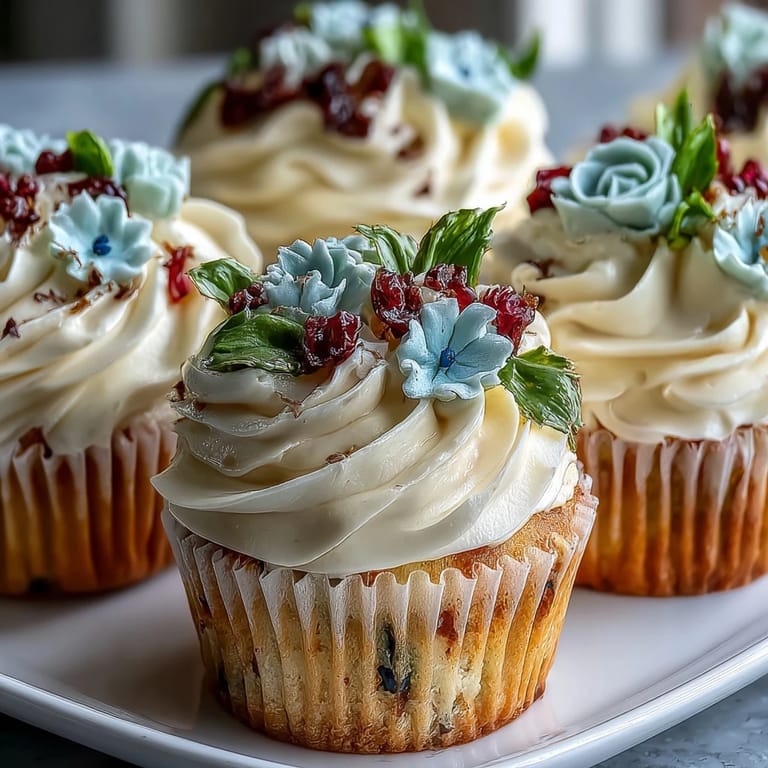
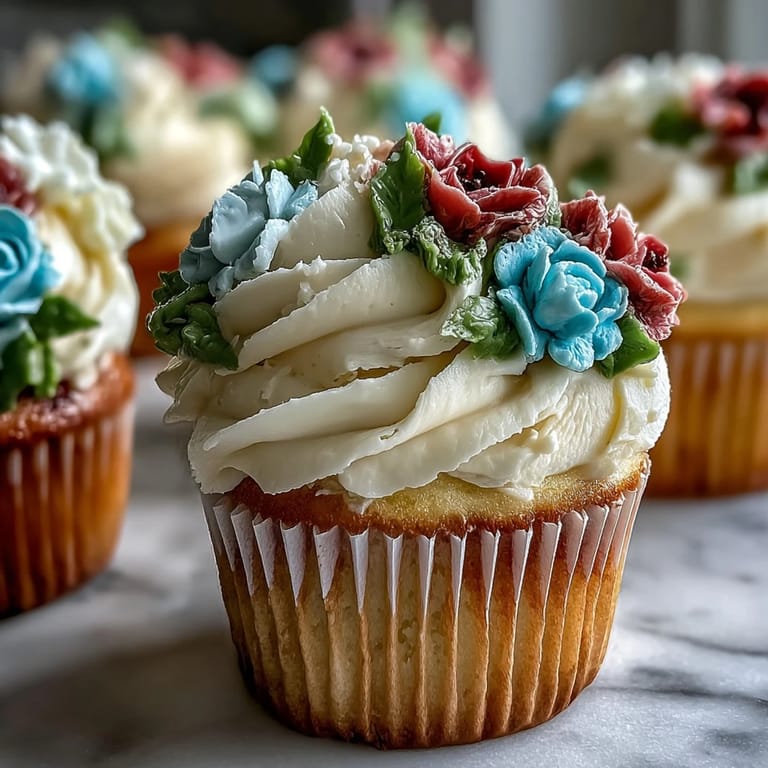
- Fit piping bags with flower tips like the Wilton 104 for roses or the 1M for simple blooms, fill with colored frosting, and pipe flowers directly onto cooled cupcakes. Use different colors and let them overlap slightly for a natural, scattered garden effect.
 Save
Save There's a particular kind of joy in watching someone's face when they bite into a cupcake that looks almost too pretty to eat, then discover it tastes as good as it looks. That's what these cupcakes do—they promise something with their appearance and actually deliver on it.
The Secret of Soft Vanilla
I used to think vanilla cupcakes were boring until I realized that the butter-to-sugar ratio and the quality of vanilla extract actually matter enormously. This recipe uses real vanilla, creamed butter at the right temperature, and the alternating wet-and-dry method that keeps overmixing at bay—all of which compounds into a cupcake that tastes elegant without trying too hard. The vanilla reads as sophisticated rather than simple, which makes these the perfect base for whatever color story you want to tell with buttercream.
Why Piping Feels Scary Until It Isn't
The first time you hold a piping bag over a cupcake, your hand shakes because you're suddenly aware that there's no hiding—the flower will look like what you intended or it won't. But something shifts after the third or fourth flower, when your hand learns the motion and your eyes stop second-guessing the pressure. I've discovered that piping is less about artistic talent and more about repetition, confidence, and accepting that imperfect flowers actually look more real than perfectly uniform ones.
Storage and Serving Moments
These cupcakes stay fresh in an airtight container at room temperature for up to 2 days, which gives you breathing room if you're making them for an event. I've also learned that serving them slightly cooler than room temperature—maybe from an hour in the fridge—makes the buttercream flowers hold their shape better and taste richer.
- If you're making these ahead, frost them the day-of; unfrosted cupcakes keep covered for 3 days and frosted ones for 2.
- A tiny pinch of lemon zest stirred into the batter adds brightness that makes the vanilla taste even more delicate and spring-like.
- These pair beautifully with sparkling lemonade or a light champagne, turning dessert into a small celebration.
 Save
Save These cupcakes remind me that food doesn't have to be complicated to feel special—it just has to be made with attention and offered with joy. They're the kind of dessert that looks like love, tastes like care, and turns an ordinary celebration into something people remember.
Your Questions Answered
- → How do I achieve soft, tender cupcakes?
Use room temperature ingredients and gently mix the batter until just combined to avoid tough texture. Incorporating butter and sugar until light and fluffy helps create airiness.
- → What is the best way to pipe buttercream flowers?
Beat buttercream until smooth and fluffy, then tint with food coloring. Use piping bags fitted with flower and leaf tips, practicing designs on parchment before decorating cupcakes.
- → Can I add extra flavor to the cupcakes?
A touch of lemon zest added to the batter enhances brightness without overpowering the vanilla base.
- → How should I store these cupcakes?
Keep them in an airtight container at room temperature for up to two days to maintain freshness and texture.
- → Are there common allergens in these cupcakes?
Yes, they contain wheat, eggs, and dairy. Some food colorings may contain traces of nuts, so check labels carefully.