 Save
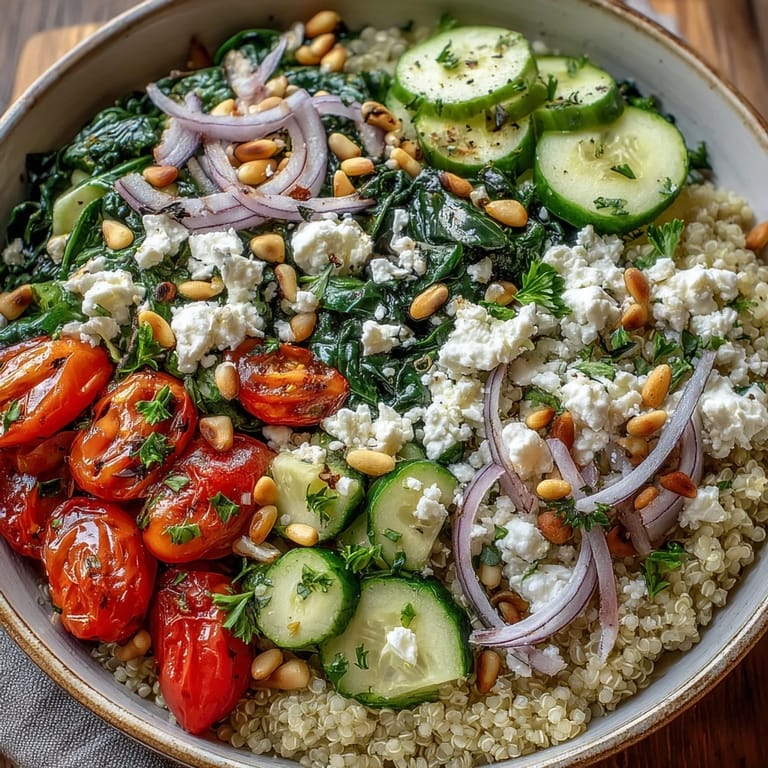
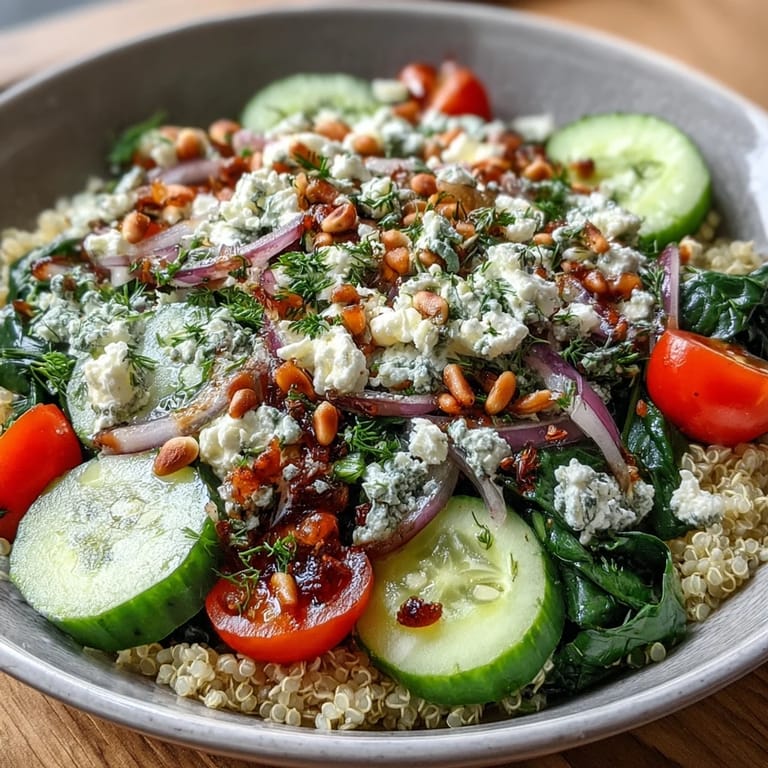
Save There's something about assembling a grain bowl that feels less like cooking and more like creating—especially when the late afternoon light hits your kitchen and you've got fresh spinach wilting in a pan, its earthy steam rising up. I discovered this spinach and feta bowl on a Tuesday when I was tired of eating the same lunch rotation, and somehow this bowl became my answer to that quiet craving for something nourishing that doesn't demand hours in the kitchen. The combination is deceptively simple, yet it tastes thoughtfully composed, like someone cared about every element on the plate.
I made this for my neighbor last spring when she'd just moved in, and watching her taste it—that little pause before she smiled—I realized grain bowls have this quiet magic of feeling both casual and intentional. She came back three days later asking if I'd teach her how to make it, and now she texts me photos of her variations. That's when I knew this recipe had staying power.
Ingredients
- Quinoa or brown rice: The foundation—quinoa cooks faster and has a subtle nuttiness, while brown rice offers earthier chew; choose based on your mood and how much time you have.
- Fresh spinach: A full four cups sounds like a lot, but it collapses dramatically when it hits heat, becoming tender and concentrated rather than overpowering.
- Cherry tomatoes: Their sweetness balances the earthiness of everything else; halving them lets the dressing coat them properly.
- Cucumber and bell pepper: These stay crisp and add textural contrast and brightness—don't skip the raw vegetable layer.
- Red onion: Thin slices add bite and color; if raw onion feels too sharp for you, let a few slices sit in the lemon juice for a minute to mellow.
- Feta cheese: It's the creamy, salty anchor that makes every bite feel complete; crumble it generously, don't hold back.
- Extra-virgin olive oil and fresh lemon juice: The dressing is where the magic lives—good oil and fresh lemon juice elevate everything, so don't use old bottles for this.
- Honey or maple syrup: Just enough to round out the acidity and add subtle sweetness that makes you think 'what is that?' in the best way.
- Garlic clove: Minced fine so it distributes throughout the dressing rather than appearing in chunks.
- Toasted pine nuts or seeds: These are optional but recommended—the crunch and warmth add another dimension.
Tired of Takeout? 🥡
Get 10 meals you can make faster than delivery arrives. Seriously.
One email. No spam. Unsubscribe anytime.
Instructions
- Cook your grain base:
- Bring your broth to a rolling boil, stir in the quinoa or rice, then lower the heat and let it simmer covered—you'll hear the gentle bubble underneath, and you'll smell that toasty grain aroma when it's nearly done. Fluff it with a fork once it's ready, and let it cool slightly so it doesn't wilt everything when you assemble.
- Wilt the spinach gently:
- One tablespoon of olive oil in a large skillet, medium heat, then add your chopped spinach and watch it transform from a giant pile into something silky in about two to three minutes. You want it tender but still green, not dark and mushy—it'll keep cooking slightly even after you remove it from heat.
- Make the dressing:
- Whisk together the oil, lemon juice, honey, garlic, salt, and pepper in a small bowl—the emulsion comes together quickly if you whisk steadily, and the garlic will bloom as you mix. Taste it straight from the whisk and adjust; lemon juice and salt can be added gradually until it tastes bright but not harsh.
- Assemble with intention:
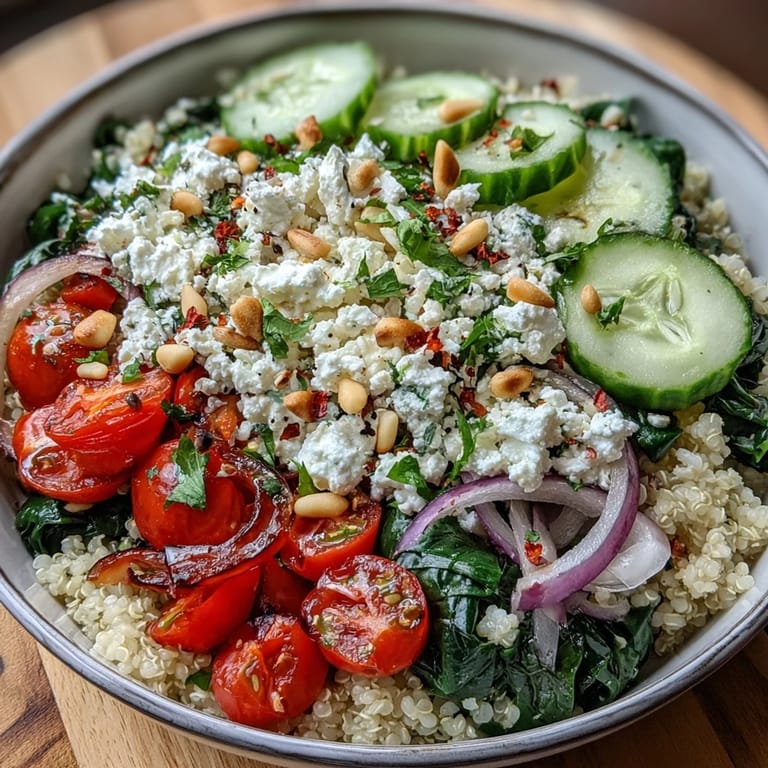
- Divide your cooked grain into four bowls as the base, then layer on the wilted spinach, then scatter your raw vegetables across the top—this keeps the vegetables fresh rather than getting soggy. The order matters because textures speak as loudly as flavors do here.
- Add the feta and dress:
- Crumble your feta generously over each bowl, then drizzle the dressing over everything so it coats the grains, vegetables, and cheese alike. The dressing will find its way into the crevices and tie everything together.
- Finish and taste:
- Top with toasted pine nuts and a scattered handful of fresh parsley if you have it, then step back and look at what you've made. Serve warm or at room temperature—both work beautifully depending on the season and your preference.
 Save
Save There was a moment last summer when my daughter sat down to this bowl and asked if we could make it for dinner once a week, and I realized she wasn't thinking about nutrition or virtue—she just liked how it tasted and how easy it was to eat. That's the real test of a good recipe.
Grain Choices That Change Everything
Quinoa is my default because it's quick and has this pleasant, slightly fluffy texture that catches the dressing beautifully. But brown rice offers deeper, earthier notes if you have the extra twenty minutes, and I've had excellent results with farro when I want something chewier and more substantial. Couscous works too if you're in a hurry—just use the same ratio of liquid to grain and let it rest covered for five minutes. The grain you choose sets the tone for the whole bowl, so pick based on what your body is craving that day.
Making It Your Own
The beauty of this bowl is that it's a template, not a mandate. I've made it with arugula instead of spinach on nights when I wanted peppery and sharp, and I've added chickpeas for protein when I knew I'd be hungry later. A friend added roasted chickpeas one day and it became so popular she stopped making it without them. The vegetables can shift with the season—whatever is at the farmer's market becomes fair game. The structure stays the same, but the story changes.
The Dressing Is Where You Win
A mediocre bowl with an exceptional dressing still tastes exceptional. A beautiful bowl with a bland dressing tastes hollow. That's why I always make the dressing fresh and taste it as I go. The honey rounds out the acid so it doesn't feel sharp, and the garlic adds depth without being aggressive if you mince it fine. This dressing works on salads, roasted vegetables, and even drizzled over warm bread—it's worth making extra.
- Make your dressing at least five minutes before serving so the garlic can bloom and meld into the oil.
- If you prefer a creamier dressing, whisk in a tablespoon or two of Greek yogurt or tahini—it adds richness without heaviness.
- Lemon juice varies in acidity depending on the fruit, so always taste and adjust rather than following measurements blindly.
 Save
Save This bowl has quietly become the recipe I make when I want to feel nourished and present at the table without overthinking it. It's the kind of meal that's honest and generous at the same time.
Your Questions Answered
- → Can I use different grains?
Absolutely. While quinoa works beautifully, you can substitute brown rice, farro, bulgur, or couscous based on your preference or what you have on hand.
- → How long does this keep?
This grain bowl stores well for 3-4 days in the refrigerator. Keep the dressing separate and add just before serving to maintain freshness.
- → Can I make this vegan?
Yes. Simply replace the feta cheese with vegan feta alternatives or extra vegetables. The lemon-olive oil dressing is naturally plant-based.
- → What protein can I add?
Chickpeas, grilled chicken, or lentils make excellent additions. The quinoa already provides 11g of protein per serving, but these options boost it further.
- → Should I serve it warm or cold?
This bowl is versatile—enjoy it warm, at room temperature, or chilled. The flavors develop beautifully when it has time to sit slightly.