 Save
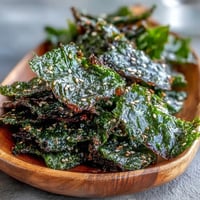
Save There's something about standing in front of a pile of fresh kale that makes you feel like you're about to do something good for yourself. A friend handed me a bunch one Tuesday evening, still damp from the farmer's market, and challenged me to make something that didn't taste like punishment. That's when I discovered that massaging kale—actually working it with your hands—transforms those sturdy leaves into something tender and almost sweet, the kind of simple technique that changes everything about how you approach salads forever.
I made this for my sister when she mentioned she was tired of sad desk lunches, and watching her eyes light up after that first bite felt better than any compliment. She started asking for it weekly, and eventually I realized it had become the thing she requested most, pushing out pasta and pizza without complaint. That's when a recipe stops being just a recipe and starts being part of someone's life, which is when you know you've created something worth sharing.
Ingredients
- Fresh kale: Strip the leaves from those thick stems without any guilt—the stems are tough and woody, but those tender leaves are where all the magic happens when you massage them.
- Sweet potato: Cut them into bite-sized pieces so they roast evenly and develop golden, caramelized edges that taste almost like candy.
- Red bell pepper and zucchini: These vegetables become sweeter as they roast, their natural sugars concentrating into something far more interesting than raw.
- Red onion: Roasting mellows its sharp bite into something sweet and almost caramelized, completely different from the raw version.
- Olive oil: Use a decent quality one for the massage and roasting—it makes a noticeable difference in flavor.
- Cherry tomatoes: Leave them raw so they stay juicy and burst on your tongue, providing a fresh contrast to the warm roasted vegetables.
- Almonds and seeds: The combination of textures keeps this interesting with every bite, and nuts add staying power to keep you full.
- Tahini: This is your secret weapon—creamy, nutty, and it binds everything together into something that feels indulgent despite being completely plant-based.
- Lemon juice and garlic: These wake up the tahini dressing, cutting through richness with brightness that makes you want another forkful.
Tired of Takeout? 🥡
Get 10 meals you can make faster than delivery arrives. Seriously.
One email. No spam. Unsubscribe anytime.
Instructions
- Heat your oven and prep your vegetables:
- Set the oven to 400°F and while it preheats, toss your sweet potato, bell pepper, zucchini, and red onion with olive oil and salt. Spread them on a baking sheet in a single layer so they have room to roast rather than steam.
- Massage your kale into submission:
- While the vegetables roast, place your torn kale in a large bowl and drizzle it with olive oil and salt. Use both hands to massage and squeeze the leaves for two or three minutes until they transform from stiff to supple and turn a brighter shade of green—you'll feel the change happen under your palms.
- Build your dressing:
- In a small bowl, whisk tahini, lemon juice, maple syrup, minced garlic, salt, and pepper together, then add water one tablespoon at a time until the mixture flows like a pourable sauce. Taste it and adjust—this dressing should taste balanced and bright, not too thick or too thin.
- Check those roasted vegetables:
- After 20 to 25 minutes, your vegetables should be tender and developing golden brown spots where they've touched the hot pan. Give the pan a shake or stir them once halfway through if you remember, but don't stress if you forget.
- Assemble everything together:
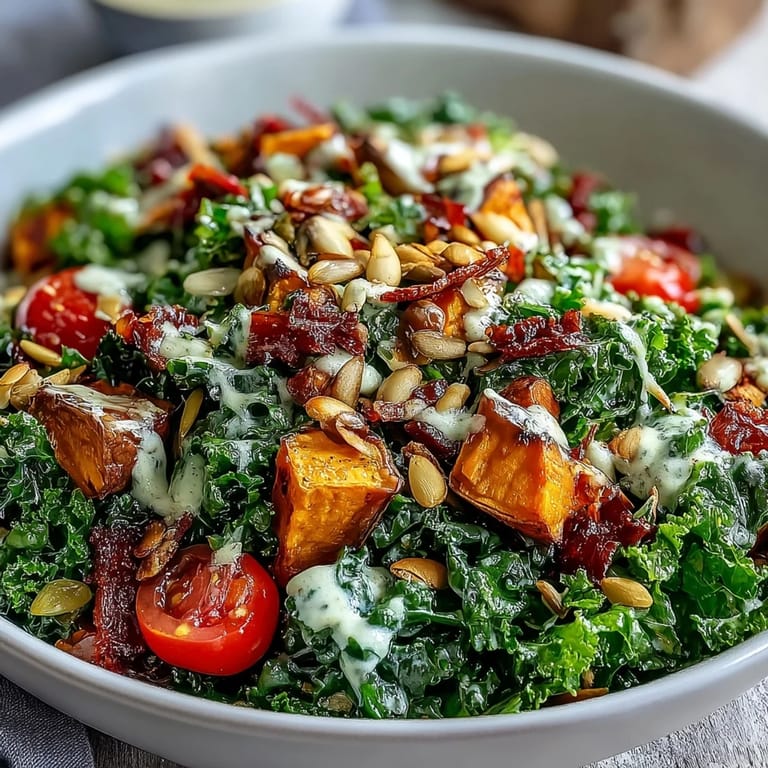
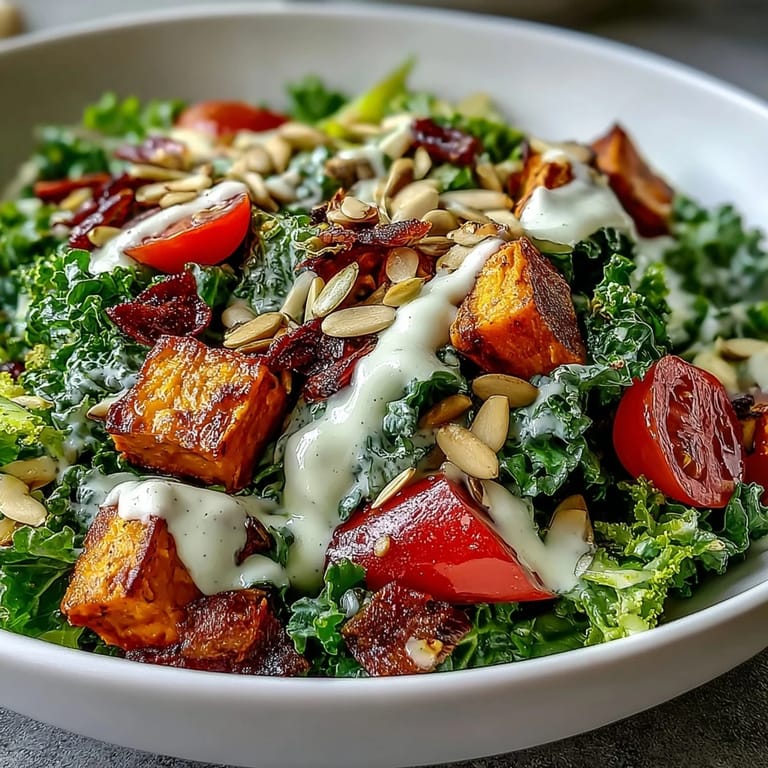
- Combine the massaged kale with your warm roasted vegetables, raw cherry tomatoes, almonds, and seeds in the large bowl. Drizzle the tahini dressing over everything and toss gently so every component gets coated without breaking anything into pieces.
 Save
Save There was a moment when my partner tried this salad expecting something forgettable, then went back for seconds without comment, which somehow said everything. Food that nourishes you without feeling like work, that tastes genuinely good instead of just being virtuous, has a way of becoming something you crave rather than something you force yourself to eat.
Making the Tahini Dressing Work for You
The tahini dressing is honestly more forgiving than you'd think, but it does require a gentle hand with the water. Start by whisking everything together without water first—this prevents any lumps from forming—then add water a splash at a time until you reach that perfect consistency where it coats a spoon but still flows. If you mess up and make it too thin, whisk in a bit more tahini; if it's too thick, another drizzle of water or lemon juice fixes it. The beauty of this dressing is that it actually tastes better the next day once the flavors have gotten to know each other.
Vegetables You Can Swap Without Guilt
The roasted vegetables are genuinely flexible depending on what's in season or what you have hanging around your kitchen. Butternut squash works beautifully in place of sweet potato, carrots develop this incredible sweetness when roasted, and even Brussels sprouts become crispy and irresistible. The only real rule is to cut everything to roughly the same size so it roasts at the same speed, and to trust that roasting makes almost any vegetable taste better than it has any right to.
Protein Additions and Personal Touches
Sometimes this salad works perfectly as-is, but sometimes you want it to feel even more substantial, especially if you're eating it as your entire dinner. Roasted chickpeas add earthiness and heartiness, grilled tofu brings a different kind of satisfaction, and even crumbled tempeh works beautifully. Fresh herbs scattered on top—cilantro, parsley, or even mint if you're feeling adventurous—add a brightness that makes the whole thing feel like someone put genuine thought into it rather than just throwing ingredients together.
- Add chickpeas or tofu if you want this to feel more like a complete meal with serious staying power.
- Fresh herbs on top make this look intentional and taste even fresher than it already does.
- This salad actually tastes great the next day if you keep the dressing separate until you're ready to eat it.
 Save
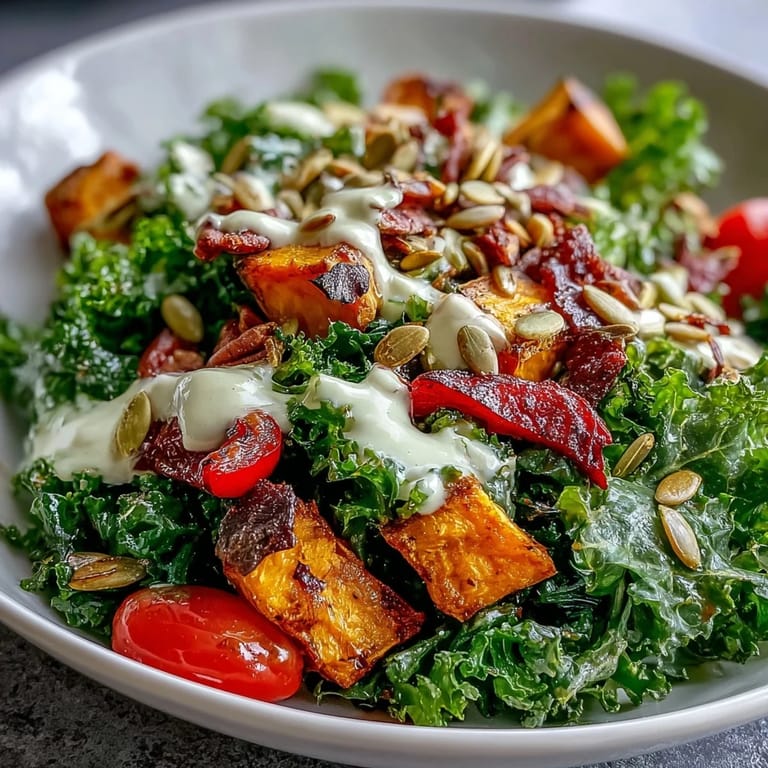
Save This salad has become my answer to the question of what to eat when you want something nourishing but also genuinely delicious, which turns out to be a question most people are asking. The fact that it's vegan and gluten-free is almost beside the point when something tastes this good on its own merits.
Your Questions Answered
- → Why do you massage kale?
Massaging kale with olive oil and salt breaks down the tough cell structure, making the leaves tender and removing bitterness. The leaves turn from rough and stiff to silky and vibrant green, becoming much more enjoyable to eat raw.
- → Can I make this ahead?
This bowl is excellent for meal prep. The roasted vegetables and massaged kale keep well for 3-4 days in the refrigerator. Store the dressing separately and add just before serving to maintain the best texture.
- → What can I substitute for tahini?
If you need to avoid sesame, try almond butter, cashew butter, or sunflower seed butter. The flavor will change slightly but you'll still get a rich, creamy element. Adjust the lemon and sweetener to taste.
- → How do I add more protein?
Chickpeas, lentils, or grilled tofu work wonderfully. You can also add a hard-boiled egg, grilled chicken, or cooked quinoa. The bowl as written provides about 8g of protein from the nuts, seeds, and tahini.
- → What vegetables roast well for this bowl?
Beyond the suggested vegetables, try butternut squash, carrots, Brussels sprouts, or cauliflower root vegetables. Just cut everything into similar-sized pieces so they roast evenly in the same amount of time.