 Save
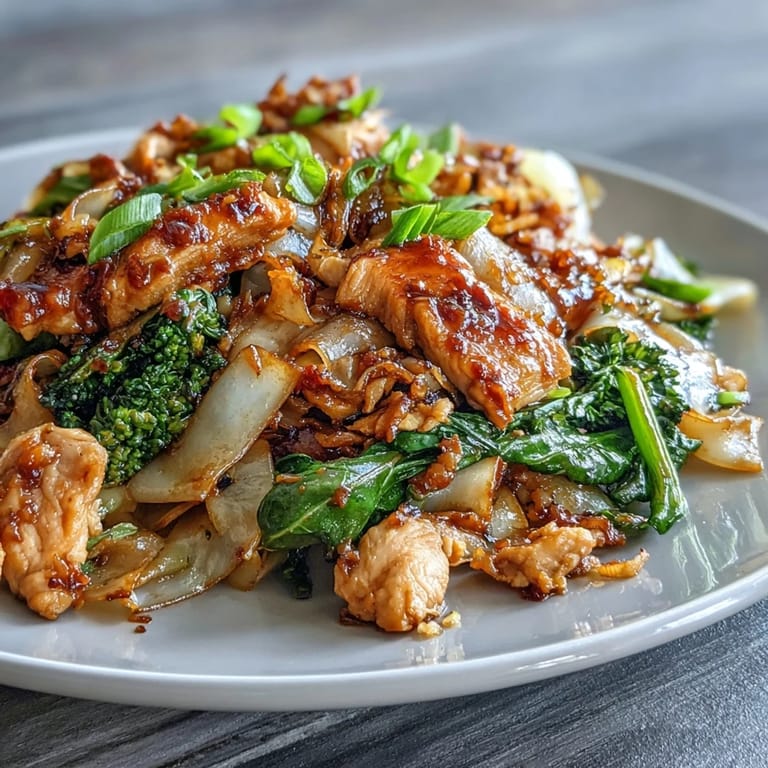
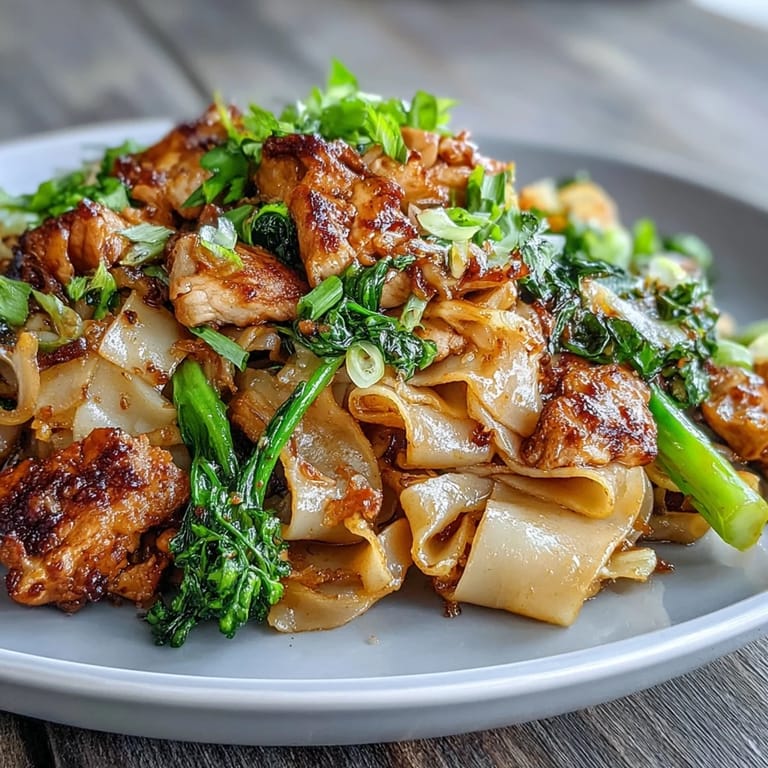
Save I discovered pad see ew at a cramped Bangkok street stall where the vendor worked two woks simultaneously, moving with a rhythm that made it look effortless. Years later, standing in my own kitchen at midnight with a craving I couldn't ignore, I realized the magic wasn't in some secret ingredient but in the confidence of high heat and the willingness to let things char slightly. This dish taught me that Thai street food doesn't require fancy technique, just presence and the right proportions.
My partner was skeptical the first time I made this without a wok, convinced a regular skillet would ruin everything. Watching their face when they tasted it, then asked for seconds before I'd even finished plating, became one of those small kitchen victories that made me braver about improvising.
Ingredients
- Wide rice stick noodles (200g dried or 450g fresh): These are the foundation, and the width matters because they catch the sauce better than thin noodles; soaking dried ones until pliable but still slightly firm gives you that signature chew.
- Chicken thighs (150g, thinly sliced): Thighs stay tender even with aggressive heat, unlike breast meat which can turn stringy if you're not watching every second.
- Chinese broccoli or gai lan (4 stems): The slightly bitter, tender stalks are irreplaceable in this dish, though regular broccoli works if that's what you have on hand.
- Dark soy sauce (2 tsp): This is the backbone of the color and depth, giving the dish its signature dark mahogany appearance and slightly sweet undertone.
- Oyster sauce (1½ tbsp): The umami bomb that makes everything taste fuller and rounder, but use a good quality brand because cheap versions taste one-dimensional.
- Light soy sauce (1 tbsp): Balances the dark soy without adding more salt, keeping the dish from becoming an overwhelming one-note salt bomb.
- White vinegar (2 tsp): A tiny splash that brightens the whole dish and prevents the sauce from feeling heavy or cloying.
- Sugar (2 tsp): Thai cooking loves this sweet-savory dance, and the sugar rounds out the vinegar's sharp edges.
- Garlic (2 cloves, finely chopped): The fragrant starting point that makes your kitchen smell alive the moment it hits hot oil.
- Peanut or vegetable oil (3 tbsp total): Peanut oil has a higher smoke point and adds a subtle richness, but vegetable oil works perfectly fine if that's what you prefer.
- Egg (1 large): Adds richness and creates little pockets of protein throughout the noodles.
Tired of Takeout? 🥡
Get 10 meals you can make faster than delivery arrives. Seriously.
One email. No spam. Unsubscribe anytime.
Instructions
- Soak the noodles into submission:
- If you're using dried wide rice noodles, submerge them in warm water for about 30 minutes until they're flexible but still have a slight firmness when you bend them. They should feel like they're almost ready to eat but not quite there yet; fresh noodles just need separating gently so they don't stick together in one solid block.
- Build your sauce in advance:
- Whisk together the dark soy, oyster sauce, light soy, vinegar, and sugar in a small bowl, stirring until that sugar completely dissolves. Having this waiting by the stove means you're ready to go the moment things start moving fast.
- Cut your broccoli with intention:
- Slice the stems into 2-inch pieces so they cook evenly, and let the leafy parts be larger because they'll shrink and soften quickly once heat hits them. This uneven sizing is actually what you want.
- Get your chicken golden:
- Heat 1 tablespoon of oil in your wok or skillet over high heat until it shimmers, then add the sliced chicken in a single layer and let it sit for a moment before stirring. This gives it a chance to brown instead of just turning gray; once it's cooked through with a hint of color, push it to the side or remove it entirely.
- Coax the broccoli into tenderness:
- Add another tablespoon of oil to the same wok and toss in those broccoli stems first, giving them about a minute of hard heat before adding the leafy parts. You're looking for the stems to turn bright green and slightly tender while the leaves just barely wilt.
- Make the egg work for you:
- With the final tablespoon of oil heating, add your finely minced garlic and let it perfume the oil for just a few seconds before cracking in the egg. Scramble it quickly so it breaks into small, creamy bits rather than one solid scrambled mass.
- Bring the noodles into the party:
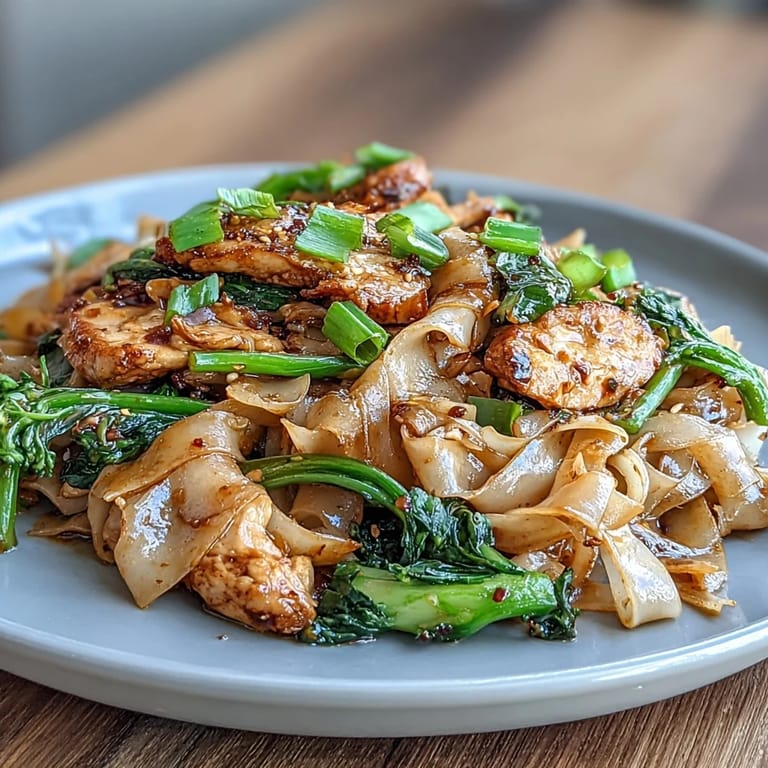
- Add your drained noodles to the wok and immediately pour that sauce over top, using tongs or two spatulas to toss everything together so every strand gets coated. The noodles might seem dry at first, but keep tossing and they'll absorb the sauce.
- Reunite everything one last time:
- Return the chicken and broccoli to the wok and stir-fry everything together for 1 to 2 minutes, making sure the heat distributes evenly and every component is piping hot. The whole dish should smell deeply savory and slightly caramelized at this point.
- Plate and serve with confidence:
- Divide among plates immediately because pad see ew is best eaten right now, not sitting around getting soggy. A squeeze of lime never hurt anyone.
 Save
Save There was a night when my mother-in-law, who grew up eating this on actual Bangkok streets, sat at my table and closed her eyes after the first bite. She didn't say much, but that moment taught me that food carries memory and culture in ways words can't quite reach.
The Wok Versus Everything Else
A wok is ideal because its curved shape and high sides make tossing easy and keep everything from flying onto your stovetop, but I've made exceptional pad see ew in a large skillet more times than I'd like to admit. The real requirement is a surface that gets screaming hot and distributes that heat evenly; cast iron, stainless steel, or carbon steel all work. Just make sure whatever you use can handle the temperature without warping or developing hot spots that will burn your garlic before your broccoli even thinks about cooking.
Protein and Vegetable Variations
Chicken thighs are forgiving and flavorful, but this dish is genuinely flexible about what protein you use. Thinly sliced beef or pork work beautifully, tofu adds a different kind of heartiness if you're going vegetarian, and shrimp turns into something almost delicate. Chinese broccoli is the real star of the vegetable department, but if your market doesn't have it, regular broccoli or broccolini will perform admirably, just cut them into similar-sized pieces so everything finishes at the same time.
Flavor Tweaks and Final Thoughts
This is the kind of dish where a pinch of white pepper or a small handful of chili flakes can push it in a different direction entirely, so taste as you go and adjust boldly. Lime wedges on the side let each person brighten their own bowl to their preference. Some people swear by a tiny dash of sesame oil drizzled over at the very end, and honestly, they're not wrong.
- Don't skip the finely minced garlic step; chunky pieces will taste raw and harsh instead of adding subtle depth.
- If your noodles seem too dry after tossing, you can add a splash of water or chicken broth, but usually the sauce is enough.
- Leftover pad see ev reheats well in a wok with a touch of oil, though it's best eaten fresh and hot.
 Save
Save Pad see ew is the kind of dish that makes you feel like a real cook without requiring fancy skills or hard-to-find ingredients. Make it tonight, and tomorrow you'll be craving it again.
Your Questions Answered
- → What type of noodles is best for this dish?
Wide rice stick noodles, either dried soaked before cooking or fresh, are ideal to absorb the flavorful sauce and provide the typical texture.
- → Can I substitute the protein in this dish?
Yes, chicken thighs can be replaced with beef, pork, tofu, or shrimp, all stir-fried similarly to retain tenderness and flavor.
- → What vegetable can replace Chinese broccoli if unavailable?
Broccolini or regular broccoli can be used as alternatives, offering a similar crunch and slightly sweet taste.
- → How is the sauce balanced for this stir-fry?
The combination of dark and light soy sauces, oyster sauce, sugar, and a hint of white vinegar delivers a harmony of savory, sweet, and tangy notes.
- → What cooking tools are recommended for best results?
A wok or large skillet ensures high heat and even stir-frying, essential for quickly cooking ingredients while preserving texture.
- → How should I prepare the noodles if using dried ones?
Soak dried rice noodles in warm water for around 30 minutes until flexible but not fully cooked, then drain before stir-frying.