 Save
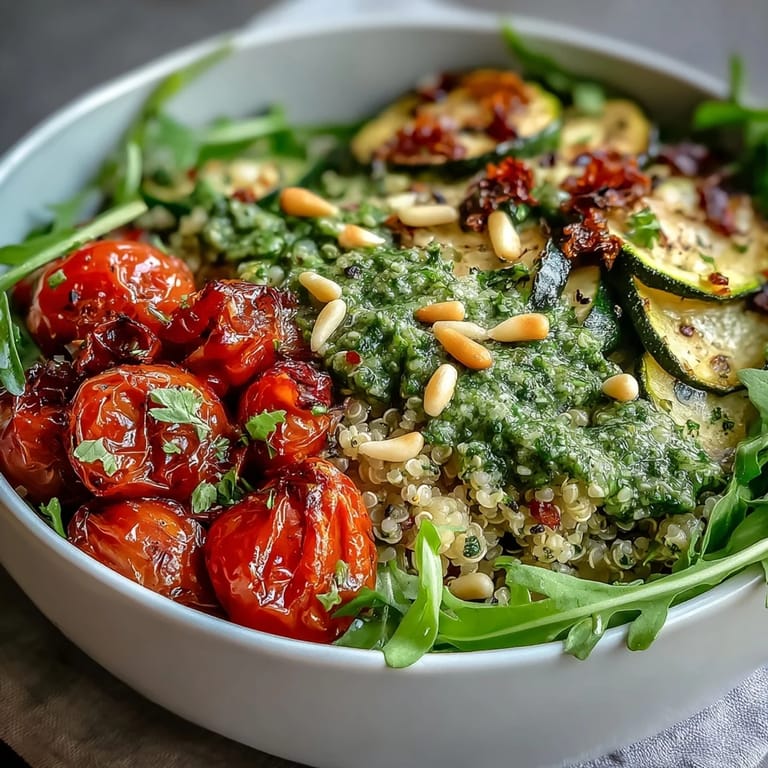
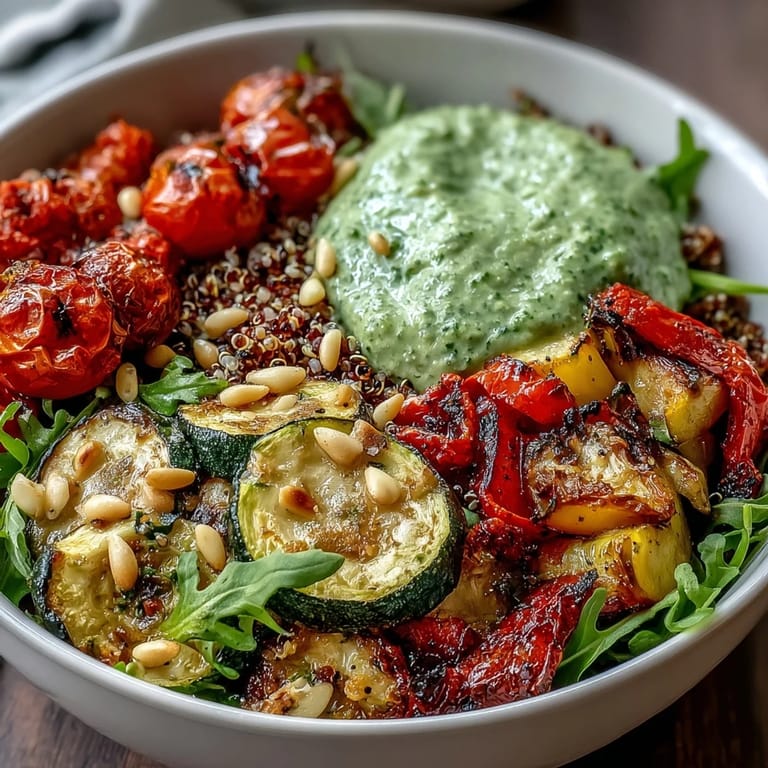
Save There's this moment when you bite into a grain bowl that just works, where everything on the plate speaks to you at once. I discovered this arugula pesto version on a Tuesday afternoon when my fridge was bursting with greens and I had half a container of walnuts staring me down. The peppery bite of fresh arugula transformed into a vibrant sauce felt like the simplest kind of kitchen magic, and suddenly I was assembling bowls for friends who kept coming back asking for the recipe. It's become my go-to when I want something that tastes like genuine effort but comes together in under an hour.
I made this for my sister last summer when she was going through a phase of questioning everything she ate, and watching her clean the bowl twice felt like I'd given her permission to enjoy food again. She loved how the roasted vegetables got slightly crispy at the edges while staying tender inside, and how the pesto seemed to tie every component together without making it feel heavy. That single meal sparked a conversation about cooking with intention, and now it's her signature dish to bring to potlucks.
Ingredients
- Quinoa: Rinsing it removes the natural bitter coating and prevents that chalky texture some people complain about; I learned this the hard way after my first attempt tasted faintly soapy.
- Cherry tomatoes: Halving them allows them to caramelize properly in the oven, concentrating their sweetness into little bursts of flavor.
- Zucchini: Slice it about a quarter-inch thick so it cooks through without turning mushy or releasing too much water.
- Red bell pepper: The sweetness balances the peppery arugula beautifully and adds visual brightness.
- Fresh arugula for pesto: Use the packed version when measuring, and don't skip the lemon juice since it brightens the earthiness of the nuts.
- Walnuts or pine nuts: Either works, though I've found walnuts are more forgiving if you're making this regularly and want to be gentle on your wallet.
- Parmesan cheese: Freshly grated makes a real difference in how it incorporates into the pesto rather than clumping.
- Olive oil: You'll use quite a bit here, so choose something you actually like tasting since it's the backbone of the pesto.
Tired of Takeout? 🥡
Get 10 meals you can make faster than delivery arrives. Seriously.
One email. No spam. Unsubscribe anytime.
Instructions
- Heat your oven and start the grain:
- Get the oven going to 400°F, and while it preheats, rinse your quinoa under cold water using a fine mesh strainer, letting your fingers gently work through it. Combine it with water and salt in a saucepan, bring to a boil, then cover and reduce to a simmer for about 15 minutes until the water absorbs completely and you see those little spirals pop out.
- Prepare and roast the vegetables:
- While the quinoa cooks, chop your cherry tomatoes in half, slice your zucchini into quarter-inch rounds, and cut your bell pepper into bite-sized chunks. Toss everything together with a tablespoon of olive oil and a pinch of black pepper, spread it across a baking sheet in a single layer, and roast for 18 to 20 minutes until the edges start to caramelize and look slightly charred.
- Build the pesto while everything cooks:
- In your food processor, combine the packed arugula, nuts, garlic clove, and grated Parmesan, pulsing until roughly combined. With the motor running, drizzle in the olive oil slowly and add the lemon juice until you reach a consistency you like, then taste and adjust the salt.
- Bring the components together:
- Once the quinoa is fluffed with a fork and the vegetables are caramelized, combine them in a large bowl with half of your pesto, tossing gently so everything gets coated but the vegetables don't break apart. The warm grains will soften slightly and absorb the pesto flavors beautifully.
- Assemble and serve:
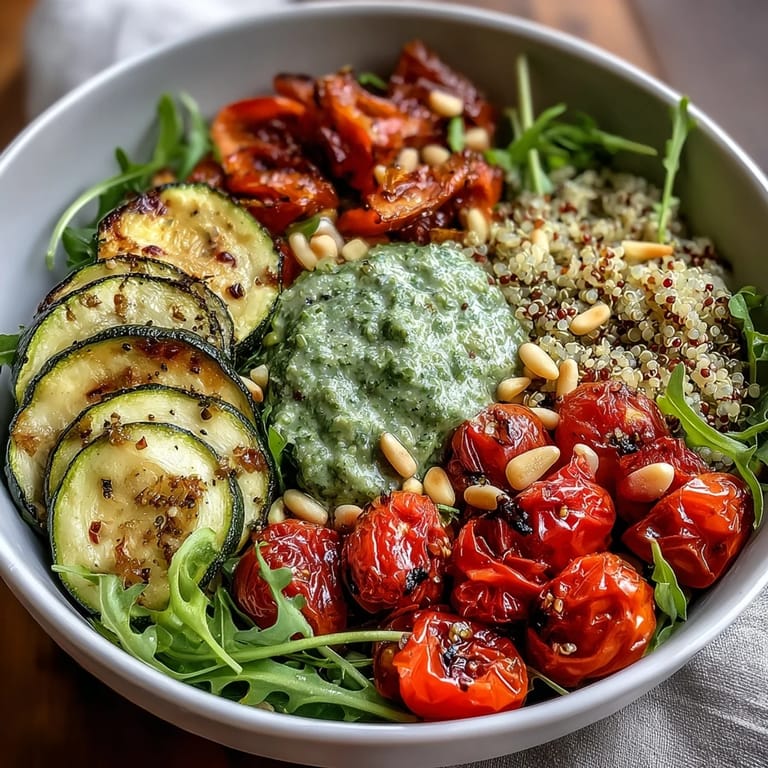
- Divide the fresh arugula among your bowls first as a cool base, then spoon the warm quinoa mixture on top and drizzle with the remaining pesto. Finish with shaved Parmesan, toasted pine nuts if you're using them, and a few cracks of fresh black pepper before serving right away.
 Save
Save The first time someone told me they'd made this three times in one week, I realized it had crossed over from recipe into ritual. There's something about a bowl this vibrant and this satisfying that makes you want to repeat the experience, tweaking it slightly each time you make it.
Why This Bowl Actually Fills You Up
I spent years thinking grain bowls were just salad with delusions of being a full meal, until I understood that the combination of protein-rich quinoa, healthy fats from nuts and oil, and fiber-packed vegetables actually creates something substantial. The pesto doesn't just taste good; it makes everything more absorbable and satisfying because fat slows digestion and helps you feel full longer. This isn't diet food pretending to be indulgent, it's genuinely nourishing in a way that feels almost luxurious.
Making the Pesto Your Own
The beauty of this pesto is that it's flexible enough to accommodate what you actually have on hand. I've made it with basil when arugula looked sad at the market, substituted roasted sunflower seeds for walnuts when a friend had a tree nut allergy, and even added a handful of fresh mint when I had some left over from mojitos. The formula stays the same, but the personality changes based on your pantry and mood.
Storage, Variations & Quick Fixes
This bowl comes together differently depending on your day and what you're willing to invest. You can prep the quinoa and roasted vegetables the night before and assemble fresh in the morning, or make the pesto ahead and store it under a thin layer of olive oil so it doesn't oxidize and turn brown. For cold storage, keep components separate so the fresh arugula stays crisp, and let everything come to room temperature before eating if you want the pesto flavors to really shine.
- If you want more protein, toss in grilled chicken, roasted tofu, or crispy chickpeas without changing the balance of the bowl.
- For a vegan version, swap Parmesan for nutritional yeast in both the pesto and the garnish, and it becomes even lighter.
- Any grain works here, so brown rice, farro, or even couscous can replace the quinoa if that's what you prefer or have on hand.
 Save
Save This bowl has become my answer to the question of what to cook when you want something that tastes like care but doesn't demand hours of your day. It's the kind of recipe that gets better the more you make it, as you learn which vegetables roast best in your particular oven and how much pesto is exactly right for your taste.
Your Questions Answered
- → Can I make the arugula pesto ahead of time?
Yes, prepare the pesto up to 5 days in advance and store in an airtight container in the refrigerator. The bright flavors may mellow slightly, but a squeeze of fresh lemon juice before serving will revive the zestiness.
- → What other grains work well in this bowl?
Farro adds a chewy texture, brown rice provides nuttiness, while couscous offers a lighter base. Each grain absorbs the zesty pesto differently, so adjust the amount based on personal preference.
- → How can I add more protein to this bowl?
Grilled chicken breast, crispy tofu cubes, or roasted chickpeas all pair beautifully with the peppery pesto. Simply prepare your chosen protein separately and arrange it on top when assembling the bowls.
- → Can I use different vegetables for roasting?
Absolutely. Eggplant, sweet potatoes, red onions, or even broccoli florets roast wonderfully alongside the tomatoes and zucchini. Just adjust cooking times so all vegetables achieve tender, caramelized edges.
- → Is this bowl suitable for meal prep?
The components store beautifully for 3-4 days. Keep the roasted vegetables, quinoa, and pesto in separate containers, then assemble fresh with a handful of raw arugula when ready to eat. The pesto actually develops deeper flavors after resting overnight.
- → What makes this pesto different from traditional basil pesto?
Arugula brings a peppery, slightly spicy kick that cuts through rich ingredients like Parmesan and olive oil. The bold flavor stands up exceptionally well to roasted vegetables and hearty grains, creating a more complex taste profile.